
EPISODE · Mar 5, 2026 · 1H 17M
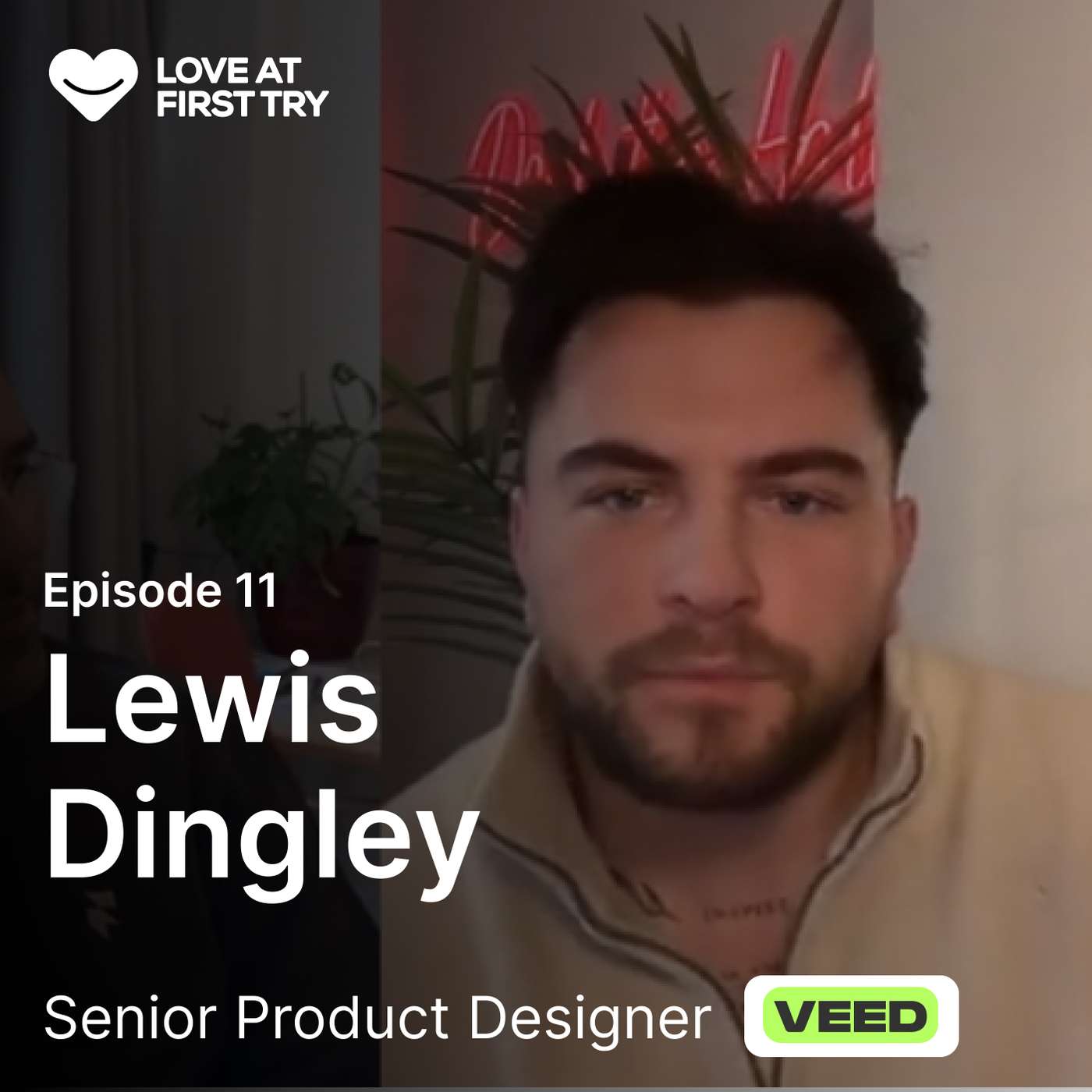
Designing AI video tools you can't prototype in Figma (w/ Lewis Dingley)
from Love At First Try · host Jim Zarkadas
Lewis Dingley spent years at Renault, Sky, and Dyson building his CV with big names. Then he realized: he was one designer among 50. No ownership. No real impact. So he jumped into startups — and now he's designing AI-powered video tools at VEED.io that you literally cannot prototype in Figma.What this episode is aboutThis is Love At First Try — a podcast about building SaaS products people actually love.I sat down with Lewis Dingley, Senior Product Designer at VEED.io — the AI-powered video editor that's making video creation accessible to everyone.Lewis has a wild background. Design school in France. Vehicle dashboards at Renault. TV products at Sky. Physical products at Dyson. And now — AI video tools at VEED.What made me want to talk to him: VEED is building generative AI features you simply cannot design in Figma. Text-to-video. AI avatars. Image-to-video editing. Real AI models doing real things.So how do you design for that? Lewis vibe codes. He prototypes with real APIs. He rebuilt an entire product in a day using Google AI Studio.If you're designing AI-powered products (or thinking about it), this one's for you.🧠 What you'll learn in this episode:0:00 - Lewis's journey from French design school to Renault, Sky, Dyson, and VEED5:22 - Why he left big corporations for startups and what changed10:45 - Why product designers need to be closer to leadership15:26 - Vibe coding: how Lewis rebuilt VEED's text-to-video product in one day18:13 - Google AI Studio vs Lovable — which is actually useful for prototyping21:04 - Why you should always present prototypes, never static screens26:44 - The trick to making AI tools understand your design system29:15 - How VEED's AI Playground integrates 30+ image and video models34:00 - Why Kling's new model made months of their work obsolete overnight36:29 - The biggest barrier for users is starting from scratch44:01 - VEED's AI agent that nobody used and what it taught them50:18 - Why education can't keep up with AI and what that means for designers55:07 - Short-form video addiction and why Lewis uses Do Not Disturb mode1:00:10 - Why some industries will never adopt new tech and that's okay1:08:27 - How Lewis defines taste as a designer1:12:25 - How he develops his taste with Mobbin, competitors, and adding his own ingredients1:14:12 - His least favorite SaaS (Slack) and why he pitched them a podcast feature💡 Actionable takeaways from Lewis→ Prototype, don't design static screens. Present interactive prototypes to leadership instead of static Figma screens. Lewis says it's the difference between getting a "maybe" and getting a "wow, yes." Seeing is believing — especially when you're trying to get buy-in for new ideas.→ Start with functionality, then UI when vibe coding. When using AI tools like Google AI Studio to prototype, build the working functionality first. Don't try to make it look pretty from the start — the AI gets confused and loses the functionality. Get it working, then refine the visuals.→ Describe your design system in words, not just screenshots. AI tools are bad at replicating your UI from a screenshot alone. Instead, describe your design system: "minimalist design, these kinds of buttons, this iconography style." Once the AI understands the theme, it can generate consistent UI without constant screenshots.→ Give users presets, not blank canvases. The biggest barrier for users is starting from scratch. Instead of asking them to write prompts or create from nothing, give them templates, presets, and examples they can tweak. Lewis saw this work at VEED — users don't want to type "sunrise lighting," they want to click a visual example.→ Use Do Not Disturb mode aggressively. Lewis realized he was addicted to his phone — checking it every 10 seconds for notifications he didn't need. Now he uses Do Not Disturb so he only checks his phone when he has time, not when it demands attention.→ Look at competitors and make it better. Lewis's approach to developing taste: research direct and indirect competitors, see what they're doing, then add your own ingredients. Don't start from scratch — start from inspiration and build on it.
Embed this episode
NOW PLAYING
Designing AI video tools you can't prototype in Figma (w/ Lewis Dingley)
No transcript for this episode yet
Similar Episodes
No similar episodes found.
Similar Podcasts
No similar podcasts found.