
EPISODE · Jun 9, 2026 · 25 MIN
1101-Computational Engineering for PET Recycling
from Paper Talk
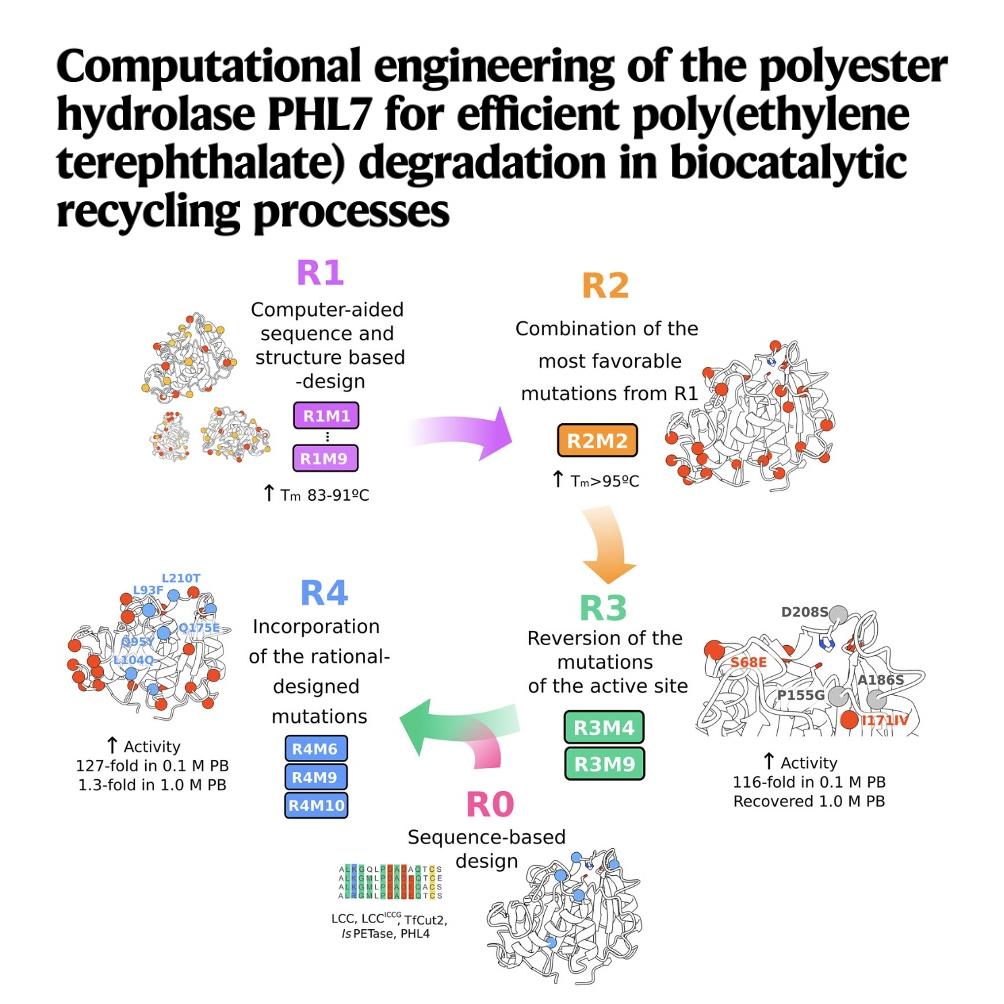
This research outlines a multi-stage computational and rational engineering process used to enhance PHL7, a polyester hydrolase, for more effective PET plastic recycling. By utilizing the Rosetta PROSS algorithm and targeted mutagenesis, scientists developed new enzyme variants that exhibit significantly higher thermal stability and catalytic performance than the original wild-type version. These engineered biocatalysts, such as the R4M10 variant, achieved nearly 115-fold higher activity in low-salt conditions and maintained their structural integrity at temperatures exceeding 95 °C. High-resolution X-ray crystallography and molecular dynamics simulations revealed that specific mutations, including the formation of new salt bridges, optimized the enzyme’s active site and surface charges. Ultimately, these robust variants demonstrated the ability to degrade up to 84% of high-concentration PET waste within 24 hours, matching or exceeding the performance of top-tier industrial benchmarks. This study establishes a scalable framework for creating high-performance enzymes capable of addressing global plastic pollution through sustainable biochemical recycling.References:Blázquez-Sánchez P, Gunkel J, Useini A, et al. Computational engineering of the polyester hydrolase PHL7 for efficient poly (ethylene terephthalate) degradation in biocatalytic recycling processes[J]. Nature Communications, 2026, 17(1): 4370.前往小宇宙评论区与主播互动
Embed this episode
Ready to play
1101-Computational Engineering for PET Recycling
No transcript for this episode yet
Similar Episodes
No similar episodes found.
Similar Podcasts
No similar podcasts found.