
EPISODE · May 16, 2026 · 1H 31M
4. Mahabharata: Indian Philosophy of Values
from Mahabharata महाभारत · host Vedanta Society, San Francisco
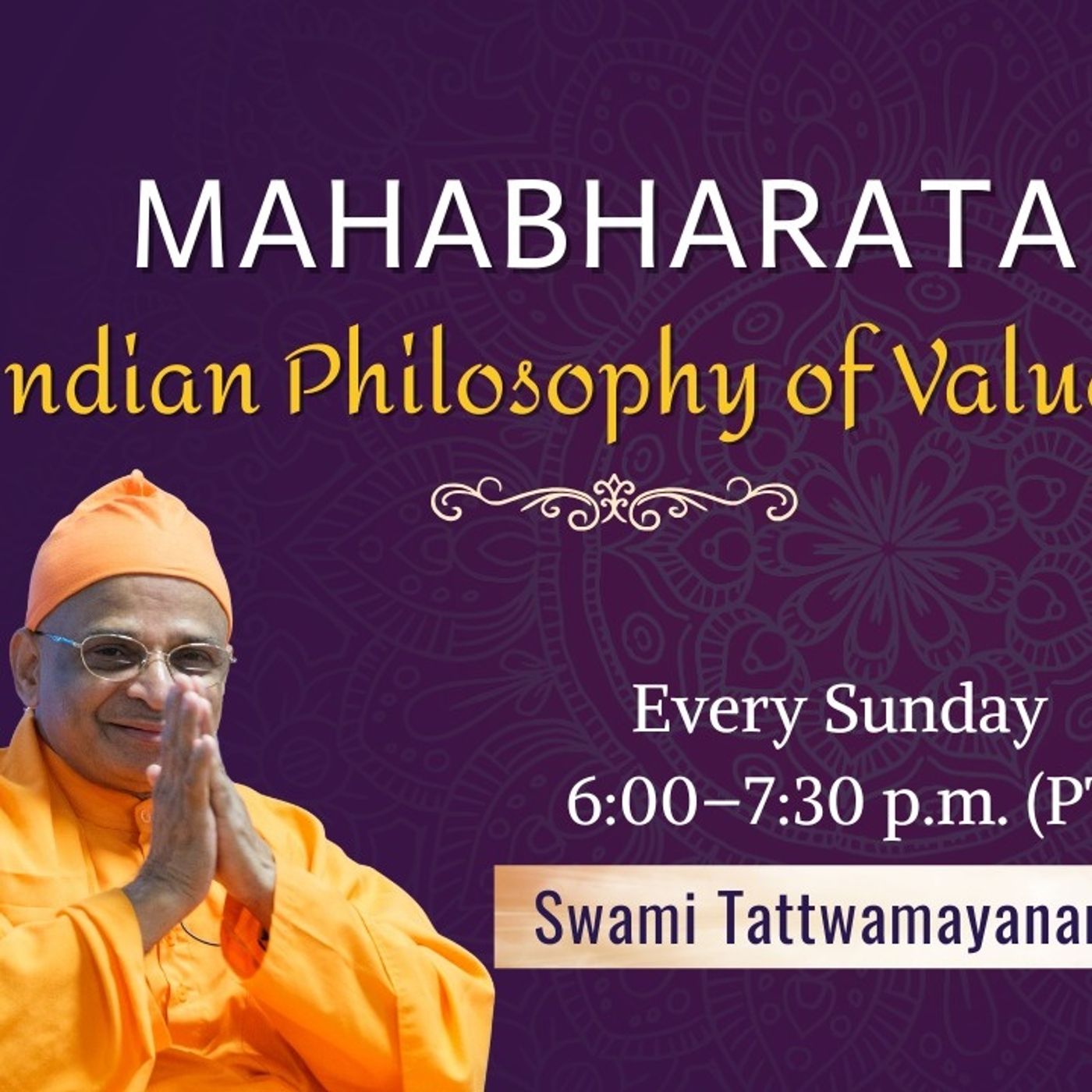
Welcome to the opening session of “Mahabharata: Indian Philosophy of Values,” presented by Swami Tattwamayananda.00:00 – Opening Instructions and Call GuidelinesHousekeeping notes and meeting flow00:30 – Introduction: Mahabharata and Human ValuesFocus on philosophy, values, and lived wisdom00:45 – Yaksha–Yudhishthira Dialogue ExplainedWisdom, detachment, equanimity, and moral clarity01:32 – Introduction to Anugita (Later Teachings of the Mahabharata)Context within Ashvamedha Parva02:42 – Ashvamedha Yajna and the Meaning of Royal CharityRitual, generosity, and social responsibility03:55 – The Mongoose (Manguṣa) AppearsA mysterious interruption during the sacrifice06:09 – Why the Mongoose Criticizes the King’s CharityOuter charity vs inner sacrifice07:29 – Story of the Poor Brahmin During the FamineRadical generosity in extreme poverty09:44 – Feeding the Guest at the Cost of One’s Own LifeFamily sacrifice and spiritual purity12:04 – Why the Mongoose Turned Half GoldenSanctity of intention, not magnitude of charity13:16 – True Charity Depends on Inner RenunciationMind, sacrifice, and moral worth17:28 – Another Mahabharata Episode on Misguided CharityWhy feeding thousands daily can reflect poor governance20:02 – Bhagavad Gita in the Mahabharata ContextWhy Arjuna needed Krishna’s teaching22:19 – Why Krishna Refused to Repeat the GitaTemporary clarity vs permanent transformation25:05 – Lesson: Spiritual Knowledge Must Be AssimilatedPractice, effort, and inner evolution🛤️ Mahaprasthana Parva: The Great Journey28:45 – Introduction to Mahaprasthana (The Great Journey)Symbolism of the final ascent30:04 – Dharma, Artha, Kama, and Moksha ExplainedStages of human evolution33:15 – Pandavas’ Final Journey Toward the HimalayasDraupadi and brothers fall one by one35:11 – The Dog Accompanying YudhishthiraDharma in disguise35:53 – Refusal to Enter Heaven Without the DogSupreme test of righteousness36:05 – Dog Revealed as Dharma ItselfFinal affirmation of moral integrity🌿 Renunciation, Death, and Inner Contentment37:05 – Krishna’s Departure and the End of an EraBeginning of Kali Yuga38:30 – Giving Up Power, Wealth, and IdentitySymbolism of bark garments40:00 – Letting Go of What Is Most PreciousArjuna’s divine weapons and renunciation42:48 – Inner Contentment as the Mark of Spiritual GreatnessFacing death without fear44:24 – Why Yudhishthira Never Looked BackDharma as unwavering forward movement🌍 Comparative Reflections and World Literature46:05 – Mahabharata and Dostoevsky ComparedHuman conflict across civilizations49:42 – Prince Myshkin and Awareness of DeathTransformation through certainty of mortality52:12 – Potential for Spiritual Change in Every Human BeingRedemption, repentance, and renewal💬 Q&A Session55:28 – Question: Flaws of Characters and Practicing Perfect DharmaHuman limitations and Krishna’s model56:18 – Dharma as Spiritual Common SenseUniversal vs situational ethics58:10 – Ahimsa Without Wisdom Can Be DangerousHistorical and moral examples1:00:05 – Why Dharma Must Be ContextualKrishna’s realism and world teaching1:03:00 – Question: Why Arjuna Fell Back After Krishna’s VisionCapacity, preparation, and spiritual maturity1:06:23 – Karma Yoga for Everyday LifeApplying Gita in modern professional life1:10:09 – Question: Does Charity by the Wealthy Have Value?Clarifying the Mongoose story’s intent1:12:04 – Question: Time, Cycles, and the MahabharataLinear vs cyclical understanding of time1:14:22 – Yugas and the Cyclic Nature of CivilizationDecline and renewal across ages1:21:02 – Question: Reverence for Animals in Spiritual TraditionsSymbolism, compassion, and inner awakeningThis program is part of the series: The Foundational Texts of Indian Philosophy.The Mahabharata, one of India’s greatest epics, offers profound insights into dharma, ethical reasoning, spiritual discipline, and the principles that shape inner harmony. In this series, Swamiji examines the epic through the lens of Vedanta, revealing how its timeless teachings can guide modern life, personal development, and values-based living.Speaker: Swami TattwamayanandaStart Date: Sunday, November 30, 2025Time: 6:00–7:30 p.m. (Pacific Time)Format: Online Class (hosted by the Stanford Hindu Students Association)Join the livestream on YouTube, or participate via Zoom or Facebook. All are welcome.For more information on this series and other programs, please visit:👉 https://sfvedanta.orgPlease continue to monitor our website for the latest information, and please email [email protected] for any inquiries. Vedanta Society of Northern CaliforniaContact Us:Email: [email protected]: sfvedanta.org
Embed this episode
NOW PLAYING
4. Mahabharata: Indian Philosophy of Values
No transcript for this episode yet
Similar Episodes
No similar episodes found.