
EPISODE · Jun 24, 2026 · 22 MIN
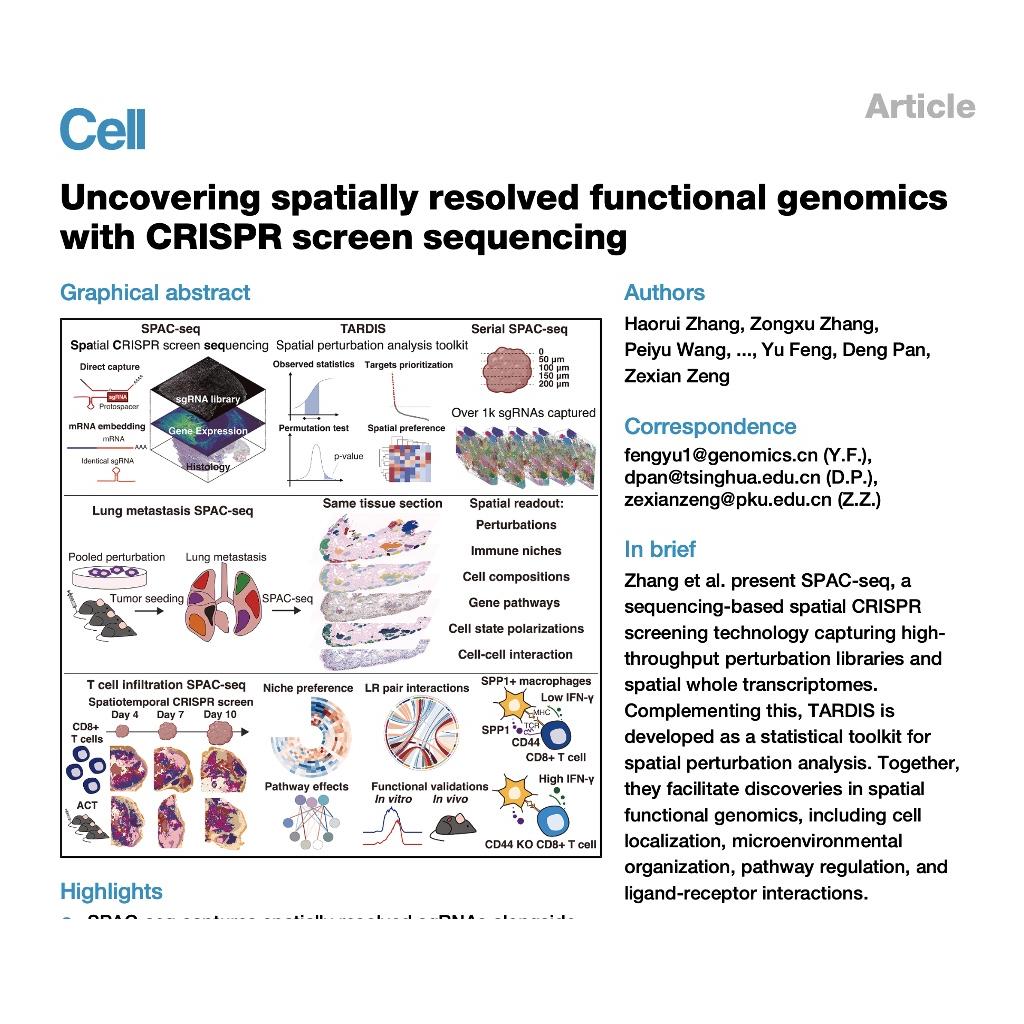
1178-SPAC-seq: Spatial CRISPR Screening
from Paper Talk
The researchers introduced SPAC-seq, a high-throughput technology that integrates spatial transcriptomics with CRISPR screening to map how specific gene modifications influence cellular behavior within tissue environments. To interpret this complex data, they developed TARDIS, a statistical toolkit designed to prioritize genetic targets based on their spatial phenotypes and niche preferences. Their findings revealed that losing the Icam1 gene in tumor cells creates an immunosuppressive niche that facilitates lung metastasis. Additionally, they identified the SPP1-CD44 axis as a critical mechanism where macrophages suppress CD8+ T cell activity by elevating mitochondrial oxidative stress. The study further uncovered that the transcription factor Bhlhe40 regulates T cell localization by balancing effector states with chemotaxis cues. Ultimately, this framework provides a powerful method for uncovering the functional genomics that drive disease progression and immune responses in a spatial context.References:Zhang H, Zhang Z, Wang P, et al. Uncovering spatially resolved functional genomics with CRISPR screen sequencing[J]. Cell, 2026.前往小宇宙评论区与主播互动
Embed this episode
Ready to play
1178-SPAC-seq: Spatial CRISPR Screening
No transcript for this episode yet
Similar Episodes
No similar episodes found.
Similar Podcasts
No similar podcasts found.