
EPISODE · Jan 8, 2026 · 29 MIN
118: How to Practice! (+ Advice for Teens)
from WTF Bach · host Evan Shinners
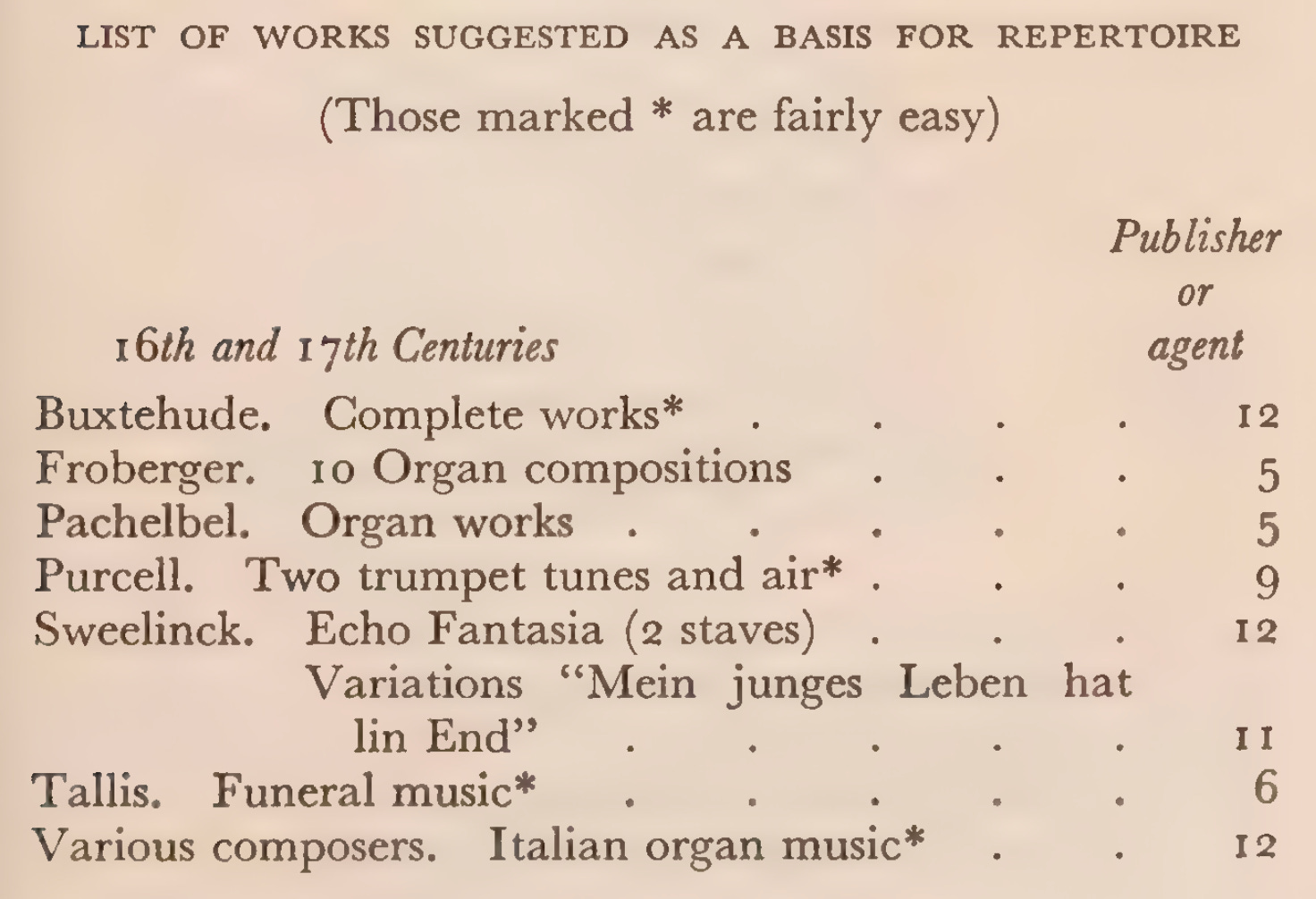
Update: Just got five promo codes to download Time Guru (the cool metronome app mentioned in the episode.) Send me a message or let me know down below you’re interested and I’ll share the codes! Happy PracticingLet’s get our good new habits in early in the year! In this episode, I read practical advice from three organists/organ method books. The organ method books are in a class of their own— highly entertaining reading.We begin with Francis Routh’s Teach Yourself The Organ (1958.) His asterisk marking the complete works of Buxtehude as ‘fairly easy’ is representative of this amusing book:Harold Gleason’s method book of 1962 makes up the bulk of this episode, the complete advice is pasted below.We feature some of Fayth Freese’s excellent article from The Diapason. I recommend the full read. And here is the advice to teens I made for the Harrison School for the Arts in Lakeland Florida. I cannot emphasize enough how music should be a joyous process at this age, never an abusive one.From Gleason (bold type is my emphasis)HOW TO PRACTICE:* Make a schedule for daily practice. Devote a definite amount of time to technique, to new music, to perfecting music already studied, and to memorizing. Devote at least one hour a day to piano practice. Later the student will need to reserve time for perfecting the many skills required for playing the church service.* Practice as if the piece were being memorized (see the section on Memorizing).* Study the music before beginning to practice. Note the key signature, time signature, note values, fingering, pedaling, structure, special problems, and general style. If the fingering and pedaling is not given or is inadequate, it should be carefully worked out according to the principles given in the sections on Fingering and Pedaling.* Memorize and always use the same fingering and pedaling. Incorporate the articulation, phrasing and interpretation into the practice.* Try to avoid playing wrong notes or incorrect time values from the first time an exercise or piece is practiced. If a wrong note or rhythm is played, do not immediately correct it. Go back to the beginning of the phrase and repeat the passage correctly a number of times.* Concentrate on the work at hand and avoid mechanical, unthinking practice and repetition. Always practice after a lesson.* Practice slowly in the following sequence: right hand; left hand; both hands; pedal; right hand and pedal; left hand and pedal; both hands and pedal. Begin the slow practice of short sections for both hands and pedal while working on separate parts.* When the phrases and sections of a composition have been mastered at a low tempo, play it all the way through. When this has been accomplished with complete muscular control and accuracy, the tempo may be gradually increased. Return to slow, detailed practice of sections which are not secure, and repeat this process at succeeding practice periods.* Always practice at a steady tempo. Do not play easy places fast and difficult places slowly.* Devote the most attention to difficult passages.* In contrapuntal music, play one or more parts and sing another part.* In passages of a technical nature, the practice of four-note groups in the various rhythmic patterns is helpful in developing speed and control.* Stop practicing and relax for a few minutes at the first sign of tension.* When practicing technical exercises for manuals and pedals, and when first learning a piece, use clear, quick-speaking stops of 8’ or 8’ and 4’ pitch (Gedackt 8’, Principal 4’).* As soon as the notes in a composition have been mastered, work out an appropriate registration.* The drawing of stops and the use of combination pistons and reversibles should be carefully practiced and synchronized, in order not to interfere with the performance of the music.* Above all, the student should learn to listen and hear that the parts are sounding together, are released together, and that the touch, rhythm, accents, and interpretation are actually being realized as intended.How’s Your Contrapuntal Journey Fugueing?HOW TO MEMORIZE:The principal reason for playing from memory lies in the fact that it will result in a better performance, both technically and musically. The perfectly memorized work becomes a part of the performer and gives him complete freedom of expression.When a piece of music is practiced correctly and efficiently, it is also being memorized, and good practice habits will lead to a continual improvement in the ability to memorize.After a composition has been thoroughly learned with the notes, the complete process of memory should be undertaken. Concentration and interest in learning are indispensable to the memory process.There are four types of memory which are used in music. Three of these types—aural, visual, and motor memory—depend on our senses or imagery. The fourth, and most important type, is known as cognitive memory. It is based on knowledge and is the memory we use in the analytical study of the music.The memorization of music requires the combination and collaboration of the four types of memory. We all vary in our natural gifts and capacities, but all types of memory should be cultivated and can be improved.Cognitive MemoryThis memory is the basis of all study, from the time the piece is first practiced until it is performed from memory. Every detail of the music should be analyzed technically and musically, and be consciously known. Organize notes into patterns, groups, and phrases. Note all sequences and variations from the sequential pattern. Analyze harmonic progressions and relate them to each other. Contrapuntal lines, rhythm, and interpretative factors are all a part of analytical study. Study the form and relate the details to the whole.Aural MemoryThis memory is useful in enabling us to hear mentally what the next note or chord is, and it strengthens the other types of memory. The ability to hear accurately and retain what we hear should be developed until individual lines of the music can be played and sung without errors. Eventually a whole composition can be “practiced” by going through it and hearing the sound mentally.Visual MemoryThis type of memory gives us a mental image of the way the notes look on the printed page, or the place of the notes and the shape of each passage on the keyboard. Visual memory may be developed by concentrating on a measure of music, consciously noting all its details, and then reproducing it from the mental image. Gradually more measures can be added, and a mental image of whole phrases and sections can be retained. Avoid using different editions of a composition during the learning process.Motor MemoryThis is one of the most useful and also the most dangerous types of musical memory. Motor memory involves the touch sensations and training of the muscles so that the movements in playing become automatic. They should, however, never be mechanical. In developing motor memory the same fingering and pedaling must always be used. Avoid repeating phrases endlessly without thought or purpose. Never depend on motor memory alone in memorizing a piece. The slightest interruption in the automatic process will inevitably lead to a breakdown.Summary* Begin to learn all the techniques of memorizing with the first lesson. The basic principles of position, manual technique, and practicing should be memorized. Analyze the exercises and studies and memorize the fingering. A few of the manual studies in which the student is particularly interested should be memorized after they have been learned perfectly with the music.* Memorizing should continue throughout the organist’s career and be made a part of every practice period.* Memorize when the mind is alert and the power of concentration is strongest. Do not attempt to memorize when fatigued.* Always begin with analysis and then introduce the other memory techniques. The more thoroughly the music is learned the longer it will be retained and the more positive will be its recall.* Memorize phrases or short sections at first and gradually develop the ability to learn longer sections. Always be sure the sections are connected in the mind and make a unified whole.* Work on at least one new section of music each day and then review the previous sections.* Memorize landmarks at cadential points and practice beginning at any one of these landmarks.* Memorize and be able to play the parts for each hand alone and the pedal part alone.* In reviewing a work previously memorized always consult the score and repeat the original memory process.* Do not think of difficulties ahead, or the association of chord to chord and phrase to phrase will be lost.* In performing from memory, the subconscious mind will function if it is not interfered with by fear.* The fear of forgetting can be eliminated by the knowledge that every detail of the music and its interpretation has been engraved in the mind and that the aural, visual, and motor senses have been well trained.Want to see this resource stick around? Here’s how you can help:We encourage our listeners to become a paid subscriber atwtfbach.substack.comFree subscriptions (yes, you can subscribe for free!) are also beneficial for our numbers. You can make a one-time donation here. We run a 501(c)3, so let us know if you want a tax deduction:https://www.paypal.me/wtfbachhttps://venmo.com/wtfbachSupporting this show ensures its longevity. Thank you for your support! Get full access to W.T.F. Bach? at wtfbach.substack.com/subscribe
Embed this episode
NOW PLAYING
118: How to Practice! (+ Advice for Teens)
No transcript for this episode yet
Similar Episodes
No similar episodes found.