
EPISODE · Jun 28, 2026 · 22 MIN
1196-Protein Epigenetic Switch for Adaptation
from Paper Talk
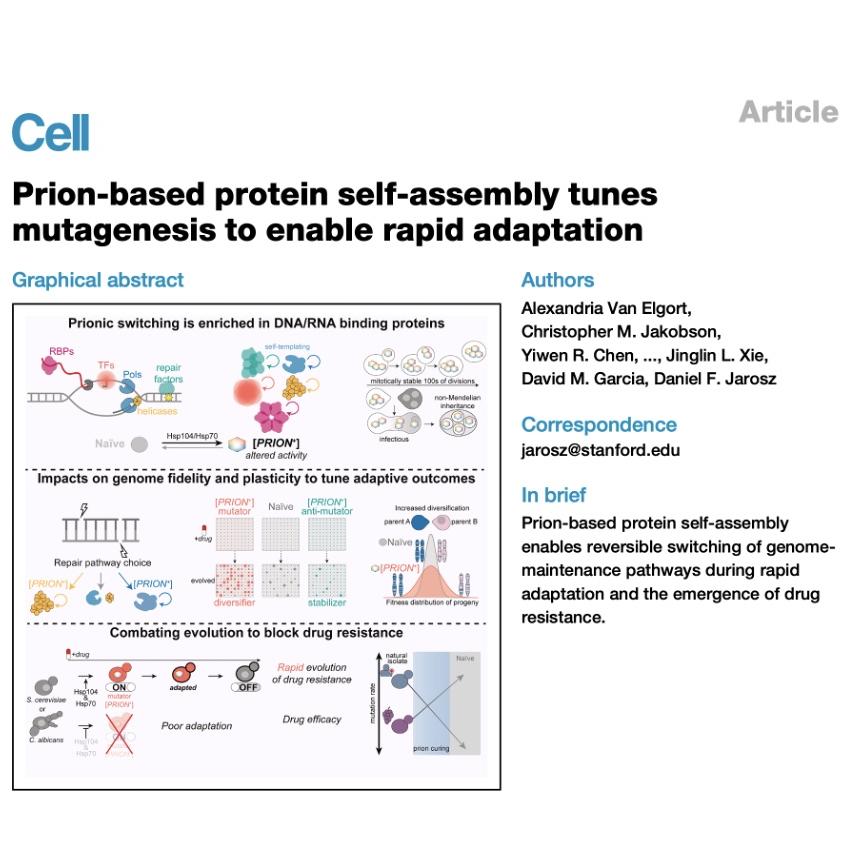
This research explores how prion-based protein self-assembly acts as a reversible epigenetic switch to control mutation rates and evolutionary adaptation in yeast. By altering the behavior of DNA repair and replication proteins, these prions can either increase or decrease genetic diversification depending on environmental pressures. The study demonstrates that these prionic mutators are widespread in nature and significantly accelerate the emergence of drug resistance in pathogens like Candida albicans. Because these states are heritable yet reversible, they allow populations to rapidly evolve under stress without the permanent burden of a high mutation rate. Furthermore, the findings highlight Hsp104 as a critical factor in maintaining these prions, suggesting that targeting this protein could potentially block the evolution of antibiotic resistance. This mechanism provides a sophisticated way for organisms to tune their genomic stability and survive challenging environments through protein-based memory.References:Van Elgort A, Jakobson C M, Chen Y R, et al. Prion-based protein self-assembly tunes mutagenesis to enable rapid adaptation[J]. Cell, 2026.前往小宇宙评论区与主播互动
Embed this episode
Ready to play
1196-Protein Epigenetic Switch for Adaptation
No transcript for this episode yet
Similar Episodes
No similar episodes found.
Similar Podcasts
No similar podcasts found.