
EPISODE · Jul 15, 2026 · 22 MIN
1283-Glial to Neuromesenchymal Transition in MPNST
from Paper Talk
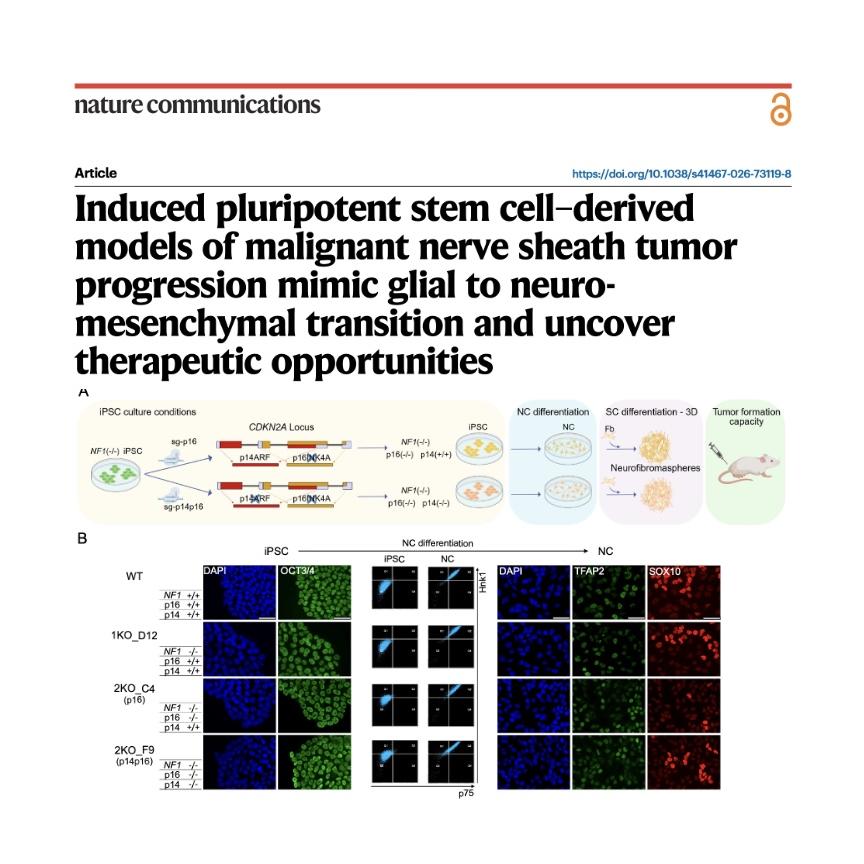
This research explores the genetic mechanisms driving the progression of Neurofibromatosis Type 1 (NF1) into aggressive malignant peripheral nerve sheath tumors (MPNSTs). By using gene-edited human induced pluripotent stem cells (iPSCs), the authors successfully replicated the stepwise loss of tumor suppressor genes—specifically NF1, CDKN2A, and PRC2—to model how benign tumors transform into cancer. The study reveals that the loss of PRC2 triggers a critical glial-to-mesenchymal transition, effectively silencing glial genes while activating neuro-mesenchymal programs that define the tumor's identity. These engineered 3D neural crest spheroids not only formed human-like tumors in animal models but also served as a platform for high-throughput drug screening. Through this process, the researchers identified that combining PARP inhibitors with MEK inhibitors significantly suppresses tumor growth. Ultimately, this work provides both a new biological model for studying tumor development and a promising therapeutic strategy for a cancer that currently has limited treatment options.References:Uriarte-Arrazola I, Magallón-Lorenz M, Fernández-Rodríguez J, et al. Induced pluripotent stem cell–derived models of malignant nerve sheath tumor progression mimic glial to neuro-mesenchymal transition and uncover therapeutic opportunities[J]. Nature Communications, 2026, 17(1): 5361.前往小宇宙评论区与主播互动
Embed this episode
Ready to play
1283-Glial to Neuromesenchymal Transition in MPNST
No transcript for this episode yet
Similar Episodes
No similar episodes found.
Similar Podcasts
No similar podcasts found.