
EPISODE · Jul 15, 2026 · 16 MIN
1284-Spatial Biomarkers of Chemotherapy Resistance
from Paper Talk
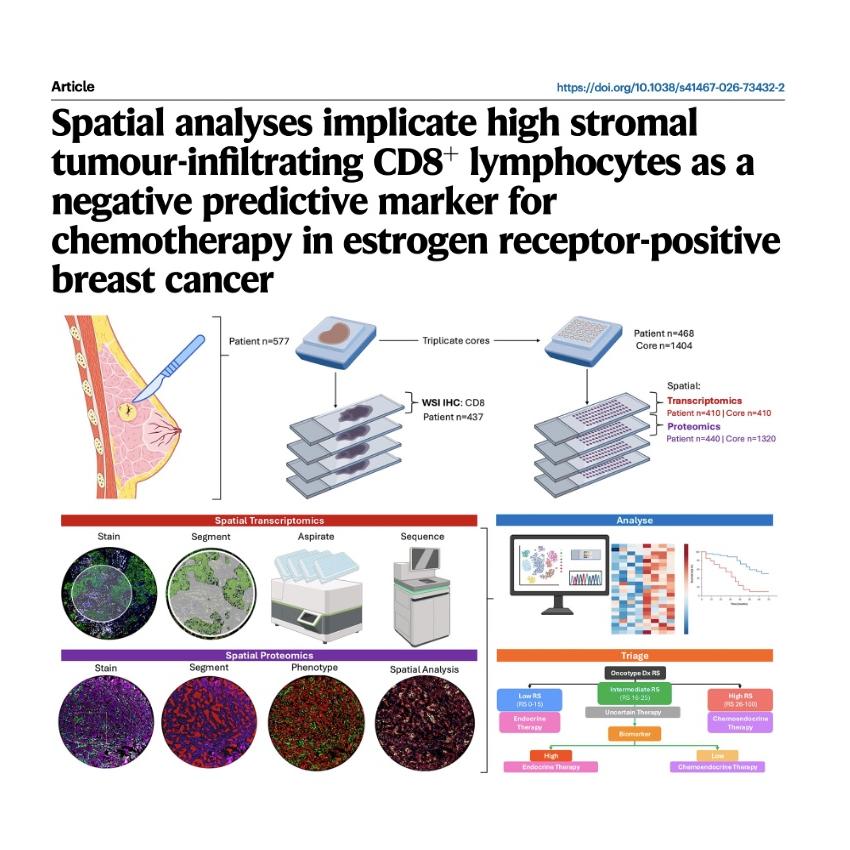
This study investigates estrogen receptor-positive (ER+) breast cancer to identify why some patients experience late relapses despite favorable early prognoses. Researchers used spatial transcriptomics and proteomics to analyze how immune cells are organized within the tumor microenvironment, discovering that immune activity in the stroma and epithelia is often decoupled. A key finding reveals that a high density of stromal CD8+ cytotoxic T-cells acts as a negative predictive marker for chemotherapy success in patients with intermediate recurrence scores. The data suggest that these inflamed immune environments may actually be suppressed or exhausted, potentially explaining why chemotherapy fails to improve outcomes in these specific cases. Consequently, sTIL CD8+ density is proposed as a novel biomarker to refine treatment decisions and prevent unnecessary chemotherapy. These insights could lead to more personalized care by identifying which patients might benefit from de-escalating traditional treatments or exploring immunotherapy instead.References:Kinsella Z, Jahangir C A, Nyarko H N, et al. Spatial analyses implicate high stromal tumour-infiltrating CD8+ lymphocytes as a negative predictive marker for chemotherapy in estrogen receptor-positive breast cancer[J]. Nature Communications, 2026, 17(1): 4863.前往小宇宙评论区与主播互动
Embed this episode
Ready to play
1284-Spatial Biomarkers of Chemotherapy Resistance
No transcript for this episode yet
Similar Episodes
No similar episodes found.
Similar Podcasts
No similar podcasts found.