
EPISODE · Dec 1, 2023 · 21 MIN
129. A Good & Bad Example of Phenomenon-Based Teaching
from The STEM Space · host Vivify STEM
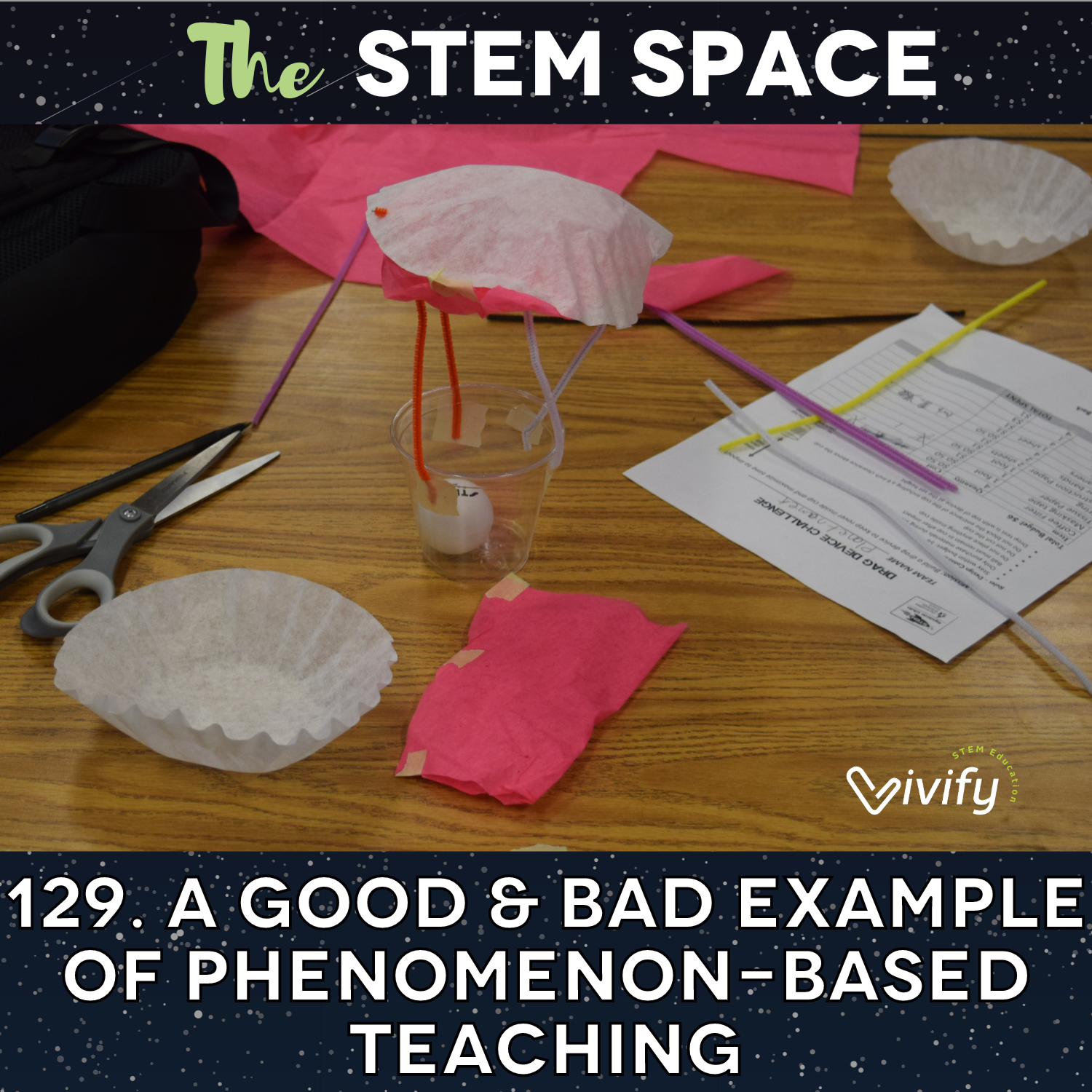
Show Summary:Claire and Natasha delve into the topic of phenomenon-based science teaching as an engaging way to increase understanding of science concepts while improving science practices. However, we warn listeners that not all lessons labeled as phenomenon-based are equally effective! Natasha shares a simple but powerful lesson that starts with dropping cans of soda into water to enhance students' grasp of buoyancy and density concepts. On the flip side, we also critique a lesson on forces and motion that falls short, potentially reinforcing misconceptions and likely creating lots of confusion among students. Teaching science is hard, and writing curriculum for science teachers is equally difficult, so this is not meant to be a criticism towards a specific company but we want to support a more general conversation on how to promote effective science teaching!Links from the Show:Related The STEM Space Podcast Episodes 128. Preparing for the New Science Standards in Texas121. The Importance of Clear Communication in Science92. Unpacking the NGSS ft. Molly Seward (K-4 Science Coach)Vivify STEM Blog Posts Engineering and the 5E Science ModelTeaching STEM Through A StoryVivify STEM LessonsDensity/Buoyancy STEM:- Ocean Study: 5E Science Unit (Sink/Float, Salinity, Ocean Layers)- STEM Pirate Ship Engineering Challenge (K-5)- STEM Sailboat Challenge (4-10)Drag STEM:- Alphabet STEM - Activities for Letter D (PreK - 1)- STEM Drag Device Parachute Challenge (2-8)Other STEM ResourcesWhat is Phenomenon-Based Learning? by TechLearningConference for the Advancement of Science Teachers (CAST)YouTube: SHARING HER PASSION | Tatiana Erukhimova Ph.D. (Texas A&M Physics Professor)Argument-Driven Inquiry Science (A Good Example of Phenomenon-Based Learning!)THE STEM SPACE SHOWNOTESTHE STEM SPACE FACEBOOK GROUPVIVIFY INSTAGRAMVIVIFY FACEBOOKVIVIFY TWITTERVIVIFY TIKTOK
Embed this episode
What this episode covers
Claire and Natasha delve into the topic of phenomenon-based science teaching as an engaging way to increase understanding of science concepts while improving science practices. However, we warn listeners that not all lessons labeled as phenomenon-based are equally effective! Natasha shares a simple but powerful lesson that starts with dropping cans of soda into water to enhance students' grasp of buoyancy and density concepts. On the flip side, we also critique a lesson on forces and motion that falls short, potentially reinforcing misconceptions and likely creating lots of confusion among students. Teaching science is hard, and writing curriculum for science teachers is equally difficult, so this is not meant to be a criticism towards a specific company but we want to support a more general conversation on how to promote effective science teaching!
Ready to play
129. A Good & Bad Example of Phenomenon-Based Teaching
No transcript for this episode yet
Similar Episodes
No similar episodes found.
Similar Podcasts
No similar podcasts found.