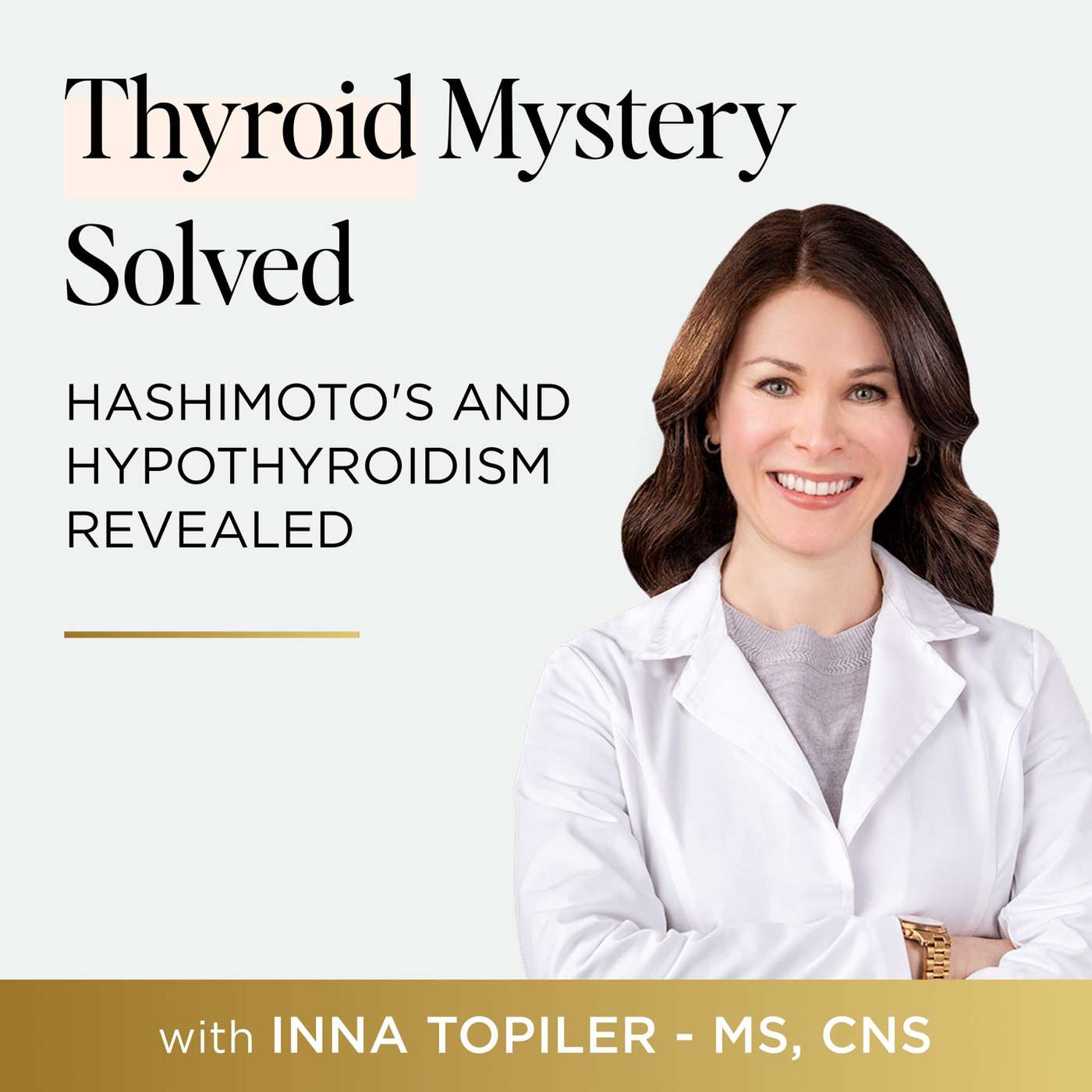
129 How to Lose that 'Menopot' and Sail Through Menopause with Guest Esther Blum episode artwork

EPISODE · Oct 13, 2022 · 41 MIN

129 How to Lose that 'Menopot' and Sail Through Menopause with Guest Esther Blum

from Thyroid Mystery Solved: Hashimoto's and Hypothyroidism Revealed · host Inna Topiler with Guest Esther Blum

The Case:  Lisa is 49 and dealing with irregular periods, hot flashes, and vaginal dryness.She is also gaining weight around her abdomen that she’s struggling to lose.Her doctor told her it was menopause and to get used to these menopause symptoms as the new normal.The InvestigationWhile menopause is normal for someone Lisa’s age, suffering through the symptoms doesn’t have to be. There are many things that can be done and I knew that we needed to explore the options. Esther Blum is an integrative dietician, high-performance coach and the author of many books including her latest, See Ya Later, Ovulator. She joined us on  Health Mysteries Solved episode 101 to talk about a weight loss mystery so I knew that she was the perfect person to talk about Lisa’s case.   Demystifying Menopause: Quick Facts About Menopause A woman is considered in menopause when she has gone 12 consecutive months without a period. Perimenopause is the phase of life that happens before that (and can last up to 10 years).  The average age of menopause is 51.During menopause, there are a many biochemical changes that affect a woman from the brain down to the vagina. The most significant change happening is that the woman stops ovulating and can no longer get pregnant. As the ovaries decrease hormone production, the adrenals step in. This hormonal shift can cause a variety of symptoms, including:FatigueBrain fogNight sweatsInsomniaIrritabilityWeight gainGut issuesVaginal drynessSome or all of these symptoms may be a part of a woman’s menopause experience. Women are Not Prepared for Menopause (and They’re Doctors Aren’t Helping!) Despite the fact that menopause happens to every woman, many find they are not prepared for it. Esther says that they often don’t have the tools, testing, or any sense of how to advocate for themselves and their body. When they visit their doctor to discuss the symptoms, they are often told that it’s just menopause and often doesn’t give them any solutions. When solutions are offered, it might be to take birth control pills, get an IUD and even to take daily antihistamines! Preparing for Menopause  During perimenopause, it’s a good idea to do some tests to get a sense of your baseline however, keep in mind that estrogen levels can fluctuate as much as 30% on any given day in menopause. For this reason, some doctors may be reluctant to test estrogen levels.Additional tests might include a urine test (Dutch Complete) to look at metabolites, detoxification pathways, and methylation, a stool test, and a GI map to test for the enzyme beta-glucuronidase. It is possible to start using bioidentical hormones in low doses during perimenopause to help regulate hormones based on what these tests reveal. Bioidentical Hormone Therapy vs. Hormone Replacement Therapy There are two common types of hormone therapy for women in menopause and perimenopause. Traditional hormone replacement therapy (HRT) is made in a lab, so it’s synthetic.  Bioidentical hormones are usually plant based (yams and sometimes soy) making them much more compatible. Esther prefers bioidentical hormone therapy over hormone replacement therapy because:They bypass the liver and gut so they are better absorbed.They’re applied transdermally on the skin (cream or patch).You have more control over the dosage with a cream whereas the synthetic hormone replacement therapy is a one-size-fits-all pill. How Long Can You Stay on Hormone Therapy for Menopause There’s a lot of conflicting information out there about how long you can safely stay on hormone replacement therapy. Much of this is based on old studies that have since been disproven. Many traditional doctors have not continued to believe that women should limit hormone replacement therapy to a few years but this is not accurate. New research suggests that not only can women stay on hormone replacement therapy for years (before and after menopause) there may be benefits.  The benefits of continued used of bioidentical hormones include:Reduction of menopause symptoms like hot flashes, insomnia, irritability, and vaginal drynessImprovement of skin elasticity (meaning fewer wrinkles)Brain healthCardiovascular healthWeight managementMany women would wait until their symptoms are really bad before going on hormone therapy for menopause because they think there is a limited time they can be on them. Now that thinking has changed on how long you can be on hormone therapy, there is no reason to wait. Starting on hormone therapy during perimenopause can decrease the impact of symptoms and make menopause more comfortable. Why Hormone Therapy is Not Enough during Perimenopause and Menopause Doing hormone replacement therapy is not a magic bullet to symptom free menopause. Esther says that there are many things women can do to support their body during these changing times. Here are few ways to optimize hormone therapy during menopause:Good sleep hygiene. That means, go to bed and get up at consistent times so your body gets sufficient sleep (it’s when your adrenals reset and repair themselves)Decrease stress by reducing how much you watch the news, especially first thing in the morningGet some fresh air and go for a walkDo strength training 2-3 times per week (especially good for post menopausal women to build bone density and manage weight)Cut out (or cut down) caffeine intake as it can interfere with sleep patterns.Cut out or cut down alcohol useAdopt a clean eating diet and optimize your protein intakeThese healthy habits will especially help if you are trying to get rid of any weight gained on the abdomen (aka ‘menopot’). Creams, Pills, Patches, or Pellets: Which is the Best Way to Take Hormone Therapy for Menopause There are many ways to introduce hormones to your system. Here are a few options you may be presented with:Topical Creams: These are commonly where therapy starts. Many are given progesterone to start and then as menopause progresses, estrogen will be blended in. You can also get creams specifically for treating vaginal dryness. You are also in control and could do things like microdosing.Patch: This is an alternative way to have hormones slowly released into the system. Usually, these stay on for a month. Pills: These are ingested which means they have to go through the gut and liver. Pellets (aka BIOTE): This requires a minor surgical procedure. These pellets contain a 6 month supply that is meant to be slowly released. The downside is that they are inserted into a small incision usually on the backside so there is a risk of infection. This is also a more expensive option and you don’t really have control over how the hormones are actually released and metabolized however the claim is that it is released in a way that works with your body. Mystery Solved With Lisa, it only took a few test to get a clearer picture of what was going on with her menopause. We did a Dutch test and found that she had low DHEA, testosterone, progesterone, and estrogen. Her progesterone and DHEA were particularly low. We started by boosting her  DHEA as it is a precursor to both estrogen and testosterone. We then...

The Case:  Lisa is 49 and dealing with irregular periods, hot flashes, and vaginal dryness. She is also gaining weight around her abdomen that she’s struggling to lose. Her doctor told her it was menopause and to get used to these menopause symptoms as the new normal. The Investigation While menopause is normal for someone Lisa’s age, suffering through the symptoms doesn’t have to be. There are many things that can be done and I knew that we needed to explore the options.  Esther Blum is an integrative dietician, high-performance coach and the author of many books including her latest, See Ya Later, Ovulator. She joined us on Health Mysteries Solved episode 101 to talk about a weight loss mystery so I knew that she was the perfect person to talk about Lisa’s case.    Demystifying Menopause: Quick Facts About Menopause A woman is considered in menopause when she has gone 12 consecutive months without a period. Perimenopause is the phase of life that happens before that (and can last up to 10 years).  The average age of menopause is 51. During menopause, there are a many biochemical changes that affect a woman from the brain down to the vagina. The most significant change happening is that the woman stops ovulating and can no longer get pregnant.  As the ovaries decrease hormone production, the adrenals step in. This hormonal shift can cause a variety of symptoms, including: Fatigue Brain fog Night sweats Insomnia Irritability Weight gain Gut issues Vaginal dryness Some or all of these symptoms may be a part of a woman’s menopause experience.  Women are Not Prepared for Menopause (and They’re Doctors Aren’t Helping!) Despite the fact that menopause happens to every woman, many find they are not prepared for it. Esther says that they often don’t have the tools, testing, or any sense of how to advocate for themselves and their body.  When they visit their doctor to discuss the symptoms, they are often told that it’s just menopause and often doesn’t give them any solutions. When solutions are offered, it might be to take birth control pills, get an IUD and even to take daily antihistamines! Preparing for Menopause  During perimenopause, it’s a good idea to do some tests to get a sense of your baseline however, keep in mind that estrogen levels can fluctuate as much as 30% on any given day in menopause. For this reason, some doctors may be reluctant to test estrogen levels. Additional tests might include a urine test (Dutch Complete) to look at metabolites, detoxification pathways, and methylation, a stool test, and a GI map to test for the enzyme beta-glucuronidase.  It is possible to start using bioidentical hormones in low doses during perimenopause to help regulate hormones based on what these tests reveal.  Bioidentical Hormone Therapy vs. Hormone Replacement Therapy There are two common types of hormone therapy for women in menopause and perimenopause. Traditional hormone replacement therapy (HRT) is made in a lab, so it’s synthetic.  Bioidentical hormones are usually plant based (yams and sometimes soy) making them much more compatible.  Esther prefers bioidentical hormone therapy over hormone replacement therapy because: They bypass the liver and gut so they are better absorbed. They’re applied transdermally on the skin (cream or patch). You have more control over the dosage with a cream whereas the synthetic hormone replacement therapy is a one-size-fits-all pill.  How Long Can You Stay on Hormone Therapy for Menopause There’s a lot of conflicting information out there about how long you can safely stay on hormone replacement therapy. Much of this is based on old studies that have since been disproven. Many traditional doctors have not continued to believe that women should limit hormone replacement therapy to a few years but this is not accurate. New research suggests that not only can women stay on hormone replacement therapy for years (before and after menopause) there may be benefits.    The benefits of continued used of bioidentical hormones include: Reduction of menopause symptoms like hot flashes, insomnia, irritability, and vaginal dryness Improvement of skin elasticity (meaning fewer wrinkles) Brain health Cardiovascular health Weight management Many women would wait until their symptoms are really bad before going on hormone therapy for menopause because they think there is a limited time they can be on them. Now that thinking has changed on how long you can be on hormone therapy, there is no reason to wait. Starting on hormone therapy during perimenopause can decrease the impact of symptoms and make menopause more comfortable.  Why Hormone Therapy is Not Enough during Perimenopause and Menopause Doing hormone replacement therapy is not a magic bullet to symptom free menopause. Esther says that there are many things women can do to support their body during these changing times.  Here are few ways to optimize hormone therapy during menopause: Good sleep hygiene. That means, go to b...

NOW PLAYING

129 How to Lose that 'Menopot' and Sail Through Menopause with Guest Esther Blum

0:00 41:38

No transcript for this episode yet

We transcribe on demand. Request one and we'll notify you when it's ready — usually under 10 minutes.

MG Show MG Show The MG Show, hosted by Jeffrey Pedersen and Shannon Townsend, is a leading alternative media platform dedicated to uncovering the truth behind today’s most pressing political issues. Launched in 2019, the show has grown exponentially, offering unfiltered insights, comprehensive research, and real-time analysis. With a commitment to independent journalism and factual integrity, the MG Show empowers its audience with knowledge and encourages active participation in the political discourse. Breaking News Show | eTurboNews Juergen Thomas Steinmetz News is relevant to the global travel and tourism industry, human rights and global issues.Breaking news when it happens and only from the source. Eat to Live Jenna Fuhrman, Dr. Fuhrman Our health is our most precious gift and smart nutrition can change your life. Each month, join Dr. Fuhrman and his daughter, Jenna Fuhrman as they discuss important topics in the world of nutrition. Eat to Live will change the way you eat and think about food. French Your Way Jessica: Native French teacher founder of French Your Way Boost your French listening skills and test your comprehension with this one of a kind series of podcasts. Get the chance to listen to a real conversation between native speakers talking at normal speed AND customise your learning experience through carefully designed sets of questions (2 levels of difficulty) available for download at www.frenchvoicespodcast.com. All interviews also come with the transcript. French teacher Jessica interviews native speakers of French from around the world who share a bit of their life and passion. Where else would you meet in one same place a French yoga teacher based in Melbourne, a soap manufacturer from Provence, or a couple cycling around the world?

Frequently Asked Questions

How long is this episode of Thyroid Mystery Solved: Hashimoto's and Hypothyroidism Revealed?

This episode is 41 minutes long.

When was this Thyroid Mystery Solved: Hashimoto's and Hypothyroidism Revealed episode published?

This episode was published on October 13, 2022.

What is this episode about?

The Case:  Lisa is 49 and dealing with irregular periods, hot flashes, and vaginal dryness.She is also gaining weight around her abdomen that she’s struggling to lose.Her doctor told her it was menopause and to get used to these menopause symptoms...

Can I download this Thyroid Mystery Solved: Hashimoto's and Hypothyroidism Revealed episode?

Yes, you can download this episode by clicking the download button on the episode player, or subscribe to the podcast in your preferred podcast app for automatic downloads.
URL copied to clipboard!