
EPISODE · Nov 24, 2020 · 41 MIN
13: Forget Pipe Cleaners: Why Real Cultural Organizing Is Not What You Think It Is – Part 1
from ART IS CHANGE: Strategies & Skills for Activist Artists & Cultural Organizers
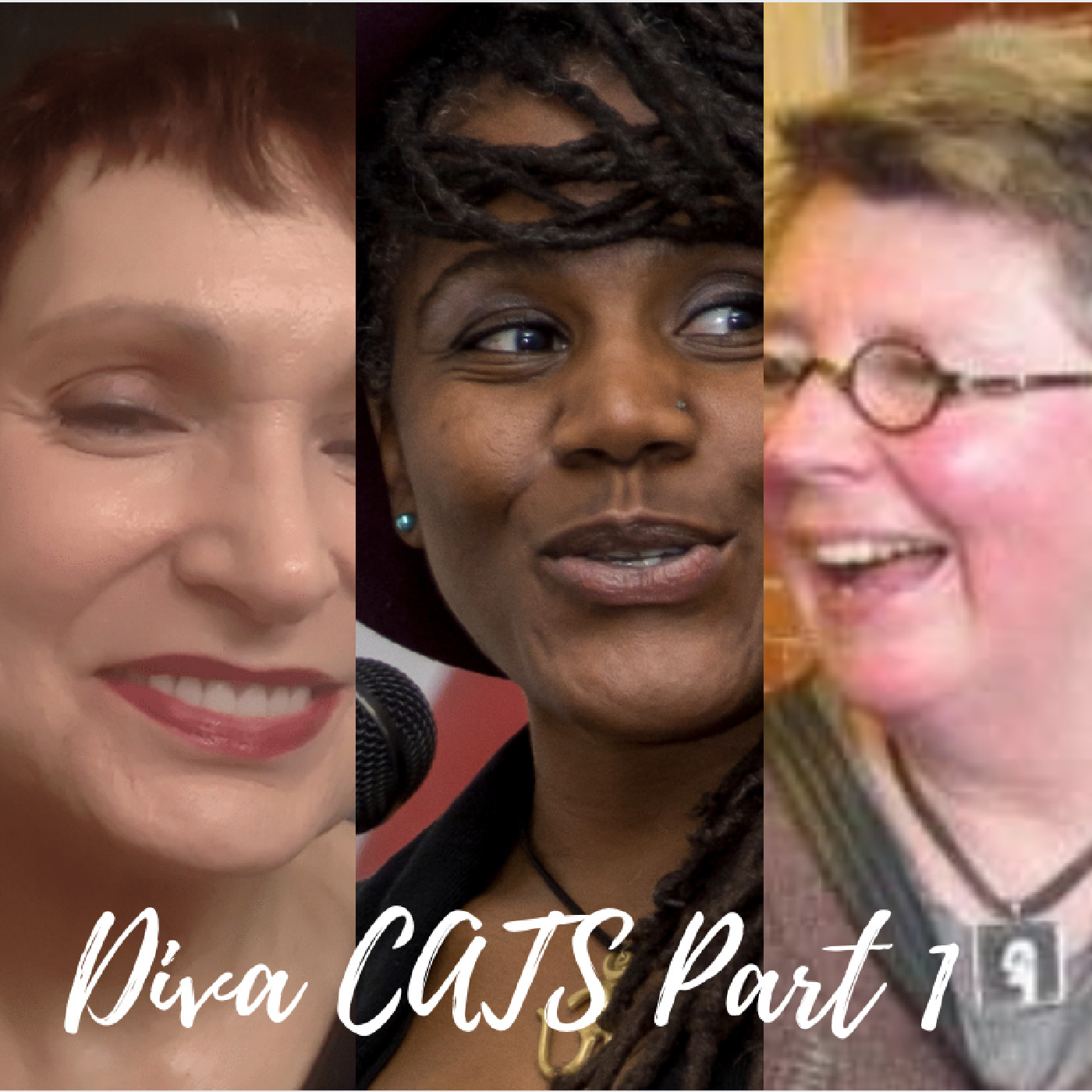
Episode 13: DIVA CATsThreshold Questions and Delicious QuotesWhat’s A CAT? I usually bring a packet of seeds and give everybody some seeds. Because I think that that's what we're doing. Planting those seeds in our field, right, ... because we're growing things and that notion of working with people, collaborating conceiving things together, imagining things together and co- creating things together. Roseann WeissActually, I don't teach, Parker Palmer says, you can't teach anybody anything, you can't teach math, can't teach science, you can't teach art, all you can teach is who you are. And so, I've spent most of my life being a listener and listening for stories and then helping people tell their stories, Con ChristesonI make art in the community I'm a community caregiver, whatever is required, that's what I'm going to do. I'll go clean up the “beep” I just beeped myself. You know, sometimes I make that “beep”, and sometimes I clean it up. Pacia AndersonHow does your work show up in the community?Taking what I've learned ... making work with other people, creating things that are visible to the community, building a community around the studio that I have in the Cherokee Arts District here in St. Louis ---a laboratory. Con ChristesonI find that I'm a conduit or perhaps a bridge would be another way to talk about it. and maybe that's what training is. connecting people, putting people together, finding ways to put things in front of people that might be useful to them. Roseann WeissWhat questions should activist artists be asking?...have you been asked for your help? Have you been invited to do this particular thing? How do you know the people that you want to offer your help to even need your help? How do you know that your help isn't harmful? Pacia AndersonAnd if I if I'm going to consider myself successful. I want to know that you can answer the question, how do you see yourself? How do you see others and how do you see others seeing you? Con ChristesonHow do we gather what do we do when we gather? How do we make sure that everyone knows that they're welcome? How do we make it so that we can continue to do so for a purpose that benefits all of us and encourages the best parts of our humanity? Pacia AndersonTranscriptNovember 17, 1998, St. Louis Missouri. The subtly illuminated room is filled by a circle of 18 utilitarian chairs. A large sheet of butcher paper spans backstage wall. At the very top, a five-inch-high hand lettered heading shouts out “SESSION 1: GETTING TO KNOW OURSELVES.” A series of questions are scrawled underneath. What is Art? -What is Community? What is Community Development?What is the History and Ecology of Arts-based Community Development? Where do I fit in this landscape?A young woman carrying a backpack approaches the circle tentatively. She scans the wall briefly and takes a seat. Over the next ten minutes, she is joined by other women and men until the stage is filled with the stuttering chatter that often accompanies the awkward dance of new acquaintance. A few minutes later a lull in the murmuring chorus is filled by the piercing sound of a bell. The voices in the circle fade as the cyclic ringing descends on the group like a sonic curtain. After a few seconds, a woman sitting in the chair furthest from the room’s entrance breaks the silence. “Welcome everybody, to the St. Louis Arts Commission and the Community Arts Training Institute. She leans forward and carefully places a pair of Tibetan temple bells onto the floor next to her chair.” I can’t tell you what an honor it is to be sharing this circle with you this afternoon.”In this episode of CSCW we will explore how a small arts training program called CAT help build a powerful network of creative change agents and established St. Louis MO as an innovative leader in the burgeoning community arts field. Bill Cleveland: From theand Community, this is Change the Story Change the World. I'm Bill Cleveland.The long and circuitous journey that led to the ringing of bells opening the Community Arts Training Institute, or CAT, began with a phone call some four years earlier. Dyan Wiley, then with the Arts Extension Service of the University of Massachusetts at Amerst, (AES), wanted to talk about creating a community arts training course for their summer institute for arts administrators. We both agreed that the time had come for this. Spurred by the availability of US Department of Labor (CETA) arts job funding in the late 1970’s, the number artists and arts organizations becoming involved in arts- based community development had been growing year after year. By 1994, community arts programming was showing up all over the country—sometimes with amazing results.Unfortunately, this proliferation was also exposing some significant problems throughout the nascent field. --- Namely, that many of the artists and arts organizations involved were unprepared for the extraordinary complexity of the work. The result was a three-day intensive.1 The curriculum for the Community Arts Partnership Institute was conceived and presented by Dyan Wiley, community arts veterans Bob Leonard, and Alice Lovelace, and myself in the summer of 1995. The highly experiential, arts-infused program emphasized the history and dynamics of social change, the development of equitable community partnerships and deep reflection about the high level of responsibility inherent to the work.In the fall of 1997, Ann Haubrich, a participant our second summer institute, contacted me to talk about creating a similar program for the St. Louis Regional Arts Commission or (RAC) where she worked. For some time, RAC had been funding community arts project. The ups and downs of that experience convinced Ann that it was time to start professionalizing the field in St. Louis. To really serve the region, we agreed RAC’s Community Arts Training Institute or (CAT) program would need to have an annual presence. We also felt it should be cross-sector, which meant involving both artists and professionals from other arenas, like human service, healthcare, and public safety. The resulting five-month intensive had an cross-sector faculty and a curriculum designed with and for the local community.Now in its 23rd year, CAT has produced a network of over 350 arts, human service, health care, and community development collaborators who are using the arts to help build healthy communities throughout the St. Louis area, and helped establish St. Louis as a national community arts/creative placemaking hot spot. A few months ago, I had the privilege of speaking with three women who have been deeply involved in the CAT as both participants and faculty over the years. Con Christeson, who was a member of CAT’s second class has established both a local studio / laboratory and global constituency as a community artist and trainer. Pacia Anderson, a 2014 CAT fellow and continuing faculty member, Is an award winning poet who has applied her skills as a writer and organizer in service to community programs all over the St. Louis region. Roseann Weiss, who coordinated CAT from 2004 to 2018 recently, joined with Con and Pacia to take a CAT inspired workshops sponsored by Americans for the Arts to communities across the country. That is, until the pandemic effectively shuttered the world. In this episode, the first of two devoted this trio we are calling the Diva CATS, Pacia, Con, and Roseann share stories about how they became so deeply involved in the global community arts movement in one of its epicenters.Part 1: Where the Heck Are We? Bill Cleveland: Let me begin by just asking checking in with each one of you as we go around, you know, obviously with the world that we live in currently. How are you doing, Pacia? Why don't we start with you? How are you doing?Pacia Anderson: I am well,...
Embed this episode
What this episode covers
In this episode of CSCW we will explore how a small arts training program called CAT help build a powerful network of creative change agents and established St. Louis MO as an innovative leader in the burgeoning community arts field.
Ready to play
13: Forget Pipe Cleaners: Why Real Cultural Organizing Is Not What You Think It Is – Part 1
No transcript for this episode yet
Similar Episodes
No similar episodes found.
Similar Podcasts
No similar podcasts found.