
EPISODE · Oct 20, 2025 · 25 MIN
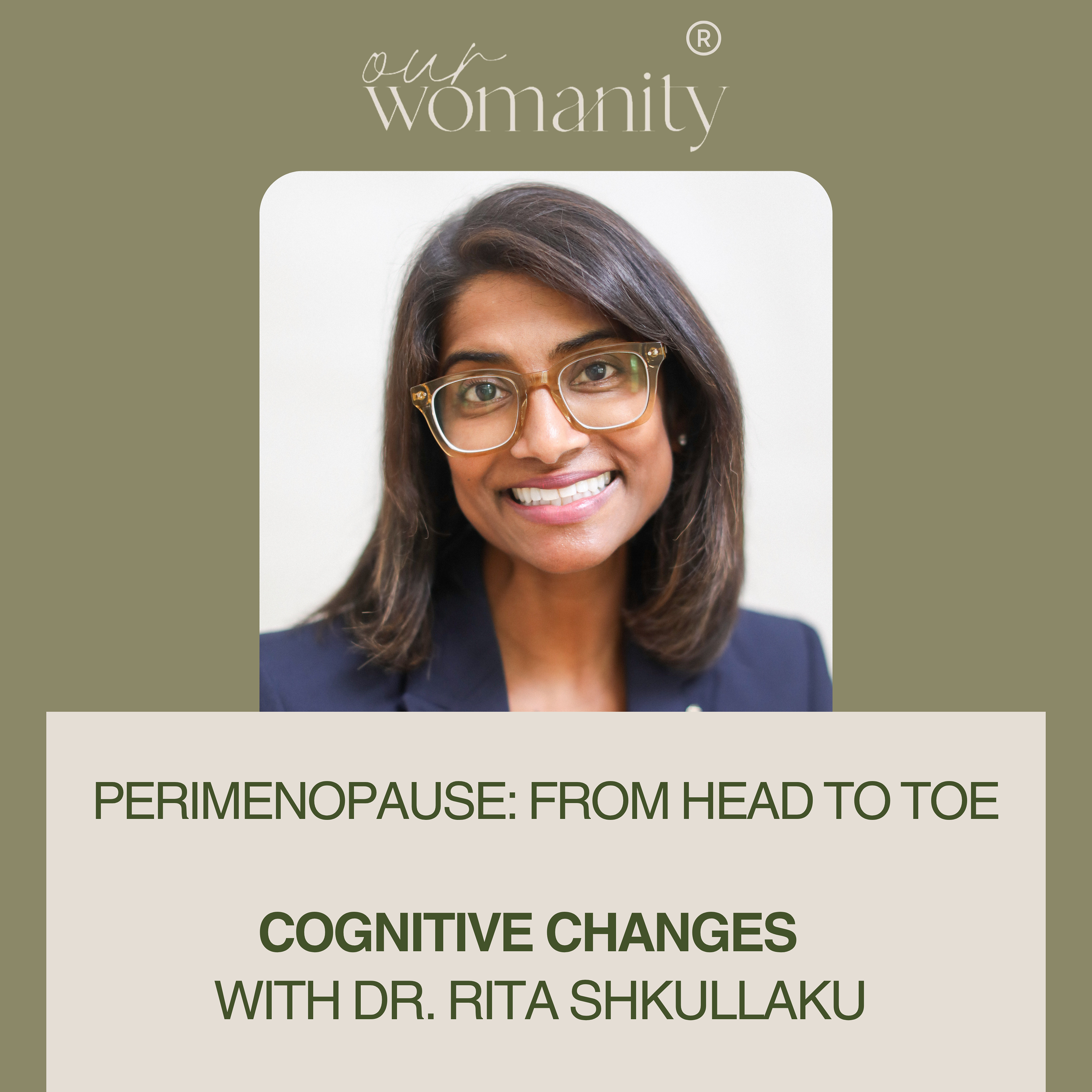
13. Perimenopause: Cognitive Changes with Dr. Rita Shkullaku
from Our Womanity Q & A with Dr. Rachel Pope · host Dr. Rachel Pope
This episode addresses a terrifying but common experience for midlife women: the cognitive changes, or "brain fog," that pop up during perimenopause and menopause. Many women fear they are experiencing early-onset dementia.Host Dr. Rachel Pope speaks with Dr. Rita Shkullaku, a board-certified internist with a special interest in nutrition, obesity, and hormones as they relate to cognitive wellness and healthy aging.The Reality and Biology of Brain FogDr. Shkullaku confirms that brain fog—forgetfulness, concentration issues, and a blank mind—is very real. She notes that having "mild cognitive issues for eight to ten years has no small impact" on high-functioning women.The problem stems from both: Direct Effects: Estrogen drops affect the brain’s ability to use the prefrontal cortex and manage stress. Indirect Effects: Severe sleep deprivation from night sweats and hot flashes dramatically worsens cognition.To distinguish serious issues from hormonal brain fog, Dr. Shkullaku uses the Self-Report vs. Intervention rule: women with typical brain fog are aware of their struggle, while those with true early dementia are often unaware and brought in by family.Practical Strategies and TreatmentManagement requires a holistic approach, starting with the foundation: Prioritize Sleep: Address the underlying hormonal issues or anxiety that keep you awake. Redistribute Responsibility: Normalize the struggle and ask partners/family for help to create time for self-care. Complex Cognitive Training: Pick up a new complex activity (like a new instrument or language) to engage the brain differently. Nutrition: Follow the MIND Diet (a hybrid of the Mediterranean and DASH diets).Treatment: If medically eligible, Hormone Replacement Therapy (HRT) is a great option, primarily by eliminating sleep-disrupting symptoms. If not, Cognitive Behavioral Therapy (CBT), mindfulness, and addressing reversible causes (like iron or B12 deficiencies) are crucial.
Embed this episode
NOW PLAYING
13. Perimenopause: Cognitive Changes with Dr. Rita Shkullaku
No transcript for this episode yet
Similar Episodes
No similar episodes found.
Similar Podcasts
No similar podcasts found.