
EPISODE · Dec 9, 2020 · 39 MIN
14: Forget Pipe Cleaners: Why Real Cultural Organizing Is Not What You Think It Is- Part 2
from ART IS CHANGE: Strategies & Skills for Activist Artists & Cultural Organizers
Episode 14: DIVA CATS - PART 2Threshold Questions and Juicy QuotesYou artists are volunteers right?"No! We're professional artists. Everybody gets paid and they get paid well" because I won't have it any other way" They may say, "Oh, well, isn't it nice that those men are able to learn some arts and crafts stuff?" No, we don't use paper plates or pipe cleaners, and to Pacia's point, we are not trying to help them. They are learning to figure out how they can help themselves. Con ChristesonWhat does sustainability mean when you are working with vulnerable people and communities?I'm sure that Roseanne and Con can both attest to it, you don't really clock out from these kinds of things. you don't take your teaching artists or community care or counselor or administrator hat or smock off when you go home. Right. So the biggest way is that the work has shown up is that it's always present, you get phone calls, you get emails, you're invited to come to this thing, you don't, clock out, you know, It's like your partner or your child or your parents that you care for. Right. It's omnipresent. It's always kind of over here. Pacia AndersonWhat does "with not for" mean?Doing something with a group of people means you're side by side with them, you are succeeding and failing with them, you are listening to each other. You are understanding what needs to happen. When we come someplace and we have a plan, then we are doing something for a community. We're not listening to the community, to the people there. We don't know all the things that are going on underneath the surface because we think we're doing something for people because we decided they needed it. Who are we to decide? Roseann WeissWhere does the work fit? In the altered landscape that has emerged around us? (I am experiencing) ...my accountability, shifting of power, amplification of marginalized voice, liberation of all oppressed people everywhere, more than I feel like I've ever seen in my forty-two years. (In this context the creative process works ) ...as medium, as conduit, as inspiration, as catharsis as an example of possibility as documentation. Yeah, as the material and inanimate embodiment of what an artist is. Pacia AndersonTranscriptPacia Anderson: ...And though distance may divideor routine in timerendering your spaces high as the tideStill the look that holds tighttwo the ends of the flash backI am rich memoriesI am fond intensityHeld in place by the mere desire to create itWhen one comes aliveWhen our atoms collideWith twin flames, one desireSacred namesbathed in fire, bathed in fire, bathed in firefire, fire, fire, fireStill life pretty and shinnyI could hold its sweetness in my handTickle the linchpinStroke the beautiful dangerA delicate malevolenceThe simple and gentle miserable symbolhold this opusthe explosive closenessSo focused that I didn't noticethe dagger in my back...BC: That was Pacia Anderson, or as she calls herself Pacia Elaine Anderson, one of the three remarkable women we have dubbed, the DIVA Cats, who shared their wisdom and stories in our last episode. In that conversation they talked about the different paths that led them CAT, the nationally recognized Community Arts Training Institute, at the Saint Louis Regional Arts Commission. In this episode we dig deeper into the CAT story with questions like: What makes a CAT, and what difference does it make in places like Ferguson and the Peter and Paul facility for unhoused men. From the Center for the Study of Art and Community, this is Change the Story, Change the World. I’m Bill Cleveland Chapter 4: Re-imaging the VillageBC: So, Con. You've been involved now in putting pen to paper around practice a couple of times you got your beautiful little book, and the workbook that you've created for Americans for the Arts. So, you've forced yourself to sort of answer some of these questions, what's this for? what do we what are we learning here? What have you come up with? CC: Well, I was one of those TIGERS that Pacia was talking about and. At the beginning of the end of the year long journey, one of the assignments was you have to you have to come up with a research project and you have to get a mentor and you have to check in regularly. And next week I want to know what it is. And I remember the consensus of all the faculty and the people who were there, the other 11 people, was that you need to write a book and you need to look at where you've been and what you've done. So, I, welcome that opportunity to get all of these stories and connections and all the different parts of my life that have been overlapping to get them on paper actually illustrated the book, which surprised the hell out of me. I find it's it's a continual job to to figure out with people what this co-creation looks like and to Give voice to the fact that transformation happens and Roseanne reminded me of the tears of transformation that have happened with the community arts training.by the way, Peter and Paul, the community service organization for which I work, we are very CAT infused. The former development director, the co-founder of the Arts Collaborative, that I manage at least four staff members went through CAT, but also four of my guys from the arts groups went through a cat. And that sort of 360-degree thing to happen is very humbling for me. Because I kind of feel like I'm at the center of it, But at the same time, stuff started growing And people make a lot of assumptions about what they see or hear. When I tell them what I do, you're like, oh, so "You artists are volunteers right?" "No! We're professional artists. Everybody gets paid and they get paid well" because I won't have it any other way" They may say, "Oh, well, isn't it nice that those men are able to learn some arts and crafts stuff?" No, we don't use paper plates or pipe cleaners, and to Pacia's point, we are not trying to help them. They are learning to figure out how they can help themselves. And so the transformation happens at that individual level, and happens at the program level once the program directors realize they are creating a more authentic relationship with people, through creativity as they began to tell and hear each other's stories, I mean, none of us expected that particular level of intimacy and support. And all of a sudden, they were not people on their own journey out of homelessness or poverty or drug addiction or whatever. They were people working together to help each other. Now, It didn't did work for everybody, but the guys that did work for they come back. There was one guy after we published our first book, he was recalcitrant. He was defiant. He didn't want to do it. We felt we made that book. We bound that book. The day that we put it in his hands, he started to cry, and he said, oh, my God, I can't wait to show this to my grandmother.So. the magic is, there, and I feel blessed to be that person who can say this is who I am, and this is who we are, and we're going to figure out together how we're going to go forward. BC: So, one of the things you just described, which is to me. It's kind of home base. Which is as a species, we do not survive without our capacity to connect to our fellow human beings Basic cooperation, succor and sustenance, that is spiritual, that is physical, that is emotional. And I think many of the gentlemen that you interacted with bear some of the consequences of being separated from their connections, to their community, to their families, to their peers. what you just described. Is an intentional recreation of the of the village, the ritual, the practice of being together in a supportive way where the power of our story together manifests unencumbered. And isn't it amazing when people are given access to it, even though they would say, I don't know anything about this art stuff. Right. It's like a magnet they come right to it. they know what's happening when they're in it.CC: Yeah, it's you know, there's they go back and forth between I want to make some stuff. I want to sell some stuff. I want people to see my stuff. But what keeps them coming back is the commitment to a relationship, I think. And I really feel like. I do it, Pacia does it, Roseanne does it. We hold the space for what it is that we believe, and even if there's a long dry spell, we hold that space and people come to count on that. And because we can hold the space and because people can count on it, that's where what you're talking about, where the village comes from.And the US Department of Arts and Culture, for which I am a cultural agent, imagines what it would be like if all aspects of daily life were infused...
Embed this episode
What this episode covers
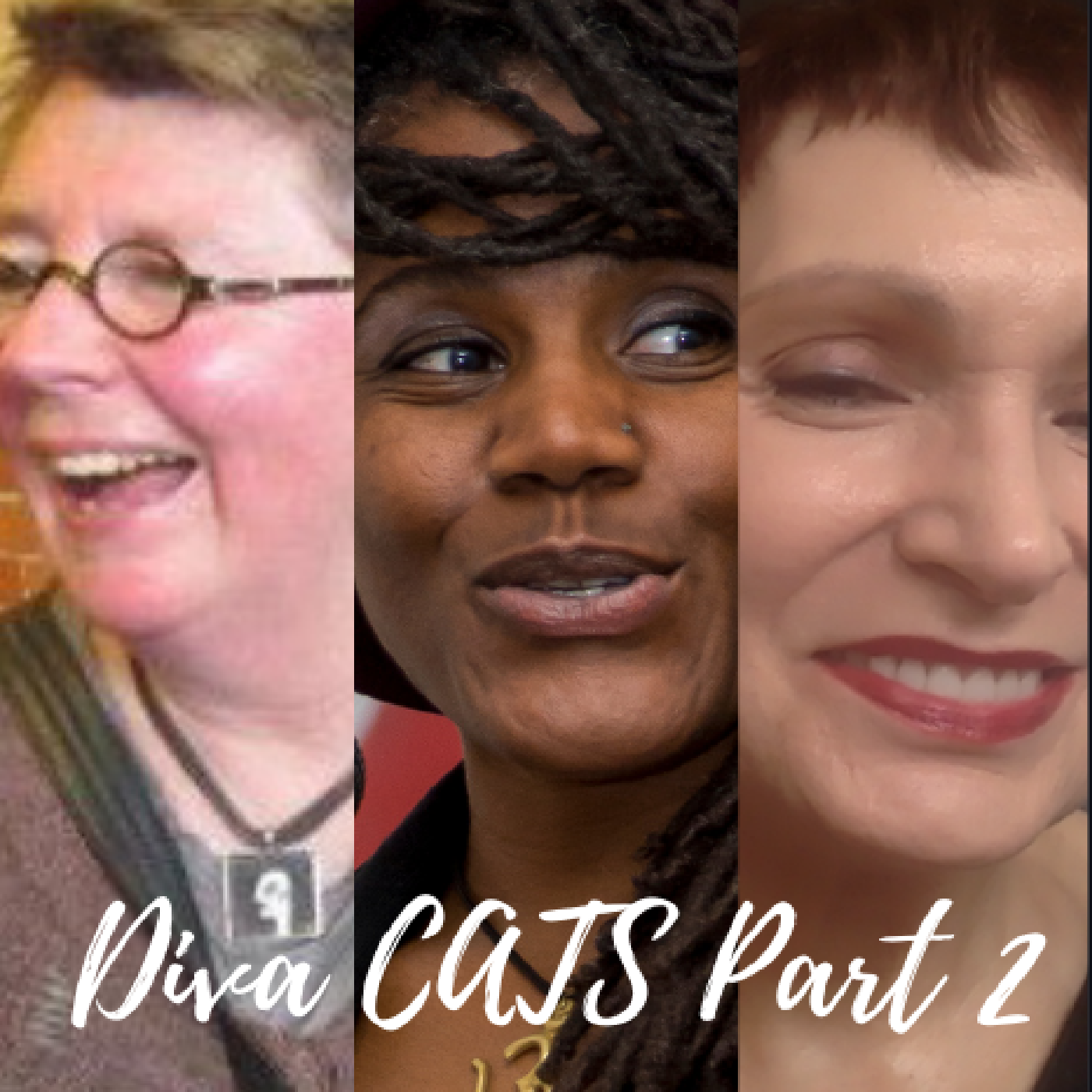
In our last episode we introduced three remarkable women we have dubbed, the DIVA Cats. In that conversation they talked about CAT, the nationally recognized Community Arts Training Institute, at the Saint Louis Regional Arts Commission. In this episode we dig deeper with questions like: What makes a CAT, and what difference does it make in places like Ferguson and the Peter and Paul facility for unhoused men.
Ready to play
14: Forget Pipe Cleaners: Why Real Cultural Organizing Is Not What You Think It Is- Part 2
No transcript for this episode yet
Similar Episodes
No similar episodes found.
Similar Podcasts
No similar podcasts found.