
EPISODE · Aug 18, 2026 · 19 MIN
1452-Adenosine Disequilibrium: Fingerprint of Embryo Quality
from Paper Talk
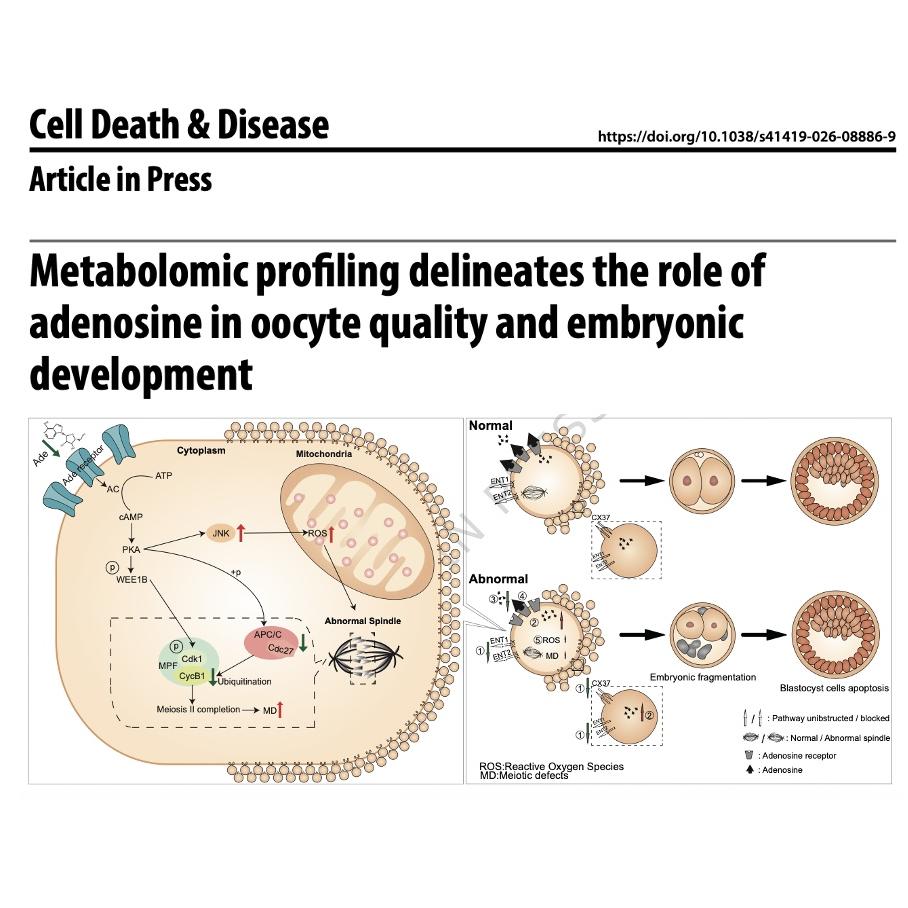
This research study investigates the metabolic factors influencing oocyte quality and embryonic development to improve outcomes in assisted reproductive technologies. Through metabolomic profiling of human and mouse samples, researchers identified adenosine as a critical biomarker, noting that its imbalance between cells and follicular fluid correlates with poor embryo quality. The study demonstrates that a reduction in adenosine transporters and gap-junction proteins causes this metabolic disequilibrium, leading to oxidative stress and meiotic defects. Functionally, the authors found that providing exogenous adenosine can rescue the developmental potential of low-quality oocytes by activating specific adenosine receptors. These receptors then modulate key genetic pathways, specifically involving JNK, CycB1, and Cdc27, to stabilize cellular stress and chromosomal alignment. Ultimately, these findings suggest that adenosine supplementation could serve as a valuable strategy for optimizing embryo culture environments and predicting clinical success.References:Yang J, Wang H, Li Y, et al. Metabolomic profiling delineates the role of adenosine in oocyte quality and embryonic development[J]. Cell Death & Disease, 2026.前往小宇宙评论区与主播互动
Embed this episode
Ready to play
1452-Adenosine Disequilibrium: Fingerprint of Embryo Quality
No transcript for this episode yet
Similar Episodes
No similar episodes found.
Similar Podcasts
No similar podcasts found.