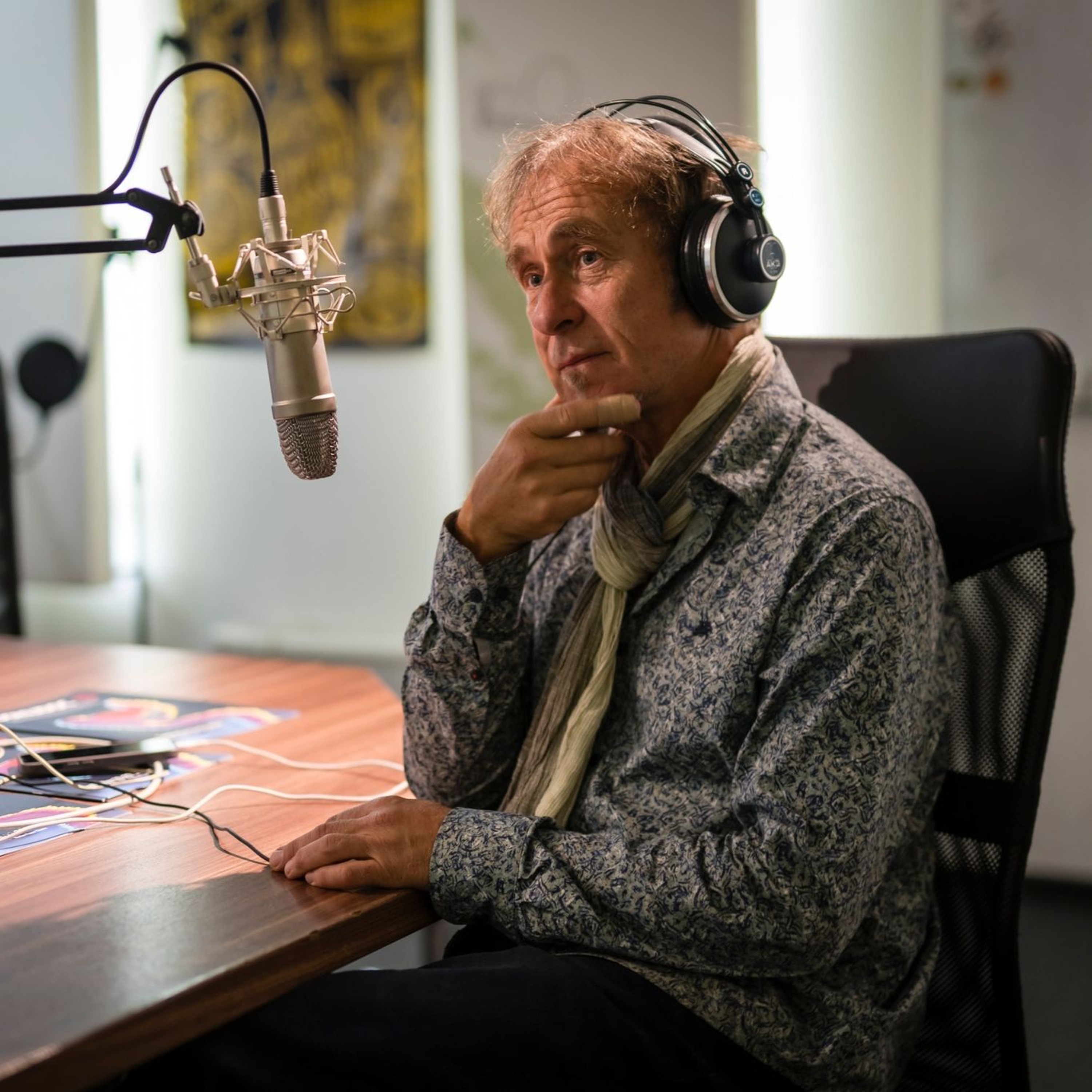
#148: Dokudoc podcast with Hubert Sauper (ENG) episode artwork

EPISODE · Sep 21, 2024 · 56 MIN

#148: Dokudoc podcast with Hubert Sauper (ENG)

from Maribor Is The Future · host Maribor Is The Future

Hubert Sauper, director, cinematographer and writer, has been working for the last three decades to reduce the process of making a non-fiction film to almost "zero". His efforts date back to the late 1990s, when in Congo and Tanzania he threw away almost everything that a film crew would normally use. In practice, this means that filming takes place without tripods, cables, artificial lights, a sound crew ... the bare minimum is enough for filming. A small but top-quality camera, a very good microphone and, of course, the most important "ingredient": time spent writing, thinking, researching and, of course, getting to know, really, deeply getting to know the film's characters. "When the camera is rolling, there is nothing in the world but the eyes, the breath, the thoughts, the smiles, or the tears of the protagonists," says the director. All the characters in Hubert's films look the viewer straight in the eye, and the effect is hypnotic. Watching his films such as Darwin's Nightmare (2004), We come as friends (2014) and Epicentro (2020) becomes a profound and enigmatic journey. SLO Režiser, snemalec in pisatelj Hubert Sauper, si zadnja tri desetletja prizadeva, da bi proces ustvarjanja nefikcijskega filma, zmanjšal skoraj na »nič«. Njegova prizadevanja segajo v pozna devetdeseta leta prejšnjega stoletja, ko je v Kongu in Tanzaniji zavrgel skoraj vse, kar filmska ekipa ponavadi uporablja. V praksi to pomeni, da snemanje poteka brez stojal, kablov, umetnih luči, zvočne ekipe ... za snemanje zadostuje popolni minimum. To je majhna, a vrhunska kamera, zelo dober mikrofon in seveda najpomembnejša »sestavina«: čas, ki ga porabimo za pisanje, razmišljanje, raziskovanje in seveda spoznavanje, resnično, poglobljeno spoznavanje filmskih likov. »Ko teče kamera, ni na svetu ničesar drugega kot oči, dih, misli, nasmeh, ali solze protagonistov,« pravi režiser. Vsi liki v Hubertovih filmih gledajo gledalca naravnost v oči in učinek je hipnotičen. Gledanje njegovih filmov, kot so Darwinova nočna mora (2004), Prihajamo v miru (2014) in Epicentro (2020) tako postane globoko in enigmatično potovanje. Moderator: Žiga Brdnik Zvok/Sound: Boštjan Eržen Produkcija/Production: Mednarodni festival dokumentarnega filma DOKUDOC Posneto v/Recorded in: GT22

Hubert Sauper, director, cinematographer and writer, has been working for the last three decades to reduce the process of making a non-fiction film to almost "zero". His efforts date back to the late 1990s, when in Congo and Tanzania he threw away almost everything that a film crew would normally use. In practice, this means that filming takes place without tripods, cables, artificial lights, a sound crew ... the bare minimum is enough for filming. A small but top-quality camera, a very good microphone and, of course, the most important "ingredient": time spent writing, thinking, researching and, of course, getting to know, really, deeply getting to know the film's characters. "When the camera is rolling, there is nothing in the world but the eyes, the breath, the thoughts, the smiles, or the tears of the protagonists," says the director. All the characters in Hubert's films look the viewer straight in the eye, and the effect is hypnotic. Watching his films such as Darwin's Nightmare (2004), We come as friends (2014) and Epicentro (2020) becomes a profound and enigmatic journey. SLO Režiser, snemalec in pisatelj Hubert Sauper, si zadnja tri desetletja prizadeva, da bi proces ustvarjanja nefikcijskega filma, zmanjšal skoraj na »nič«. Njegova prizadevanja segajo v pozna devetdeseta leta prejšnjega stoletja, ko je v Kongu in Tanzaniji zavrgel skoraj vse, kar filmska ekipa ponavadi uporablja. V praksi to pomeni, da snemanje poteka brez stojal, kablov, umetnih luči, zvočne ekipe ... za snemanje zadostuje popolni minimum. To je majhna, a vrhunska kamera, zelo dober mikrofon in seveda najpomembnejša »sestavina«: čas, ki ga porabimo za pisanje, razmišljanje, raziskovanje in seveda spoznavanje, resnično, poglobljeno spoznavanje filmskih likov. »Ko teče kamera, ni na svetu ničesar drugega kot oči, dih, misli, nasmeh, ali solze protagonistov,« pravi režiser. Vsi liki v Hubertovih filmih gledajo gledalca naravnost v oči in učinek je hipnotičen. Gledanje njegovih filmov, kot so Darwinova nočna mora (2004), Prihajamo v miru (2014) in Epicentro (2020) tako postane globoko in enigmatično potovanje. Moderator: Žiga Brdnik Zvok/Sound: Boštjan Eržen Produkcija/Production: Mednarodni festival dokumentarnega filma DOKUDOC Posneto v/Recorded in: GT22

NOW PLAYING

#148: Dokudoc podcast with Hubert Sauper (ENG)

0:00 56:19

No transcript for this episode yet

We transcribe on demand. Request one and we'll notify you when it's ready — usually under 10 minutes.

Frequently Asked Questions

How long is this episode of Maribor Is The Future?

This episode is 56 minutes long.

When was this Maribor Is The Future episode published?

This episode was published on September 21, 2024.

What is this episode about?

Hubert Sauper, director, cinematographer and writer, has been working for the last three decades to reduce the process of making a non-fiction film to almost "zero". His efforts date back to the late 1990s, when in Congo and Tanzania he threw away...

Can I download this Maribor Is The Future episode?

Yes, you can download this episode by clicking the download button on the episode player, or subscribe to the podcast in your preferred podcast app for automatic downloads.
URL copied to clipboard!