
EPISODE · Dec 23, 2020 · 33 MIN
15: Art Is Not An Extra: Why Artist Activists & Cultural Organizers Should Be Leading Community Recovery Efforts
from ART IS CHANGE: Strategies & Skills for Activist Artists & Cultural Organizers
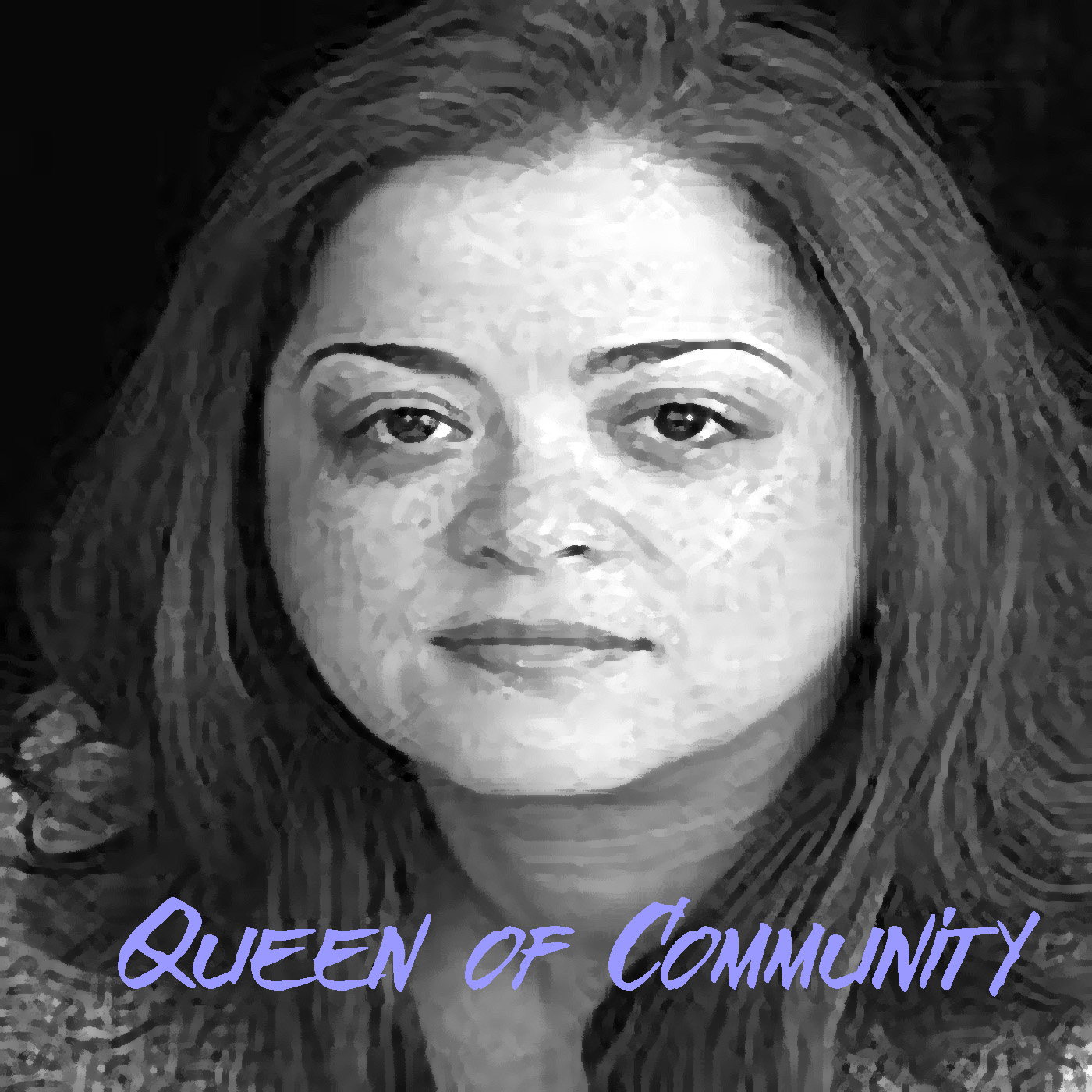
Episode 15: Sharnita Johnson – Queen of CommunityThreshold Questions & Delicious QuotesWhat was the path that led you into cultural philanthropy? I never saw anyone that looked like me, a black woman in philanthropy, in a city like Detroit, which is where I'm from, which has I think the population is like 90% African American so it just never clicked. that was something that I could do, even though I certainly had the skills and the education, et cetera. Until I did see someone who looked like me, a black woman in philanthropy, who became a mentor to me and, helped pave the way for me to get into the field, which was not easy.You were involved in some contentious debates about the appropriateness and value of public art when you worked in Flint Michigan. What did those struggles teach you?This commissioner at one point came up to me years later and said, I just want to apologize to you. I was a little bit confused, and I said, “Apologize for what? And he said, “I gave you so much flack about that mural, but I love it. I look at it every day. I can see it from my house and when my family and friends come to visit, it's the first thing that I showed them.”So that was again, transformational because I just saw what the power of love and the arts can doAre you thinking that when ... the doors reopen, when the streets repopulate, that there's a particular role for the makers and creators in our community to help with that. (pandemic reconstruction)There is a critical role, and I'll say, as devastating as the pandemic has been for all of us, and particularly, those who have lost loved ones, and the communities that have been devastated, but the creatives are still creating. I was on a zoom earlier with some young public artists, ...and they're telling this story ... in a way that journalism isn't going to tell it. They're going to tell ... it through pictures and stories and music and poetry.TranscriptBill Cleveland: Now, if you peel back the wrapping on a concert, play a festival, a poetry reading, or an art exhibit in most American communities. You'll find the indelible fingerprints of what arts folks call funders. These arts funders come in all shapes and sizes. There are local, state, and national funders on the public side. There are individual donors, and then there are private individuals and foundations whose contributions are often referred to as cultural philanthropy, which, in 2017, contributed nearly $3 billion to America's artists and arts organizations. Needless to say, the people who manage the programs that grant these funds have an interesting job.Who wouldn't want to give away money to deserving folks in their communities? But, as is often the case, it's harder than it sounds. The job certainly comes with the power to influence and do good. But, also the responsibility to apply that influence judiciously with the clear understanding that gifts given with the best of intentions can do harm as well.Throughout my career, I've worked with many funders on the giving side and as a recipient, and advisor. Along the way I've had the privilege of collaborating and learning from some truly creative and insightful souls. Shanita Johnson, who is the Arts Program Officer at the Geraldine. R Dodge Foundation, is one of these. As you will hear in this episode of Change, the Story, Change the World. She's one of those unique people who can deliver both the good news and bad inherent to her work, all the while, maintaining the trust of the people in communities she serves.This is Change the Story, Change the World, a chronicle of art and transformation. My name is Bill Cleveland.In my conversation with Shanita Johnson, we start off with a short discussion of prison arts and the possibility of sharing videos of prominent poets performing at the Dodge Poetry Festival with incarcerated writers. After that we explore Sharnita’s journey into the world of arts, philanthropy and her work at the Geraldine R Dodge foundation.Part One. Call Me Community. BC: Yeah, I’m good. I had my first, zoom concert.Sharnita Johnson: Oh, saw your, music stand, your guitar.BC: Yeah. Yeah, there's a prison choir. The Oakdale Choir run by Mary Cohen. They have this thing where they have guest artists come in. They use Liz Lerman's, critical response process. And so, I played the song and then they gave me all this feedback on it, which was fantastic. Yeah, it was really cool. So, one issue with prisons, is that, outside/inside digital access doesn't exist.SJ: Yeah.BC: So, they have inside systems and those inside systems are like from like 1975.SJ: Wow! BC: One of the things I'm thinking of doing is accessing your poetry festival videos and then trying to figure out a way to download it.SJ: I think that would be such a beautiful thing to do with this to really get the poetry to people who are the most isolated, who need to have this inspiration and joy. yeah.BC: And these are writers. These are people who are there. They are hungry to hear people who do what they're trying to do at the highest level. Yeah.For our conversation this morning I reconstituted my questions, in a way that hopefully will make them a little fresher. So almost everybody I talked to, my first, subject is how they define their work and what they do. And I’ve been asking people what their street name is, what their handle is. my friend, Sandy Augustin, she said, "Oh, I'm a navigator". And of course, Leni Sloan was a gun runner for the arts. Sharnita, have you got one that pops up for you?SJ: Actually, it's funny cause I have a very good friend that calls me "community." Like whenever I tell her about my work is "Oh my God, you are so community." And actually, when I left the Ruth Mott Foundation, they gave me a wand and I think a Tiara that said, "Queen of Community."SJ: So, it's interesting because, I didn't grow up in a household where we volunteered, my dad had his own business, so he worked all the time. My mother worked full time. I'm the youngest of six kids. So that sort of volunteering at a soup kitchen or serving on boards, that just wasn't my life growing up. And I think it was so important. Because my family moved from public housing into, we thought we were middle class. We were probably really working class, but that was so important, and I think my parents just really felt all those battles have been won. They had made it into, the next level and they thought that the protesting and the advocacy and the marching and the community organizing and the door knocking, they maybe hope that was done.SJ: So, I didn't experience volunteering and philanthropy and community in that way really until I was an adult, until I started to understand that things weren't equal. And things look different for, even in my own family. everybody didn't have the same opportunities and, there was disparity there. And then, I was the first college graduate in my family on both sides. proudly we have many more now, but that was quite a feat.And so, I really think becoming aware, for my parents, it was very important for us to be in that bubble. where everything is safe. You don't have to worry about what you're going to eat. You don't have to worry about where you're going to sleep. We've arrived. and I think as an adult, I really, during undergrad, I started to see, Oh, I am in a privileged place through the hard work and sacrifice of my family. And so, I think as I got into the nonprofit sector and started to volunteer on boards is when that really started to gel for me. So, I was probably my early twenties.BC: So, there's a, a path that led from. you're growing up in your bubble, to this world of philanthropy, and in a particular area --- not just philanthropy, but cultural philanthropy that has your street name right in the middle of it “community.”SJ: Yeah.BC: What's that journey.SJ: As I reflect, I’m at the point in my life where I am thinking about legacy and what my story is. And while I'd like to think in some ways, it was because of my own hard work. And, and it was a lot of hard work., in many ways I think about it as a destiny.Now, I'm not saying that the universe plotted out my life and said, this is what you're going to do. but it really sorta was, there were just some inflection points where I'm very clear that there was a bigger force that wanted me to be in places at tables, doing things and saying things and moving things beyond what my small mind could envision.BC: A part of your biography is a particular, attention to the story before the story, the history. could you talk a little bit about, the role history has played, in finding...
Embed this episode
What this episode covers
Who wouldn't want to give away money to deserving folks in their communities? But Sharnita Johnson, will tell you it's harder than it sounds. She has the power to do good, but, also understands that gifts given with the best of intentions can do harm as well.
NOW PLAYING
15: Art Is Not An Extra: Why Artist Activists & Cultural Organizers Should Be Leading Community Recovery Efforts
No transcript for this episode yet
Similar Episodes
No similar episodes found.
Similar Podcasts
No similar podcasts found.