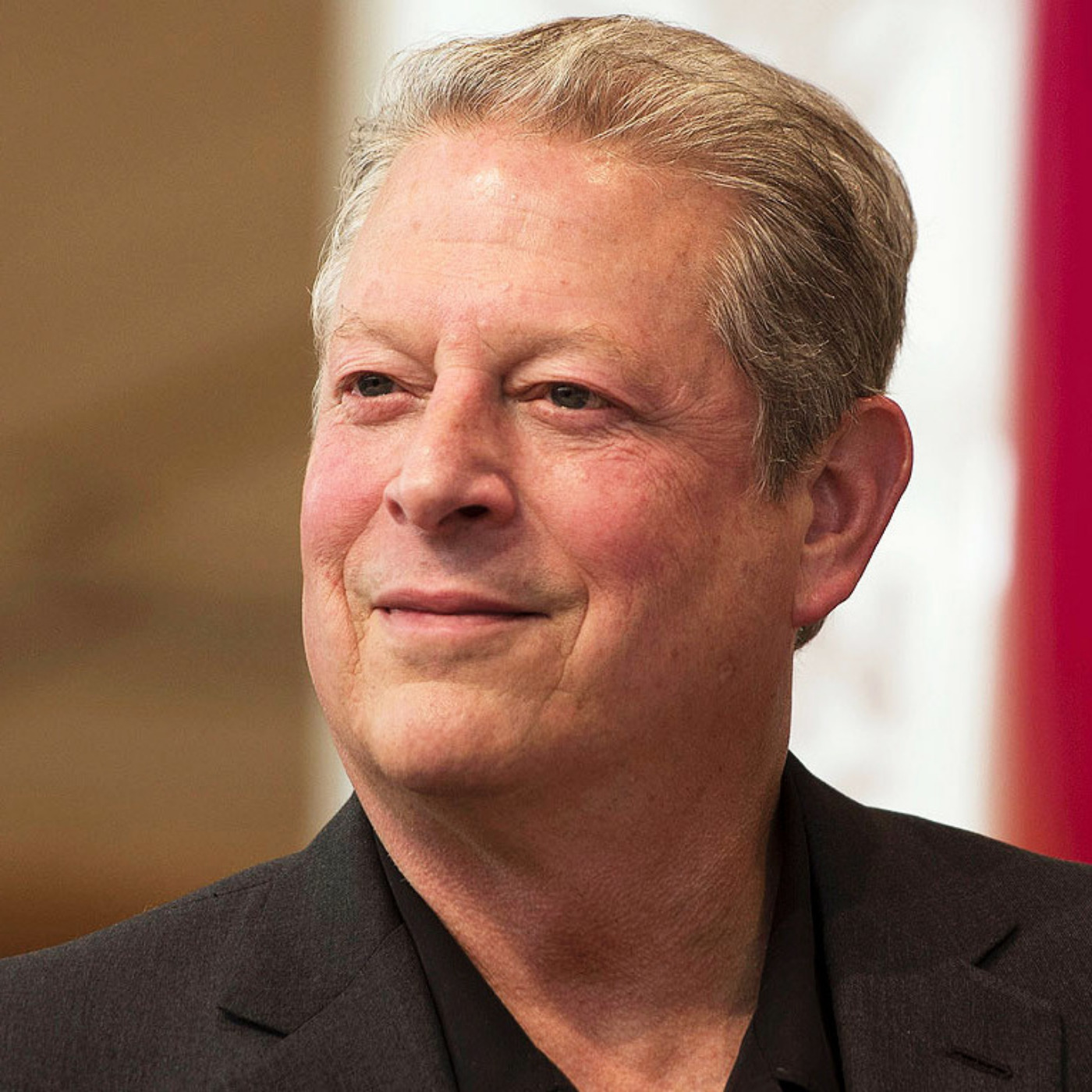
151: What Al Gore Misses episode artwork

EPISODE · Mar 11, 2019 · 12 MIN

151: What Al Gore Misses

from This Sustainable Life

I confess I haven't interacted directly with Al Gore so I don't know how he leads in person. I saw him on stage once, but the person interviewing him, Jaden Smith, was 20 years old and I didn't see grasped the situation. Jaden is Will Smith's son and promotes a bottled water brand---that is, he sells something nearly free with extraneous packaging, which I consider needlessly polluting. My main interaction with Al Gore is through his movies and reading about him in the media.I would love to have him as a guest. I would love to hear him share his history and the history of the movement from his view. He's won a Nobel Prize, multiple Oscars, and more. I could learn incomparably more from him than he could from me. So when I suggest he's missing something, I mean that in the context of his getting much more. But he's not perfect or omniscient.I love what he's done to reach where we have, but reaching the next step is going to require leaders who live consistently with the values they recommend to others. People look for any excuse they find to say, "He's doing it" or "She's doing it, so I can too."If you put in front of someone trying to quit smoking a lit cigarette, no matter how much people are determined to stop, they at least feel motivated to smoke. Given enough time, many will smoke. And when they do, they will think something justifying the behavior, saying in the moment why it's the right thing to do, because emotions drive reason more than reason drives emotion, however much people fantasize otherwise.Now add to the person sitting there, multiple industries spending trillions to advertise, government subsidies meaning that I'm helping pay for it even though I don't want to, those industries paying people to figure out how to hide the problems, influence the smokers through sophisticate marketing techniques.Now throw in a surgeon general who smokes, who makes movies showing himself or herself smoking, telling people the dangers of smoking while smoking, telling others not to smoke. And the family doctor smokes. And the nurse. Everyone telling you not to smoke smokes.The same would happen to someone trying to quit eating too much salt, sugar, fat with putting a gooey chocolate lava cake and an obese surgeon general eating bags of Doritos, family doctors drinking soda while telling people not to eat salt, sugar, and fat.Or an alcoholic trying to stop drinking with a surgeon general holding a bottle of rum, a family doctor with a six pack of beer, and so on.This addictive behavior and the self-serving justification people feel before doing it sadly closely describes people's environmental behavior. In my experience, when given the choice between comfort and convenience that pollutes or challenging themselves to avoid polluting, people will use any excuse to continue the comfort and convenience. Two days ago I attended a symposium at NYU on sustainability. The last several talks talked about the problems with single use containers and plastic. As soon as it ended, they all drank wine in disposable plastic cups. I didn't see anyone show any concern.People are missing the joy and emotional reward of living by their values, which increases with the challenge of doing it. It's like your team coming from behind to win. The greater the deficit, the greater you celebrate the win.Carbon offsets are a nice fantasy, but they don't remove greenhouse gases from the atmosphere or ocean. They limit the rate of increase, which is not decreasing. The way they motivate people, their net systemic contribution is probably to lead people to pollute more overall.My model of leadership is to help people do what they want to but haven't figured out how. It's not about convincing, seeking compliance, or coercion. It means helping them identify their values and goals, then to help them achieve them, consistent with the leader's vision.To motivate people to change their behavior, a leader must practice the behavior he or she recommends---at least not to violate it. Until they do in the area of the environment---if you ask anyone to do what looks like a sacrifice and they think you aren't doing it, their greatest contribution may be to create votes for populists. The irony and one of the biggest experiences I'm trying to share through this podcast is that when it clicks, acting by your values isn't sacrifice. It's the opposite. For that matter, it takes less time to click and register as joy, fun, and other ways rewarding with each practice adopted.The crazy missing point is that living by their values would improve their lives and effectiveness, at least by my experience. People who say one thing and do another think they're changing the system but are supporting it, comparable to a doctor or surgeon general who smokes or drinks soda. Stopping living by the system's values of growth and externalizing costs and living by and promoting ones like enjoying what you have and taking responsibility for how your behavior affects others will make them more effective and happier.Not saying saint or perfect. Saint implies morality. Not good, bad, right, wrong but practical matter of helping people live by their values. He has plenty of followers who share his values. I think nearly everyone. Perfect, well no one is. I'm not. You don't have to be. You need only show you're doing your best.As for all other listeners, pointing at leaders not living by their values doesn't make you abandoning yours any less a personal abandonment. I should say that in the positive. The sooner you face and overcome what inhibitions and challenges stand between you and living by your values, the sooner you'll find greater meaning, purpose, value, passion, growth, and all the things I know you value more than the comfort, convenience, or whatever you get from your equivalent of smoking, eating junk, drinking.You can lead. Do you have kids? Coworkers? Neighbors? You can lead.Back to Al Gore, I'm not him and I don't know his community, so I could be wrong, but I see someone with a lot of behaviors inconsistent with the future he describes. He and his supporters may say, yes he causes a lot of emissions, but each use is justified.They miss two big things.One, people will follow his behavior. SUV example.Two, they're missing what he could do more effectively. Instead of going places in person, it looks to me like he could empower more people to do his role. To franchise what he does. Maybe he's doing so as much as he can. If so, I would think he should publicize how much he's polluting and clearly demonstrating how any lower emissions of his would increase emissions globally. If he can't show that, I think that his next great step will be to live by the values he promotes and still be as effective. I am confident he could. When he does, I predict he'll wish he did earlier.If I'm not presuming too much, I believe being on my podcast would help him. Hosted on Acast. See acast.com/privacy for more information.

I confess I haven't interacted directly with Al Gore so I don't know how he leads in person. I saw him on stage once, but the person interviewing him, Jaden Smith, was 20 years old and I didn't see grasped the situation. Jaden is Will Smith's son and promotes a bottled water brand---that is, he sells something nearly free with extraneous packaging, which I consider needlessly polluting. My main interaction with Al Gore is through his movies and reading about him in the media.I would love to have him as a guest. I would love to hear him share his history and the history of the movement from his view. He's won a Nobel Prize, multiple Oscars, and more. I could learn incomparably more from him than he could from me. So when I suggest he's missing something, I mean that in the context of his getting much more. But he's not perfect or omniscient.I love what he's done to reach where we have, but reaching the next step is going to require leaders who live consistently with the values they recommend to others. People look for any excuse they find to say, "He's doing it" or "She's doing it, so I can too."If you put in front of someone trying to quit smoking a lit cigarette, no matter how much people are determined to stop, they at least feel motivated to smoke. Given enough time, many will smoke. And when they do, they will think something justifying the behavior, saying in the moment why it's the right thing to do, because emotions drive reason more than reason drives emotion, however much people fantasize otherwise.Now add to the person sitting there, multiple industries spending trillions to advertise, government subsidies meaning that I'm helping pay for it even though I don't want to, those industries paying people to figure out how to hide the problems, influence the smokers through sophisticate marketing techniques.Now throw in a surgeon general who smokes, who makes movies showing himself or herself smoking, telling people the dangers of smoking while smoking, telling others not to smoke. And the family doctor smokes. And the nurse. Everyone telling you not to smoke smokes.The same would happen to someone trying to quit eating too much salt, sugar, fat with putting a gooey chocolate lava cake and an obese surgeon general eating bags of Doritos, family doctors drinking soda while telling people not to eat salt, sugar, and fat.Or an alcoholic trying to stop drinking with a surgeon general holding a bottle of rum, a family doctor with a six pack of beer, and so on.This addictive behavior and the self-serving justification people feel before doing it sadly closely describes people's environmental behavior. In my experience, when given the choice between comfort and convenience that pollutes or challenging themselves to avoid polluting, people will use any excuse to continue the comfort and convenience. Two days ago I attended a symposium at NYU on sustainability. The last several talks talked about the problems with single use containers and plastic. As soon as it ended, they all drank wine in disposable plastic cups. I didn't see anyone show any concern.People are missing the joy and emotional reward of living by their values, which increases with the challenge of doing it. It's like your team coming from behind to win. The greater the deficit, the greater you celebrate the win.Carbon offsets are a nice fantasy, but they don't remove greenhouse gases from the atmosphere or ocean. They limit the rate of increase, which is not decreasing. The way they motivate people, their net systemic contribution is probably to lead people to pollute more overall.My model of leadership is to help people do what they want to but haven't figured out how. It's not about convincing, seeking compliance, or coercion. It means helping them identify their values and goals, then to help them achieve them, consistent with the leader's vision.To motivate people to change their behavior, a leader must practice the behavior he or she recommends---at least not to violate it. Until they do in the area of the environment---if you ask anyone to do what looks like a sacrifice and they think you aren't doing it, their greatest contribution may be to create votes for populists. The irony and one of the biggest experiences I'm trying to share through this podcast is that when it clicks, acting by your values isn't sacrifice. It's the opposite. For that matter, it takes less time to click and register as joy, fun, and other ways rewarding with each practice adopted.The crazy missing point is that living by their values would improve their lives and effectiveness, at least by my experience. People who say one thing and do another think they're changing the system but are supporting it, comparable to a doctor or surgeon general who smokes or drinks soda. Stopping living by the system's values of growth and externalizing costs and living by and promoting ones like enjoying what you have and taking responsibility for how your behavior affects others will make them more effective and happier.Not saying saint or perfect. Saint implies morality. Not good, bad, right, wrong but practical matter of helping people live by their values. He has plenty of followers who share his values. I think nearly everyone. Perfect, well no one is. I'm not. You don't have to be. You need only show you're doing your best.As for all other listeners, pointing at leaders not living by their values doesn't make you abandoning yours any less a personal abandonment. I should say that in the positive. The sooner you face and overcome what inhibitions and challenges stand between you and living by your values, the sooner you'll find greater meaning, purpose, value, passion, growth, and all the things I know you value more than the comfort, convenience, or whatever you get from your equivalent of smoking, eating junk, drinking.You can lead. Do you have kids? Coworkers? Neighbors? You can lead.Back to Al Gore, I'm not him and I don't know his community, so I could be wrong, but I see someone with a lot of behaviors inconsistent with the future he describes. He and his supporters may say, yes he causes a lot of emissions, but each use is justified.They miss two big things.One, people will follow his behavior. SUV example.Two, they're missing what he could do more effectively. Instead of going places in person, it looks to me like he could empower more people to do his role. To franchise what he does. Maybe he's doing so as much as he can. If so, I would think he should publicize how much he's polluting and clearly demonstrating how any lower emissions of his would increase emissions globally. If he can't show that, I think that his next great step will be to live by the values he promotes and still be as effective. I am confident he could. When he does, I predict he'll wish he did earlier.If I'm not presuming too much, I believe being on my podcast would help him. Hosted on Acast. See acast.com/privacy for more information.

NOW PLAYING

151: What Al Gore Misses

0:00 12:34

No transcript for this episode yet

We transcribe on demand. Request one and we'll notify you when it's ready — usually under 10 minutes.

Big Old Life: Heather Blackbird interviews people on planet earth. Heather Blackbird loves asking questions. This podcast is a learning experience. Join me, Heather Blackbird, as I talk to people about their lives. Frequency of new episodes is a little all over the place and I'm learning as I go. Big Old Life is a small way of talking about the vastness of life, one person at a time. If you are reading this or found this podcast it's probably because someone you know gave you a link to it. :) Explicit Tales Of A Superstar DJ The Insomniac Spun seemingly out of nowhere from her complacent life in the corporate world, turned seemingly overnight from 16-Hour shift work and into the life of a literally starving artist and working musician, The Protagonist navigates her supposed rise to fame and superstardom on a journey through spiritual awakening, coming-of-age, and intimate self-realization--guided by an omnipresent force and equipped with the power of love, magic, and music. {Enter The Multiverse.} [The Festival Project] The Festival Project, Inc.™ is a multidimensional multimedia platform which encompasses exploratory and artistic social personifications and expressions on cosmic theory, spirituality, growth, health & wellness, philosophy and theoretic dynamics in entertainment such as music, design, film, television, radio, dance and festival culture, art, fashion, literature, and science. The Festival Project™ and its subsidiary Non-Profit, The Collective Complex © aims to challenge modern artistic and philosop Explicit The Sacred +Profane Podcast nephtaragrace The Sacred + Profane Podcast is a provocative conversation dedicated to cementing a better future for all. We specialize in unpacking the nuances of what is considered sacred and profane, particularly focusing on sex, death, and all that pertains to the circle of life. Our aim in focusing on such ”taboo” subject matter is to demystify what is unconscious, bring to light what has been known for centuries as ”the occult,” and empower the rapid transformation that is occurring on the Planet. Explicit Northern Sass and Southern Class Tay and Ani Come sit in on girl talk with Tay and Ani as we discuss life in Texas, girl math, food, wine and roasting each other. Explicit

Frequently Asked Questions

How long is this episode of This Sustainable Life?

This episode is 12 minutes long.

When was this This Sustainable Life episode published?

This episode was published on March 11, 2019.

What is this episode about?

I confess I haven't interacted directly with Al Gore so I don't know how he leads in person. I saw him on stage once, but the person interviewing him, Jaden Smith, was 20 years old and I didn't see grasped the situation. Jaden is Will Smith's son...

Can I download this This Sustainable Life episode?

Yes, you can download this episode by clicking the download button on the episode player, or subscribe to the podcast in your preferred podcast app for automatic downloads.
URL copied to clipboard!