
EPISODE · Sep 4, 2026 · 22 MIN
1538-Maturation of Long-Term Human Brain Organoids
from Paper Talk
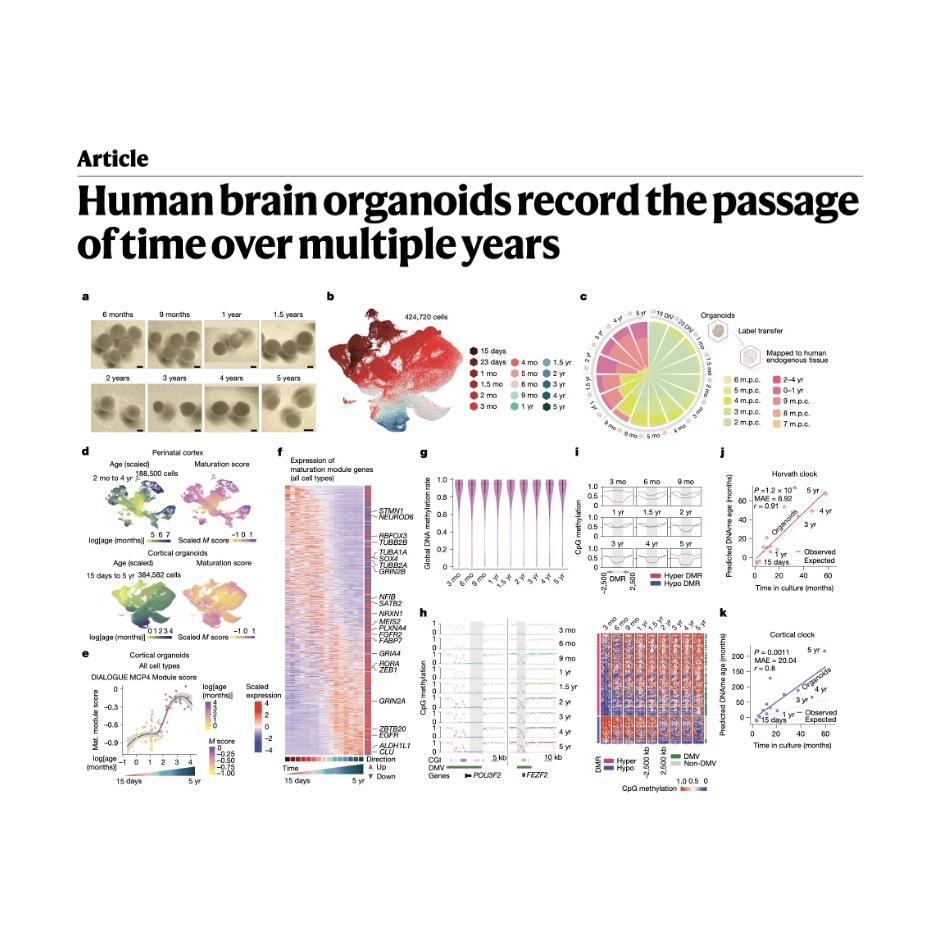
Recent research has demonstrated that human brain organoids can be maintained in laboratory cultures for over five years, allowing scientists to study long-term neural development. These advanced models successfully replicate the transcriptional and epigenetic aging patterns found in actual human brain tissue, accurately recording the passage of time at a molecular level. By optimizing growth conditions with specialized media, researchers improved the survival of excitatory neurons and observed the formation of complex synaptic connections and myelin. Furthermore, experiments with chimeric organoids suggest that neural progenitors possess a "memory" of their developmental age, enabling them to skip early growth phases and produce late-stage cell types directly. This breakthrough establishes organoids as a viable system for investigating the protracted maturation of the human brain, including periods of postnatal development that were previously inaccessible. The findings provide a comprehensive map of how human brain cells measure and recall their own biological age throughout their multi-year lifespan.References:Faravelli I, Antón-Bolaños N, Wei A, et al. Human brain organoids record the passage of time over multiple years[J]. Nature, 2026: 1-11.前往小宇宙评论区与主播互动
Embed this episode
Ready to play
1538-Maturation of Long-Term Human Brain Organoids
No transcript for this episode yet
Similar Episodes
No similar episodes found.
Similar Podcasts
No similar podcasts found.