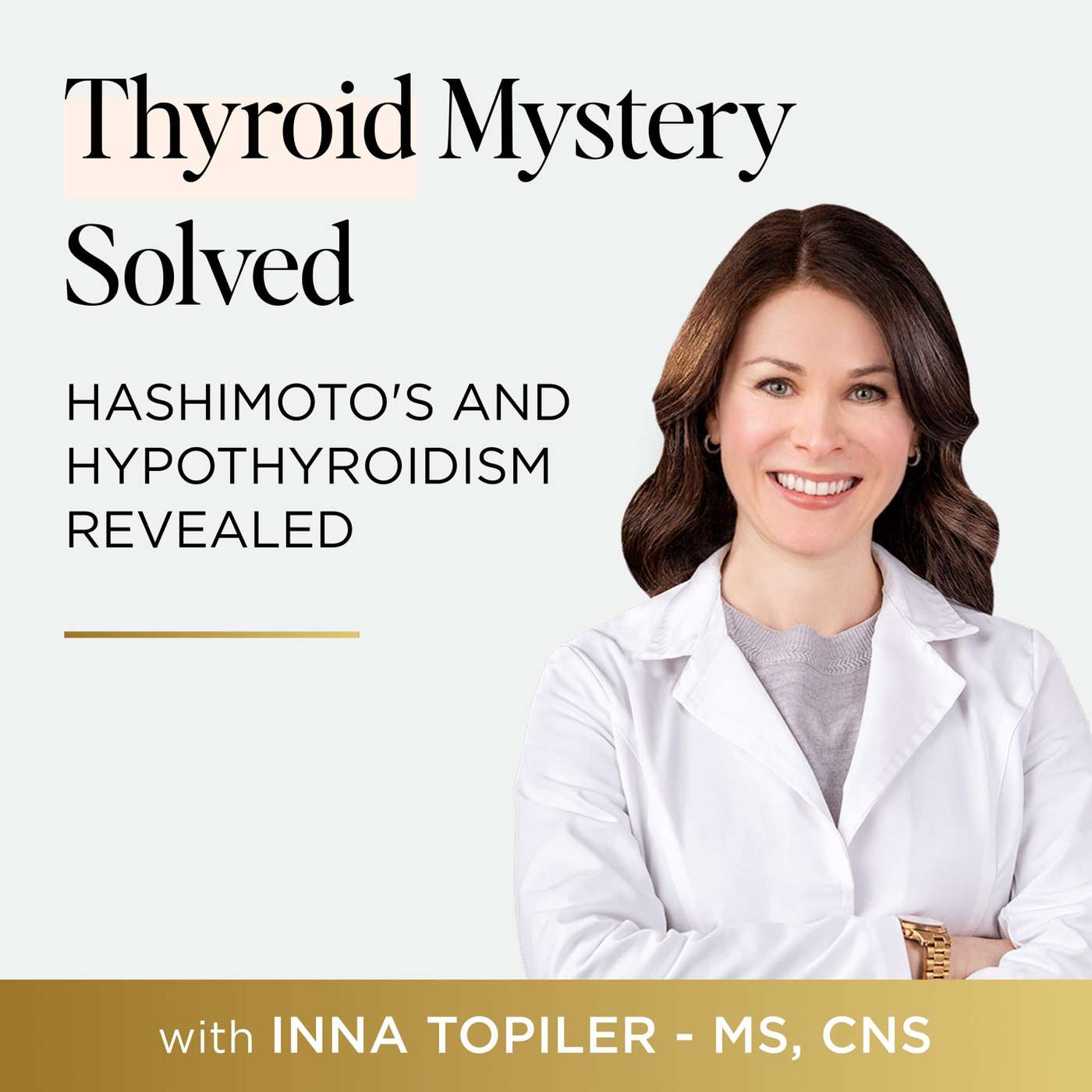
154 A Novel Approach to Supporting Hormones in Perimenopause and Menopause with Emily Sadri (Part 2) episode artwork

EPISODE · Oct 12, 2023 · 40 MIN

154 A Novel Approach to Supporting Hormones in Perimenopause and Menopause with Emily Sadri (Part 2)

from Thyroid Mystery Solved: Hashimoto's and Hypothyroidism Revealed · host Inna Topiler with Guest Emily Sadri

In the last episode, we met Justine. As a reminder, here are a few details about her case. The Case:  Justine is 44 and dealing with sudden abdominal weight gain.She is also experiencing brain fog which is causing her stress. Her PMS is getting worse and she just doesn’t feel like herself.She saw her gynecologist who suggested birth control and antidepressants.  The Investigation If you didn’t hear the first part of this story, please go back and give  episode 153 a listen. In that episode, I spoke about Justine’s case with Emily Sadri, an expert in Hormone Replacement Therapy (HRT) and achieving hormonal harmony. Emily is a good friend to the show having previously shared her insights in episodes  141 on Semaglutide (like Ozempic) and Weight Loss and  107 on Birth Control Use with Thyroid Issues.In the last episode, we talked about the many misconceptions around hormones during perimenopause and menopause. Now, let’s pick up where we left off in the last episode by looking at the timing for hormone support and the physiological restoration protocol (PR protocol). When to Start Hormonal Support A question many women ponder is when to start supporting their hormones, especially as they transition into menopause. Emily noted that the dosage and timing of hormone support depend on whether a woman is still having a menstrual cycle regularly or if is their cycle has become irregular, for example, every 3-6 months. For instance, women who are still cycling (i.e., ovulating) might only need a minimal dosage of estrogen (1-2 milligrams) transdermally daily, while others might require more substantial support. The key is to start with a little bump up and track and monitor for changes. The Importance of Monitoring Hormones One alarming revelation was the number of physicians who prescribe hormone replacement therapy without regular testing. Traditional doctors are often focused on resolving a singular symptom. So, if the dosage reduces, say hot flashes, then the doctor considers the problem solved. But, solving one symptom is not equal to being in optimal health. Emily and I both believe in the value of consistent monitoring. After all, our bodies are ever-changing, and what worked two years ago might not be effective today. Estrogen and Progesterone: Misunderstood Roles A common misconception is that only progesterone affects sleep. However, Emily pointed out that estrogen plays a vital role in our circadian rhythms and sleep cycles. In fact, estrogen is a precursor to serotonin, which in turn is essential for producing melatonin, our sleep hormone. It's crucial to maintain a balance between estrogen and progesterone for optimal health. All the more reason to be monitoring hormone levels once treating them, because the individual may misinterpret or miss the symptoms of a hormone imbalance. And, off-balance hormones can work against each other. Physiological Restoration: Embracing the Natural Rhythm Physiological restoration is all about mimicking the body's natural hormonal rhythms. This method called the Physiological Restoration Protocol (PR protocol), can be especially beneficial for women in perimenopause or those transitioning into menopause. This method requires the woman to adjust their daily dosage according to where they are in their cycle but it is not as complicated as it sounds since there are generally just two topical treatments to manage. There is an app that helps make it quite easy. The key is understanding that our bodies are all changing and treatment needs to flow with those changes. It’s a spectrum - we’re not robots, explains Emily. It's all about understanding and supporting the body's innate processes.Utilizing tools like the Dutch test can offer profound insights into hormonal health. For those navigating perimenopause, the cycle mapping feature can be especially enlightening, painting a picture of your hormone fluctuations throughout the month. However, Emily says that the simple Dutch can be misleading, so you want to also look at the organic acids section to get the full picture. Starting Hormonal Support Later in Life If you're approaching your 50s or have already transitioned into menopause, hormonal support may still be a consideration for you, says Emily.  While earlier intervention can often provide smoother results, starting hormonal therapy within a decade of your last period can still be advantageous. Estrogen Metabolism: It's Not Just About Detox There’s been a lot of talk among functional medicine practitioners about having patients detox when starting an estrogen protocol. This might include supplements like  DIM or  Calcium D-Glucarate. However, it's crucial to first understand an individual's estrogen metabolism before diving into detoxification. Emily likes to make sure that patients have proper methyl donation and  magnesium levels. She may also look at  glutathione but more for those in perimenopause (and takes caution with anyone in full menopause, being sure to monitor symptoms). Supplemental support can be important, but every woman is unique, and what works for one might not be effective for another.Supplements that Emily considers for perimenopausal and menopause on HRT include: Fish Oil B Vitamins (based on methylation) Zinc SulforaphaneIn addition to the previously mentioned supplements for peri and menopause: D-Glucarate Magnesium Glutathione  DIM  Calcium D-GlucarateMystery Solved - Getting Answers from Hidden Hormone Imbalances Taking in everything that Emily shared, it was time to solve Justine’s hormone health mystery. She was thrilled to hear that there was an explanation for everything that she was experiencing. For so long, she thought she was crazy! She didn’t realize that even small changes in her estrogen can cause such significant symptoms. If you’re going through something similar, please know that you are not alone and you’re not crazy either. Justine's symptoms led us to expl...

In the last episode, we met Justine. As a reminder, here are a few details about her case. The Case:  Justine is 44 and dealing with sudden abdominal weight gain. She is also experiencing brain fog which is causing her stress. Her PMS is getting worse and she just doesn’t feel like herself. She saw her gynecologist who suggested birth control and antidepressants.    The Investigation If you didn’t hear the first part of this story, please go back and give episode 153 a listen. In that episode, I spoke about Justine’s case with Emily Sadri, an expert in Hormone Replacement Therapy (HRT) and achieving hormonal harmony. Emily is a good friend to the show having previously shared her insights in episodes 141 on Semaglutide (like Ozempic) and Weight Loss and 107 on Birth Control Use with Thyroid Issues. In the last episode, we talked about the many misconceptions around hormones during perimenopause and menopause. Now, let’s pick up where we left off in the last episode by looking at the timing for hormone support and the physiological restoration protocol (PR protocol).  When to Start Hormonal Support A question many women ponder is when to start supporting their hormones, especially as they transition into menopause. Emily noted that the dosage and timing of hormone support depend on whether a woman is still having a menstrual cycle regularly or if is their cycle has become irregular, for example, every 3-6 months. For instance, women who are still cycling (i.e., ovulating) might only need a minimal dosage of estrogen (1-2 milligrams) transdermally daily, while others might require more substantial support. The key is to start with a little bump up and track and monitor for changes.  The Importance of Monitoring Hormones One alarming revelation was the number of physicians who prescribe hormone replacement therapy without regular testing. Traditional doctors are often focused on resolving a singular symptom. So, if the dosage reduces, say hot flashes, then the doctor considers the problem solved. But, solving one symptom is not equal to being in optimal health. Emily and I both believe in the value of consistent monitoring. After all, our bodies are ever-changing, and what worked two years ago might not be effective today. Estrogen and Progesterone: Misunderstood Roles A common misconception is that only progesterone affects sleep. However, Emily pointed out that estrogen plays a vital role in our circadian rhythms and sleep cycles. In fact, estrogen is a precursor to serotonin, which in turn is essential for producing melatonin, our sleep hormone. It's crucial to maintain a balance between estrogen and progesterone for optimal health. All the more reason to be monitoring hormone levels once treating them, because the individual may misinterpret or miss the symptoms of a hormone imbalance. And, off-balance hormones can work against each other. Physiological Restoration: Embracing the Natural Rhythm Physiological restoration is all about mimicking the body's natural hormonal rhythms. This method called the Physiological Restoration Protocol (PR protocol), can be especially beneficial for women in perimenopause or those transitioning into menopause. This method requires the woman to adjust their daily dosage according to where they are in their cycle but it is not as complicated as it sounds since there are generally just two topical treatments to manage. There is an app that helps make it quite easy. The key is understanding that our bodies are all changing and treatment needs to flow with those changes. It’s a spectrum - we’re not robots, explains Emily. It's all about understanding and supporting the body's innate processes. Utilizing tools like the Dutch test can offer profound insights into hormonal health. For those navigating perimenopause, the cycle mapping feature can be especially enlightening, painting a picture of your hormone fluctuations throughout the month. However, Emily says that the simple Dutch can be misleading, so you want to also look at the organic acids section to get the full picture.  Starting Hormonal Support Later in Life If you're approaching your 50s or have already transitioned into menopause, hormonal support may still be a consideration for you, says Emily.  While earlier intervention can often provide smoother results, starting hormonal therapy within a decade of your last period can still be advantageous. Estrogen Metabolism: It's Not Just About Detox There’s been a lot of talk among functional medicine practitioners about having patients detox when starting an estrogen protocol. This might include supplements like DIM or Calcium D-Glucarate. However, it's crucial to first understand an individual's estrogen metabolism before diving into detoxification. Emily likes to make sure that patients have proper methyl donation and magnesium levels. She may also look at glutathione but more for those in perimenopause (and takes caution with anyone in full menopause, being s...

NOW PLAYING

154 A Novel Approach to Supporting Hormones in Perimenopause and Menopause with Emily Sadri (Part 2)

0:00 40:46

No transcript for this episode yet

We transcribe on demand. Request one and we'll notify you when it's ready — usually under 10 minutes.

MG Show MG Show The MG Show, hosted by Jeffrey Pedersen and Shannon Townsend, is a leading alternative media platform dedicated to uncovering the truth behind today’s most pressing political issues. Launched in 2019, the show has grown exponentially, offering unfiltered insights, comprehensive research, and real-time analysis. With a commitment to independent journalism and factual integrity, the MG Show empowers its audience with knowledge and encourages active participation in the political discourse. Breaking News Show | eTurboNews Juergen Thomas Steinmetz News is relevant to the global travel and tourism industry, human rights and global issues.Breaking news when it happens and only from the source. Eat to Live Jenna Fuhrman, Dr. Fuhrman Our health is our most precious gift and smart nutrition can change your life. Each month, join Dr. Fuhrman and his daughter, Jenna Fuhrman as they discuss important topics in the world of nutrition. Eat to Live will change the way you eat and think about food. French Your Way Jessica: Native French teacher founder of French Your Way Boost your French listening skills and test your comprehension with this one of a kind series of podcasts. Get the chance to listen to a real conversation between native speakers talking at normal speed AND customise your learning experience through carefully designed sets of questions (2 levels of difficulty) available for download at www.frenchvoicespodcast.com. All interviews also come with the transcript. French teacher Jessica interviews native speakers of French from around the world who share a bit of their life and passion. Where else would you meet in one same place a French yoga teacher based in Melbourne, a soap manufacturer from Provence, or a couple cycling around the world?

Frequently Asked Questions

How long is this episode of Thyroid Mystery Solved: Hashimoto's and Hypothyroidism Revealed?

This episode is 40 minutes long.

When was this Thyroid Mystery Solved: Hashimoto's and Hypothyroidism Revealed episode published?

This episode was published on October 12, 2023.

What is this episode about?

In the last episode, we met Justine. As a reminder, here are a few details about her case. The Case:  Justine is 44 and dealing with sudden abdominal weight gain.She is also experiencing brain fog which is causing her stress. Her PMS is getting...

Can I download this Thyroid Mystery Solved: Hashimoto's and Hypothyroidism Revealed episode?

Yes, you can download this episode by clicking the download button on the episode player, or subscribe to the podcast in your preferred podcast app for automatic downloads.
URL copied to clipboard!