
EPISODE · Sep 10, 2026 · 21 MIN
1564-Intestinal Muscle Plasticity and Regulation of Gut Size
from Paper Talk
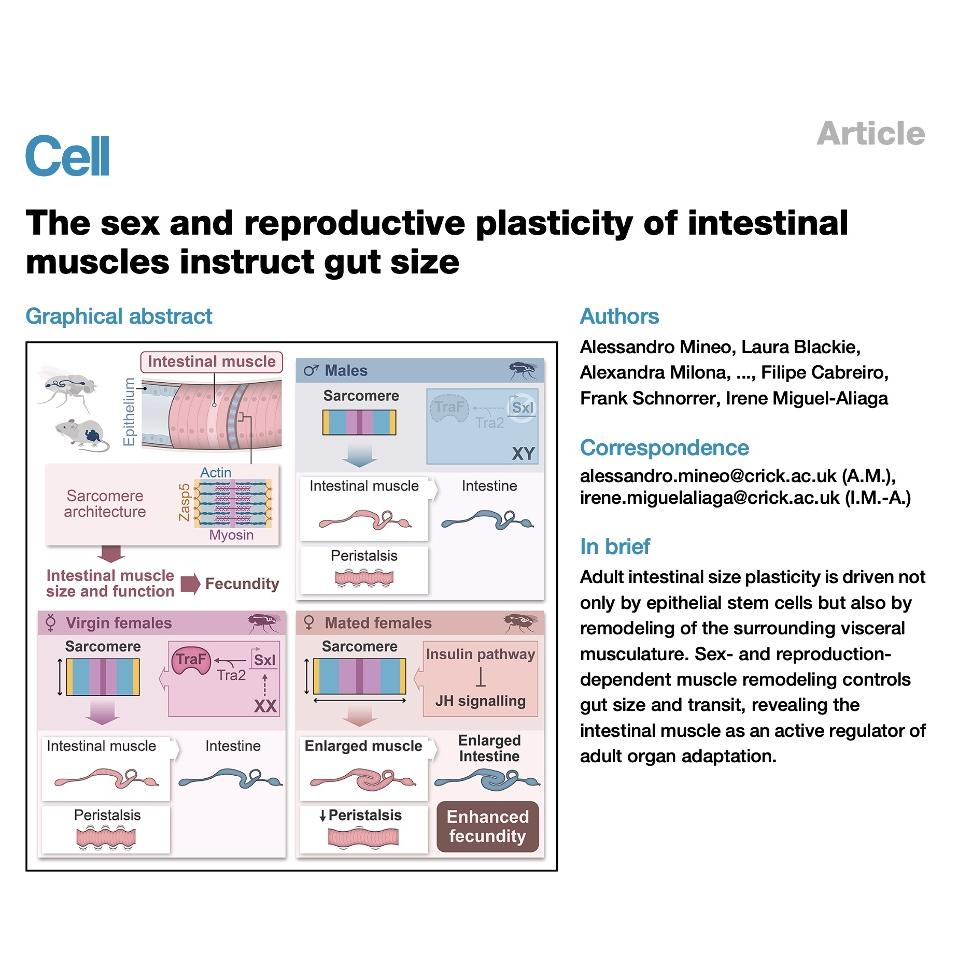
This research identifies intestinal muscle as a primary regulator of organ size and reproductive adaptation in both Drosophila and mice. While previous models focused on epithelial stem cells, these findings prove that visceral musculature actively remodels its own sarcomere architecture in response to sex-intrinsic determinants and hormonal signals. In females, mating triggers sarcomere elongation and myofibril thickening, changes that physically expand the gut and slow peristalsis to maximize nutrient absorption. Genetic manipulation of the Sxl-Tra-Dsx pathway reveals that these muscle-intrinsic factors extrinsically dictate overall intestinal length, regardless of the animal's chromosomal sex. Ultimately, this muscular plasticity serves as an adaptive mechanism to support the high metabolic demands of fecundity and offspring production.References:Mineo A, Blackie L, Milona A, et al. The sex and reproductive plasticity of intestinal muscles instruct gut size[J]. Cell, 2026.前往小宇宙评论区与主播互动
Embed this episode
Ready to play
1564-Intestinal Muscle Plasticity and Regulation of Gut Size
No transcript for this episode yet
Similar Episodes
No similar episodes found.
Similar Podcasts
No similar podcasts found.