
EPISODE · Sep 18, 2026 · 30 MIN
1586-多器官芯片模型揭示心脏抗癌转移机制
from 聊聊Sci
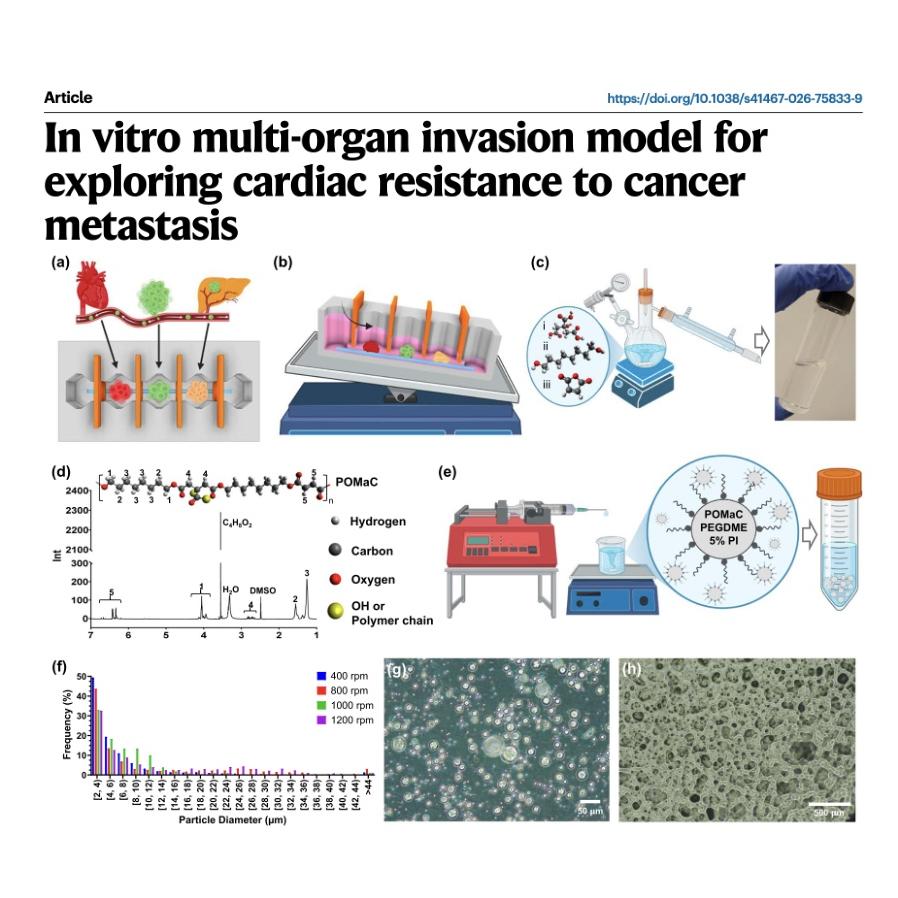
这篇论文介绍了一种名为多器官入侵装置(MInD)的新型器官芯片平台,旨在探索人类心脏对癌症转移具有天然抵抗力的机制。研究人员利用3D打印技术开发了具有多级孔隙结构的PermeoTubes导管,模拟肿瘤细胞迁移的复杂基质环境,成功在芯片上实现了心脏、肝脏和乳腺癌组织的共同培养。实验结果表明,与极易发生转移的肝脏组织相比,心脏微环境能显著抑制癌细胞的侵袭和增殖。通过细胞因子谱分析和RNA测序,研究发现心脏组织能诱导癌细胞产生免疫激活信号、增强细胞粘附并启动促凋亡程序。特别是ADAMTS9基因被证实参与了这种由心脏介导的抗转移过程,这为开发新型癌症治疗策略提供了重要的生物学基础。该研究不仅揭示了心脏抵抗转移的独特性,也展示了生物仿生平台在加速转移抑制药物研发方面的巨大潜力。References:Shakeri A, Abdo D, Lei M H C, et al. In vitro multi-organ invasion model for exploring cardiac resistance to cancer metastasis[J]. Nature Communications, 2026.前往小宇宙评论区与主播互动
Embed this episode
Ready to play
1586-多器官芯片模型揭示心脏抗癌转移机制
No transcript for this episode yet
Similar Episodes
No similar episodes found.