
EPISODE · Jun 20, 2024 · 28 MIN
159: Ted Corbitt – Part Two (1953-1963)
from Ultrarunning History · host Davy Crockett
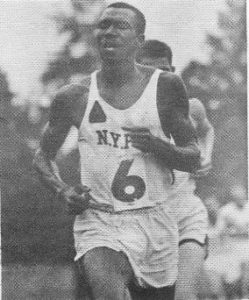
By Davy Crockett After Ted Corbitt's disappointing 1952 Olympic marathon, he was determined to continue running. (Read Part One). His key takeaway was that he had to elevate his performance by running more often and covering greater distances. But as he continued to push his training, he experienced a series of chronic muscle strains for the next year. Corbitt was focused on the marathon distance and continued to finish high each year at Boston. He believed that success would require training every day, reaching at least 100 miles per week. His perseverance finally paid off in January 1954, when he emerged victorious in a marathon held in Philadelphia, completing it in 2:36:08. He won again, at the 1954 Yonkers Marathon, considered the national championship, with a time of 2:46:13. He had proven that his 1952 Olympic selection was justified. In 1955, he made the team for the Pan American team in Mexico City but was cut from the team became of lack of funds. It bothered him that some newspapers listed him as a non-finisher in the race. He never started it. Throughout his long running career, he never had a "did not finish (DNF)." Learn about the rich and long history of ultrarunning. There are now ten books available in the Ultrarunning History series on Amazon Learn More The 1956 Olympics were to be held in Melbourne, Australia, during the month of December, which caused alterations to everyone’s training calendars. With the goal of making the Olympic team again, he surpassed 5,000 miles in 1956. If the Olympics had been held during the northern hemisphere summer, he would have made the team. But after a six-place finish at the Yonkers Marathon, held during the fall, he fell to the alternate place for the team. Corbitt was obviously very disappointed that he missed being on the ’56 team by just one man. He recalled, “It was like being in mourning.” Still, he never contemplated quitting running. In May 1956, he set the American record for a marathon on the track with 2:42:25 in Philadelphia, and became the U.S. National Champion at 30 kilometers, competed on a one-mile bicycle loop in Cincinnati. He repeated in 1957. Corbitt's future involvement in ultrarunning would take root with the London to Brighton race held in England. London To Brighton Ultra-distance races essentially disappeared during the World War II era. In the late 1950s, the modern era of American ultrarunning gave birth. This was largely because of the efforts of the Road Runner Club of America (RRCA) established in 1958, and also because of the efforts of Corbitt. England took the lead in the 1950s to reestablish ultras, and specifically the 50-miler. The London to Brighton 52-miler began as an official running race in 1951 with 47 starters. It had been a standard point-to-point challenge for both walkers and runners since the first running race held in 1897. Heel and Toe walking races were held for many years on the route during the first half of the twentieth century. In 1951, the London to Brighton running race was established by Ernest Herbert Neville (1883-1972) and the Surbiton Town Sports Club. It would eventually be considered the de facto world championship 50-mile race for several decades. The Road Runners Club (RRC) In England, the Road Runners Club (RRC) was founded in 1952 by Neville to help promote London to Brighton and to encourage more long-distance running. “The aim of the RRC is to bring together all those interested in long distance running, to stimulate interest in our great sport, to serve as a forum for all enthusiasts, and to further the interests of road runners everywhere.” By 1953, London to Brighton got the attention of leading long distances runners from other areas of the world, especially among ultrarunners in South Africa who had been running the Comrades Marathon (54 miles). London to Brighton became the race that the best ultrarunners in the world wanted to compete in.
Embed this episode
What this episode covers
After Ted Corbitt's disappointing 1952 Olympic marathon, he was determined to continue running. His key takeaway was that he had to elevate his performance by running more often and covering greater distances. But as he continued to push his training, he experienced a series of chronic muscle strains for the next year. Corbitt was focused on the marathon distance and continued to finish high each year at Boston. He believed that success would require training every day, reaching at least 100 miles per week. His perseverance finally paid off in January 1954, when he emerged victorious in a marathon held in Philadelphia, completing it in 2:36:08. He won again, at the 1954 Yonkers Marathon, considered the national championship, with a time of 2:46:13. He had proven that his 1952 Olympic selection was justified. In 1955, he made the team for the Pan American team in Mexico City but was cut from the team became of lack of funds. It bothered him that some newspapers listed him as a non-finisher in the race. He never started it. Throughout his long running career, he never had a "did not finish (DNF)."
Ready to play
159: Ted Corbitt – Part Two (1953-1963)
No transcript for this episode yet
Similar Episodes
No similar episodes found.
Similar Podcasts
No similar podcasts found.