
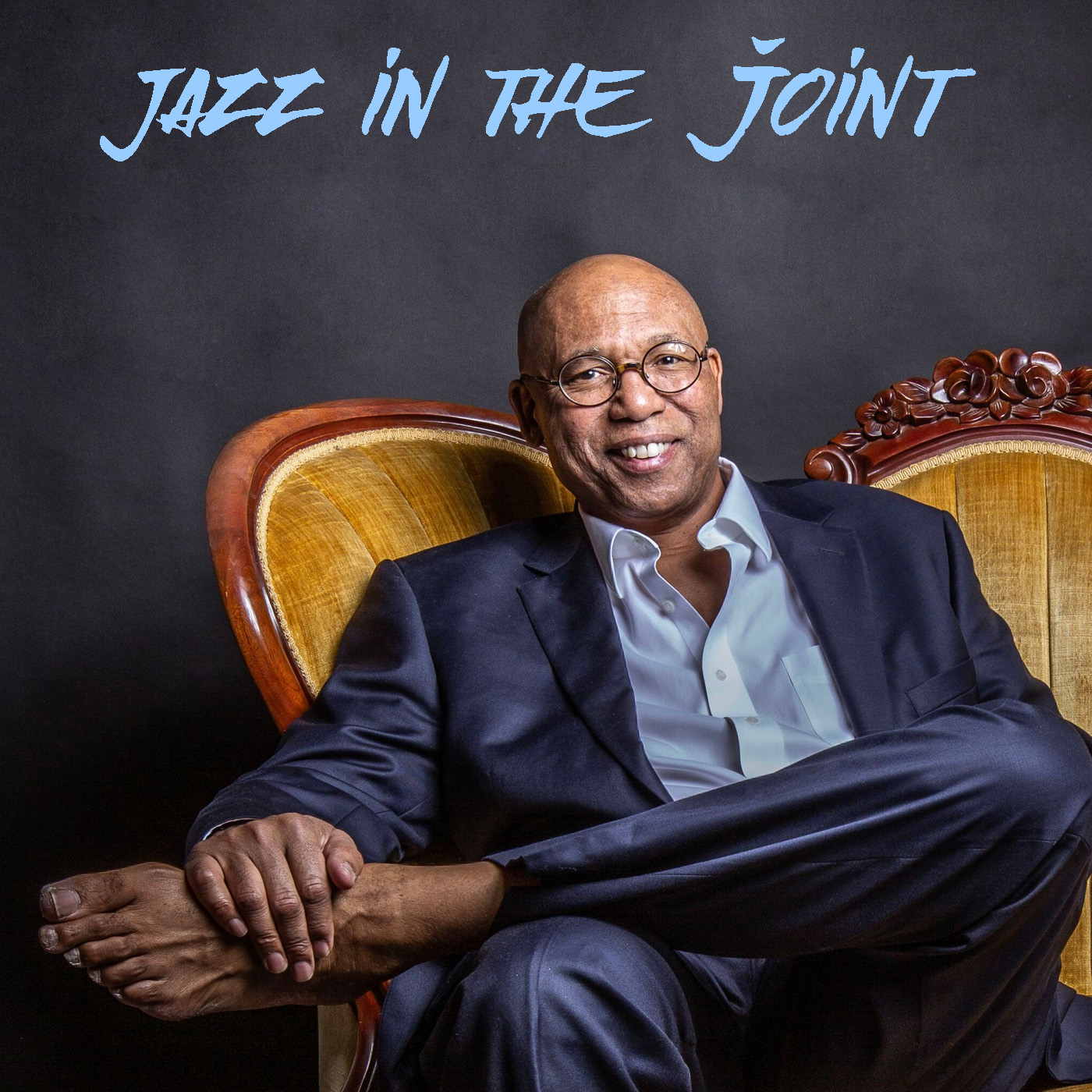
EPISODE · Jan 6, 2021 · 45 MIN
16: From Mingus to Folsom: Henry Robinett on Music, Mentors, & Thriving as an Artist for Change
from ART IS CHANGE: Strategies & Skills for Activist Artists & Cultural Organizers
Here is the link to the Arts Extension Service: Creative Community Leadership Course Info.Episode 16: Henry Robinett - Jazz in the JointJazz musician, composer, educator Henry Robinett has the kind of calm, purposeful trajectory that allows him to ignore the detritus, and collect the sublime and the quirk, all in service to making and recording extraordinary award-winning music and helping heal heads and hearts in the largest prison system in the world. Threshold Questions and Delicious Quotes:How are jazz legend Charles Mingus, the world famous Manhattan Plaza artist residence, and Henry Robinett connected? "I had a very famous cousin of mine, a jazz musician by the name of Charles Mingus. Well in 1977, I lived with him in New York. We lived in these condos, it was a condo full of artists called Manhattan Plaza and it was subsidized housing for artists. It was great, cause you had some very famous musicians who lived there, and once a week, twice a week or something, they used to have a big band, like in the basement of the people who live there. And so, I'd go down there and play. He came down to watch and listen. And that was a big deal because he was the greatest of all the musicians who lived there. So even these famous musicians would go off. And so right afterwards, he came up to his place on the 43rd floor. And there I was it, so he said, "What are you doing?" I said, "Rehearsal and stuff", he said, "You're supposed to hang. You're "supposed to hang with all the men." I go, "I'm hanging with the greatest musician right now. Why would I want to hang with those guys when I can to hang with you?""How does a jazz guitar virtuoso and composer end up working at Folsom Prison? "So, Bill Peterson, who was the artist facilitator at old Folsom, called me. I hadn't been thinking about teaching prisoners at all. and my first thought was nervous. " Oh man, these guys are pretty tough hombre’s, this is interesting." And I went there, and it was an experience. And when you, you experienced an experience like that, where all of your, worst expectations don't take place in what you're really coming in contact with are human beings who aren't any different than I am, except there's a dark past that you are aware of must've happened with these guys or they wouldn't be here. But, you don't think about any of that stuff because I'm just in contact with a human being who is in need of something I have and so, I loved it."What role can artmaking play in the positive transformation of people who are Often characterized as "hardened criminals?" One guy said to me, “Look, Henry, I'm never getting out of here. I'm just never getting out, and I had to really change. So, the person I am now is not the person who was out there. I don’t do anything that I used to do. I don't smoke, I don't cuss, I don't do drugs, I don't drink, none of it, and I didn't change my life because I wanted to impress the parole board. I changed my life because I needed to change my life.” How can an open to all music program work in a place as racially segregated as a prison?"You have a lot of people who, are very gang related, and the music department is one of the areas where that breaks down. Because, on the yard you have yard rules where the Aryan Brotherhood, they don't mix with the Mexican gangs and the black gangs, and you have to fall in line. You have to do what they say. But behind the walls of the music room, you don't see the yard. So, you have white guys playing with black guys and Mexican guys, and that was things that would never happen on the yard, and that's really nice."Is there turning point for people trying to learn and master an instrument?"So, I try to get them to get this idea. If you feel like, "Oh my God, I can't do this anymore. I just can't do it." I go, "Okay. I understand. ..."Just continue. "Boredom? Oh yeah. Boredom that'll happen. You just need to get past the boredom part."And then it becomes self-motivating. He starts getting creative and that's the point. if you can take the tools and get to the point where, "Oh my God, I can be creative with this. I can use this as self-expression, or I'm winning there." There's a loss point, and there's a win point. And the catch point is when you actually have a win point. And "Oh, I finally get what he's saying.” Then it becomes really exciting. and a lot of times it's when someone starts writing music."TranscriptMusic.... ( Change, by The Henry Robinett Group)Bill Cleveland: That’s the Henry Robinett Group. So needless to say, its jazz time on Change the Story / Change the World. My guest, musician, composer, educator Henry Robinett is cool. Not just old -school hip cat, vernacular cool, but truly low in temperature. That’s because Henry moves through the jingly, messy stuff of life with a focused persistence -- the kind of calm, purposeful trajectory that allows him to ignore the detritus, and collect the sublime and the quirk, all in service to making and recording extraordinary award-winning music and helping heal heads and hearts in the largest prison system in the world. We talked as the truly terrible summer of 2020 was closing up shop. As usual, we started with our guest’s backstory.This is Change the Story, Change the World, a chronicle of art and transformation. I’m Bill Cleveland. Before we join Henry. I would like to share something I’m really excited about. As some of you know, the Center has been providing in-depth professional development opportunities for creative community leaders across the country for the past two decades. Last year we joined up with the University of Massachusetts’ Arts Extension Service to create a new 13-week online course called Creative Community Leadership. So, starting on February 4th, Kathi Bentley and I will be offering a rigorous, engaging learning opportunity for anyone interested in exploring how art centered strategies and tools can help us rebuild and reform in these turbulent times. And, when we say anyone, we mean it. Artists, arts administrators for sure, but also folks involved in social service, community development, philanthropy, education, city hall--- we think the time is ripe for creative community change agents of all stripes to roll up their sleeves and get to work. So, if your interest is piqued do a google search for Arts Extension Service – that’s Arts Extension Service or click on the Arts Extension Service link in our show notes. And If you want to know more about Kathi and myself go to our Episodes 1 and 5. Now on with the show. Part 1: PracticeBill Cleveland: The nice thing about these conversations is that the people I'm talking to know their story. So, Henry, you and I go way back, with a quarter of a century in-between. Over that time, my experiences set me on a path to what has become the name of this podcast, which is Change the Story Change the World. That's my change theory, which is artists creators can help address critical community issues with seriousness and the power of our work--If we're smart and we're patient--can actually change things significantly. So that's why I'm talking to you because, you’re one of those folks, and one of the things we'll explore is how in the world you got down that road. But let me begin by asking you, how do you, describe what you do in the world? What is your work? Henry Robinett: I've always been inspired by art, and I've always been inspired by the idea of being an artist. And I want to say I probably grokked that in my early childhood because my mother loved the arts. She loved literature, she loved painting, she loved music, classical music. And so, she would take me to museums. And there was a time when I was interested in painting and I wanted to do paint, oil. Even as a little kid, I was inspired by the Impressionists van Gogh and Monet and Degas. We went to Paris and saw all these great artists, and I wanted to emulate that. So, I took classes and oil painting, and at my elementary school, they hung a bunch of paintings up, and that was very exciting, and I think the idea was, even before I understood it was self-creation self-expression and as I got older, it seemed to me that the artists are the ones who really create the world. They're the ones who inhabit the creativity. They're the ones who design the chairs, they design the houses, they designed, the roads that we use. But, more than that, they actually create an aesthetic that every age can be identified with.So, if you're studying the twenties, you really have to go back and read the literature, the twenties, you have to listen to the music of the twenties. You have to look at the paintings of the twenties. It's just not, it's just not a dry historical thing. So, I think in a very cheap way, the people who make the world are the politicians, but, in a very real way, the people who make the...
Embed this episode
What this episode covers
My guest, musician, composer, educator Henry Robinett has the kind of calm, purposeful trajectory that allows him to ignore the detritus, and collect the sublime and the quirk, all in service to making and recording extraordinary award-winning music and helping heal heads and hearts in the largest prison system in the world.
NOW PLAYING
16: From Mingus to Folsom: Henry Robinett on Music, Mentors, & Thriving as an Artist for Change
No transcript for this episode yet
Similar Episodes
No similar episodes found.
Similar Podcasts
No similar podcasts found.