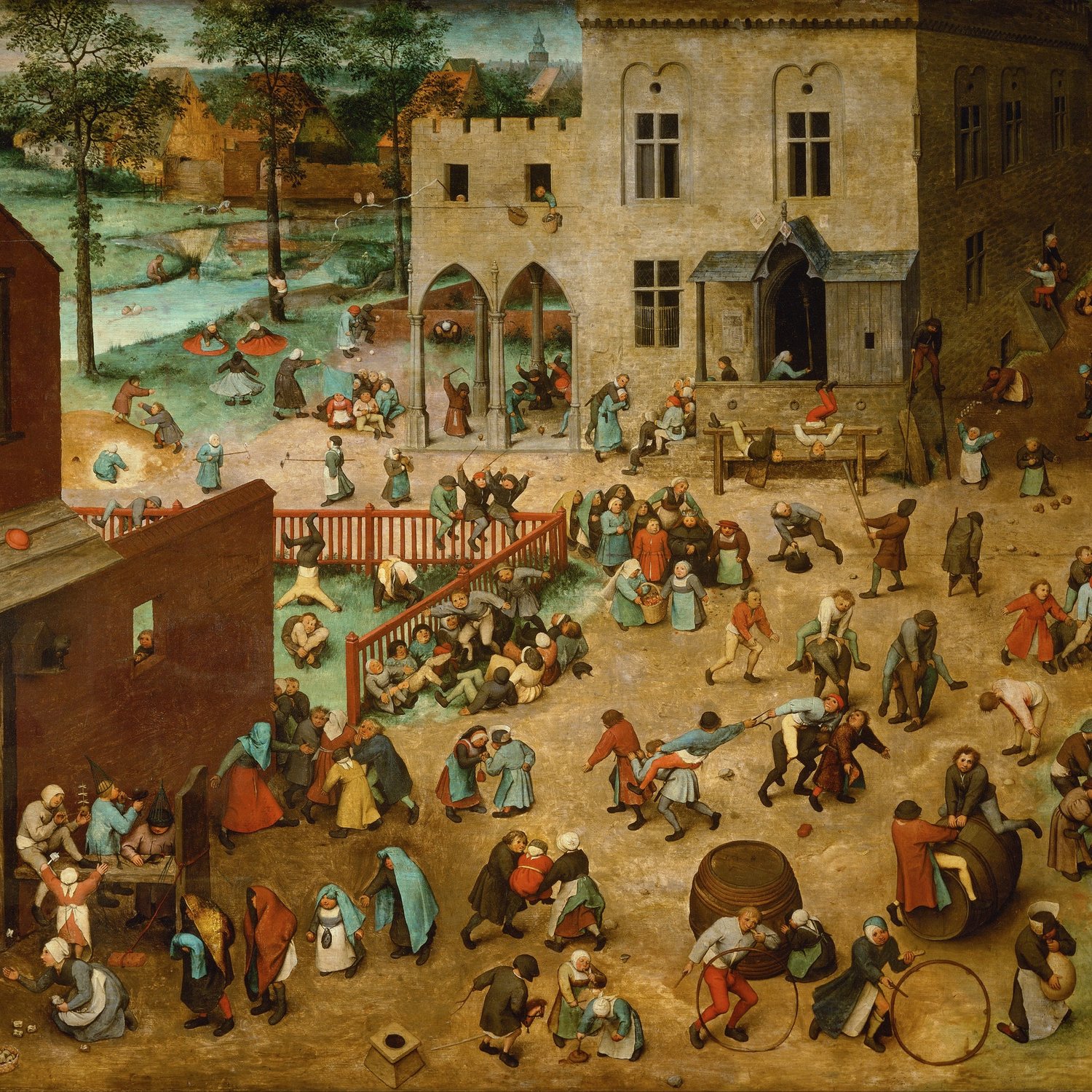
Hi and welcome to classical stuff you should know. My name is AJ Hennenberg and I'm joined by my colleagues, Graham Donaldson and Thomas Maggie. And we all work at Veritas Academy in Austin, Texas. It's a classical school and we are here to talk about classical stuff.
And today. Yeah, so yesterday we had a snow day in Texas, which is hilarious because a Texas snow day is like 50 degrees. And it was a beautiful day. It was a beautiful day yesterday.
It was sunny and balmy by noon. But when the public schools cancel or whatever decisions they make, we just follow suit. And so they canceled school because some parts of like San Antonio and more southern like buta got hit pretty well. Well, they turned on the part of the park.
It was like an inch and a half. So hard mean. Yeah, but for Texas anyway. But this means that we had an entire day where we didn't have to do work.
We could do leisure. And so I know. And so we had a leisure today. I think we should talk about leisure today.
Thomas, can you tell us about leisure? You can't speak for yourself. I'd grade it all day. So this is probably a good place for us to start.
So you all got an unexpected day off yesterday. Man, you could have used that day for anything. You could have gone on rock climbing. You could have.
It was snowy. It was snowpocalypse. It was gone. So what did you all do?
What did you all do with your day off yesterday? Why don't you go first, Berg? I sort of booped around the house until 11 a.m., which I want to do when I can sleep in. And then I graded a bunch.
And then I went and had a. Does people really want to know my schedule for? Yeah, I'm going to do our round. And so this will tie into our topic for the day also.
I went and met with a lady about DJing for a climbing competition. And then I went and watched Project Runway with Mr. Graham Donaldson. Season 16.
No, I'm sorry. It actually seems like it's actually season 16. It's terrifying. And we've been faithful watchers since.
I think you and I have started watching it together season 11 or so. Yeah. And I watched before that. And then we all watched before.
But a little bit. I did do some homework some grading. But knowing what you're talking about today, I'm full of shame that I did not do what Peeper commands us to do. What may we do?
We'll come back to that. What does Peeper actually talking about here? So when we originally were going to record the podcast is going to be right before Thanksgiving break. And so we could have planned our break time to follow with this goal of leisure.
I guess we'll just use this for Christmas time instead, which is just around the corner. So what I'll be talking about today is an essay. An essay by Joseph Peeper called Leisure The Basis of Culture. and perhaps more importantly, I should ask, is it leisure or leisure?
What is the correct pronunciation? It depends on if you're wearing any velvet. Well, wearing velvet, it's leisure. As you can see, head to a velve right now.
So leisure is the way I should pronounce this. I think you just follow your heart on this. Please tell me that's the advice you get to us also. In MLA format?
I don't know. Just follow that line. It's good. So yeah, we're talking about leisure, the basis of culture.
So I guess what I have here, I have a summary of these five different sections within the essay. But let's start out with, you all read this. And who is Joseph Peeper? Joseph Peeper is a German Catholic.
He was born in 1904. He was a professor of philosophy of religion at the University of Munster, where they also make the cheese. I don't know. That just made sense in my mind.
So this book is from 1948. So that was after he had gotten to the University of Munster. And another work of Peeper's at his excellent is the Four Cardinal Virtues. And the Four Cardinal Virtues is a funny book because he actually wrote it in four parts.
Like he would write the part on prudence. And then a couple years later, he wrote on justice and the four to two in the temperance. Well, it's hard to practice all four at the same time. So he just kind of focused on one at a time and kept going.
It's a very good book also. My introduction to Joseph Peeper came through a book that is absolutely named Joseph Peeper on anthology because it's an anthology of Joseph Peeper's works. So instead of it taking all of his works and combining it into one book, they take excerpts from each book. It's an easy way to kind of get used to the arguments of Joseph Peeper before diving into the full works themselves.
But we'll be talking specifically about leisure today. We'll probably at some point come back to the idea of virtues since we talked about vices, not too long ago. But leisure and the title is leisure as the basis of culture. Leisure, the basis of culture.
So he gets to that point at the very end of this book. But just let's talk about what you all experience having read this book. Do you remember how you felt going through this book? We even start with like, do I remember something from the book itself?
I remember not feeling leisurely the read. It wasn't something I would choose to go back to. There are certain things that define my thinking that I always want to return to and read. This was not one of them.
From what I remember from Peeper is he kind of was on the same camp as Aristotle, which is when you have all of your needs met, like food, shelter, those sorts of things, school is or learning is what you do in your spare time. Learning is rest. If I remember correctly, scolay, the Greek word scolay, actually means rest, which our kids think is hilarious. When you tell them that because you're like, we don't school means rest.
And they're like, well, you should see my weekend. And so if I remember he says that if you are full, actually, at leisure, it's not that you're just watching television, but you are actually improving your soul. Yeah, that's good. So everything you just said, that's a great place to start with it.
So in his introduction to the work, he talks about what Graham just said, that the word scolay means leisure. And that's where we get our modern word school. So school was supposed to be, or was originally this place of leisure. I subbed in a leadership class last year.
And this is the thing I wanted to talk with them about that. The word for school comes from leisure. And I put that on the board. And just like Graham said, they laughed at me.
They thought I was telling a joke that those two things were supposed to be combined or related to one another. And I get that. I would not describe my school experience as leisurely. I don't know if you all would.
I kind of feel like my school experience was leisurely, but not in the way that people are talking about. More on the way of not enough was asked of me. And I was not willing to go above and beyond what was just the minimal of what was just asked of me. And that's probably Canadian public school.
Oh, no, I shot for 93. I want to get right above the minus. But not working harder. So in that sense, when I think of high school for me, it's just like a lot of like PlayStation and paying out friends.
I don't remember the content of school. I don't actually remember like feeling like learning had any currency for me until university. And I was taking a class or two that just melted my brain. And then all of a sudden like this meant something.
But definitely not in high school. So it was leisurely, but in the rarves, not leisure. It was. So that's interesting.
Then was university more leisurely. And we will define this term in a second. Then you'd say your high school, middle school, elementary experiences work? Totally.
That was where everything sort of opened up for me. Yeah, I don't know. I approached education the same all the way through. And part of it was just, and I have to get this done attitude.
And I don't know. I was not necessarily a proactive part of my own story in all of my schooling. I think I just sort of let school wash over me. And I enjoyed the beach.
I was like being at the beach, right? I'm at the beach. Here come the waves. I was going to roll with it and learn what.
And I was really into school. I enjoyed learning. I enjoyed reading. I enjoyed math.
I enjoyed science. I enjoyed all of it. But I don't think there was this realization in me that I need to focus on my education and learn as much as I can because eventually it'll stop. It's just like, this is what people want me to do.
I'm going to do it. Here come the things, and I'll learn what I have to learn. So what is Leisure Thomas? So before I jump into that one, so when you all read this a few years ago, you all had a conversation about Pi Dea, and there were, I think, five people on the stage.
And something that was brought up a few times is that people are not very clear in how he approaches this subject. And I didn't realize this until I wrote or took notes on each of the different sections. So there's this one essay split into these five sections. He does not define Leisure, which again is the title of this essay until the third section.
So he spends two sections talking about this subject without actually saying what it is. And then he goes into that in the third one. So the definition of Leisure, he gets a definition of it by its opposition to work, Leisure as this opposition to work. So whereas work is activity, Leisure is non-activity.
He has this quote in there about where he says that Leisure is about this inward calm, the silence, this acceptive attitude of mind. So it sounds almost like the difference between if you listen to a previous episode of Ratio and Intellectus, right? Where one is the work of Reason and One is letting the object work upon you. So the second section of this essay talks about actually references Ratio and Intellectus.
So this is kind of the sequel to that podcast, which I listen to again, ahead of today's episode. And from that episode, there's this question of what is the matter? What is the implication of this distinction between Ratio and Intellectus? And I think Leisure is the answer to that.
The reason there's a distinction between the two, the reason that distinction matters is that One is useful in Leisure and One is the work that we're doing every other hour of the day. Ratio being what is typically valued of us, intellectus is what we receive and what we are receptive to. Can you give me an example? If I was doing the same activity, let's say I was reading a book, what would the ratio or the work of that, what would be doing that in a labor way and what would be doing that in a leisure way?
I'm going to change your example. I hear what you're saying. I object to reality and you want to ask how I want to answer. I'm going to address something else.
You look at the presidential debates. What's the takeaway of the logical fallacy? It's not usually logical fallacy. Wait, is that?
So you talk about it in class sometimes. You'll be teaching them about romantic poets. And you're doing this work of going word by word and saying, this is what the meaning of this is. But students will have this moment, this aha moment, where it's like they receive the meaning of it.
That's what happens to them. I think that's the easiest way to think about that distinction is that one is by diving into a complicated work and going word by word and trying to really understand the meaning, that's the elliptical pronunciation. So you can do rotio or ratio. So I apologize for listeners who are judging me right now.
But that's the rot. Don't apologize to the haters, Thomas. Sorry, haters going to hate. That's the ratio of work, having to dive in and really work at it.
But intellect is that you sometimes just receive the meaning that by having done all this work, you get to the end. And it suddenly makes sense. So how can you, if we want our students to be able to do both of those things, I feel like if I give them an assignment, or if I give them, let's say I give them the essay prompt, or the final thing that they're going to be producing at the end of the lesson, the end of the five weeks of doing Romeo and Juliet, for example. I always have a rough time justifying giving them the prompt at the beginning, because I feel like then they're only going to read the book with eyes for how they do that assignment.
And I feel like that is more of the labor or the work of English literature, which they need to do, and there needs to be some work. But how do you design a class or a course or a five week section of reading a book that actually creates that leisure, where they're just receiving it, and they're just enjoying it? Because some tell me that sometimes students don't just enjoy the reading that I give them to do at home. What?
What? They're different ways to approach that piece of it, they're different ways to approach Romeo and Juliet. And it's not supposed to be blissful at every level of it. There is a work that's required to get to that point of being able to receive the knowledge, receive the intellect as.
And there are books where that's even more evident. Yes. Mobi Dick, for example, is not an easy read. Do you have charts on rec?
Yeah, this is part where Ron Swanson is like, I hate books, because my favorite book is Mobi Dick. It's just about a whaling venture. It's like, at the end, someone likes to have more than that, he goes, no it's not! They're like, because we read it last year.
Sorry, I derailed your thoughts, because- Yeah, can we get that instead of- Yes. Where do you want to remember it? So let's go. So the ratio intellect is in his second book, or in second section of the set.
So we'll come back to that in a second. So I'll finish the definition of leisure. So first off, the way that people are finding leisure first is that leisure is non-activity. Second is that leisure is contemplative as opposed to work, which is toil.
Wait, isn't a whole isn't that self-contradictory? Non-activity and contemplation is contemplation and activity. I would say it is. So this is fun.
So his way of clarifying what he means by, oh, I'm sorry. There's a word I left off. Leisure is contemplative celebration. Sorry, which you still might view as an activity.
So you are in your place. My friend. You have a champagne. You have yourself leisure.
So from that first point we take that, it's non-activity, which it is looking out and it is being receptive to what is outside of oneself. It is looking and saying creation is good. Things are good. The second part is celebrating what one is receiving.
So man looks and affirms it is good. And he talks, this prototype of what the celebration looks like is the festival. The festival is the origin of leisure. So it's not just being receptive and receiving all this information, but it's taking joy in what you're seeing outside of yourself.
So it's that celebration is the next level of that. I don't know if I would say that's an activity though. You all might disagree with that. So if I'm sitting in this room and I'm taking in the green ness of that wall and just like, man, I love that greenness of the wall.
Is that an activity that I've done by enjoying it? You're not asleep. Sure. I'll take that.
Wait, but as festival. So in that definition, so people would say it is more leisurely to be doing something like a big tailgate before a football game than something passive, like watching a movie. Yes. I don't know about the tailgate.
I don't know if that would be. But I'm thinking like what's a modern day festival, right? Like what is a modern day celebration of something where people are getting together and they're celebrating an event? People's Final Answer is in section five.
He says that Sabbath is the ultimate celebration is the ultimate festival. And that is a day that, well, within the Christian community, you would culturally say no work is to be done on this day. It's only for divine worship. And to engage in divine worship is to do something for its own sake, which is the worship of God.
You're affirming all that God has made as good because it's a good God who has made it. And it's just this receptivity, this openness to whatever God would say in that divine worship. So his answer would not be, I took a religious studies class in when I was getting my MBA and it was on religion and capitalism and they talked about football as the modern American religion. So I guess there are some maybe comparisons to you there.
But Peeper as a Catholic ultimately takes this to Sabbath as the ultimate experience of leisure, which we should come back to in a second. Sorry, so the third element of leisure is that work has utility. Well, leisure exists for its own sake. So there is no utility to leisure for it to be leisure.
It must be useless. But if I enjoy, I don't know, say designing furniture, that's I have trouble seeing that as not leisure, right? It is an activity. It's something I enjoy and it's definitely useful.
Yeah. But if that's something I enjoy doing, then what's the issue? Yeah, his opposition is more to the social, like the external utility of a thing. So if you are designing furniture, so if you're designing furniture to make money, then that has a utility to it.
You're selling it to someone else. But if you're designing that furniture for the sake of furniture itself, because you want to do that activity, that different. What if I do make money with it? Then it's just a byproduct, as long as it's not your reason for it.
So he is not explicitly referenced money in this. So the point of leisure isn't so the idea is not so much that it's not an activity or contemplation, but that it's the celebration of the thing for its own sake. You have brought all three definitions into one sentence by saying that. So there is, so these are three elements of it.
It is receptivity. It is celebration and it is for its own sake. But if I'm not being receptive, I'm producing furniture. You are just like the feeling of the wood and the tools and the, I don't know, probably not.
That probably wouldn't be receptive. Yeah, it feels like we're sort of dancing around it. OK. No, but I mean, there's something receptive of the craft, right?
Of the enjoying of the experience, the aesthetic of the wood shop and the smell and the feel and that kind of thing. Like, for example, if you took that away, if you had to, if you had to, if there was a way to produce furniture with taking that away, you would feel like you have gone down a step as opposed to gone up a step to increase your productivity. Like if you're doing it just for labor, stripping it away of its aesthetic qualities would be seen as a good. You can get to turn these chairs out faster for more money.
But if you're doing it from a place of leisure, then you are, then you've given you've given up something that is the content that is the sort of enjoyment of the craft itself. My point is that it's still not good. Take away production from this and take away activity from this. And it is no longer leisure.
If I cannot act and create furniture, then my leisure goes away. If no furniture is ever created, then the leisure is at least hampered. Right? What I mean, better is actually do make pottery.
I do ceramics. If I don't actually get a mug at the end of it, like it's kind of a bummer. And if I don't actually get to make something with my hands, then something is wrong. And I would consider that a leisure activity for me.
So this is so when we talked about two thoughts. So when we talked about the not sense, what we call them, vice one of the vices we talked about was sloth or a cedia. And one form of what a cedia looks like is this when we say sloth, we tend to think of like a lazy person, so like an external form of laziness. But the classical understanding of sloth is an internor.
It's what an internal, uh, disquiet an internal, not at peace. And so to be for activity versus non activity, there's this. What people describe it as an inward calm. So if you can do your pottery with an inward calm, then that would qualify for leisure.
I guess impossible to do it without that inward calm. So unless I'm a corporation and I need to turn out a hundred mugs by the end of the day. So like, but for the girls, number one boss. Yay.
So for the craftsman to do it. Sure. Like I think that would be, uh, I think that would be leisure. Um, the other thing is that what people will point to you as the ultimate form of leisure is philosophy.
Uh, and that's classic. I know, of course, philosophers saying philosophy is the ultimate form of leisure. Not color me, not surprise. He should be our leader, our king or philosopher king.
That's the, isn't it? Every philosopher said philosophy is the end of man. Well, in every potter. Right.
So no, nobody was a potter. That's bad. And I can't make any money off it. So that this essay, Leisure of the Basis of Culture is in the, so the original version of this book was published, uh, I think in 52 or 54 with an intro by TSL yet.
And it was just the book by itself. In 2009, it was republished. Yes, with an introduction by James Shaw, who is also a great writer and speaker. I guess more writer now.
But what it's paired with, it's leisure is paired with the philosophical act. And what James Shaw is saying is that those two arguments must go together for there to be a complete argument here. So Leisure sets up that we need something that is receptive and celebratory and exists for its own sake. And then, people's answer to what that is is philosophy.
So I think the questions we're having here is that in people's framework, pottery is a lesser form of leisure than philosophy. That's why we have all these questions. Like, does it qualify or not? Because philosophy is what qualifies ultimately.
Oh, this is, uh, this is kind of part. I mean, I'm going to take a little issue with philosophy as the ultimate end of man in my next podcast, which is great news. But philosophy is the ultimate and the ultimate leisure I can maybe see that that's okay. No, some men definitely don't enjoy philosophy for its own sake, but would enjoy pottery for its own sake.
And that's, I've been thinking about this in preparation for today because I think all of our episodes have eventually come back to this tripartite soul that what does it mean of a person? If they do not desire a leisure, what does it mean of a person if they don't desire contemplation or celebration or nonactivity? Would you look at that person and say, that's fine. Is it a different preference or is it a moral matter to say, you know, they work seven days a week and they work 100 hours a week?
Is that okay? Well, it's not you're not making a fair distinction. I was making a distinction between the potter and the philosopher, not between someone who has no leisure and someone who takes part leisure. If I can do pottery while celebrating the thing itself while engaging an inward calm, then I am engaging leisure just as a philosopher is.
I just don't like, I don't want to think about the ultimate end of man. I want to think about what a great shape for a mug is. So what about a man who we'd say is perhaps unschooled and can't engage in philosophy in the same way that someone else does? Is he barred from leisure forever?
I would say no. I'm trying to find a good peeper answer to this one. So I did not, this is the one part I thought we weren't going to talk about. So five sections to this essay, this fourth one he calls an excursus, you've heard that word before?
He's making that up. He's making that up. It's a digression. It's like literally a digression is what he calls this fourth section.
And he talks about him writing in the 40s, he is thinking a lot about communism. And he talks about proletarianization. So it's people moving from owning a farm, owning a business to being a wage worker at a corporation. That's what proletarianization means.
But the problem he points to is not that people are moving from owning a business to being a wage worker, is that they're moving from owning a business and having autonomy to being satisfied, just in getting a wage. They're satisfied. They're one track. They don't care about any interior part of the person.
And so is it a problem to make mugs? No. But I can also see someone, all they want to do is make mugs. And if they make money off of the mugs and they're doing it seven days a week, that's where you get into a problem.
Yeah. But they're not doing it for leisure. They're doing it because that's all they are. Yeah.
Yeah. Does people talk about all about the problem with mechanization and industrialization? Like when the man has moved from crafting the entire piece of pottery and has to think about what makes like, he's doing the whole process. Because I came back to something you said earlier that when you're making a mug, you're not necessarily engaging in philosophy, but you still have an idea of the good.
Yes. What is like the good for this mug? What makes a good mug? And by extraction, like the good mug is going to make the user of the mug's life better.
Well, if you're making the user of the mug's life better, you have a concept of what is better for that user. And now we're already into metaphysics. In a small way, but just in a small way. Maybe you're not sitting there while you're making this mug actively thinking about the good of man.
But you're coming to it with some sort of intentions of what the person is. So the topic of my question was, does he have this idea that atomization or mechanization has removed the individual person from the process? And all they're doing is like sticking a handle on a mug on the conveyor belt and sticking a handle on the mug on the conveyor belt and getting money and then they can go off. Is that the break between leisure and labor?
So this is when he's talking about the problem of proletarianization, which I hate that word, it's hard to say, is that what it does is that it makes people, like I said, satisfying one track, he also says, so he says what needs to happen is an enlarging of the scope of life beyond the confines of merely useful servile work because proletarianization does the opposite of that. It focuses your scope on just adding this one way to adding this one handle, doing this one thing. And so we don't need to change our job, but we need to think more broadly about what it is to be a man, not just in doing this servile work, not in a way. Not just in doing work that's a certain function, but being, you're not fully a human if all you do is work.
And I guess that's what I'm getting at with this. And so, Ajit, your question, if that is done not as their form of work can probably be the means to leisure? Yes. People would say it's a lesser form, but it's still a form.
So that was what I was saying. Not everyone should be a full time philosopher, and people would not argue about it. But then he's condemning people to lesser forms of leisure. And that's a classical idea.
That's what I take issue with is that different people, different people, different people, different people. Philosophically is the highest form of leisure and that anyone who does not prefer philosophy cannot engage in the highest form of leisure. That is what I'm taking issue with. I think we're also confusing.
Like when we, as modern people here, philosophy, we think of a department in a university and people who are philosophers. Whereas I think classically philosophy was like if you were making a mug and you ever had that thought of, what makes a good mug? And is this person who is using my mug happier because of the goodness of my mug? How can I improve their experience of this mug?
Like in that sense, you were entering into the philosophy of things. You're talking about the good and you're sort of moving into metaphysics. So I think classically, they didn't have like philosophy as a subject or as a section. It was almost like a category of thinking about something.
And so I think that's maybe what people are getting at. I'm with you there. But again, my poor potter who has spent so many years doing pottery as his leisure is condemned to mere moments of the highest form of leisure. He does philosophy and if that's true, if he only thinks of it for a couple of minutes and then he goes back to making his pots and enjoying them, then he is only really engaged in the highest form of leisure for a couple of minutes out of those couple of years, which I take a lot of issue with.
So people are going to be that there should be six days of work which are non-leisure and there should be one day of leisure. So everyone, that is a common experience available to Christian. We just look at that mug. Right.
Or just take it all in there. That's your day of experiencing that. So if we take that seriously and we take seriously to not work one day a week, we all have access to that same leisure. And if we take the folk Christian angle, which is where people ends up, we have entered into rest through our salvation.
The most important and necessary work for us to accomplish has been accomplished for us in Christ. And so we can rest fully in that. So that same rest is available to all of us. It is not just certain people of means that don't have to work.
So it seems like we are now linking leisure instead of with philosophy with rest. And if I find pottery with, if I find pottery to be restful, then if we call it, we can call that the highest form of leisure. My issue is with the definition in linking philosophy as with leisure in its own end. And I see linking philosophy with the highest end of man, right?
The highest end of man's contemplation. And that's what I'll take issue with in my next podcast. I'm excited. You guys are doing so good.
I hope. But, you know, hey, fingers crossed. That'll be a good podcast. But my point is that to say that only those who engage in philosophy as their leisure are the ones engaging in the highest form of leisure.
I think is wrong. I just think it's wrong. Yeah. And that's fine.
I mean, I don't think you have to agree with people on this one. Maybe part of it. What I hear you saying is that people comes at this because he is a philosopher and so he defines. That's what he enjoys, sure.
That isn't the justification he gives. But I can see that because Aristotle does the same thing. So it's like a thousand other philosophers. I'm gonna get that.
Wait, where we going? I feel like I've derailed us. What was the overall point here? Can you give us like a umbrella view of what you're bringing us?
I guess the definition of leisure was the main point. We're trying to line this plane right now. I don't know. The other idea that was interesting from it that this should be a shorter conversation than what we just went through.
So like a section three is where he defines what leisure is. So again, this is probably the main point of what we're talking about here is that people are defining leisure as non-activity, as contemplative celebration, as existing for its own sake. The book before that, book two, or section two, he's talking about this idea of difficulty and value being tied together. I think this is where I wanted to go, Graham, when you brought up the paper that your kids are working on.
So there's this, people propose that there's this idea that hard things are better than easy things. So things that we work for are more valuable than things that are given to us or just received. That's one of the lines that people agree with that idea. Not necessarily.
I definitely think that we can feel that way and we get biases towards that. If you work really hard and make 10 bucks, you're in a value that 10 bucks more than if you found 10 bucks on the street. I'm sure there's an actual cognitive bias that is called, but I can't remember what it is. But I think generally it's true.
That things that are worth doing are more difficult than things that are easier to do. Or if you asked 100 people, if you define for them what race, you don't like to mean, then you said which one is better. Do you think people would have a preference for one? I think the ratio would be the one that would be hard work.
Hard work will lead to more knowledge and more outcomes. I think in our world, our modern world people have, and I definitely see this in students, they have a predisposition to saying that working hard is the best thing to do. If you're a hard worker, that's the greatest sort of praise that you can be given to somebody. I think it's exactly right.
That's what people get to hear. He says that the individual conscious is where that idea comes from. I'm sure you'll remember. It's a little hard work in Protestants.
And Max Weber comes in and says that the Protestant ethic is hard work. So Weber comes many years after Kant, but that's the point that he comes to also. But this second section is all just to say that, just because I think it's hard does not mean it is good, and that at the point where we are perfected in virtue, we will do good things easily, and that will be better for us than it being hard for us to do good things. I was going to say, if we're talking about doing the good as hard work, it's hard work because of the fall.
I don't think it's what we're supposed to do. We're not doing good should not be the same hard work that we find it to be today. Yes. And this is, he gets us in the philosophical act, but this is the distinction between Kant and Aquinas that Kant says, I think it's the right distinction, that Kant is talking about the fall is breaking everything, and that there's no hope for humankind, and it must be hard work for us to do good because there's no good in us.
Well, Aquinas looks at the fall as more of a bend, and that there are problems in us, and our desires will lead us to the wrong place, but there are still good things in man, and that bend can be corrected in some ways. So through my sanctification, I should be able to forgive people more easily the longer I walk with Christ, so that it being easier is a sign of virtue, not a lack of virtue. Is that a distinction? Am I being clear on that?
And that Kantian sort of definition of the fall of man being completely irrevocable predisposes the soul to a CDO. Yes. Well, because there's no hope, well, why should I work to improve myself morally, I'm a fallen person, and so I struggle with this. Yeah.
And then you stay in that struggle, and so doing anything about it. And we all know that when someone says they're struggling with something, what they really mean is I'm doing it, and I don't really want to not do it, but I also recognize this something I shouldn't be doing. Or sometimes I try not to do it, but then I do it again. But then deep down, I'm really not going to change.
Yeah. Well, I think that's going to be the right place to land this, in that wonder, I think we're just talking about this, the answer to a lack of leisure, and what people mean when he talks about philosophy is not metaphysics, it's not ethics, it's not ontology, it's not any of those things. It is wonder, and it is a celebration of all that is. And so whether you agree with these three rules that he lays out of non-activity, contemplative celebration, leisure, just for its own sake, we should feel a sense of wonder in creation, in books that we're reading, in ideas that we're going about with.
And that is what Aquinas proposes as a solution to sloth or CDO, and it's what people say we are lacking in our society today. So how can I make, if we're going to go with this idea of six days of work and one day of leisure, how can I make one seventh of my English class something that is wonderful, something that is filled with wonder? Because as soon as I give my students an assignment, I can see their brain switch to, I need to sort of now follow this plan to produce this artifact to get this grade. And my feeling is that kills a little bit of the, it salts the earth for that leisure, that wonder.
So how do you have like a one seventh of a class or one seventh of a school year dedicated to actual leisure? Cancel all your grades. So you don't have regular classes and just do lectures. No, surely that's not the answer.
So there's a stream on the new campus, we'll be able to send the kids and be like, sit by the water. Just think, just think. Watch the fish. No, but it's leisure trainable.
It's leisure teachable. Yes, yes. This is a broader question that's been asked for thousands of years, is virtue trainable? And yes, my answer is yes.
Okay, cool. So I don't know if you all have ever listened to this delightful podcast from Thirsty Institute called Close Reads. They're reading Thirsty Institute is fantastic. They're reading through Twelfth Night right now, and I didn't think I liked Shakespeare very much, but hearing them talk about it's been delightful.
What? Sorry. I'm clearly not because I thought I'd read Twelfth Night, and I could not remember a single plot point from that. So, I'm sorry.
I'm just okay. I'm just okay. I think I did theater in high school. I should love Shakespeare.
There's a view of Shakespeare that he's hard to understand and really stodgy and his language is difficult. When really that guy was a verbal cowboy. He made up half the words he used. I read somewhere that he invented the prefix un-undue to un-hair someone's head.
That was him. He just made stuff up. And half of our idioms come from him. That is a doornail, Shakespeare.
All the stuff we say. And he's running for the common person. So the people who come to the globe were like, you know, they paid their five cents or whatever they get. It wasn't just the high-minded people who were watching it.
It was like common people. But I don't know. Anyway, I think we had more. Anyway, just...
So before we head to the Circe Institute, one time I read an article written by a headmaster of a classical school. And he says, our students have been reading Harry Potter and we will not have them read Harry Potter in our school. Harry Potter is full of witches and magic and sex and all these things. And he's like, they will read only Shakespeare.
I'm not sure this guy has ever read Shakespeare because Shakespeare's bread and butter is witches and magic and sex and all that intrigue that comes with it. Oh, that's funny. But this was a tangent on their podcast. So, a tangent on art.
What they were talking about is that these people often get this question of what books should I teach? What books should I teach? And the problem they have in answering that question is that the books you teach would be the books that you love. Because if you don't love that book, you are not going to teach that well, you're not going to teach from a place of leisure because you're going to be just trying to get through as fast as you can because you want to get to dunk into the brain.
The deliverable. Oh, to the one you enjoy. So, Graham, the way that you love Paradise Lost is the way to teach from leisure because you love Paradise Lost. You were discovering it alongside those students.
But here's the thing. So, I didn't love it my first year. It's more like I faked it. Right?
There were things in here that were lovable, but I didn't enjoy it until I enjoyed it. Right? Like it's I didn't love it until I treated it like it was something that was worth loving. And then before long I realized I loved it.
Yeah. And I think that's the importance of having classics and having a Western canon that we can say. Bless you. These are books that people who are smarter than me have respected before I came on this earth.
And they're at least worth a read. At least worth a consideration. So, I think so you loving and enjoying that book is how you will convey to other students how to love and enjoy books. You talked before about how your goals with the ninth grade class is to teach the love of literature because they need to catch that now so they can succeed in Graham's class and then Katherine's and then the senior class after that.
Maybe you have any deep insights into this question too? I agree. Yeah. So, AJ, what did you say that like teaching them the love of literature is enjoying the thing itself?
Like that is that's the leisure part of it. Yeah. Yeah. It all comes back together.
Wow. Well done. So I think that is going to wrap it up for today. So, yeah, we're talking about leisure today.
Talk about three elements of it. I think this podcast is leisurely. I just so much enjoyed this. I'm just receptive to whatever weird things you are going to say and it is celebrating to be here.
So, podcast as the basis of culture. Yeah, same thing. All right. Well, that is our podcast here on leisure.
We're listening to us wrestle with this idea. Oh, gosh. Oh, gosh. And if you have any questions, concerns, feedback, clarifications, please email us at classicalstuffatveritasacademy.net.
And before we sign off, gentlemen, I am going to spring something on you. I'm introducing a new category at the end of the podcast called Classical Stuff Graham Got Wrong. So, I was listening to an old podcast of ours on the Christian night and I was talking about how a chivalry and how chivalry came from the French word chéver meaning horse. Chéver does not mean horse.
Nope. Chéver means hair. Chévaux, however, means horse. So I spent 40 minutes or whatever long I was talking to you about a code of hair, which, I mean, I'm sure we could come up with a hair code.
We have a dress code at Veritas, which involves hair. So that's chévaux l'ery. Anyway, thank you for listening. Hold on, that's not the only thing we've got wrong.
I think, was it the first episode we did the tripartite? That was Homer. Anyway, we did the tripartite. And we kept on saying tripartite.
Yeah. Like the ties are all in. It's with a tea, tripartite. And I think there's a variety of other things we've sort of said.
I confuse justice and prudence on our left. We've got to save some of these. Let this category needs to have to save your mistakes on categories. That's true.
That's funny about mistakes. Let's play a little calmer podcast for our mistakes. Yeah. Hey, we're all amateurs at this.
We should also plug our website and iTunes thing. So we have a new website and it's classicalstuff.net. And you can go and you can find all of our episodes there and some nice paintings to go along with them. We also include some extra content like on the logical fallacies.
I've listed a bunch of the fallacies beneath the episodes. You can find those for reference. You can also find our podcast on iTunes. It's a way easier way to get our podcast.
And you can find it through there.