
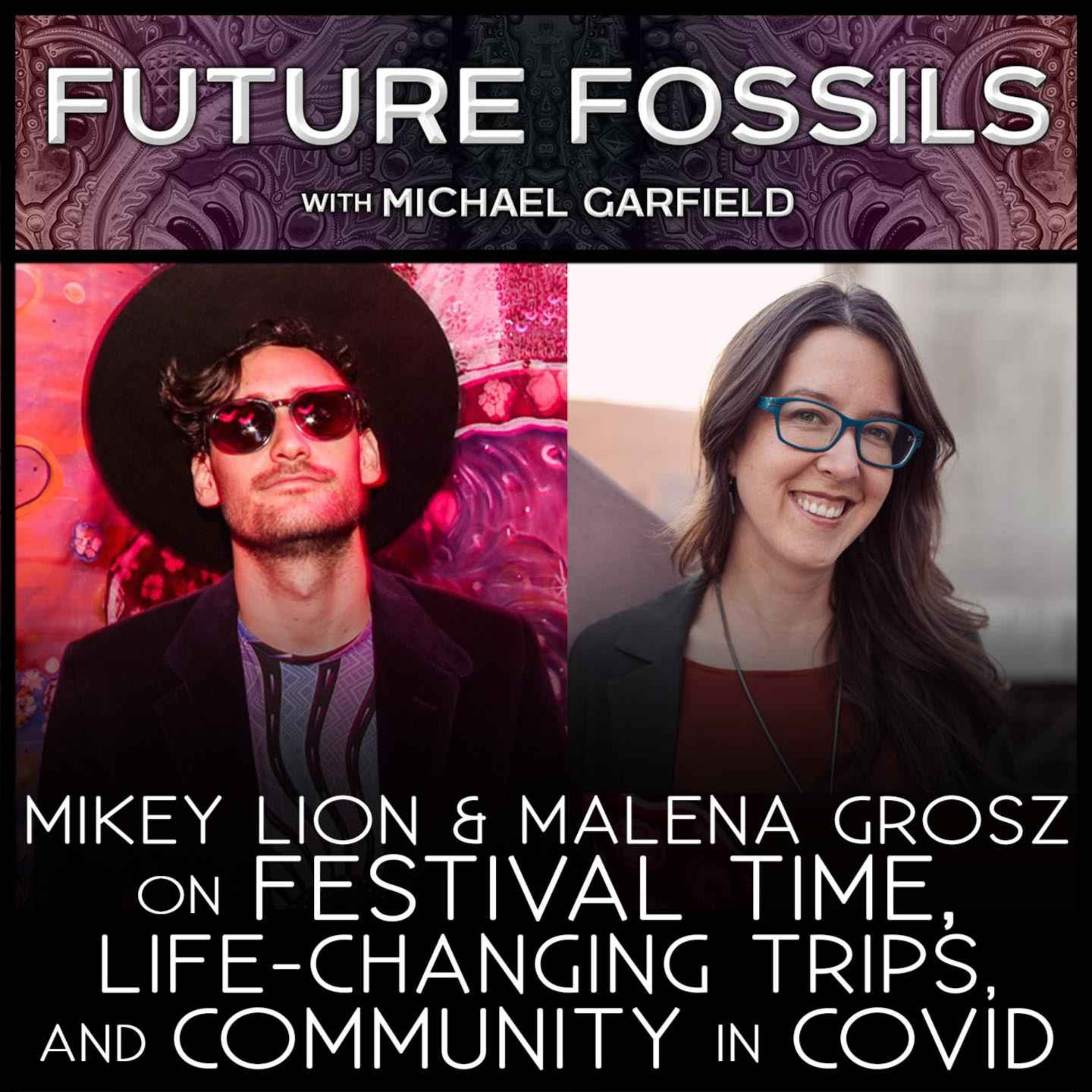
Greetings, future fossils. Welcome to episode 168 of the podcast that explores our place in time. This week, our place in time is the beginning of a summer of reopening. People putting their little heads out of the snail shell and starting to explore in a way other than the adolescent rebellion that we've seen motivate large gatherings over the last year, people who just refuse to believe in the pandemic.
Now, this is something else. This is people stretching out to try and reconnect with the life that had been ripped from us over the last year. We're all a little weirder, having spent so much time alone, so much time trying to accommodate these new conditions and the gout and confusion that goes along with. Living through a moment of global history, so what is the festival going to look like now?
And how will the pandemic have stamped its mark on gatherings moving forward? That's one question, but another question, a little bit more evergreen perhaps, is how experiences of the timeless are both the inspiration for and arguably the chief benefit of coming together in festival celebration in the first place. I mean, it's very much, no matter where you go, about the experience of unlatching from clock time and sinking into something that I like, Phil Ford, episode 157 guest and co-host of Weird Studies calls Diviners Time, where as I talked about with the original co-host Evan Snyder way back in episode 2, about the Kairos, this qualitative sense of exploring time as a living thing, allowing ourselves to be guided by intuition and curiosity rather than subservience to the ever onward marching and accelerating. Atomic Overlord that synchronizes all of our devices.
As we start heating into the summer, many of our brains start craving that langerous, lazy river time, cicada metronomes, a son that never seems to set. It's in the spirit of a hopeful, joyous return to the things that we've lost over the last year, even if they are forever changed. That I invite you into this delightful conversation with Mikey Lyon, co-founder of Desert Hearts and Melina Gross, creator of the Party Pro Toolkit and podcast. To inveterate festival producers, people committed to fostering the creativity and community that often has a hard time taking root in a society dominated by economies of scale.
Hop into our virtual cuddle puddle here and enjoy a conversation that starts out kind of abstract and conceptual, but eventually makes it into some surprisingly deep and vulnerable places. And I'm really honored that Mikey in particular was willing to share some reflections on a difficult psychedelic experience and that we were able to talk through it right here on the podcast. I think that's a first, at least for future fossils. And it was an honor and a joy to participate in that, much as I used to participate as a live painter in festivals acting as de facto harm reduction and psychedelic integration guide.
Oh, the good old days. Before we dive in, I just want to say if you enjoy the show, if you're getting value from these conversations, please consider supporting future fossils on Patreon. I have stubbornly resisted taking sponsors for this program because transactional relationships, due to my festival background, are just not what I want to encourage in this world. I want this show to be beholden to no one but us.
And that means taking the bold move of relying entirely on listener support, which in turn means having a day job, which in turn means outsourcing editing of this show to my wife or my friends, making sure they're taken care of, staying up until 2am, night after night, properly research, publish, and share these conversations, supporting the discussions going on in the future fossils, Facebook, and Discord groups. I love you guys and I want to keep doing this for as long as I can. And I'm deeply grateful to every single one of you who has helped me make it this far, including this week's newest Patreon supporters, Sterling Bond, Luke Aiden, Earl Kelly, Sonya Rent-Dorf, and Jalopy. Welcome on board.
We're having a couple of really excellent upcoming future fossils book club discussions, including pre-cognitive dream work and The Long Self by Eric Wargo on July 11th, for which he will join us on the book club call. That's a first, I'm very excited about that. And also I've started doing a new bi-weekly series on the off weeks of this show for $5 and up patrons. The latest episode was on hyper-objects and hyperestition and Jurassic Park, as a way of framing my latest studio single, Life Finds Away, which is black comedy about technological evolution and unintended consequences.
So if this is the kind of thing that sounds interesting to you, hop on over to patreon.com slash Michael Garfield and dig in. And if you spend all your stimulus money on Dogecoin, only to watch Elon Musk tank the crypto market, you can still help this show by rating and reviewing it on Apple Podcasts. I deeply appreciate it. And it's the best thing you can do to get this program into the ears of new people who might appreciate it.
Anyway, thank you each and all again for listening. Enjoy this conversation. And if you want to talk about it with people afterwards, hop on into the Discord server and find us. The water is fine.
Oh, and stick around after the conversation. I'm going to share a track from Mikey Lyon's new album For the Love. All right. Well, let's talk about time, shall we?
First of all, it's a pleasure to have you on the show. And you too, Alina. It's nice to have you back. And Mikey, I would just like to start by asking you to reflect on what time means to you, especially in light of the time that you have invested in community building and in creativity and like music and how that fits into like a larger scope of like a broader sort of philosophical understanding of time for you.
If you might. Jared, we're getting deep real quick here. I love it. I thought we were going to talk about time of the interview.
You know, some little things I've known in time. Time to me is this ever-changing tool that we're just part of. And I think over the last year, time has at different points slowed down. It's sped up.
It's definitely not moving in the same amount of time as it should be. As I've got older, time definitely seems to be moving faster. And the amount of time and energy that we've put into Desert Hearts over the last eight, nine years, it's kind of unfathomable. At this point, it doesn't seem like it just seems so far long ago when we started it.
But I also know that we have so far to go with Desert Hearts and what we're doing. And so time is really just, it's my friend and it's also my enemy. And it's something that I always have a hard time grasping because when I have too much time, then I don't know what to do with myself. And then when I have not enough time, I'm just completely lost and frustrated as well.
But what about that sweet spot of time where you're just in the flow and things are kicking and moving along and there's also that sweet spot? Oh, yeah, absolutely. To your point, Mikey. Well, I had a conversation on another podcast that I host with this guy, Peter Dodds, who's a researcher at the University of Vermont who studies Twitter data, looks at the frequency of words, like takes it way deeper than the Google end-gram thing if you're familiar with that.
Sure, yeah. Studies that changes in frequencies over time, but also gets to see how they develop on the network. Like it's not just the frequency of a word, but how it's shared and how many times it's shared and the geometry of the network through which it's shared. And he had this term, collective chronopathy or chronopathy, which he meant originally to just be the sense generally that people feel, that we've collectively feel about how fast time is passing, you know, we're like the character of it.
But I'm misread it. So I had this whole conversation with him before I realized that he actually meant, not what I thought he meant was that it was like a disease, that we were out of whack. It was very clear that in his data that like there were times in 2020 where the last week feels further away than last month, you know, or like that kind of thing was going on. So anyway, I like your answer.
Thanks. It's also times like the best George Carlin bit ever and also if you're familiar with that at all. Oh man, I know I am, but give us a refresher. I can't do it justice because it's pure word poetry and he's just riffing, insane, but it's go back and check it out after this.
The George Carlin bit on time is unbelievable. Yeah, he goes fast as I recall. Oh yeah. Yeah.
What about you, Melina? I want to just anchor this in your feelings about time before we go into other stuff. I feel like time has been going through compressions and expansions, similar to what you were saying, Mikey, where I feel these points where it feels super condensed and it goes by really fast. Like this whole last year is honestly gone by really fast, but then there's these moments where like I'll just lay in my yard and I'll just listen to music outside and I'll feel like it's just been four hours and it's been 45 minutes.
So I feel like this quiet space that we've been able to individually share during this time has been really good for that to like feel the compressions and the expansions of time. So there's something that just occurs to me, I don't know why it took this long to occur to me, but here we are. There's something that we didn't really get last year. I think we all know this on the surface of it, but I think I have a new angle on what we are missing, which is that sense of time that you get at festivals.
More to like what you were speaking about earlier, Melina, with Flow State kind of a thing, where you get into a more of like dream logic kind of time, where you're just maybe you're in more of like a mythic cycle or something with, you know, the way that your body just responds to you putting it through these sort of heroic circumstances or whatever, but like there's a sense of time that you get into with a group of people, like a pod of folks that you're tripping across the plyo with or whatever. And anyway, so I'm curious, I don't think probably everybody lost that last year, but I'm curious what you think is like special about the kinds of time that people experience at festivals and like how we might have to find other ways to access that, you know, while we're still like stumbling our way back to whatever like a normal social life looks like for human beings. And I'd love to hear you go about that first, Mikey, if you don't mind. Sure.
I remember when I was first going to festivals and going to Rais, even in EDC back when I was 18 years old and being on the dance floor and being in this state of ecstasy. And I'd already I'd been there for three hours or so, having the absolute best time in my life and then looking down at my watch and being like, oh my god, it's only 9 p.m. It's like, we got nine more hours of rigging, you know. And you're just like, I remember these distinct moments where time does slow down when you're in this complete state of sensory overload, consciousness, and just exactly where you're supposed to be.
And I think that's one of the most powerful moments of being at a festival is when we're in this state of collective consciousness on the dance floor in a yoga class or workshop. And everyone's just on this same energy and same vibe. That's when I always feel time seems to slow down for me. That it can also be with a small group of friends, just a gathering over at my friend's house when there's 10 of us and we're just having a really amazing time.
That's when time seems to slow down. And so being at a festival, I think it's always it's a hard thing to replicate because it's just there's a vibe that you can cut with a knife. And it's just something that is very hard for us to find outside of it. And I think even in a nightclub is tough nowadays.
And that's why people have really gone and moved towards dancing at festivals because there is so much more energy that's being expelled and brought in. Well, you know, how do you feel? You can answer the topic question or whatever it's proposed, but also like the statement that he just made. I know that in your work with Party Pro Toolkit, you've interviewed a lot of people that were, at least before the pandemic, hosting really beautiful and thriving little scenes.
I'm curious to understand how you distinguish those two in your own view of things. Like the difference between the outdoor, desert, rave type camping festivals versus holding it in a warehouse. Right. And I actually do have a deep curiosity about that of the container that's created by being out at these events where we're camping, we're out in the woods, we're out at Burning Man, we're on the fly-in.
And I think that that container that feels very safe and also somewhat closed in of, you know, you're not going back and forth, or just going back to your apartment, or you can't just like pop over to a convenience store. And I think that that container creates the opportunity for that experience, but I'm really curious about what are the ways that we can start incorporating more of that experience and the culture that we find in these isolated events that, you know, our festivals, Desert Hearts, Burning Man, and how do we start bringing more of that culture into our nightlife communities, because that's more accessible. And I also feel like that's kind of where it's needed. So I just stole that and proposing any question for you, Mike.
What do you think about that? It's something that we've always tried to do when we are doing our Desert Hearts events in the city. We started a brand called City Hearts that was essentially trying to replicate the energy that's felt outdoors and bring it indoors. And we used to fill this party at the Velosco Theater in Los Angeles where the stage is just like one part of the show.
And outside there's fire spinners and artists and vendors, there's an entire vendor village. And I think that that kind of community coming together is something that is really important in achieving that vibe and achieving the collective consciousness of people interacting with one another. And we're all connected in the different art that we choose to give. And whether you're painting or performing or just giving a hug on the dance floor, those are the kind of things that I think really elevate the vibe and take it from something that is a bottle service club that's very materialistic and they're shallow and then turn it into something that is deeper.
It just allows people to go further into their mind and to share that experience with others. Well, and what I care you're speaking about is kind of the multifaceted experience. It's different from buying a ticket to see a DJ perform. And that is the sole focus of the experience is that DJ in the booth where I hear that too of this opportunity to bring in other artists, other experiences, even the life painting of just having this multifaceted experience that's presented that allows the participants to look around a little bit and not get so singularly focused in what's happening.
Right. And I think the dance floor in general never was supposed to be focused on the DJ. It was supposed to be just you mingling with your friends and dancing with the people that you love and for hours on hours on end and somewhere along the line, I think like America took over and just like, here's the DJ focus on him, let him gag you. But I think that we can actually use a lot less DJ booth focus nights.
I agree with you there. No. Except the DJ booth at Desert Hearts is so, so cool. And what's great about it is that you can actually get up on the DJ, you can get up on the stage and you can get up on the DJ and there's like no boundaries there.
And I mean, I spent hours back there just feeling like a rock star just really feeling those vibes. So I appreciate that. Yeah. And that's something that we did specifically.
So we wanted to get rid of the VIP experience at Desert Hearts. We wanted to just make it so that everyone is out there able to go to any part of the festival and feel just as special as anyone else. And at the same time for the DJ, you are now smack in the middle of the party. You have people behind you to the sides of you and front of you and you can feel the vibes so much more versus just being the sole person up there.
Yeah. It always helps me get more in the groove when I'm DJing. So it's something that we always implemented. Granted, we've had plenty of problems with that.
But it's a pretty self-regulating festival. When people are mess up up up there and acting full, generally someone sees that and they're like, oh, someone in the crowd will just be like, oh, I gotta go like a candleless versus getting them off stage. But yeah, we like to keep it a little bit spicy. Well, it seems to come from the dewocracy of burner communities and that all access that y'all create, like that very much is a festival that has more of that burning men vibe than anywhere because of some of those boundaries that you've opened up.
And like you're saying, it empowers the people who were there to feel like they can also step in and kind of support each other or step in on a situation that's going on. Yeah, we took so much guidance and inspiration from Burning Man when we were creating the culture of desert hearts. We always wanted people to feel like this is their festival, that they have just as much authority as us. And if they want to go and regulate or let loose, they can always feel free to do that.
And that's something that we wanted to give that freedom to the people there. I appreciate that. So I have a question about that. And I was going to ask this question before you brought up Burning Man, which is now jammed awkwardly into the question, which is about the scale of the event and the fact that you can put the DJ booth in the middle like that and have the audience kind of self-regulate in that way seems to be something that you couldn't really get away with if it were a festival of a certain size.
Like if the crowd were of a certain size and it's not just the size of the crowd, it's also the psychology of what attracts a crowd of that size and it's something to do with it. There's certain things about human psychology that emerge mobs and so on. But it is just this question about how you and the other people putting this festival on are thinking about what's possible and what it means because it's also a larger event serves as a different motive even for the people attending. So I'm curious to hear your thoughts on all that stuff.
Yeah, it's in this point of we're really trying to figure out the next step for us because on one hand the festival is 5,000 people right around there every time. The area that is located at Los Coyote's Indian Reservation is like completely maxed out. It's always a thing trying to figure out parking and then just the overall space in the footprint that we have is just too small. And the thing that they don't tell you when you're throwing a festival is that it never gets any cheaper throwing it and it always gets more expensive.
And when you don't have the scale to keep having more people come in, then the ticket price goes up to pay for these new things. And then all of a sudden we're at the point where I don't want to be boxing out the fans that make Desert Hearts what it is. I don't want to be selling $400 tickets. So we're really at this point where we're trying to figure out our next move.
Because on one hand it's the most beautiful party in the world. I would put it up against anything. But I don't know how sustainable it is at this size, at this location. So it's like this like, yeah, technically.
I mean it could get significantly bigger. I mean not like hugely bigger, but it could get bigger without it changing fundamentally in the world. Absolutely. And what point is it, you go from the crowd to take care of itself to know we really need more security.
That's I think part of it too. I don't know. I think there's something that happens socially about anonymity and being able to feel like you're accountable to your community or feeling like you're just one in the million. You're just one of the crowd.
And so it's like I see some of the worst behavior at Coachella. I also see some of the best behavior at Coachella. But there's something about that size of a crowd where people feel like they can just throw trash, do whatever. And it's like, I feel like there is a limit to that personally.
But Burning Man does it, 80,000, but I've got five miles diameter to do it in. Right. Yeah. I think it just comes down to the culture that you're putting forward.
And how do you train the next batch of people that are coming in that are new? And I guess how to educate them on all the practices that have gotten us to where we are. And that's always something that's a struggle every year. It's really hard to do, but we've implemented different workshops throughout the festival to try to teach people the new, I guess, the burner way or the leave no trace way and make it better mentality.
But I really think 5,000 has been such a sweet spot for us. It's never felt overcrowded, but it's enough people that it creates this like utopia vibe for a weekend. It does and that the singular stage aspect, you know, it doesn't divide the crowd. It's kind of like there's this one stage experience and then there's these other areas and things that you can do.
But the music is singularly focused and I personally love that. It's important. The whole five stages at a time thing drives me insane. Oh yeah.
Insane. Especially because almost anywhere you're throwing an outdoor festival, you know, you're going to be relatively limited in some way, you know, with the land. The more stages you add inevitably, you end up pointing systems at each other. There's got to be some sort of network theory rule to like how you like an algorithm that we could optimize for speaker placement that we could just freeware to the people like festival producers for the love of God, you know, just like minimize the amount of times that has to happen.
But yeah, I think there's that part of it too, which is like, it's not just a raw size of the festival. It's like the size of the festival relative to like what's actually possible. You've been financial slash real estate constraints. You know?
Yeah. I don't know. Yeah. It's something that we always took a lot of pride in was one stage, one vibe that's been our ethos since the beginning.
And it creates this atmosphere that every single person on the festival is just on that same wavelength, same vibe, collective consciousness, whatever you want to call it. But if you're not finding with the music, you can go somewhere else and go check out the art or one of the million other things to do. But it's something that we always wanted to do with Desert Hearts because we never saw it anywhere else. And vibe was everything that we would strive for with Desert Hearts was always putting the vibe first and how to create the best party atmosphere possible.
And the one stage one vibe is the backbone of that for sure. Yeah, I would agree. I think that's really special. And it's like I'm the sort of person that I pay more money for lower capacity.
Like that. So I guess my question to you would be, I should actually, I should take this opportunity to give a shout out to Travis at Utopia Fest in Texas because he's always held that same attitude about his festival. And he'll do alternating stages because it's like bands and they have to take time to set up. But there's always ever only one band at a time.
So that's great. But yeah, so there's that. So how do you feel about then Silent Disco? Because the whole two channels, three-channel thing has always pissed me off.
I'm just contributing to the fragmentation of American society. I mean, you're not going to find me DJing Silent Disco. It's not conducive to like having the best time ever. It's hard.
Everyone's dancing to like a different rhythm and a different beat when there's two channels that always throws me off so hard. It's also, live music's supposed to be something that you feel. And having a real sound system in base up against your body along with everyone else in the crowd, feeling that exact same thing, that's what creates a good party and a good dance floor. And when it's a Silent Disco, it's really hard to capture any of that magic.
Yeah, Silent Disco is like a compromise for the most part. It's like, well, this is all we can do right now. Right. I guess it's better than nothing.
It's better than nothing. It's not like a go. Yeah. I'm almost having with a subpack or like a bass aware or whatever.
If you can wear a woofer, then I'm mostly okay with it. It's just the whole like channel A channel B thing that really gets on my nerves about it. You know, it's like that you can be dancing right next to somebody to a totally different groove. But a crowd getting into it together is one word to the statement that we were just making about one stage.
It's like, anyway, that's what that is. But okay, so I want to take a total dog like I want to elbow here and ask you about, you mentioned in the emails leading up to this, I have not been to Desert Hearts. Other than what I hear from my friends, like I don't know much about this festival. And I would like to know about the origin of this event first.
And then after leisurely stroll through that, like, if we can also, I'd like to hear about what it has been like to sort of reimagine the event over the madness of the last year or so. An origin story and then like a re-origin story, if you would please. And then Malina, just so that you've got this on your mind, like you have thrown your own festivals, you know, you've participated in production at other people's festivals in a major way. And if you feel like giving origin stories in that regard too, I think that would be useful for like the follow up questions I have about this for both of you moving forward.
Thank you. All right, let's go. Let's do this. This is 2012.
At the time I had graduated, you know, I graduated from college, meaning one of my partners, Marps, had also both been graduated as well and were throwing these parties in North County, San Diego, called Jungle. And we really just like, we wanted to always create this vibe, even at our Jungle parties before it was where we had the live artists, the music, the decorations always over the top. And we would cut down all these trees from my dad's backyard and just jumble by this beach bar in Grille in North County, San Diego. And that was like a couple months leading up to Desert Hearts really.
We'd been doing that for like nine months or so. And my brother, who is also one of the partners in Desert Hearts, he wanted to share DMT with me. And I had never done DMT or I lost good, but I was fairly experienced with psychedelics. And so I was really excited to do it.
And we set it all up in my dad's backyard, my parents were asleep. I was living at home at the time still. And I was like, I'm getting smoked with DMT and about a minute goes by and I'm getting all the fracko colors, just wild wild colors in my head and laying down. And I open my eyes and I look up and every single tree, every leaf, every branch, every live thing in my dad's backyard and my dad has this incredible backyard.
It's like a jumble back there. And everything back there is just looking down at me just with this huge shitty grin on its face on everything. And they're just going, yes, yes, yes, yes. And I'm just like, what the fuck?
Like, oh my God. And I'm watching all these fractal patterns of shapes and colors that I've never seen before, shooting back between one another, between plant to plant. And for whatever reason, I'm on their vibe with them. And I can understand what they're saying.
And they're saying how unbelievable is this, that he finally understands that we're just as alive as he is. And these are plants that I've literally grown up with. Like we lived in the house for 22 years. We went up to that point.
All every plant in the backyard was something that my dad had planted. And for me, all I knew of these plants was yard work. I had no appreciation for them. I'm just like, get me out of here.
I saw like, so I'm having this epiphany. And I was like, oh my God. And then I just think, oh my God. I'm so sorry for cutting you guys down for my jumble parties.
And literally, and the trees just go, no, dude, don't you understand that what you're using us for is to create a positive impact in the world. You can use us anytime that you want. And that to me was just like the secret of life given to me in that moment where the way of the universe, the way of nature and the earth and plants is to ultimately create a positive impact and to do things for the love and to spread love and positivity everywhere. And in that moment, I felt like I was given my life purpose to really make it my, I guess my way of life to spread love and positivity in the things that I do in life.
Now I came down from that trip and it was like, okay, I had a lot of work to do. We started Desert Hearts two months later with your first Desert Hearts party two months later out in the middle of the Mojave Desert with the intention of spreading as much love and positive energy as humanly possible. When we went in with that intention as like the sole driving purpose of the party, it just became magic. And I feel like no matter what things have been like throughout us, when we keep that as our guiding principle, it's like we can't lose because it's what we're supposed to be doing in our hearts.
That's really like the deeper origin story of Desert Hearts. And then what's even more fascinating about this story is that, so I listened to this song by Francesco Lombardo called So Fuel, S-O-F-I-E-L. That was a song that I was listening to while I blasted off for the first time. And I met Francesco Lombardo a couple years ago and I told her this whole story how her song was this huge catalyst for me going into this trip and she's just like, are you kidding me?
You know what So Fuel means? And I'm like, no, definitely not. And she's just like, So Fuel is the goddess of, or she's the angel of nature. And so just like, kind of gave me this like total serendipitous moment of like, yep, that's what was supposed to be happening on that day.
Yeah, I'm still just, like, that's a story that's now ingrained in my life of like who I am. And single handling the most important impactful moment in my life. Yeah, we've kind of just been keeping on with that ethos ever since. And it's just letting me in the right direction and that's the origin, I guess.
So how did you, so that was the origin. But how did you move from that to hosting the 200 person festival? Like, how did you call to your team? How did you decide which like-minded team is he wanted to work with?
So we had so me and Marv's my brother who is one of the partners. He's my younger brother. And he was a DJ at the time and we were doing this. And then we had Lee Reynolds who is, I don't know if you guys know Lee Reynolds, but he's like the most interesting person in the world.
He's 20 years older than the rest of us. So when we were 23, when we were starting as a hard to do was 43. And he's just like an energy god. That's like a way to describe him.
It's just that he's just beams energy and attracts people and makes them feel good. That was someone that we knew that we had to have for sure, like to help us with this thing. And I got to meet Lee Reynolds at a sonic bloom and he ended up hanging out by my art installation, which was like a illuminated flower of life out of the bicycle rooms. He was just here so chill, he was hanging out with us and then he was like, all right, let's go back to the stage.
We're walking back to the stage, he's like, do you want to skip? And I was like, yeah. So he's ripped and held hands and like ran across this field. And I was like, all right.
I knew he was a magical being from that moment. Yeah, yeah, he's truly one of a kind remarkable human. What was also really cool about that is so we had our party called Jungle. We actually had his own party called Moon Shake that was happening in North County, her in, by downtown San Diego.
And then since he was from an older generation of house music heads and we are like the fresh up and coming, all of us were like just graduating college and whatnot. So then our two crews collided and it was like this really awesome blend of people from like the older generation, meaning the new fresh energy and it was just a really, really beautiful experience. And then, you know, our first party was 200 people and then the next party we threw was 400 people and the next one was 900 people. And then we were just like, oh shit, like we need to get some infrastructure because we don't know where we are.
And then I guess, yeah, it just kind of always grew word of mouth. There was just something different happening in our parties than any other desert party or festival. And yeah, I just remember that at the very first party on the first sunset, it was someone coming up to us and telling us that this is going to be the next lighting in a bottle. And we're like 23 and just like, what are you talking about?
But no, I guess. And then it just kind of like, oh, yeah, for sure. Let's keep it going. And it all happened really organically and just for the right reasons.
And it's given me everything that I have to do. So can I ask about how the record label, that whole piece of it seems unusually ambitious for a festival already sized? So what were you all thinking and actually how has it synergized with the event? I'm real curious about this piece of it because it seems like starting from zero knowledge, this seems like it could actually be a really interesting way for those two things to support one another and actually pay artists in a way.
So what you all are doing with it? Was there a point where the record label just felt like the appropriate next step as far as being able to release music by these people who are involved? Exactly. Yeah.
So all the founders are DJs and producers. And really, I always had a dream of finding my own record label and running my own record label. And when I was producing music, when I was 2014, when I started Desert Hearts Records, and I'd been shopping my tracks around different places and not getting the responses I wanted or just wasn't really feeling like I should be joining someone else's crew by putting on my own music and like why do we establish ourselves and make this thing legit and real? I've always wanted to DJ for a living and for my career and owning my own record label and having full control over the music that I put out, I can release music whenever I want.
I can put out all my friends and family's music if it's the right fit and if I believe in it. And then I can also meet DJs that are coming to the festival and I can introduce them to our whole community of the Desert Hearts fans and followers of the music in the festival. And so it was just like the perfect balance and the perfect thing to really just, I guess, boost the Desert Hearts community and be able to just bring in more people to it as well. Yeah, that's Desert Hearts Records.
And one of my partners, Mars, he definitely has some more techno side to his music that he plays. And so we started Desert Hearts Black just a couple years ago. And yeah, it's like brethren's sister's label now. I run Desert Hearts Records, he runs Desert Hearts Black.
And just like we each have full control over what we want to put out on it. And it's just, it's been really great. It's actually Desert Hearts Records is actually coming up on its 100th release in May. And that's my, yeah, and that's my debut album.
So pretty excited. Wow, that's actually really cool that you did it backwards like that. You waited until 100. It wasn't, it just kind of synced up like that when I was doing the release schedule and thinking about where I wanted to release my album.
And you know, this album took me a long time to make it just kind of all just like this the synchronicity and it was like, oh, I could put my own number of 100. But something also that's really cool that we did was because we built this community, we built this backbone of our festival scene, of the art scene. There's so many components and different crews that are involved in Desert Hearts that make it what it is, kind of like how theme camps operate at Burning Man. We built this community first as like a backbone for playing music and being able to share new music and new artists with the community.
And so I think normally the business model for DJ is you put out a song and it charts and it does really well and everyone's, everyone loves you for this like short window of time when your song is really hot and then your song eventually declines and especially house music, it has this really short shelf life. And so everyone's always chasing their last hit and trying to put something out that's going to bring them back up to that level that they were. Whereas we kind of did it backwards and like built this following in community first and then just share our music that we have when we have it. And we're never having to really chase this feeling.
Yeah, it's been really cool. It seems a lot more sustainable than the average DJ career. Yeah. And that's something I'm curious about is how did you, like, what do you think some of the aspects are that helped you to build this community and movement?
And, you know, was it having a really solid marketing team? Was it just creating this experience that, you know, catches word of mouth? Or what are the combination of elements you think that contributed to that success? Because there's a lot of small time crews.
Like I was one of those small time crews of being like, does their hearts, they're doing it. They're like, dang, they're breaking the threshold. I really think it comes down to empowering people and giving them something that they truly feel part of and that they're proud of to want to share with their friends. So everyone from medical to the trash pirates to art, lounge and all artists that come to Desert Hearts, like we always empower them.
You guys make it what you guys want to make it. And we will just oversee it, but like we're never micromanaging the different crews that are involved with Desert Hearts. And it's even down to empowering the people that are able to dance on stage with us. It's, you know, it's we always wanted to make people feel welcome and that they're part of our family and that they were just as important to this community as we were.
That's why we started doing the necklace thing. We were just at all of our shows for the first, like six years, we were just giving out hundreds and hundreds of necklaces at every show, us personally going out onto the dance floor and just like, welcome to the family. And it just created this synergy and people felt so proud to be a part of something because I think that humans are just super tribal by nature, right? And the average person in America, they might find their sense of belonging in a sports team or whatever political party that they subscribe to.
And they're able to get that like us versus them and tell it, we're like, I'm on a team. I'm on something that I believe in is doing the right thing in the world or even if it's, when it's football, right? It's like you're just like trash talking all your other teams because it's fun. And you know that your friends might be on another team or they're on the same team as you, but then with Desert Hearts, if you like give people a sense of belonging to something that is ultimately, I think good and coming from a peer place of love, just being able to bring people together, like the root of something that means more than something superficial.
Yeah, I think that that's what people really, really vibeed with and why Desert Hearts has lasted this long so far. Yeah, I feel that it's interesting to feel the parallels in our origin stories and, you know, some of the ethos behind what you're talking about where it feels like it just kind of is some of that stuff that gets woven into the collective consciousness of some people get to download. It's interesting because my inspiration to start hosting events also started with the DMT trip. Yeah.
Let's go. Let's hear it. I have it all right. But within about it is my partner at the time, we went to this festival called Firefly that was hosted in Flagstaff, Arizona and it had that kind of vibe.
It was like 2000 people, the community would spend, you know, weeks and months like building and, you know, getting this land ready for all of us. I was the best. It had that real community vibe and ended up camping randomly next to the person who became my DJ partner and this other crew out of Santa Fe who introduced me to Michael actually. And they were the ones who shared with us that first experience and it was like the next year we were all hosting a stage together, that same group of people.
We were hosting a stage at Firefly. We had started producing Inner Space was a bi-monthly immersive, performative house music event we were hosting. But it really felt like that whole experience was so synergistic in just creating the platform for people to create. You know, to say, well, we've got this kind of esoteric theme that we don't want to put explicitly on the poster, but we want people to feel it through the way the poster is designed, you know, through the moment they walk in the door from how the space is designed.
But there was something very connecting in that experience that I think just activated all of us, even though it wasn't necessarily the first DMT experience for all of us. There was something that really electrified us in finding our unity together in what seemed like a mismatch group of humans before that moment. Let me just be clear about this. Plants didn't talk to you.
You know, I was also under trees. So when you're talking about looking up in the trees, like smiling at you, and for me, it was kind of more these like circus orb characters and opening my eyes to like the fractal type experiences. But I think what it was, I remember looking at these people's faces and these were new people to me, but seeing these recurring fractals and lines in their faces and seeing the different colors of their auras and kind of seeing how we all fit. This is not something I normally talk about, but you brought it up.
So I felt like it was great. This is so worth taking a little stop in and just like exploring for a minute because, you know, my buddy Stuart Davis, whom I regard as, you know, one of a handful of people I consider like an older brother on the path, right? Songwriter and comedian and just TV guy and like film director and like just a painter, just a total fireball. In the last couple of years, he started hosting the show Aliens and Artists, and I've had him on Future Fossils to talk about it, about his experiences, but not just things that would present as extraterrestrials, but other sort of non-human entities, you know, mythic archetypes that you like tangle within like a really palpable visceral kind of way and like just all therapeutic dialogues or whatever muses that you arouse in your own self or whatever.
So where was I going with this? Oh yeah. So Stuart has this whole podcast devoted to asking why it is that the like one of the maiden features of the Alien Encounter is to incite creativity, to inspire the artistic act, you know, and like there's so many other versions of this. Like, I think the best version of the Stone Day theory for human language is the one that Richard Doyle gives in his book Darwin's Pharmacy, which is about the psychedelic experience, making us so desperate to communicate what we saw that we come up with language.
It's the kind of thing that you're like, hold on, just okay, I'm gonna make up some words and I'm just gonna have to see what happens. And then I will show you and then I will say those words and then you will get me. So there's that and I'm just curious what your thoughts are on that because it is curious that for both of you, it seems like the psychedelic experience has this relationship to creativity. Although I just saw this article today that said that Silla Simon in particular has a complicated relationship with creativity.
While you're answering this, while you're riffing on this, I'm gonna take a look at that and see if that contributes anything meaningful to this discussion. Yeah, I'm actually very conflicted myself on this because on my most recent DMP trip that I had, I actually had an Alien Encounter that was like super negative. And it like, yeah, and it completely shifted my whole reality of what I thought was true for my like the path that I'm on. So like totally mind-fucked me because we were out in Joshua's tree and we just had like the most beautiful LSD trip that day and we were just kind of winding down around the campfire and we started passing the DMP around and I did like a first hit and I had this like weird, overwhelming experience of like this like force putting like a bag over my head or something or like this like weird fractal pattern thing was kind of getting like forcefully like putting like right here like over my head and not in a comfortable way either.
So I came out of that kind of just like shook it off like oh, that was weird like okay, I'm probably just not going far enough into this and so I did it the next time that the pipe was going around, I guess the medium, I'm like alright I'm gonna like really go for it on this one and get in my all. And so I take a hit, same thing I'm getting that like kind of color but just like the force over my head and then like alright I'm going in for round two and I go like take this other hit and as I'm like holding it in my hand I'm like seeing this like full ancient language like written on like all the wrinkles in my hand and it's like oh god here we go. And then I get transported to this like operating room or something and this weird entity is like holding up this like it's like a snake or something it's kind of like holding this like talisman and it's just like look look look look look and just like holding it like right up to my head and like very very aggressively like look look look look and it's like I don't know what it was it's kind of like weird, it seemed like a power source or something and then all of a sudden seven tentacles like shoot out from this fucking alien beast and I like lashing into me and I'm like oh stop stop stop stop stop and it's just like at the same time like my whole body's clenching and it's like oh it's just like oh oh oh oh oh oh oh and it felt it was so fucked up like I like came out of it like crying and just like devastated like I had just been like so violated and I didn't feel like any kind of love or any kind of them helping me or anything like that it was like my whole world of like knowing where nature in the universe stands as far as love and positivity just it's like shattered for a moment and it's like that I don't know what to make of this anymore. So that happened like a couple months ago and I'm like just like still not exactly sure how to process it because it was like yeah it was like kind of devastating but yeah when I mean like I mean I'm talking like it hurt like my whole body was like full clenching up and when I looked into it other people have had similar experiences like this but oftentimes it was they call it like the operating room or like the operating table but a lot of times people are they feel like the aliens are like putting something good into you or taking like that things out of you where I was like this just felt like so wrong and really pretty messed up and so yeah it's got me questioning a lot things now.
Well thank you first of all thank you for being so vulnerable and willing to bring this up on the show because this is some intense shit and I didn't know that we were gonna go here today but let's go here. Let's go here because this is you know important I think I've had a very what I would call comparable experiences under the influence of DMT on multiple occasions and some of them have been positive and some of them have not been and you know I feel like I have some basis upon which to compare them and contrast them and understand what underlying unity they may actually possess and I've had I remember having conversations about entities with Mild Remake Tofr Sykes who's a brilliant lovely person and I'm gonna have him on the show here soon I swear you know and he was talking about and I agree with the importance of this about you know like banishing things and like identifying them and like you know calling them but like in my experience and maybe this is just a different structure for different folks kind of a situation like maybe some people are more facile with one technique than another but like I feel like I've never had as much success banning things as I have sort of like befriending them or like understanding it was it was back to back and it's funny because I was just talking about the guy who gave me DMT the first time today we still we still talk I met him at a trinumeral in 2008 in Asheville and so the festival for 888 weekend which also happened to be the weekend of the Beijing Olympics and like what seems to me to be like the passing of the significant like the symbolic football of power from America China was going on that weekend and that just happened to be the weekend that I took DMT for the first time and had this like you know surgical intervention but it was like a surgical karma intervention or something like they were actually working on something that like manifests in my physical body somehow but is actually the intersection of past and future out of like a great number of possible intersections of past and futures you know like but with like the interference pattern that would create this possible moment and then like a vector in time that it travels sort of in terms of its like memory or like the appearance of memory but then like the next time I was instead of in a beautiful North Carolina and would I was in my friend's basement in Kansas City on this like cheap aluminum futon and it's like kind of in a bad neighborhood and somebody like upstairs right as I hit the pipe somebody flushed a toilet at like the pipes in this old old house in Kansas City started squealing and I ended up in this space where like I was compelled to investigate this time like the first time I had no idea what to expect I went in completely blank but this time I went in with like an intention to explore and I hit my head on like an invisible ceiling on my way into hyperspace and like I was like I was made very clear to me how dumb that is because you're like you're supposed to go through the gate that decapitates you or whatever you know so to try and like bring that in the way that my brain narrative eyes to anyway in that moment was that I was being sort of like encapsulated by heaven's immune system and like rejected by this like the system that like you can't bring your like human ego into these spaces like you can there are higher parts of you that survive this you know that can like be in there and bear witness to what's going on but like for you to be like I'm gonna go in there and do what I do it's like yeah no no no like screw you and like get that part of the bargain of that moment was that I got like violated in not in precise in the same way that you're talking about but like that there was this like a mosquito type thing that like injected me and was like I was like oh no what is this like it's a pre-incurational contract ha ha how do you how do you know like how do you know you're not just getting gaslighted by some sort of hyperspace monster you know that's like you're supposed to I'll just I believe whatever you say because you know you seem so great and powerful you know anyway so I don't know how you how do you reconcile that shit but I will say that one another time that I had a really weird horrible kind of experience that felt coercive and unpleasant was with this being that was like an and I've talked about this before on the show that had the origin story of this thing but this being that appeared for me and my partner once we were tripping acid together that was like an egg I later started to think of in terms of it was like an aggregate that we had created like this this spirit that we had like awoken from the possibility or whatever and I remember trying to chase it away because it represented a relationship that at the time I was trying to distance myself from because I can be like a long distance and I didn't want to be a long distance and so I was like I don't want to be in a relationship at all and I was like get off me thing and I was tripping with some buddies of mine later that summer and trying to get the thing to go away after like you know years of like awkward relationship with it and it's like dug claws into my shoulder or something while I was like trying to tell it to go away and like it wouldn't let me go I swear to god this was like a horror movie like it wouldn't let me go until I had written I'm sorry like I had like a writing instrument in my hand I had a notebook and it was just like I apologize I was like uncle you know like since then and I just found completely crazy pants talking about this shit but like since then my partner and I have come to terms with this thing and you know to some extent like we had in had a real breakthrough when rather than banishing it we decided to just kind of like go through the motions of like you know the sort of creative process that had created it in the first place and just make another one and thereby like diminish the first one in importance so is this a big character for you or is this all in that same experience oh no this is taking place over years okay yeah yeah yeah so you know this was like more like what we did was we just created another one so that this one was no longer the only child you know it like it like stopped misbehaving after that because it's now just like part of an ecosystem of these these things that we've at first accidentally but now kind of like intentionally have like grappled with I don't know if any of that is helpful to you but I don't know what about you Molina what are your thoughts on this question what I found is sometimes in those dark and difficult experiences that there's really powerful lessons and sometimes things that you don't want to look at much like you're describing and so in that I think there's something really important to those experiences because it's part of the paradox like if everything was rainbow sunshine love and light all the time in those experiences you know that's only one side of the spectrum so I've had some I've had like one particular experience where I was able to experience my actions through other people's eyes and the ways in which I had not been as kind or thoughtful as a person I'd like to think that I was and this happened at a time when I was producing events and I was leaning a little too hard into feeling like I needed to meet the masculine energy of the industry that I needed to be taught that I needed to be hard and this happened in that moment and it made me pause and see like the ways in which I was becoming a monster and it took several months for me to shake the feeling of it but it it was something that absolutely shifted my behavior like it was a really powerful lesson for me of like wait a second and that was when I started bringing more softness I started leaning into my sensitivity and my feminine leadership and like what those strengths are and so I was like that you know it's another one of those experiences it was a pivot point for me that helped me to be a little bit more aware of the energy that I expressed and how it can affect other people and particularly when you're a leader and an organizer and a coordinator and how you know you can hold the center of the energy for the entire community you know so I had this moment of getting really stressed leading up to a festival we were producing and realizing like wait a second my number one goal should be to pull the place of calm for everyone here and no matter what happens I need to be that place of calm because that is my number one priority for my team and it was drastically different from the festival I'd produced the year before where it was like I was trying to you know make things just right in a certain way and you know pulling more into that perfectionism you know I don't know so I would say like the psychedelic processing journey can be so incredibly powerful and how it communicates through your creative expression how it communicates through your ability to connect with other people to connect with you know the earth the trees the world in which we exist but if we were only getting the light side of that spectrum we would be completely disillusioned with the human experience and how we interact with world. Mikey can I ask you about this what is going on with desert hearts right now as far as like covid like what is in the future for you like what is the team planning as like a path like a process forward in this this environment and how much do you think that that kind of stuff has to do with providing me like a window of opportunity for you to have this kind of difficult experience because like you know I'm not gonna like force a correlation where there isn't one but it does seem like maybe you know you're going through like a really massive phase of transformation like individually and collectively and there might be some kind of relationship there I don't know am I nuts no no I think that you're hitting the nail on the head I think that a lot of the lessons that I'm learning right now are especially right now I've been going through I feel when like the negativity of covid or money problems or what not you know as I'm a DJ and I make my living playing gigs and there's no gigs for the last year and I think that a lot of this transformational period right now is really coming at me all at once in desert hearts there's a lot of moving parts underneath everything right now as well that are changing yeah I think that as we move forward with desert hearts it's it's something that I'm actually looking forward to kind of the next chapter of it because we've been doing it this way for so long there's been this year two-year gap in the festival I don't think we're going to be coming back until 2022 just based on how things are going but I think that we're probably going to be coming at it with like a fresh energy and try to like really leave that part of the story behind and like start this next chapter that's kind of my intention with it I think that my partners are also in a pretty similar headspace as well I don't know I think that just this year's been so beautiful but also difficult and really testing on me to like keep doing it for the love you know it's like this like huge sense of resistance has been like constant on me and especially with the album cycle and everything it's like there's so many factors at play that are just like trying to get the best of me there's a book that I really love called the War of Art and it's all about the resistance right and the closer you are to accomplishing your goal the more resistance you're having and and that is something that I think is like really happening in my life right now and it's hard not to be it's hard to like take a like and it's me generally being myself up right it's like but for this extended period of time and then I'm like okay I just have to like keep going forward and really try not to get caught up in this negative thinking because I know that the path forward is love and positivity and staying true to my heart I mean yeah you can even say that this game key experience that I had was just like a radical batch of resistance coming my way to try to like throw me off it sounds like processing of fear you know just in what I heard like that was what came up for me was this like you know these tentacles coming and grabbing you and pulling you beyond your consent or control yeah that really reads like fear to me and you know there's this whole thing so that's like that's part of the resistance right like fear intuition is it actually valid or is it just that tension that builds right and yeah I mean I could absolutely be a cause because yeah I definitely definitely with my album right now it's like the most fear and anxiety and just like insecurity and I think that that's just part of the process of the artist yeah it's really really hard to go through but I know that thousands of people have done it before me and it's just I think it's just part of it and it's something that I'm going through right now for sure again thanks for exposing your belly to everybody on the show yeah I want to ask in a closing gesture here for both of you to speak to you know typically what I mean by people in the show I might ask what kind of considerations it brings up for you if you think about the you know people of the future as being sort of alive right now you know like that the past, present, and future are kind of all happening at once or you know to like think about what it what kind of message you would hope to leave them or to you know what kind of reflection you would want to hear from them but I want to like that's like so much I want to hone it down specifically with the both of you to what you would want to tell them or learn from distant future humans or whatever we become about throwing parties specifically like what would you hope to like God forbid people forget how to party like what would you tell them and then like God willing they'll be better at partying than we are so what would you want to know like what we're gonna question would you ask stay off your phone at the party for sure that was like it's crazy the phone it's it's can't as we can have said that as we grow with technology it's a very fair business but as we grow with technology it's actually natural the technology is natural because it's coming from human beings as we go forward it's all part of this timeline of where human beings are supposed to be going so therefore it is natural but it is it does fucks it up for sure for the things that we're doing and and it takes you out of the place that you're supposed to be in the moment and puts you halfway across the world but on your phone and I think it's really important that we try to preserve these present moments with with one another because it's it gives so much energy in life to us and then I think when people are consumed with other things elsewhere like where are human beings we're not supposed to be taking in information from everywhere in the world all at once we're supposed to actually be living in like small tribes of people and being present with one another and so it's really it's going to be so interesting moving forward because you've seen what it's done to Coachella you've seen what technology is done to Burning Man and that's something that desert arts is always there's no there's no Wi-Fi or cell service there so it's really preserved a lot of that being present moment so for the future I hope that people just can try and consciously stay present as much as they can whether they're with their friends or at a festival and just try to be worried about the moment you think they'll just like build giant Faraday cages and be like sorry we have our like cell signal jamming towers like you will not get a signal here I promise we use technology to make you be present you will be present in fact put on this this helmet that will like help maintain a state of relaxed but focused awareness we'll be wearing this throughout the you will wear this to the festival thank you you'll have a great time guaranteed I know sad feelings I think the future I'd like to see it would be for party culture to be honored as a social good I think there's still a lot of you know negativity and contempt about what it means there's a lot of shame you know just when you get into the wider normal dynamics of human culture but what I would really love to see is for people to like own this as part of a social good that is good for us that is healthy that we want to bring our children up in these healthy communities of people being expressive and creating and learning new skills and learning how to you know cohabitate and exist and build these micro miniatures temporary societies together I just think there's so much value in this that I would love if we could kind of break through some of the you know bullshit that has been building alongside with all of the really incredible momentum you know but you know much like I'm gonna loop it back to you know psychedelics it's like you can't have the light without the dark right have the light without shadows and so how do we move forward in existing in this way that we move forward with those shadows that we learned to dance with those shadows yeah I love that well it's one thing to look to dance with them and it's another thing to let them conduct the the orchestra right like you know like just final a final statement and you can we maybe we can toss this or not but you know because I just I do want to say that was awesome that was powerful both of you thank you so much thanks for being on the show that was really fun and also I want to I want to say that just what you just brought up there Molina of that reminded me of something that was in our email lead up to this about festivals and consumer culture and like I'm just dangling this last little topic on the end of the show if you want which is you know how do we tangle with that and like again I point to like I gesture towards the possibility of new economic models for these these events that are like these events have been a place where we test culture you know where we create fashion and we beta test cool new technological toys but it's also a place where like new relational styles are explored you know new new forms of identity are played with and that's really important I think this key like this corridor what's going on here but like why am I not seeing still other than like you know Burning Man really popularized the notion of a gift economy with a lot of people and it's really important but like why am I not seeing newly technologically enabled economic gestures where like many more people can have a stake in an event than normally do like like I always wondered why if a festival didn't want to pay some of the sort of like low level performers like dancers and painters and so on then like why wasn't ticket allocation or like high yield affiliate marketing like not a bigger part of the expected financial plan of small festivals and I don't know like what kind of innovations desert hearts has thought about in this regard but I would be really curious to hear from you both what your thoughts are on you know what's possible with the future of making these things more sustainable by kind of like bringing a little closer to the way that festivals used to be just an emergent product of the community rather than like the financial burden of a handful of producers it's like part of what it seems like the problem is I don't know thoughts uh yeah it's hard for me to like talk about my economic experience with deserts because like we're still trying to figure that out um it's like it's always all over the place um and it's like we I feel like we go back to the drawing board all the time we have like an absurd amount of guest lists because we end up just trading tickets for people to come for like contributions and stuff and just because we're always like that's our skating creative you know with like our our budget and then we end up having like yeah our guest list is actually absurd that does arts and if people knew the real number they'd be like wow but we end up having just an unbelievable amount of content and not only that but a real sense of community by doing it this way and when people figure out a better model like I'm all for exploring it this has just been what's working for us and and I hope that uh I hope people are onto something soon well that's certainly like spreading the load yeah you know like it doesn't seem like it makes it makes it cheaper for it to exist in the first place but there's still this lot of you know like how do you capture like waste heat and generate electricity with it like how do close the loop in a way that all of that love and care and and collaborative energy ends up like actually funding itself in an ongoing way that like you know what I mean like right like it funds all the artists so that they can participate in projects you're round like yeah I don't know like it I'm just thinking very vaguely into this but right well what you're saying brings up thoughts of like okay so what can we borrow or take inspiration from from corporate models from nonprofit models and how they handle their financing right so nonprofits have patrons and donors and the way that membership models work if people you know supporting the you know growth of this nonprofit and then in corporations you have shareholders and investors and not saying that you know either one of those is exactly the right thing but I think there are opportunities for us to look at as you know community builders from the ground up at these you know party scenes what are the ways that we can create more opportunities to bring other people in who are willing to take that risk we're willing to you know share their means towards contributing towards the thing existing that makes it easier for it to continue that makes it easier for you know things like low income tickets to happen so I think there's definitely thoughts to explore there yeah you nailed it actually as far as you know I was thinking in my mind something kind of like more generally like an ecological thing you know we're like one thing's metabolism sort of supports the metabolic output of one creature is the input of the other creature and so like how you know there's like you know wheels within wheels kind of stuff but like I like like it is it is ultimately yes like maybe it's about subscribers or you know maybe it's about like I really like the idea of something like you know the festival as a public corporation where people are sharing in risk and reward you know and like all of the fans are incentivized to evangelize the event not just because it's culturally great but because they have some kind of some kind of stake in it and maybe it's not a simple maybe you can't do that for SEC reasons so it's like not as simple as that but like you could still give people like experience rewards at the festival you know in some way like by meeting collective goals you know that like you could you could still turn it into like help us out help us make this festival even more like enormous and like we're gonna have like stretch goals for the festival you know so that well and then what about you know crypto and you know and a tease and some of these other opertine other models that exist what does that look like yeah that the crypto thing is actually kind of what I was that's what I was thinking as well like this sounds very like crypto influences but I got into crypto game but I was at this morning so I'm not the guy in that well you could certainly you could certainly get a desert art token you know I mean why not and then and then you know that's the fungible kind right and then sorry it's the non-nungible stuff is concerned there's that too that could be like part of the all of the stuff that unlocks you know as as people collaborate to anyway now we're just sort of like I just got ramped up again well I mean it's I mean I really because you know here's here's a thought is I was at this blockchain conference in Toronto almost three years ago two and a half years ago and one of the people handing out flyers at this event was working on a company where it was a video game you know an online video game hosting like you know it's east or kind of platform but they were like they're running the game software servers and so on but it was like you are mining the network by playing the games and like you can do all the stuff where it's like you're securing the network through all these computationally cheap means by just you know verifying location or verifying like a human user or all of this stuff and end up mining the the native token for some platform and I was like what's really gonna happen and you know maybe by the time my toddler daughter is my age is that and I'm not saying this is great exactly there's like a lot of problems with the idea of like tokenizing everything but like it's hard for me to imagine a future in which the finer we can resolve and identify and then like instrumentalize value you know the more tiny little it's like we're like fracking the unknown you know with our autonomy like we're just like we're percolating into like all the little possibilities and like as we do that all of this random crap that human beings are doing all the time is gonna be generating data that like their AI their personal AI is gonna be selling on behalf of them and they're gonna be like making all this passive income from like your personal data you know and so like you know just the thoughts of like all the little ways that we become even though as like as we become more and more domesticated we become more and more um and I know I'm talking to a guy who says turn to damn phone off we're not gonna let you get the festival but but but at the same time like and I completely get it like I wrote a song called signal which is precisely about like wanting to get the hell out of the grid of stuff and just find a place where there is no signal and how it's getting increasingly difficult but yeah so at any rate like I think about like all of the ways that the machine economy is gonna start monetizing little things that we currently can't get paid for and like how that's gonna change everything and it just makes me wonder like what that process looks like interfacing with festival culture you know like what it what it looks like for a festival to be paying people or like creating opportunities for them to get paid by third parties somehow I don't know like that's like so out there that it may not merit further conversation but divide token yes yeah I don't know enough about enough about it really um but it's it's going to be really interesting the next the next generation of festival goers is is they're they're the ones that have grown up only with the phone and with the tablet or screens in front of them and it's really going to be interesting how they make it their own yeah I think we're yeah all us millennials for that technological divide and we don't really know where at least for me I don't really know which side is the side that I feel more comfortable with because in on one hand I think it's really important to stay true to where we came from and and try to preserve the vibe in this way that we know has worked for us but also at the same time you have to you it's like our kids are almost going to have to be super proficient with their technology because if they're not then they're gonna get left in the dust and so where do you kind of draw the line as far as preserving well is I guess the natural way that some people would say or do you just go all in on the technology because that's where we're headed as a as a race to an owner even these well I mean that's generally the problem with culture right like the culture I mean from the very beginning culture has evolved faster than our physical bodies have evolved you know and so there's all kinds of things that we already live with that we already endure that are completely out of alignment with the animals that we are sure you know and and even in very technologically primitive basic kind of situations that's the case you know so it's yeah that's like I think that's just like a problem that we're stuck with as people like we're always going to be asking that question no matter what it looks like our kids are going to be like well I got a brainship but I don't know about this whole nanotechnology thing you know like you know let's let's telepathy about it with our brainships or concern about our daughter turning herself into a dolphin with nanotechnology yeah you know damn it okay right for sure well may may the desert have mercy on us all thank you so any final final words before we clip this I just thank you so much for having me I really enjoyed talking you guys you guys are awesome thanks likewise yeah same thank you this was an absolute treat and I feel very light from this conversation thank you y'all a great night yeah you too thanks again for listening future fossils is an independent entirely listener supported program if you believe in the work that I'm doing you want to help see it thrive into the unimaginable future then you can avail yourself of all the backstage goodies at patreon.com slash michael garfield or you can just leave a review at apple podcasts that's more helpful than you know reach out to me personally at michael garfield on twitter or instagram and have a wonderful yon