At MedCan, we know that life's greatest moments are built on a foundation of good health, from the big milestones to the quiet winds. That's why our annual health assessment offers a physician-led, full-body checkout that provides a clear picture of your health today and may uncover early signs of conditions like heart disease and cancer. A healthier you means more moments to cherish. Take control of your well-being and book an assessment today. MedCan. Live well for life. Visit MedCan.com slash moments to get started.
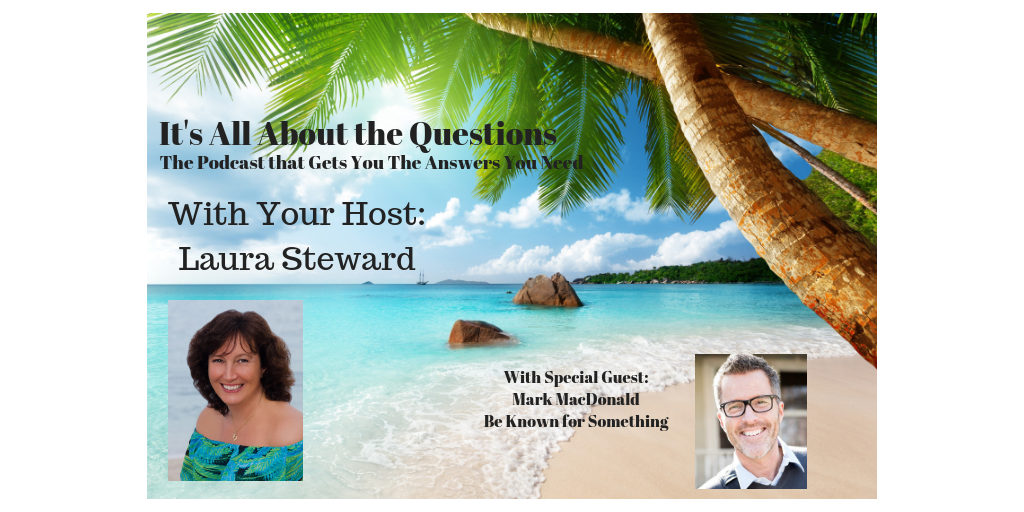
Welcome to It's All About The Questions, where learning to ask the right questions can help you achieve lifelong success. Now, here to help you ask all the right questions is award-winning author, international speaker, and business strategist, Laura Stewart. Good morning, afternoon and evening, everyone. Welcome, welcome, welcome to the show today. Always so, so, so much fun to be here with you and to have my amazing guests and be here in the radio station with Mr. B in the booth, taking care of things, making sure I go out over the airwaves and Rhett Palmer for having this wonderful station bureau's voice on WAXE and iHeartRadio. And it allows me to give voice to my guests and to myself as well, because, you know, the show is called It's All About the Questions. It works with my personal brand.
from my number one international best-selling award-winning book, What Would a Wise Woman Do?, and the keynotes that I do, and all of that work that I do when I'm being interviewed on the other side of the mic, and when I am doing strategy work with my clients to help them grow their businesses. But what really is a brand, and how do you make that brand work for you so that you really can be known for something? How can you make sure that you can reach your community in the way that works for them? Because, you know, too often, business people, I saw this with a client only a few short months ago, they couldn't understand why they were losing business. We had them poll their clients and they found out, well, they took away all the stuff that their clients liked and needed because somebody up above in corporate decided, well, we're not doing that anymore. Well, they couldn't understand why they lost their entire client base. Think about the changes at companies like JCPenney and Sears and brick and mortar stores that seem to be closing left and right. It's not because they don't have a product. They're not reaching their community or even understanding who their community is. So I'm really pleased to have my guest on this week who also...
I have to thank Melody Holmes for connecting me to him. His name is Mark McDonald. He's a senior brand strategist, communication director, creative director, writer, blogger, author of Be Known for Something, Reconnect with Community. And Mark, I'm so excited to have you here today to help my listeners understand how they can reach their community. It's so important.
Oh, my goodness. Thank you so much for letting me actually have a voice as well. And everything you just set up, I mean, those are the questions that everyone needs to be asking. And it really comes down to what is it that I am known for and how can I tweak it and improve without actually breaking it? And when the big chain stores that you talked about, when they break it on a regular basis, how can you as an individual or a small business owner actually be able to do it and know what you need to be known for?
and how to become consistent with it. That's where it all comes down. It just comes down to making sure you understand the principles of personal branding or regular branding. Can you describe for my listeners so that we're all working from the same conversation for the purposes of today and going forward because this is critical. How do you define brand?
You know, it's interesting because the first time that I was exposed to branding, I kept thinking, I'm not sure whether anyone has clearly defined it. And ultimately, Laura, as you know, I work a lot with the church audience. And when I do deal with churches, the first time that I suggested to a church that they should know what their brand is, I immediately got pushed back because it sounded so business. And that's essentially how I came up with the idea or the concept of what are you known for? Because that really is what your brand is.
So a lot of people say that it's like the emotional aftertaste when someone has experienced you or your product. So it's, you know, when I talk about brand, many times people say, oh, I like my logo. And your logo is not your brand. Your brand is the promise that you offer when people come in contact with you. So it is the thing that people remember about you after the fact.
So what you need to do is you need to control what the promotion is towards it and then the experience while you're actually in contact with a particular audience. And then hopefully afterwards people will know you for something that they'll come back to you for. And know you for something positive versus having a really horrible aftertaste in their mouth after they work with you. Oh, my word, yes. And ultimately, if you're not controlling your brand, you already have a brand. You're already known for something. I know that oftentimes in our social media feeds, we're flipping through our walls, and you can see the little avatar, the little picture, and maybe not even the name, and you just quickly look at the picture and you go, oh, I know exactly what they're going to be talking about. And everyone kind of groups people into what you're known for. And if you're out of control, so you're not controlling anything, then you're...
your brand can be interpreted in so many different ways that it really doesn't add any benefit to who you are. All right, so let's take a deep dive into that whole concept, right? Because lately on my social media, my branding, other than posting my shows, really has been puppy photos. Things that are positive, you know, like here's your daily smile, here's your calm at the end of the day, here's somebody that I've heard that I, you know, some curated stuff, because this last year has been really hard for me with the loss of my mom, and yesterday, October 1st, was the one-year anniversary. And what I needed for myself was very positive things being posted on my social media, things that inspired me, made me feel happy, made me feel good. And I've gotten a very positive response from people with that. Doesn't necessarily talk to what I do as my business brand, but as my personal brand, I think it reflects that. So is there a difference for people to start thinking about between perhaps some personal branding and some business branding? Because who I am as a business person is the same thing, you know, kind, love dogs, you know, positivity. As a friend told me over the weekend, you help people think up.
Nice, nice. And first of all, I'm so sorry. I know we talked before this interview, and I'm sorry for your loss. It's so hard. And even after a year goes by, it's amazing how close it is to you. I can't believe I got through saying it without breaking down into a puddle on the floor. Well, and I guess that, you know, what you've done about how you consciously have chosen, I need some encouragement, so I'm going to give encouragement. I mean, I would certainly encourage everyone to do that because the world needs a whole lot more encouragement.
However, I guess that what we have to remember is that your personal brand, well, I guess it all really depends on how much you want to monetize your personal brand. Everyone is known for something, and a lot of people who are known for a particular thing, they'll write a book about it, and then they have to step up their skills to help promote it and to actually become known for it so that it becomes monetized. But a lot of people, perhaps people who are listening right now, you're not interested at all in monetization. You don't want to make any money off of your platform. That's not my audience, typically. Okay. Well, if they do want to monetize, what I would say is instead of thinking about how do I make money off of it, I would think more along the lines of who do I want to influence? And do I have the right people around me looking for that influence?
Okay, say those two questions again, because I think they're really important. Who do I want to influence in the second one again? Are they the right people around me that want that influence? It's kind of the, you know, which comes first, the chicken or the egg scenario. So oftentimes people say, well, I want to be known for this. And then I say, so who around you wants to hear that? And they always go, oh, you know what?
I don't think anyone really wants to hear it around me. Well, then it's probably the wrong thing. Or they just have to go out and find a whole new group of friends, where I believe that God puts a whole bunch of people around us, and they're all looking for something, and birds of a feather tend to flock together. So those people that are around us, we oftentimes can just take a step back and look and say, so what are their felt needs? What are the things that they're looking for that I can deliver authentically?
And if we can ask those questions and we realize that everyone around us is in need of strong encouragement right now, then, yeah, become known for your encouraging words or reaching out and trying to, you know, oftentimes I think about encouragement and sometimes it's just surface level. But if we can dive down a little bit deeper so that we actually hit certain pains and concerns in our audience, it'll be better received and you'll become known for a brand, a personal brand that is needed and relevant in your community. Okay, I get that.
Let me throw another piece in there. So what if the people that are around you, you really don't want to be doing work with? You know, for some reason they're attracted to whatever you're putting out there and it's been very successful, but it's not what you want. Well, and I think that you, I mean, that's what we call perception and perception of who you are and what you're delivering. I think that that's a really good place to start and to internally question yourself.
Is my perception reality? And is it where I want to be? And that's perfect. We're going to tease him with that, if not, and go right into our first commercial break. We are here with the amazing Mark McDonald, brand strategist extraordinaire, talking about how you can be known for something. And let's make it something you want to be known for. We'll be right back.
I'm laughing because I was working through my dog-eared copy of your book, Be Known for Something, Mark, during the commercial break. And I'm like, yeah, that was really, really good. Okay, yeah, that was even better. Yeah, okay. I like the book. I think the book is great. I love the concepts. And now I get to talk to you on air because, you know, it's the stuff you're talking about is so brilliant. Okay, so before the commercial break, we were talking about what if the people around you are not the people you want to be doing with. And I cut you off for commercial and tease your audience with the if not. So the other half of that thought, Mark.
Oh, man. Well, I guess that my mind started to race a little bit during that commercial break. And I guess that the easiest way to describe this is that every person has an audience. So that audience, what I would call internal audience, are the people who are your closest friends, people that actually listen to you on a regular basis. Then you have an external audience.
who are people who come in contact with you through social media or not as direct. And then you have a service or product or abilities. And if you think of it as a Venn diagram with two big circles, there's no way that you're going to be able to actually have those totally overlap over top of each other. You can't meet everyone's needs. You can't take everyone to their goals.
So you have this Venn diagram where you have a slight overlap, and that overlap is the area that we have to target. So what are the things that I'm uniquely qualified to be able to produce or give to my audience? And the audience has to have a perceived need or felt need for those things. If we can figure out what that is, that's just huge. That's like the breakthrough moment where you can say, oh, my goodness, if I only talk about these little things, then I'm going to be known for something that's relevant and needed.
Now, what you were talking about, well, what if your perception of who you are is not what people need? Well, that's typically how brands fail. So you have to decide, do I work on the product side, the ability side, so that I get different abilities and different products, different services, so that I can attract a better audience or a different audience? Or do I try to change the minds of the people who are currently in my community? And sometimes that's, well, one is harder than the other.
I would imagine it definitely is harder with that. I mean, look at, I mentioned JCPenney the other day, and we can talk to death series, and I've done that with Daniel Burris, one of the top futurists in the world, and several other of my guests. But like JCPenney, I used to buy a ton of things there. I'm 55 years old. I've been buying stuff there for a lot of years. And then they decided they needed to rebrand everything and change it to a younger, hipper, supposedly dynamic, right? Well, they didn't want to go there.
And then they lost their entire other core audience in search of and they've never been able to find their way back. So what is it about that brand conversation that when you say get stuck in a rut or you're almost the rut is covered and you're buried into the rut, that makes it so hard for somebody to really get that word out and be truly known for something? Well, and this is where it gets a little bit. I guess, sad, in the sense that if we concentrate on one particular audience, what I would call your internal audience, the people who know you, if we concentrate on them, they're always going to be reducing in size. So through depth, through attrition, through people just moving away, ultimately if we just concentrate internally, At a very particular group of people, that group will almost always reduce the size. However, our communities, our bigger, greater community is growing in size.
So what we have to always be aware of is that we have to be open to see kind of the Who Moves My G's book, where it's like, wow, it seems like the whole community is changing, but I'm going to concentrate on those people who like to listen to me. Okay, you know they're writing a follow-up to that book. Oh, are they really? Yeah, it's going to come out soon. John David Mann is involved with it, a good friend of mine, and he's been on the show, so hold that thought. Go ahead. It's such a great book, mainly because, you know, whether you're a business or a person or a church, I mean, we have to concentrate on that external group so that it influences our...
contact with our internal group. So that's what we can look at when we look at demographic studies for various communities. You know, I'm 54, so you're much older than I am. I am. I'm ancient. So the thing is, is that we tend to flock together. And so the people that are around us and in our internal audience oftentimes are about the same age as us. And what we have to understand is that most of the growth in the community around us are usually much younger than us. So when we look at demographics, we oftentimes see that the millennials by far are the largest group.
And because of that, it influences the average age of our external community. So what JCPenney did, where they kept concentrating on a clearly defined internal audience, they kind of lost sight of the fact that they have to be able to morph and bring that internal audience around to a much younger audience because there's so many more young people. And then, of course, there's the complexity of the Internet coming into play and then realizing that people didn't want to go to bricks-and-mortar stores and that they wanted different things. So they weren't able to flex as fast as they should in order to be able to move to or morph their audience to something else.
So, I mean, it's a complex thing, but you have to make sure if you're struggling with trying to have an impact with your internal audience, your message is wrong or your audience is wrong, and it's so much easier to change your message than it is to change the people. All right. Now, you talk about changing message, and your message may be wrong. We're about a minute and 30 into heading into the national news. What are some questions my listeners can think about while they're listening to the national news, podcast people, pause, right, that they can start thinking about to help them redo that?
So if you were only going to talk one thing to a group of people that you really love, what would you actually say? Oh, I like that. If you're going to talk one thing. Go ahead. Say it again.
So if you're going to talk one thing, so you've assembled all the people that you love, the types of people that you love around you, and you finally have been given the stage. They hand you the microphone. What are you going to say to them if you only have a short period of time? And this is not an elevator pitch thing, that 30-second elevator. This is a different conversation, correct? No, yeah, exactly. Like, this isn't a sales thing. This is more of an engagement thing. What could you say that would instantly get their attention and want to know you more?
I love that. That's a great idea. So think about that as we go into the national news break. We are here with Mark McDonald, brand strategist extraordinaire. And when we come back from the national news break, for you on the podcast, you don't have to hear that. We're going to talk about threads. And we're not talking about sewing threads. And for those of you who are into social media, we're not talking about that kind of thread easier, but how you can create your own personal brand thread. We'll be right back. Welcome back, everyone. We're here with Mark McDonald. And Mark, I love your...
promotional materials with your whole be known for something book and discovering your thread it's i'm going to paraphrase because this particular one is focused on a lot of the work that you do with over 3 000 churches around the world but so instead of finally a church can is finally your business can expand your reach and significance simplify the communication process tear down silos create a website hub that your community loves discover your thread obviously you are a brand master which you are you've been doing brand work for years including with your your company what was it pinpoint marketing Yeah, Pinpoint Creative Group. Pinpoint Creative Group. I think I need to become one of your clients to help me as I step back out into the world.
Well, interestingly enough, the Pinpoint Creative Group, which was an agency, it was in a world of agencies. I mean, everybody and their dog has an agency. You just look around the corner, and there's another one. And our thread that we decided to, it's like, okay, so if you come to Pinpoint Creative Group, we want you to be known for something. So that was the thread that we identified, and it had such resonance. I mean, people bought into it so quickly that we ended up, we bought the URL for BeKnownForSomething.com, and then we started talking about BeKnownForSomething.
created our own social media channels. And those social media channels and our website views, they grew probably five times as fast as Pinpoint Creative Group. So we ended up doing away with Pinpoint Creative Group and really focusing on being known for something. And that's when the book came out of it. And it's really a great book. And of course, I'm going to say one of the reasons I love it is all the questions you pose in the book. And what I love about it, you know, I've been called the queen of questions.
since I was a little girl. I love questions. And questions really help us trigger new thoughts and get us out of ruts. And the whole idea of discovering your thread that I teased before the commercial break, I feel it is so different than what anybody else is doing. Can you define what you mean by discovering your thread? And then let's get into a conversation about how my listeners can begin that process.
Absolutely. So I think through social media, we realize that you see a post that you engage with, and then you think, oh, yeah, I wonder what people are saying if it says that there's 20 comments. I'm a comment reader. I'm a people watcher, so I love to read those comments. And so I'll jump down, and that thread of comments, everything has to do with the first post.
However, there's always that one person, the troll, that says something that's so off-thread that you go, what on earth are they in this conversation for? And ultimately, in our personal brand or in our corporate brand, we all have to have a thread so that we know how to stay on conversation so that when somebody sees something that's off-conversation, they would say, well, that doesn't really belong. And that thread helps us kind of unite our thoughts and become more concise and more consistent so that we're talking about one theme that we know that our audience would actually want to hear about. Okay, so what my listeners tend to be entrepreneurs or business owners, and we have a lot of listeners that work in corporate and are thinking about maybe starting something different or they want to revitalize their corporate ideas and thoughts. How do they begin determining what their own threat is and how they can grow that threat?
Hopefully that's the right kind of question to ask here. What a great question. This is great. First of all, I think that everyone has to understand that the world around us, we've all had diminished attention spans. So the attention span has gotten shorter and shorter. So people don't pay attention very long. So my mantra of edit, edit, edit, I mean, it seems like a total rabbit trail that we could go off and talk about.
But ultimately, every person needs to be able to even take the elevator pitch that you talked about earlier. I mean, it has to be even shorter than that. So you need to come up with, some people call it a positioning statement. Some people call it a tagline. Some people say it's a brand promise. I like the idea of a thread because it really has to be woven through everything that you do. So if someone meets you personally or corporately or looks at your website or looks at your social media or through your print materials, that thread has to be woven through everything. So if everyone's attention span has gotten shorter and shorter, we have to say it as concise and as quickly as possible. But the problem is that the world around us is incredibly loud. And the best way to be heard is to be so consistent that you're communicating in unison.
so that there's no harmonies to it. It's really focused. And if you're not tired about talking about it, you're not doing it well enough. Because the people around you, there's so much going on that they only hear kind of like your TV channel. It's like they tune in every so often and then they tune out. And that in and out, that out actually sounded very Canadian because I am Canadian. It did sound very Canadian, yes. But people are tuning in for such short periods of time that we have to make sure that the message is so consistent and so consistently delivered.
and almost to the point where you're just sick and tired about talking about it, that when they tune in, they go, ah, that's exactly what I need. And then through that consistency of thread communications, that's how you actually become known for something. The thought that went through my mind when you were saying that was having watched the Emmys recently and somebody was presenting with the woman who played the queen in Black Panther, the Marvel movie, the Queen of Wakanda. I can't remember her name. I love her. She was in Hellstella, got her group back and everything.
She said to the woman, but I'm here with the queen. And then she does the hands across the chest thing and the bow, which is Wakanda forever. And the gentleman who played the Black Panther, he recently said he's so tired of people doing that. But that's a thread that's now been associated with both of their brands. And they're getting tired of talking about it because there's more to them than that role. Is that sort of the idea of what you were just talking about? It is. And oftentimes people who mock their thread annoy their audience.
So things like, oh, man, I hate when they do that. Like, I just saw a Macaulay Culkin interview, and they said, so is it annoying? Like, when people flock up to you, he's like, I will never put my hands to my cheeks ever again. And I'm thinking, no, that's what you became known for. You became known for it, so give it to the audience. And what it does is it instantly connects you back to the audience, and it engages with them in such a way that they'll actually listen to something more. And that's what we have to do as, you know, how we went to the heartbreak.
Your whole life, you are collecting people around you who want to listen to you. And what you need to do is ask the right questions so that you're looking for what they're looking for. And then as soon as you know, oh my goodness, I can deliver that, then unless the audience wildly changes, you need to just continually talk about the thing that allows you to engage with that audience. It doesn't mean that that's where it ends, but you need to create a level of engagement in order to be able to move them forward into another pod. So a thread doesn't end. You build off your threads. That's what I'm hearing.
Absolutely. And what we, you know, a thread, that positioning statement, the tagline, you know, we say three to five words, make it really benefit-driven so that when somebody hears the benefit, they almost instantly understand the pain you're solving, or it could be also a path to a goal. And when you hear that thread, it just, it opens up a larger discussion. And similar to what we were talking about for being known for something, being known for something, think about how ambiguous that is. I mean, it could be much bigger depending on who I'm actually talking to. So whether I'm talking to a church, to a business, or to a person, I always say make sure your thread is big enough so that you can talk about everything that you can possibly talk about to several groups, but you have to remember who your targeted group is.
Which is something that I know a lot of you out there struggle with, is understanding that target group. So Mark, in your book, Be Known for Something, and I'm just going to throw this out there to everybody listening. This book, that wonderful book that Mark wrote, Be Known for Something, Reconnect with Community by Revitalizing Your Church's Reputation, has a focus of a lot of the work that he does helping churches, which are in desperate need right now of reconnecting with their communities and providing what their communities need while staying focused with who they are. There's so much stuff in here for... any business it does not have to be a church you can pick through this so i highly recommend you getting it and if you're a church you absolutely must get this book but you know in here you talk about this whole idea of um how we need to think about communicating our threads and the questions we need to ask to come up with those five sentences and i'm just looking at the clock so we're going to have to go into our last commercial break there's never enough time for me to have people like you on my show because i just i just want to talk to you forever we'll be right back with more from mark mcdonald hang on mark we're coming right back okay okay this is sort of hovering in the back of my mind we've talked about threads we've talked about brands we've talked about um how people can really be known for something but it's not a it's not a
a vacuum, right? You explain social media and all that other stuff. So when somebody has now sort of gotten these ideas together, how do they begin to communicate that? Because otherwise, what's the point, right? You're in your little silo and you're not putting it out there in the world. And your book, you talked about, you know, get it really good with a small audience first before you start trying to grab the big audience. So how do people begin to take these concepts forward?
But it's interesting because what I hear, I mean, I've been doing this for 32 years, and as I talk to clients, people will be bragging about all the great stuff that they have. And I'll say, so why are you here? And they say, well, because we're the best kept secret. And that is never a good strategy. Because what we have to do is if we have something that's relevant and needed in a particular audience, we've got to communicate it in such an effective way so that every person is saturated by that thread, by that content. So, I mean, I want to get really practical here, and I guess that what I would encourage everyone to do is, first of all, know who you're trying to talk to, your targeted audience, create a persona for them so that you describe them, so that you know their needs and their goals, and then you try to figure out, okay, so based upon that main persona,
How do I deliver a solution that is a solution to the needs or a path to the goals? Come up with that thread. And then as soon as you know that thread, like, oh, man, I was watching the other night Subway, and I know the Subway is suffering a little bit right now. But they've come up with their new thread of make it what you want, which is getting back to what they're best at. You know, all the other sub shops, you just order a sub, and it's not customized at all. But make it what you want is such a great thread.
I would love to kind of walk through all the subway stuff, but think about your threat. What is it that you're promising that differentiates you and positions you different from everyone else who's talking in that area? Then start looking at how many things you can control, and you want to control as many... senses, of all the senses, like your touch, like what does it look like? What does it smell like? Think about all of your senses and then look at what tools you have. You probably have social media for sure because it's pretty free and easy to set up. So look through all of your social media, control your URL, so whatever your name is, try to lock that down. If you're not locked down now and you don't have a large following, I would try to get something that works consistently throughout everything. And then look at your
your brief description and make sure that your brief description contains your thread, sets up the pain or sets up the goal and then says, and here's how we offer a solution. And that, that solution, that thread has to beg the question of, Whoa, how do you do that? And if you can get your audience to ask, so how do you do that? Then they're asking you for promotion where a lot of people push with promotion and then they wonder why people just turn, tune them out. So then take a look at your picture.
and make sure that your picture is consistent. So if it's a logo or if it's an actual person, depending on if you're doing corporate brand or personal brand, make sure you've controlled it across all of the channels that you possibly have. I would recommend Facebook, Twitter, and Instagram. Those are kind of the three big ones. And then after that, with your social media, you're going to have to drive people away from social media, and you usually drive them toward the website. So I would really concentrate on creating a website, whether it's a personal brand website or a corporate website.
Make sure that the URL is similar to the URL that you're using for your social media channels. And then really simply, when you arrive at your website, most people don't spend very much time on the homepage. In fact, some of the research is saying about three seconds. So in three seconds, can people instantly know what you're promising, the pain that you're solving, and then looking at your menu, does it quickly say, here's how I deliver that? I started writing notes. And I was like, oh, wait, wait, he stopped talking. I got to talk again.
My listeners, Mark, are so used to me getting so involved in the conversation because I love my guests. I get to pick the guests I have on my show because it's something that I want to learn and improve and get better at. So you should see the notes I've taken from the show all over the show page. And I guess that if there's one big takeaway, everyone needs to discover their thread. and then that's your brand, and then you control everything around it. So when somebody experiences your thread, what emotion comes from it? And that emotion can help you decide what colors need to be around that brand. That emotion needs to be, is it a joyous feel? Is it a solemn, thoughtful feel? You just have to think about that emotion, and then does your website say that emotion? Do the people that you picture on your website, does it say that emotion?
people to experience it and know what they're going to feel at the end because you somewhat control that as well as part of the brand promise. And then you just make sure you lock everything down and just communicate, communicate, communicate, and edit, edit, edit, and make sure you're as consistent as possible. And we've talked a little bit in the show about if you make a blip, but we're running out of daylight for the show. And I want to make sure people know how to reach out to you because I've gotten some notes from some people saying, where can we get more information? We've mentioned the book Be Known for Something by you, Mark McDonald. I told him it's focused on church, but there's massive information. But you've got a website with a lot of other really great information. So how do people find you?
I do, and I always have to mention that it's Mark MacDonald, M-A-C-Donald. It's easier to find me that way. And if you go to benownforsomething.com, you can find out more information about what I do. And then if you're looking for the book, of course, it's at benownbook.com, and also you can find it on amazon.com. And my social media, of course, everyone should follow me. Just look up Mark Mac 1023. So it's Mark Mac 1023. And that's on Twitter?
Are you on Facebook as well or just on Twitter? Oh, my goodness. I'm on everything. All right. And even on Pinterest. I kind of keep up with various things in branding on my Pinterest channel as well, and LinkedIn and Twitter and Instagram, Facebook. All right. So beknownforsomething.com, everybody. His social media is at MarkMac1023. Last thought, you want to leave my audience with, Mark, my listeners, my wonderful listeners. Figure out how you can love your audience.
They've been gathering around you, and they're looking up to you for some reason. So all you have to do is just figure out, how do I engage them and take them on a journey? And that's your brand. That's the thread you need to discover. And if you don't want to be on that journey, then you need to figure something else out, right, Mark?
That's right. Get on a plane someplace. And I just love this topic, everybody, because I think it's really important to be known for something and to be known for something positive in the world. You can make a difference with who you are in the world today. It's just a matter of getting some focus and getting some clarity. And I hope through this show today with Mark McDonald that you've really gotten some ways to begin thinking anew about how you can reach out to your community and make a difference in the world today. So Mark, thanks so much for being on the show today.
Thank you for having me. And remember, everybody, the right questions can change your life. So what are you asking today? Have a great day, everyone. You've been listening to It's All About the Questions, starring Laura Stewart. Connect with Laura at itsallaboutthequestions.com and download a free workbook that will help you ask better questions starting today.
At MedCan, we know that life's greatest moments are built on a foundation of good health, from the big milestones to the quiet winds. That's why our annual health assessment offers a physician-led, full-body checkup that provides a clear picture of your health today and may uncover early signs of conditions like heart disease and cancer. A healthier you means more moments to cherish. Take control of your well-being and book an assessment today. MedCan. Live well for life. Visit MedCan.com slash moments to get started.