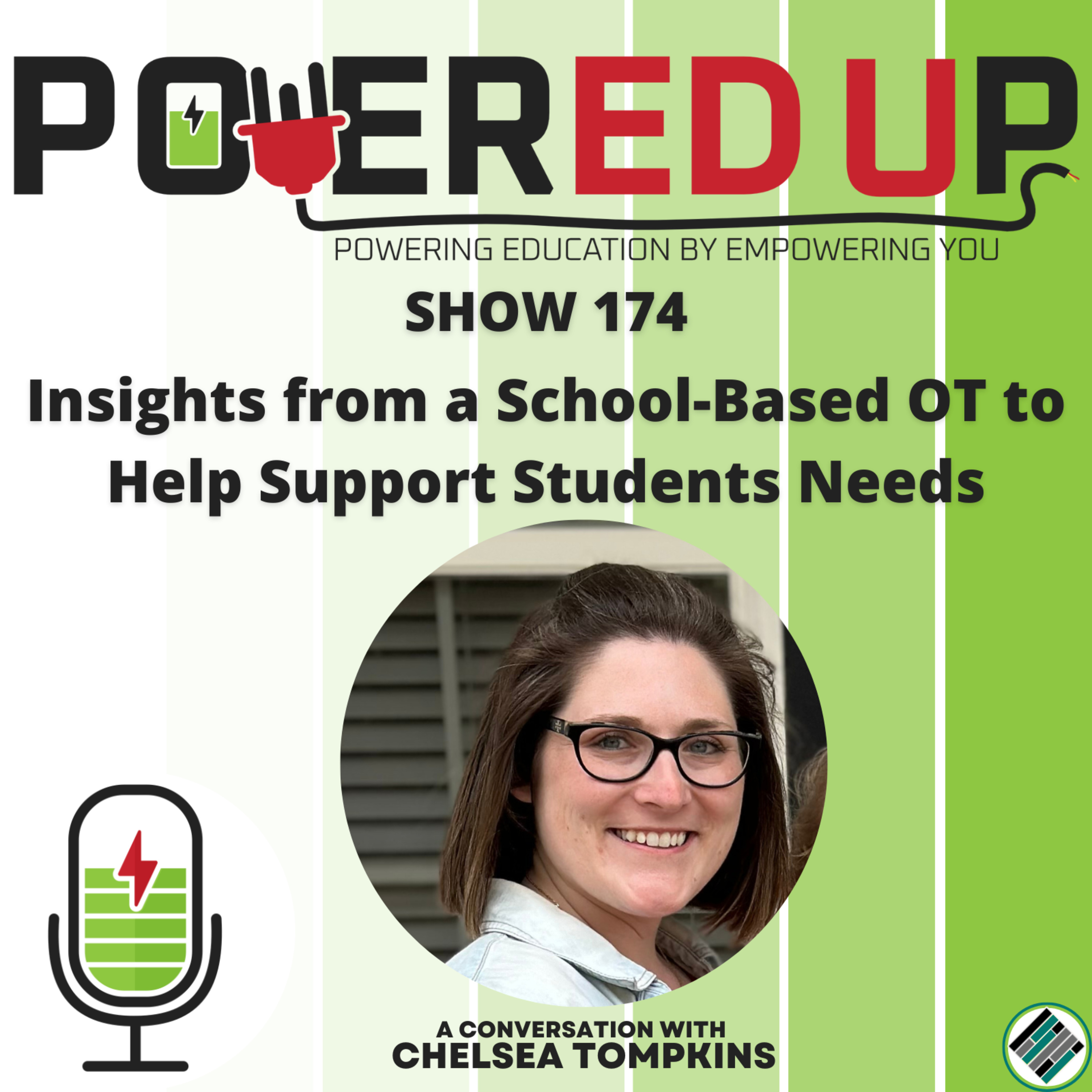
176: Insights from a School-Based OT to Help Support Students Needs
from powerED Up Hosted by Ken Ehrmann
Chelsea Tompkins, a school-based occupational therapist, shares her experience working with students and teachers to support their educational needs. She discusses the importance of real-time interventions and the challenges of generalizing skills. Chelsea emphasizes the need for accommodations and modifications to address executive functioning skills, such as organization and planning. She also highlights the impact of sensory issues on behavior and the importance of understanding and addressing these needs. Collaboration between teachers and occupational therapists is crucial in creating a supportive learning environment. In this conversation, Chelsea Tompkins, an occupational therapist, discusses the importance of providing sensory support and motor labs in the classroom. She emphasizes the need for flexible seating options, sensory breaks, and sensory input tools such as fidgets and weighted blankets. Chelsea also explains the significance of motor labs in helping students develop motor skills and integrate reflexes. She suggests that teachers can implement strategies such as visual supports, consistent expectations, and grading rubrics to support students with executive functioning abilities. Overall, the conversation highlights the importance of considering the individual needs of students and providing them with the necessary support to succeed in the classroom. Takeaways Real-time interventions are essential for addressing students' needs and promoting skill generalization. Accommodations and modifications can support executive functioning skills, such as organization and planning. Sensory issues can impact behavior, and it is important to understand and address these needs. Collaboration between teachers and occupational therapists is crucial in creating a supportive learning environment. Provide sensory support and tools such as flexible seating, sensory breaks, and fidgets to help students with sensory needs. Implement motor labs to help students develop motor skills and integrate reflexes. Use visual supports, consistent expectations, and grading rubrics to support students with executive functioning abilities. Consider the individual needs of students and provide them with the necessary support to succeed in the classroom. Chapters 00:00 Introduction and Background 03:09 Working with Different Age Groups 03:56 Skills Addressed by OTs 08:15 Common Classroom Practices that Impact Students' Processing 11:18 Understanding Sensory vs. Behavioral Needs 14:25 Examples of Sensory and Behavioral Issues 18:51 Accommodations and Modifications for Students 22:28 Supporting Students with Sensory Needs 24:22 Creating a Supportive Learning Environment 24:50 Supporting Students with Sensory Needs 26:14 Developing Motor Skills through Motor Labs 30:53 Allowing Infants to be Active for Kindergarten Readiness 34:13 Supporting Students with Executive Functioning Abilities 38:15 Creating a Supportive Classroom Environment 44:44 Assuming Positive Intent and Understanding Roles 46:24 Providing Consistent Expectations and Visual Supports Email: [email protected] Help us out! Help us reach new listeners on iTunes by leaving us a rating and review! It takes just 30 seconds, and instructions can be found here. Thanks! We appreciate it! Apple Podcast Review
Embed this episode
No transcript yet.