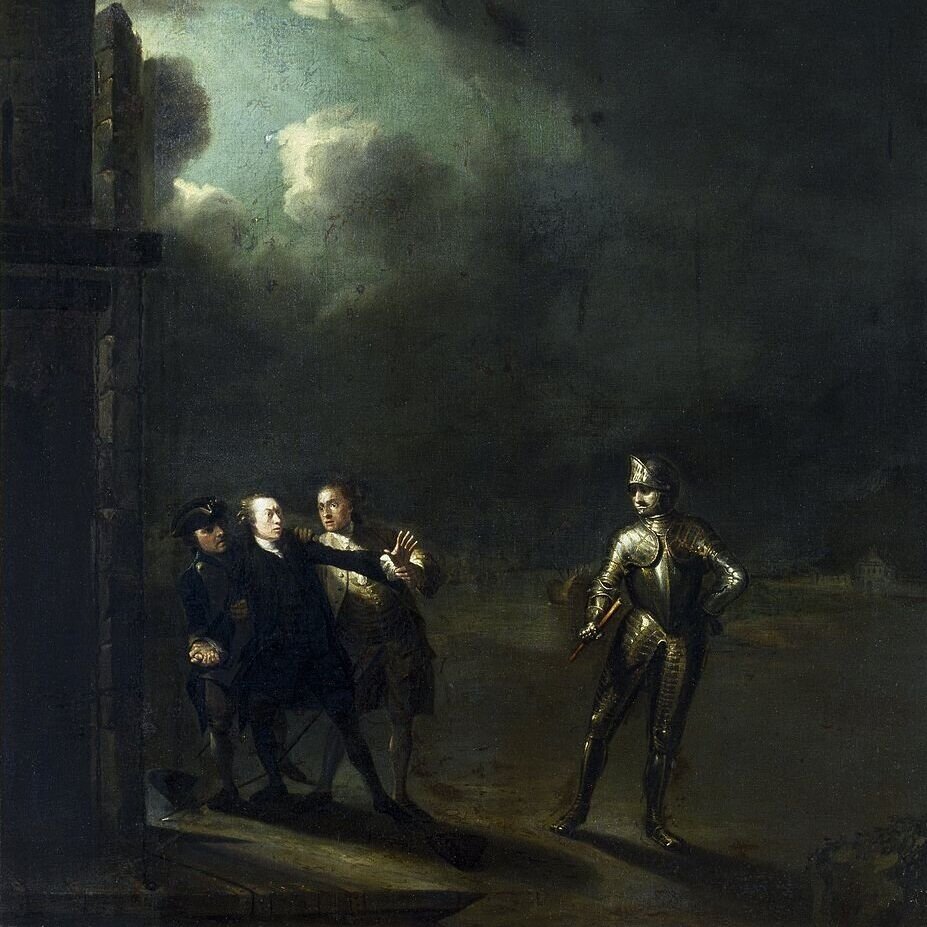
Hi and welcome to classical stuff. You should know we're a podcast that talks about the classical world So it would be literature philosophy art politics, you know Whatever whatever is floating about at the moment and our goal is to bring that to the masses in a way that isn't completely awful That you might kind of enjoy a little extra education in your life And I'm joined by my two compatriots Graham Donaldson hello and Thomas Maggie hi my name is AJ Hannenberg And we are coming you to you from sunny Austin, Texas and today we are talking about what I think is one of the most important things in any conspiracy Theorists arsenal. Yeah tin foil. Yeah, we can make hats out of it protects our brains from alien waves It probably won't be abducted if you're wearing a tin foil hat and it's also great for girl and vegetables really has a lot of uses I'm a big foil guy.
Yeah, it's a little surprised you wanted to do a whole hour on that But well you know I'm expecting he's gonna talk about the process by which you create I would love to find that out But you laugh but in to foil can have many use they can't you make like a fair day cage out of tin foil or no I just said it was it's got some other things in the fun Like I said it's a top tool in the conspiracy I always wear a tin foil hat but I keep on around when I do I keep on around for special occasions I wear a normal habit. It has a lining. Yeah, yeah You can't wear all tin foil people right well I mean is it really sure that if the Sun has like an explosion it could fry our electronics is that a real thing or is that just like EMP an electric is that real? I don't think it would be the same the strength Yeah, the coronal mass ejection is home Listeners if the Sun can kill our internet right us before it's too late and let us know Yeah, we are talking about foil today.
I'm not quite the kind of foil that hand ever was talking about although Tin foils interesting actually fun Donaldson family fact we have not bought a roll of tin foil in 11 years of marriage because Amanda saves Tin foil and washes it and dries it and she reuses tin foil. I know it's the weirdest thing in the world But but she just Saves all the wrapping paper from all the presents actually shout out with shout out to mom I'm not sure we bought wrapping paper in forever exactly because she you know She'll cut the tape carefully and preserve it. Yeah, you keep the wrapping paper Yeah, you keep the oil somewhere we keep doing we have it So when it's cleaned we fold it and keep it in a drawer and then we need to foil something now eventually the foil can get so Sully that has to go away, but then it's just you keep your antenna up So you know if you have a It's much easier when we live in a place where like there's a proliferation of breakfast tacos that are wrapped in foil I'm so mean well, then you have little tiny pieces though. You gotta clean it That's not a lot of tin foil with work with fine.
It's enough. It's enough. Okay. Anyway foil So no the foil we're talking about is a literary analytical tool or literary analytical.
Yeah, it's a tool wherein you can sort of compare two characters It may seem kind of simplistic or dull, but it actually I think can end up being really powerful thing that gets you talking about a text talking about a story Where you can now elevate it beyond just Some sort of like academic way of talking about a book But you can actually sort of bring it into talking about it on a human level and you can even be talking about it in regards to yourself I even think that literature ends up being a foil for us But we'll get there at the end now. I have in my hands here the handbook of two literature the tenth edition by the venerable William Harman and Hugh Holman The handbook of literature is a fantastic book What this is is the handbook of literature is there you go. They got our own It's just a dictionary. Oh, no, no, no, you have the seventh edition.
Yeah, I think it's all the gram You have it a whole man. It just says William Harman on it. Oh, maybe he maybe home and got ditched Anyway, we didn't hear about it. So the the the Entry for foil is very brief and I will read it so foil literally a leaf of bright metal placed under a jewel to increase its brilliance That's the gold foil.
Okay, but so that's literally what they're talking about in literature the term is applied to any person who through contrast underscores the distinctive characteristics of another thus Layeredes Fortenborough and even the players all of whom are willing and able to take action with less reason than Hamlet has served as foils to Hamlet So they give you this great example and the example is of these characters acting as foils to Hamlet and Hamlet And that's true. So we're just gonna talk a little bit about Hamlet We're also gonna talk a little bit about foils in crime and punishment If you are less familiar with these plays with these books Hamlet and crime punishment I mean you'll still get some of this podcast but you may want to listen to previous episodes where we sort of do synopsis of those books But we're gonna be sort of talking about these characters In order to sort of highlight their foil them. Hanenburg do you have any different in yours? No, it's exactly a entry.
I have the feeling they just changed the page numbers around and saw another edition. No, you do it It looks like so see Hugh Holman died in like 1981 Anyway, that might be the reason he's not on the book anymore. No, cuz he's I don't think his contributions are dead longer than I've been alive Yeah, okay, okay So Comparing characters when you have a character in a story they Have actions they're doing things if you are analyzing that book and if you have look at other characters around them and see that They are in similar contexts or or are in similar decision have the similar sort of decisions that they have to make and they're doing them in different ways Comparing the differences between those characters is often a very fruitful exercise So I'll give you an example from Hamlet I'll give you examples from crime punishment So they've the example that they gave with Hamlet in In the handbook here makes sense so Hamlet is a character who is making a giant going back to Megabe's last week's episode moral decision Oh, but whether or not he should enact revenge on his murdered father So he is trying to make a decision as to whether or not he should kill the man who killed his father and He has a lot of sort of moral hang ups around it And also even just like questions about why should you even do anything in this life? There are other characters who are in in fact in the exact same position So by the end of the play layer at ease has a murdered father by Hamlet and Fortenborough has a murdered father by Hamlet's father And so you have these two men who also are in the same position of Hamlet they have reason to Act and to take revenge and they're going about it in different ways than Hamlet is So let's analyze layer at ease layer at ease comes in and he is willing to kill anybody who even remotely Possibly has any connection to his father's murder and layer at ease It's quite clear the way that he's talking is even willing to kill somebody who he is only like 5% sure did it Right like he's willing to kill Claudius even though there's the king even there's no A rhyme or reason that Claudius murdered him glary's comes in hot hot tempered and is willing to throw down at a moment's notice He is somebody that is not thinking and he's willing to act This is in complete contrast to Hamlet who is spending the entire play Handering and wondering whether or not he should do this thing or not thinking too much not getting too much all right Obvious contrasts and the question you ask is this one man better than the other Fortune bra is has laid up is that answer to that?
Yeah, I think layer is is worse than Hamlet and I think that's fair You would look at layer is he would say this man is headstrong and is going to get a lot of innocent people killed and Hamlet Isn't except Hamlet's overthinking it's innocent people killed whoops So the thing he was trying to think he actually ends up doing the thing that we probably soon layer is what I've done Which is killing some people sure I don't know I like lardies this way just come on in and stab stab stab Probably cuz I'm naturally a Hamlet. Yeah, so you look at it's a lot of feels very American So yeah, hold on to that thing that you just said I'm a natural hamlet cuz I think that's gonna end up being the launching off point for You're wearing black already for us talking about this with real life people us Contrast that to you have a character like forton bra who if you sort of re closely realize is hatching this very well-laid masterful plan in the background he is Amassing an army he is pretending that he's taking his army through Denmark to go do something else but in reality Oh, yeah, we're gonna go take over this other way. Yeah, okay. No tension.
Can we mark our army to go invade Poland? We're totally not going to invade you guys even though. I have a natural ancestral grudge against you cool I'll just I swear I swear we'll just go right through and Claudia's is like awesome He's come on boys come on in done done Yeah, and so by the end of the play foran brought comes in has a clean sweep of Denmark and he just shows out actually When everyone has murdered each when everyone is dead and he's like whoa this place looks worse on the battlefield It actually does not make clear whether whether or not he's there to take over he just kind of rolls in well He fires up the thing is there's cannon fire so you get the sense that he started in a siege, but oh really? Yeah, very quickly, but when very quickly it happens they say um When the murders happening where he showed and then osmric and no to others fight cannon fire and the foran bras here And the ford bras rolls in and hamlets like take over yeah, yeah, he's like oh sure I didn't intend to do it but foran bra has sort of measured clinical and Also, he seems to have the support of his troops and everything that is sort of said about foran bra is that he's sort of worthy and noble and You know should be in charge even hamlet when he's done.
He's like yeah foran bra can be charged He's probably pretty good at this and you can trust that to hamlet who sort of sours all the relationships around him Yeah, yes, maybe the people like him but the people like him not because they see see him as a Noble ruler who maybe they would want to be their king but they like him because he's like witty and funny and Never know what a hamlet would be a card and he's an actor through and through so he's always like hamming it up to the audience And so that's that's a likable thing, but it's not likable in the sense of I am I am glad to be under this person's command because he is so good like a Cyrus the great or somebody like that right It's him I wouldn't say like a full hamlet. Yeah, he's a little hamlet He's a little hamlet, right? Okay, so then the character foran bra serves as a foil to hamlet These and so a layer these and foran bra visa V hamlets moral decisions You can extend it further hamlet is pretending and in many cases is sort of flirting with crazy town And he says I'm gonna pretend to be mad and everybody who talks to hamlet is like yeah, he seems crazy But there's like method in his craziness. He's like saying true things while being crazy And and that is a powerful thing to do is that if everybody thinks that you're just a big jokester you can say true things This is why people will go and listen to stand up comics and have Santa comics like actually roast their way of life And be like oh isn't he great right because he's just the funny man right?
And hamlet is just the funny man hamlet is also and and by Everybody thinks he's flirting with crazy. He can say the real things. Okay at the end of the play Ophelia also goes crazy It's also unclear if Ophelia is like Ophelia is not crazy in the realm of like Straight jacket poofling and crazy like she's not completely broken her mind isn't so broken that she is no longer She is nonsensical because the things that she says are also Pregnant with truth as they say in the play that when you listen to her it has the form of meaning even though it's wrapped up in Matt And seeming madness so Ophelia's madness is a foil to Hamlet's madness Hamlet is using it as sort of a Almost like a political tool to try to like stick it to power and Ophelia is using it kind of in a different way hers is Hamlet who I loved killed my father who I loved and her heart is now torn in two directions between being being sort of kicked to the curb by Hamlet and also the untimely death of her father and her madness has this tinge of This is what you get for basically for playing the game. This is what you get for Believing the fairy tale that your principal common Mary you and you're you know you sort of listen to your dad and he said to be to be chaste and good and to And that your and if you sort of follow the rules and be coy and be beautiful then the boy will love you and marry you and I did And the boy killed my dad and rejected me and now she's she's mad She's gone crazy with it, but and so her last scene where she is crazy.
She also spends the time sticking it to everybody in subtle ways Her madness is a lot more tragic than Hamlet's I actually I don't have I personally don't know how I've how the foil of Ophelia's madness How we can really sort of use it to contrast with Hamlet's madness But it is there and the fact that Shakespeare has these characters who are going through similar things The death of my dad has given me license to be crazy in public and tell people how I feel about them both Hamlet and Ophelia They both have this but in their differences we can maybe make sense of the nature of Hamlet's madness and Ophelia's madness I'll give you another example of crime punishment and then we can say like okay, so why are we doing this? In crime and punishment you have characters that are all in very similar kinds of situations There's the character of Sonia and Dunia and Sonia is a poor Girl from a family that is in you know dire financial need and so she has to go and sell herself as a prostitute in order to make Some money for the family. She is meek. She is mild.
She is good natured. She is like tremblingly sad She's like a scared little deer the whole book And she is sort of doing this horrible sacrifice for before her family, okay We have the character of Dunia who is Raskolnikov sister Her family is in dire financial need instead But she but they are up sort of like a higher class than Sonia So Dunia is selling is going off and she is marrying a dude for money that she doesn't love and he's kind of like this pompous boob and He wears purple gloves and he wears purple gloves He didn't wear them. He carried he carried the lavender gloves because they were too nice to wear fair enough But he is kind of like pompous and he like curls his hair and he Kind of show boats when he first arrives he talks about all the young are so useful because they they have all the progress is so good I was such good opinions. He has a what is up my fellow kids right?
These sort of showcases all his knowledge and Raskolnikov just gives him a dressing down Yeah, it's all fluff and offended anyway He is clearly like kind of a dork of a person and being married to him is Obviously mercenary well, it's even worse because he says go for it He says that he wants to marry a destitute woman because then she will always look at it on him as her benefactor Yeah, like I want to marry somebody cool because then I'll kind of like I was gonna hang over her Yeah, she'll bring you my slippers and she can't talk back right like because she knows where she came from It's horrible. Okay. He's not a person now. It's not of the same Quality as Sonia who is just going out and being a prostitute to like drunk peasants But it is of a similar kind of thing.
All right, there's two characters sacrifice the same thing But they are both self-sacrificing themselves for and they both sort of are held up as these selfless characters Okay, you keep those on sort of one side of the equation on the other side of the equation you have a character like Raskolnikov Raskolnikov is willing to kill other people for getting money. He is selfish like he wants He is saying that he's sort of utilitarian if we want to go back to Thomas's last episode We're talking about ethical frameworks. He is willing to kill others for cash So that he can sort of like make his life better and he dresses it up like like a virtue that if I you know She's worth die. She's not she's a general drag on society If I can take her money and do good with that money that I'm going then I will you know, I'm this good person You know, I can sort of you have more utils in the world, right?
Okay, Raskolnikov has a pretty extreme view of this kind of utilitarian thing Lusin like the guy who's marrying Dunia also has a utilitarian view of the world But his is a lot more like genteel and respectable But it's still utilitarian if I live my life completely under self-interest and gather all of my money together and become super rich Well, then I can go do beneficial things to poor people like marry them And they have yeah, and so that they have to you know that they are beholden to me And I'm lifting Dunia out of poverty and the only reason I can do that is because I was Self-serving in my youth and saved all my cash and now I can do beneficial things like save poor beautiful women Right he has this utilitarian view that is also selfish, right? So the book framework has selfish characters and selfless characters Raskolnikov and Sonia exist almost on like the lower-class version of this or if you want to call it like a more extreme version their poverty necessitates them to take more extreme actions a Sonia as a prostitute Raskolnikov is a murderer and then like Dunia and Lusin's relative Middle-classness means they don't have to be as extreme but they but their actions are still in the same of the same type as the other two They're just sort of like more socially acceptable. She's marrying she's a gold digger or she's marrying for money he is marrying with money he's marrying with money and knows and is kind of like a pompous rich jerk and Is willing to be selfish for his own gain just like Raskolnikov but Lusin's not murdering Raskolnikov is okay So Raskolnikov and Lusin you can see them as foils for each other Dunia and Sonia Sonia Oh Russian names in this book you can see them as foils for each other and then you can kind of like cross foil each other and make claims about like Because they're you yeah by Lusin Dunia because they're sort of a higher class than Raskolnikov and Sonia it their sort of personal ethic plays itself out in less extreme ways Right now you're saying something interesting about you know If losing was poor would he murder you know if he's still the same ethic as Raskolnikov So maybe he would anyway my the point being in showing this is not to debate these characters is to show that the power of contrasting the power of using the foil in literature can Open up the story to talk about these norms can open up the story to talk about how these characters are different okay So yeah, I feel like I'm used to hearing a foil brought up as like a positive or a negative foil or in your Hamlet example you're looking for who handled this better than Hamlet But with your kind of punishment example, they're all bad people aren't they well Sony and They're trying itself sacrifice Even even we're just a loose and res call of interaction Raskolnikov says to him as Lusin talks about his ethos He says if you follow this to its conclusion, you can slit throats and lusin's like my good man My good man, of course not and it seems like Raskolnikov has a disdain for it But he does it but then he did it like he followed it to its natural conclusion and slit some throats. Mm-hmm Kind of didn't want to He did it because he wanted to prove that he was like hardcore That's what I was talking about because after he gets caught by the lady What's it called when you sell stuff to the pomber after he kills a pomberker?
He's like see some is it pomberker's daughter? Sister sister but anyway that was an accident Or he didn't come there intent to correct her or her get her or her baby Well, yeah, sorry. I'm used to thinking of that was a tangent I'm using a foil is like, you know, there's a main character who does something wrong The foil is kind of how they should have handled it or a better example And that's probably too simplistic. I think that's like that is the first step So with with handling a ladies that's the first step sure like who's doing this better, but but continuing with the foil You're right like when you get to a more complicated book of relationships like crime punishment It's not is Raskolnikov losing handling it better.
It's the comparison of these characters is Well the point I was making with that is the extremity of the poverty So the fact that Raskolnikov is desperate means that his philosophy his personal I think is going to play itself out in a harsher way than Lucent who is not desperate or but they still they still have the same Philosophy in kind they just have a different philosophy and degree and you wouldn't know You don't notice that until you start doing that foil comparison now Raskolnikov also gives us license to do that because he does it himself in the book But since Raskolnikov does it himself in the book with Lucent it should give the reader license to start doing with everybody else in the book So so then like Raskolnikov gives you license to compare doing in Sonya because he does it He's like oh my sister. You're just like Sonya selling yourself for cash It's like well she is but not really there's also a direct able comparison We haven't mentioned yet which is where Raskolnikov and Ruzmikin Yeah, right Ruzmikin is another student who has fallen on hard times doesn't have the money to continue his studies But his solution is to work He's going to make some translations make a little money on the side and he's got money to give away because it's making You know he's actually getting some and he says you know It doesn't really matter what the original text is anyway because no one can tell him doing it wrong So I'm still translate it good or bad and make a couple bucks off of it He's really nice to everybody there's no reason for him to get hurt anyone He just has all these grand plans about how he's gonna make some cash and help his entire community It's the same as Raskolnikov but through pulling up his bootstraps and get some work done rather than murdering somebody and taking all the stuff Yeah Raskolnikov wants so both of them are willing to do hard things to get ahead But the hard thing the Raskolnikov is willing to do is murder whereas the hard thing Ruzmikin is willing to do is work honest work And Ruzmikin really is like how to win friends and influence people kind of guy Everybody's loves him. Yeah, naturally. Yeah, whereas Raskolnikov is you know how to hate everybody in Anyway, so the might so yeah, okay, so why why do this it doesn't just help you internalize the book That question of what we did with Hamlin ladies who did it better.
What are we actually trying to get to with that question? When I'm if I'm under stress or when something bad happens to me how should I respond? Yeah, we're trying to get to some kind of moral I deal well some sort of ideal decision or like what what is the ideal type of person and this ends up being a big kind of fruitful questions for literature that they can help sort of form the reader is a Struggle for the ideal type now Hamburg you you are better at giving like a little rundown of what we mean when we say the ideal type What do we mean when we say ideal type the notion of the ideal type is saying that there is a there's a right way that men should Behave and conduct themselves in the world and much of the the discussion of philosophy and ethics has been aimed at determining what that ideal type is But what whereas probably the current ethos moral relativism says there is no ideal type You can be whatever you want to be the type is whatever you choose Most of philosophical history has claimed that there is some ideal type That's not just Christianity which would say Jesus is our ideal That's I mean Plato had an ideal type Aristotle had an ideal type the even the Stoics had an ideal type Almost even the Nietzsche's ideal type was the criminal I mean somebody who lives according to their own law right that he even said so right the Superman is akin to the criminal and then there's They're like most philosophers say this is how man should behave and so discussing the ideal type is what we're doing Yeah, so if in Megbee's last episode we were talking about we were having a conversation about the ideal type Yes, we were doing it from sort of a rational philosophical framework discussion Kind of a higher level of which of these ethical frameworks is better than another one. Yes, I suppose to doing it in this way you have a Sort of a human level story and you are asking those Normative questions about what is the ideal type by analyzing by talking about characters and how they and how they interacted in a story Is Hamlet going about this the better way or is laterties is foreign broggling about this a better way or Hamlet?
Is is Hamlet's feigned madness a useful thing is Ophelia's or is it feigned is Ophelia's feigned madness or unfain madness? A useful thing a sort of like a press a press a press a press a release or not is she speaking truth to powers Hamlet speaking truth to power? Is there actually a difference between what Sonia and Dunea are doing just because there are you know degrees of respectability about prostitution versus marrying for money is Loosen as bad as a murderer or not And I think these are actually open questions even though that they are both operating from the same kind of like selfish place Clearly Razumikin is going about life better than Raskolnikov But they're animated and motivated by the same things so They so that okay if Raskolnikov and Razumikin come from the same context Why are they operating in different ways? Why is what Razumikin doing a a satisfying life?
And what Raskolnikov is doing is an unsatisfying life and by sort of having these characters I'm contrasting them to each other you know Having a conversation about this you are getting to or trying to uncover that ideal type and and say like what is the attitude behavior Decision-making the way someone comports oneself that is the best way for a human person to sort of exist given the contexts of the world That they get thrown at yeah Like when we talk about in your last episode if we talked about like a Objectivist well, we're sort of like plucking somebody from a context and saying here are the other characteristics of objectivist And I think that's a totally fine thing to do and then if we were to say like here's Raskolnikov or here's Hamlet in a context Talked let's talk about their decisions that they're making they're now in a in a an actual living breathing story Where people are behaving and they're reacting to that behavior Analyzing them is very different than talking about Aism sure and sing with your if hamlet and leartes or your comparison You're neither of them is perfect and they're responsive in the way that when you analyze a philosophy you can have essentially a perfect view Yeah, but in the trolley problem brings us out you don't get to be perfect You don't get to have perfect outcomes so having to deal with it in the okay Either your bloodthirsty or your inert one it makes it interesting again Yeah, whereas if you were to write yeah, so this is sort of the nuance We're I was even thinking about the last episode is if you were to write the story of the trolley problem I suppose to just have the like lab experiment if you write the story of the trolley problem you would have a character who would say things like Should I put a lever well? How did this even happen? You know is in my own prank show the context of a person in the real life of a real life scenario Isn't it's gonna be the same thought process as oh, I'm an objectivist How would I deal with this well then you make another character who is cajoling him trying to get him to pull the lever But he's willing to pull themselves and the other guy that walks by so what are you doing and pushes out of the way and then yanks 11 right? So there's also this book called the Sunflower that is about an incident during World War two This is brief aside.
Sorry where There's a Jewish man at a concentration camp and he's working every day one day is pulled out of the group Take into the bedside of a dying German soldier and the German soldier asks him for forgiveness Mm-hmm So just as please would you forgive me for what I've done in my life? And so then the book is a series of essays responding from all these different philosophical and religious viewpoints as to how should This is a real story that happened. How should this person respond in that moment? That's another way of doing it where?
You should build out the story and give the different viewpoints as to what someone should do if you are an egoist or a utilitarian or a Pick your kind of work. Yeah, and then um, so this is how you use that tool to Compare these characters So if you're doing it in a classroom or doing it with yourself you would get out a sheet of paper and you would start writing this The similarities and the differences between two characters that are in similar contexts and then from there you start to ask these kinds of questions So we've been doing that the next level of this is to then actually see wait The piece of literature itself ends up acting as a foil to me as the reader so The way that the book answers these moral questions or goes about these problems and my reaction to it is to be is supposed to sort of help me sort of Understand myself. So So if you okay if you're watching like if you have a group of people and you're all watching a horror movie and Some are people just like love the scenes where everyone gets cut up and some people horrified of it and some people just are so satisfied that the bag Gets caught at the end and some people are so like kind of jeez duff that the bad guy didn't get away with it The question is should we be if you are one of those kids watching that movie on a sleepover Does that movie your reaction to that movie has it told you something about yourself? Yes?
And has it also sort of told you something about your friends who are reacting in different ways sure? Yeah, this feels the same as again the trolley problem last time you all had immediate responses. Yeah Tell you something I'm not sure I want to hang out with the kid that really loves the cut up scenes Yeah, yeah, it doesn't seem like fun getting out, but I mean at the other hand like Oh, I love for movies. You like the parts where you'll get cut up not particularly Make sure if you so then but it is actually a reliable thing Do you think it is a reliable thing to say like oh when I read a book like for example?
I really hate capture in the ride hate that book first time I read across the room literally I was like kind of just chucked it was my disdain or just discuss of that book Worth analyzing to understand myself or is it just like it was a crappy book like I guess my point is if if should you be spent should The person when they read something that affects them Um, should you spend the time trying to sort of understand the source of your discuss? Um, I say yes I don't you're probably moving toward a no, but the my response in saying yes is that like the book should say with you for a while So just so initial, you know you read hamlet Layer two really sticks with you as a character because you're a foolhardy person You just like taking action So that example, you know just kind of kicks around your mind for a while that doesn't mean that your initial reaction is the same one You'll have at least to look at why am I so drawn to this character and not this one? Yeah, I discussed by this character and not this one again, you know If you only read a classic once you have it read it at all So to let it stay with you is to kind of grow with it. Yeah, I think sort of the point I'm saying in an image of yours saying this earlier It's like oh well I see a lot of hamlet in me is I think that's that is a helpful thing for the person what to do when they read books is what do I find interesting or what do I what do I see in myself in a character and Constrain comparing that to the idea of like the ideal type is this a good thing that I have this this quality in this Characteristic or is this a bad thing that I have this quality or this characteristic?
Um, and then we've got we've got a lot of people laughing at us outside of you here Yeah, it's the kids who work here to clean that So I guess my point being that You would say yes, I think it is the answer is yes like when you are reading something and You should always be asked yourself. Why do I do I do I like this thing and is it actually worth liking? Why do I hate this character? Do I hate this character for the right reasons or do I hate this character because they remind me of me?
And I hate that about myself And that books end up sure should end up becoming like foils for ourselves in order for us to kind of Sort of understand ourselves for example. Why do I love what's it called one floor over the cook who's nest and you hate that one floor? Yeah, no Do I hate that book because I have you know Because of the reasons that I think that I think why I hate it or do I hate it because there's something about the book that reminds me of me That I dislike about myself. I don't know I actually actually don't know maybe maybe I love it because what I really love the idea of a License and just freedom maybe that's what I need to investigate myself Am I secretly a Christian who just would love to have a day where I can just do whatever I want to yeah Maybe I hate that book because I don't like when people just like get to do whatever they want because it makes me feel uncomfortable Yeah, I mean that's a bad characteristic to have is that is that a characteristic of the ideal type?
I think this is an argument for reading books together and then talking about okay This is why this is what I like this is what I didn't like again the strength with which you hated a character is a strength with Which someone else loves that yes then to again this is the same point from before of people People have an immediate reaction to an ethical situation then having the discussion of why is really important same here of Again to your maybe you're right about one floor over the cook who's nest and Graham is wrong. Oh, yeah, that's true But it gets now just a point of warning going back to our example of the kids watching the horror movie and I do agree with you The kid that's like ends the movie is like I love blood. You're like, okay, you know what you're not coming over next time But they're out to the machete see oh man, I don't go sleep But there is a word of warning that should be placed where in like you can't judging someone's reaction to a story It's really hard for you to draw conclusions about that person It's probably a better exercise done for oneself than it is done for somebody else I mean and this is even something that happens in the play of Hamlet Hamlet Hamlet says hey if I put on this play Depicting the murder of my father and I judge my debt my uncle's reaction who I think is the murderer then I can know what's going on in his heart and Turns out that when he does it he's right. He does know it's going like the scene did effect Claudius and Claudius Sort of does tip his hand and Hamlet does know what's going on in the guy's soul, but I don't think that this is a This is not a foolproof way of like Building relationship like if you're having I don't know you wouldn't do this with your spouse You know go watch a movie and if she like loves a scene where the husband dies be like oh no, right?
There are things There is an element of that when you're dating where if they don't just don't like the same stuff you like it might be good I don't know I don't know about that. I know I understand It's just like I feel like when you're trying to apply that metric or you're trying to apply that that tool to somebody else It's so complicated that you I feel like the potential that you make the wrong conclusion There's so much margin of error that it's almost not worth doing then if you're doing it to yourself For example the kid who loves the blood scenes maybe it's cuz reminds him of hunting with his dad Yeah, you know what? Yeah, you want to be a doctor? Yeah?
Yeah? Physiology yeah, I think the point is more that those Reactions are avenues to talking about a philosophy that this is I think what you're saying about my episode It's like it's really hard. No one's gonna there's a small group of people who would say I'm an objectivist I'm an egoist I'm a virtue ethicist but most people kind of they can't talk about it as abstractly as that so you can Abody it in a story and then say which of these characters is the most interesting or which do you associate with the most? So you learn something about the other person, but it's not you can't just judge the emotional reaction It then has to lead to tell me why this character is interesting to you my understanding that correctly I think so and then the other thing you can add on to this is also doing read the power of rereading books is Is being is also the power of sort of seeing your own change as a person over time?
So for example this past summer I reread Lord the Rings I don't think I'd read it since college and I remember the last time I read it in college the When I read it I would read the parts that didn't have airborne in it fast because I wanted to get to the part With airborne because I love the character of everyone. He's cool. He's the king he throws down He can like the women for the girls falls and I'm gonna be like I can't be with you I have to be with my beloved and you know as a 21 year old man you're like, yes That's what I want you know. I love this guy.
You want to turn down like that was your dream course I'm walking after you be like sorry take it No, there's someone else And this idea that he's got this like destiny of like being the king of minestereth Yeah, right right you know 21 year old you read that you love it Okay, when I read it this past summer I I just loved the story of Sam and Frodo specifically Sam When Sam a simple country gardener thrown his adventure is and then out Has to find courage doesn't kind of doesn't really know what's going on But it's just along for the ride and by the end, you know sort of realize you know sort of finds himself as You know Sam wise the brave and then also Frodo the person who his his heroism comes not through feats of strength But through like single-mindedness endurance of pain I just found those to be so affecting it so much so that I was on the fly in Canada somewhere to see my family And I was on the scene where Sam thinks Frodo has died and he decides that he will take up me the ring bear I literally cried on the airplane not audibly in a way that the guy next to me was weirded out But I just I was just so moved by it. I was just so moved by You know and whenever they talked about wanting to go back to the simplicity of the shire You know it hit me like In a sort of a strong way like I wanted I too wanted to go back to the simplicity of the shire and the beer and the pub and making cheese and like Growing Gardens and that kind of thing okay? A psychologist could probably have a field day over the change in Graham Donaldson from 21 to 38 based on what I find resonant in the story But personally what one should do is when they look at that they can say okay, so what about You know what is the ideal type am I resonating with here? Well there you know the you know Sam's desire to like live a simple life in a good Home, but he has to do this difficult thing that he doesn't want to do but he's doing it anyway You know those are those are valuable lessons I don't know my point being that it I think it is a fruitful exercise for the reader when they're reading to keep notes to write Things down.
I don't know if it's you go as far as journaling your thoughts But to keep some sort of record of your reading so that if you do go back and reread the book You have a record of the reading that when you were that you had that when you were younger that now that you're older you can You know you see either the growth not even just a growth But just a change and that change is actually I think kind of like rewarding thing to see I think this is why marginalia is important exactly with pencil Yes, I go back and I look at the passages I marked I was like thinking you could sort of see this chronicle of your own change over time Just in just in what affects you and if you do that if you sort of keep a record of yourself Visa V the books as a foil to yourself then there's something where you feel like you have taken more control of your own Headspace then if you're just sort of like a slave to the everyday or you're just sort of like being If you're sort of unthinkingly going through life and you're not reflecting on your place in it and reflecting on your change on your place in life then you know you're Think understanding yourself is going to be missed so the foil is not just to sort of land the plane here The foil is not just to compare characters But it's to the act of comparing characters you can then begin to compare characters to yourself And then if you continue that process through time you've almost kind of like built up this compendium This is why commonplace books are so important that you can sort of have this record of your relationship with your own soul By going through these stories, and so Well really you're just testing it's a continuous testing of a character to the ideal type is this mmm What does it reflect in me that isn't in the ideal type? What are they doing wrong? I mean it's the basic practice of fiction and literature which is to It's a low stakes way to test our own reactions right should that guy have done that thing well what I've done that thing maybe and looking at philosophies As they work out in the world right we talked about in Maggie's episode about all of these different ethical frameworks And and we had characters that we could say well This is a character that actually tried to live that out It didn't really go so well for these few reasons So I don't think I'm gonna do that framework that is like I said It's a low stakes way of working things out of the world yep having to do ourselves and Yeah, anyway, so that's that's that's a shorter episode but that's that's sort of what I wanted to sort of show is that When you sort of like have a book and even have a literary device and you work your way out you can begin to apply That literary device not only just to the job or the work of analyzing literature, but then using it on you as a reader The muscles of reading others it can be turned on on yourself and you can read yourself and there and um You know sort of almost take some kind of agency and understanding you as you exist through through through time Right like I now look back and I can see the 21 year old Donaldson reading this book thinking that he you know Wine to be king and now the 38 year old Donaldson reading the book wanting to be a simple gardener right like there that there's a There's something in the ideal Tiable shift yeah, but there's something in the ideal type in both of those things it is appropriate for 21 year old to want to you know romanticize going off and finding some sort of like kingship in the world just as there's probably something appropriate for 38 year old to To want to have sort of like a settled rooted existence Yeah, and but willing to take up difficulties of those of the days you're called to what I love is that in the original definition from the handbook Literature says a foil is a thing you put behind a jewel so in this case you're the Right so the foil is behind you to bring out your own brilliance And so on that note we'd like to end the episode with Graham as a brilliant jewel as I always knew he was so this has been classical stuff You should know you can check us out on the internet all over the place You can email us at the guys at classical stuff.net which is our website classical stuff.net where you can find back episodes and paintings to go along with the episodes And you can also donate to us on patreon if you like our stuff and with that comes some perks You get ad free episodes if we ever have ads we have occasionally and you also get some other perks So you can get in between episodes And if you go with the highest here you can get a free sweatshirt and a pair of crocs Which is super fun you can also find us on Twitter CLSCL stuff and you can find us other places to you know wherever wherever podcasts are made and sold So on the marketplace of podcasts, that's where we're at one of the singing podcasts Link in podcast all day stop by our booth and get yourself a pop a nice hot podcast Thank you governor get podcast anyway, this is Graham Thomas and AJ signing off. Bye.
See you later