
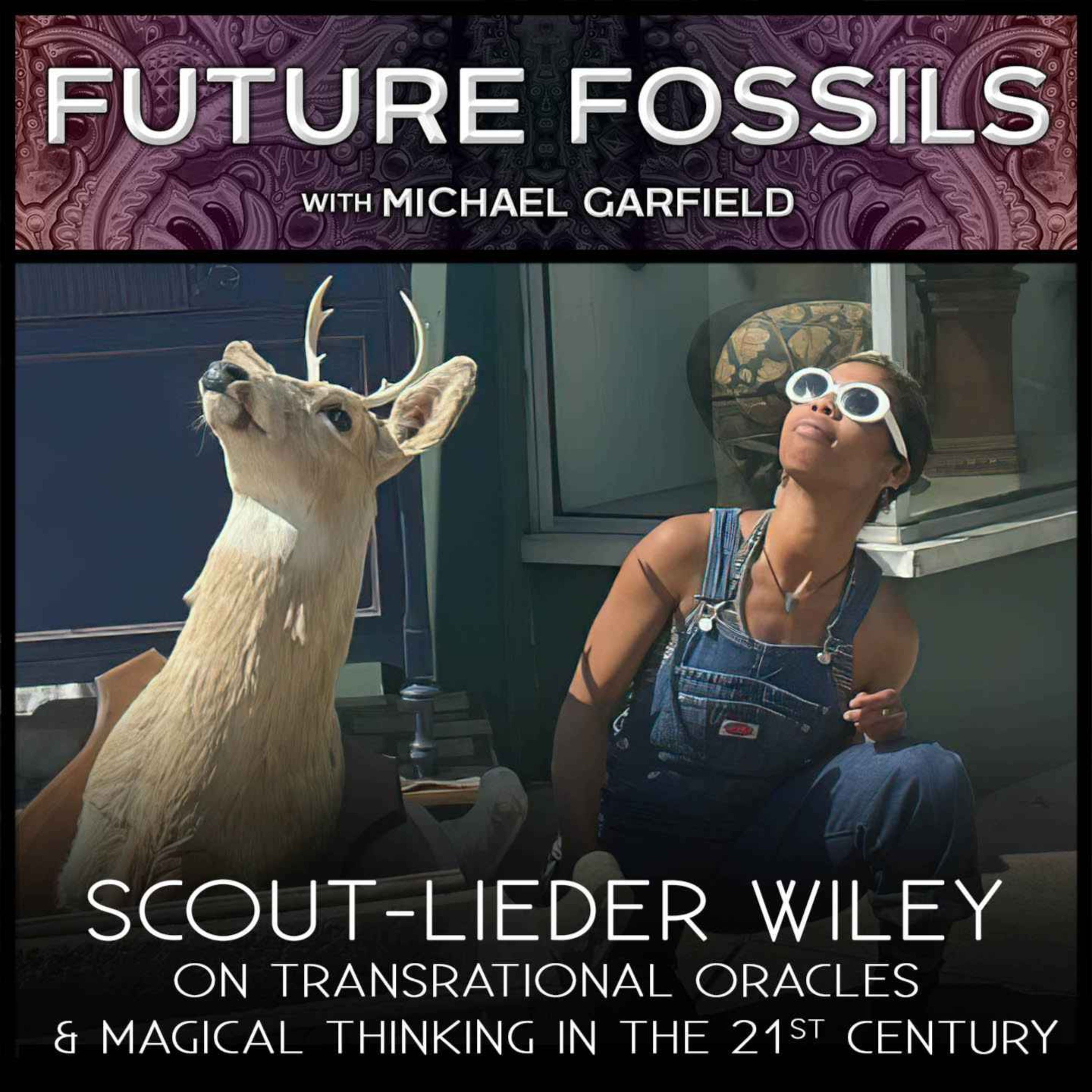
We need to first accept that we have this desire, I dare say call it a need, to predict what's going to happen next in a world where we very technically absolutely cannot. And if we can, we can only do so temporarily. So there's a sort of like inductive reasoning piece that we use inductive reasoning, but the problem with inductive reasoning is that to be fair, and this is kind of like basic bitch philosophy here, but I'm gonna say it anyway. My personal subjective world can't assume that the sun is going to rise tomorrow, but my interpersonal sort of transpersonal experience can, due to just the history of the habits of the universe that humans before me have contributed to charting, and then humans after me will probably contribute to charting, and so there's that sort of like beyond me piece.
But in terms of the individual subjective understanding of the self, I would say that the symbolic esoteric is very much compatible with more, shall we say, analytical modes of understanding sort of the psychology, and then you have like the neurology and whatnot. Like when once you get into these, the weeds of how things sort of work in terms of complexity, the symbolic esoteric references become more useful, because they're seen for what they are, representations of a complex reality, and not reality itself. So that is I guess the fundamental difference in integral people talk about this all the time, and it's easily misunderstood, I think that that trans rationality is actually a really bad name for the concept, but I didn't come up with it, so it's not my problem. How many of us really know our cosmic address?
I mean, are we even in the neighborhood, and if you do know where you're located, do you know your neighbors? Superimposed that over the stamping and addressing of Christmas cards, preparing gifts, I suspect if one were to map my holiday gifting, you'd find a scale-free relationship, maybe a map of my own brain. If you're a skilled data visualizer, please talk to me. Let's, uh, scheme in 2022.
But anyway, today's episode is with Scout Leader Wily, an amazing human being who somehow embodies all three components of her own name. She is a scout, she is a leader, and she is Wily. And we had an immensely fun conversation that my friend Mitch and then I spent an extraordinary time editing to make it palatable. The amount of work that goes into this is prodigious, which is why I want to take a moment before we dive in to thank everybody that's been supporting us on Patreon, including new supporters Travis, Strahn, Michael Cannon, Camilla, Caulk, Jeff, Willard, Alex Karabi, Benjamin Taylor, Ace Frazier, and Kate Cholewa.
They say it takes a thousand true fans, in which case I am 22.6% of the way toward this show and all of the wonderful things that have sprung up around it being what I do for a living. So thank you, HAB! And thank you! Thank you.
If you're new here, patreon.com slash Michael Garfield is a cave of wonders, but not the kind you get trapped in by some weird sand tiger, no trickery here. I think of it maybe in terms of plumbing. It's like I have this faucet, art comes out of it, and music, writing, and they all mix together in a kind of holding pool before flowing over into other domains. And if I close the valve, then the whole thing backs up and explodes, so I can't do that.
But I also don't want to ruin my neighbor's yard, so your support helps me create a kind of aquaponic permacultural structure in which all of the new ideas and inspirations can be safely integrated into something generative and full of joyous surprises. So yeah, thank you. I hope you enjoyed this conversation as much as we did, because we enjoyed it. I was certainly much exploring the performance of expertise, the virtue of naivete, the holy work of being unfinished, speaking the unspeakable comedians as gadflies, heioka medicine, astrology and the Enneagram and tarot, and Hermes the scientist versus Hermes the communicator.
How close to the street can you live and still have your own thoughts? The decentralized autonomous organization for science that could fund taboo research, time binding and prediction and tarot and algorithmic policing and how it's all kind of related to one thing. Ritual art, the value of boredom, and quite a bit more. Actually, Scout is wonderful.
I'm honored to have her on the show. Give her a warm welcome and thank you for listening. How are you? It's so nice to meet you and stuff.
Right. Yeah. Given geologically recent events, meaning not just the latest Facebook disclosures, but everything else that's been going on for years, our entire adult lives, I am really glad to connect with people that I know from Facebook over video calls, or in person has stopped seeming like a real goal on some level. It's just like not going to happen.
But the more I can quote unquote export my social graph, the better. Yeah. Yeah. How are you doing?
Yeah, I hear that. I'm pretty good. I have a weird like sleep clock kind of thing. So I just woke up maybe like an hour ago.
I live in the dream. And yeah, and I am freezing because I live in a weird room that weirdly doesn't have good air circulation in it when it's hot. And then when it's cold, it's like doesn't have great insulation. So my excuse for wearing a sweater inside is very strong.
And I'm really excited. I have no idea what we're going to talk about. So I guess we're going to just we're just going to have a conversation and I freaking love that so much because I love your I love your work. I love being a part of the future fossils group.
I love the complexity podcast. I love your art is super cool. Your wife and kid are absolutely adorable. I just like really stoked to be talking to you.
So totally. I feel great solidarity with you based on what little I know of you from your I'm sure it's actually quite a bit from your like amazingly articulate and candid social media posts. And you represent I think for me the completely uninhibited visionary freaky, witchy thing that I also feel but cannot be really in my life. And so like just to see somebody like taking it and running with it and kicking as much as you do was really inspiring like you're posting in some integral group and saying really interesting things.
And like for me, integral theory is something I studied in grad school and then various dramas led to the cohort of people that I was interested in that stuff with and committing it to it full time just exploding the tower fell to put it in tarot terms. Right. And suddenly it was just like what is this? We had like a diaspora of integral weirdos that had lost faith in the project and it's actually really cool to see people like Nora Bates and critiquing the very premises of adult developmental psychology and so on.
So I don't know it's just cool to see this thing that I had sort of once devoted myself to and then lost faith in but still frame the world in that way and then to see you coming up and just acting like a like an explosive magnetic thing. It just seemed like you were like an enzyme or something for all of these amazing conversations about this stuff that I hadn't really been seeing happen for years. And I don't know if that's actually true or like what might be behind the sort of algorithmic resurgence of this stuff in my media sphere. But anyway, so yeah total mad respect for you as well.
Yeah, it's like it's nice to see somebody who hasn't had it crushed out of them fucking just radiating, radiating this. Yeah. So yeah. Yeah, thank you.
I think there's something to be said of I mean, I guess I'm gonna toot my own horn for a little bit. If that's okay. So I guess there's something to be said about I'm gonna toot my own horn in the way that you've seen me normally to my own horn, which is by self-deprecating in like some sort of like ironic way. But yeah, there's something to be said about not really knowing what you're talking about and talking about it anyway.
There's certain like bravery, sort of foolish bravery that's necessary for that. And I feel like what I've kind of unconsciously been doing and more consciously been doing in the past couple of months as I've realized I've been doing it is as I learn, I just kind of talk about what I'm learning. And I think that there's something sort of strangely inviting about that to people, especially who are older, because I think as you get older, you sort of internalize the belief or the sort of mindset that you are an elder or like, so we live in like a very Western culture and Western culture has this thing where everyone's supposed to be an equal on the one side, but then on the other side, we have this false meritocracy that has a little bit of legitimacy to it, but that there's a lot of illegitimate sort of ways that it shows up where there's definitely a hierarchy, but there's also this belief that like the individual is sacred and there's this sort of conflicting cultural narrative that we play with in America and places like that are similar industrially and, monterily, I guess so to speak, where when you're older, you kind of get this idea that it's sort of similar to the concept of what an elder is, but then you have this hierarchical notion that you have nothing left to learn or you need to perform a type of wisdom that makes you sort of better than or more intelligent than people younger than you. And then I think that there's this sort of way of playing with that elder, younger kind of dynamic where there's mutual learning and there's like interpetitive nature to it that I think, and this is kind of more like an indigenous concept to be vague, that the younger generations exist to prepare their role within like the cultures to prepare the elders for death, they sort of play they embody more the trickster, the change of the culture, they are essentially there to ensure that the elders do not think that they are more important members of society, and then the elders exist to sort of anchor the younger generations to sort of, they give them something to change, something to grow from, something to integrate and incorporate into the what is emerging.
And I think that we might not have that in the same way as we did when I guess in pre conventional social structures, but we still do have it in like our counter cultural movements, when people write these articles about how millennials versus boomers and gen Z versus millennials, it's sort of like a woefully oversimplified synthesis or what's the word I'm looking for, synthesis is not really the right word, it's more so like they're trying to describe this phenomenon that is real in a way that doesn't really do it justice, so to speak. So I sort of forgot where I was going with that. Oh, talk about myself. Yeah, I think that there's something to be said about this kind of like thing that I do that I've noticed works really well, where I kind of am like playing with these concepts that I barely understand, and trying to understand them by bringing people into the space of just play and nonsense.
And it's almost like my ignorance is almost like a gift in that way, if that makes sense, it's kind of like inviting people to not take themselves that seriously. And I think when you learn something in grad school, the pros of that is that you get to fully immerse yourself in and embody it. And I think that I've seen you embody integral principles in a way that a lot of people on the internet just don't, they don't, they just they pretend, you know, they throw the colored code words around from spiral dynamics, kind of in this way, where they're performing what you actually, I feel are. And I've never seen you really use the lingo, but I've seen you embody the traits of what an integral sort of mind would look like, especially when you talk about stuff on the complexity podcast, it's like very much giving people sort of voice and there's this interdisciplinary piece as well that you have there where you're kind of inviting people to bring their knowledge and then you go and you synthesize it and you bring your own.
And it's just really elegant the way that you sort of demonstrate it. So I think that we're kind of coming out the same thing from different angles and that's pretty interesting. So totally, first of all, thanks for recognizing my game, I guess. Okay, something that you said in there about the virtues of naivete.
Yeah, this is something that I brought up. I actually, this was the sort of thesis of the episode complexity I did with Carl Bergstrom and Jevin West, because they were talking about disinformation and critical thinking. And the conversation came around to, well, there always has to be somebody that can call bullshit. Yeah, the people, the younger people don't have as much invested in social finite game, right, to use the James Carson term, you know, this sort of zero sum status, larping crap that, you know, that has dominated civilization.
And so there's also this problem of expertise, blindness, I think that once you get to know something really well, then you don't know, you don't remember what it's like not to know it. You have trouble communicating it. And often that knowledge has been sort of compressed into implicit, like muscle memory or something. You can't like teach somebody to play the song.
And like, I feel like I got that job, because I had committed myself for years to rejecting the lingo that made integral theory, an insider baseball conversation. Like, I was like, if this is something that has like footholds for people to understand and enrich themselves at any level in that sort of framing, you know, wherever they happen to be in their lives, children or whatever, then why are we using this like jargon? Yeah, yeah, it's sort of like a gatekeeping strategy. And I've spoken with a couple of friends with that are also in the integral community about the part of the theory that talks about how every sort of stage or every state has a shadow or I guess a better word would be ironically a better word, I think would be pathology, even though that's kind of a judgment.
Sure. But whatever. And I was talking about like integral stage sort of thinks that it's hot shit so much that it almost forgets that there is a pathology that sort of goes with it. There's sort of dark side, there's a way to weaponize it.
And people will very easily say, well, that's not the real version of the thing. You see this a lot in like political theory, that's not really leftism, that's not really communism, that's not real capitalism. It's funny because it's like, no, it's definitely real. It's just it's the part that you don't really want to claim when you when you label yourself this thing, you don't want to encompass the darkness of it, which is kind of silly, really, because how are you supposed to repair the darkness if you don't own the darkness?
And there's definitely a sort of like a lofty, almost cruel kind of detachment that I think comes with the strategic thinking and being able to digest cognitively higher levels of complexity will come with if you're putting all your resources towards solving this vast puzzle of how systems and meta systems and meta systems all fit together, especially when it comes after a stage that's highly emotionally sensitive, which they call the green stage or whatever, I feel like the risk there is detaching from the heart to speak or detaching emotionally, but detaching from empathy. And there's there's a risk when you have these tools that demonstrate a sort of hierarchy. And then you come from a social structure where hierarchy is then linked to dominance and oppression and all of that. It's very difficult to use the tools you have an ethical way when you're kind of detached from empathy.
And I think that a lot of integralists don't want to own that. They might lack empathy because the way that they sort of value strategy more than they do connection. I think that's a very real thing people are not owning. Yeah.
And for people who are unfamiliar with this sort of theoretical structure that we're discussing here, the idea being that the modern world is sort of instantiated in a mental structure and the pre-modern world and the post-modern world. And I'm slowly not divorcing, but like sleeping in a separate bedroom from some of these formulations in terms of them being a successive, you know, transcend and include development cycle. Yeah. Like a clear progression.
Right. Right. Right. And I think that there's, you know, I mean, I'm not going to open the stage theory debate box here.
But I do think a lot of conversations I've been having lately add nuance to those thoughts. For example, I just got off the horn with Chris Ryan for an episode about his book Civilized to Death. And you know, one of the things that's a common in Ken Wilbur's work is he's doing this thing where he's saying, oh yeah, we made these choices together. Like he's like deconstructing the war of the sexes, you know, and saying like, oh, okay, patriarchy was something that men and women chose together because men and women both didn't want more miscarriages from doing heavy farm work.
And it's like, okay, cool. That's useful sort of in thinking about like the pressure of the environment on, you know, and like the way it constrains our decisions. I was like talking to Chris Ryan. And Chris Ryan took it even a step further and was like actually the whole issue of civilization and agriculture seems to have been that we optimized for the wrong thing as a way of surviving a especially austere period of climate change.
And because you see agriculture pop up all over the world at the same time, like specifically like irrigation planting cloud rose comes all at the same time. So it's not an idea that spread. It's a hole that everyone fell into at the same time because there were years that things were unusually lush and fertile. And so people like population grew to a point where they had to start settling down settling happened before farming, you know, and so he goes into like go back to the top and these other ancient sites that provide evidence for this that we were building these megalithic structures before we were actually camped around them.
And then things got hard and suddenly we were like, all right, how do we make the best of a bad situation? And so I don't know, I guess what I'm saying is that once you add the fact that like humans are scaffolded and that so much of what we are and the way that we think and the complexity of our mental structures and so on is contingent on things like the availability of nutrients or, you know, the social contract that we have with a hierarchical society and whatever its concerns are, then like there's great confusion generally in the conversation. I think there still is about the relationship between cultural evolution and personal development and can explicitly conflated those and basically Ernst Heckle's famous statement that on Pajani recapitulates phylogeny that the development of the organism is like a rerun in miniature of its entire evolutionary branch. And that kind of basically saying the same thing that the environment creates a sort of container for you to grow into and that the bar of what constitutes adulthood keeps going up.
But that's clearly not true. I think it's more his interpretation of certain things. I feel like and this is just completely like a I don't really have evidence for this is more of just a random intuitive droplet of belief or whenever that comes from comes from me and reading Wilbur is that I get the impression a lot of time that he's reasoning from the conclusion that things fit together in a certain way. And he's perhaps in believing already that they fit together.
I would go so far as to say he's right that they fit together. However, the way in which he believes they fit together, I feel like sometimes blind has blinded him to allowing them to reveal the way in which they fit together. So it's like he assumes that things fit together in a specific way and then he takes all these different theories together and strings them together based on what he thinks pairs well together based on what his personal belief structures are about reality and and metaphysics, you know, so his own personal beliefs about the metaphysical nature of things. I think we're unconsciously motivating him to see things certainly.
And I think that you kind of see this and when he has like talks more recently because he's older now and he's like, I don't know, but it is more recent talks. You can kind of see, you can kind of see him doing that and taking things new things and fitting them into his previously determined box of integral theory and here's how integral theory works. And it's that thing we kind of we kind of talked about slightly earlier where it's like the more you know about something the more you have to lose if it's wrong, kind of. And it's funny because it's like, that's kind of why we have these sort of weirdly rigorous standards for what we determine is scientifically true, that perhaps need to start being applied to places outside of science.
But in a way that sort of still respects that like, I was talking to layman Pascal the other day, wait, what is it two days ago on my wide my Wednesdays kind of podcast thing, it's not really a podcast, but about the irrational sort of elements of being and how do we relate to them in a way where is like modern science has seen them as sort of like a thing to move out of the way in order to get the thing that is more important. How do we properly contextualize that irrationality? I think when we don't, this is sort of a leap from what I was just talking about, but when we don't find a way to relate to that, it ends up just getting in the way of the thing that we pushed it out of the way to get to anyway, because it's not like it goes away. It's like, we're essentially just putting blinders on, we're not actually destroying what's in the way.
And what I think is interesting about stuff like spiral dynamics and stage theory and the quadrants and whatnot is that it's interestingly modernist, the idea that like the spiral sort of thing is like a linear progression of like things get better as time goes on. And that's kind of like bled into the integral space like that belief, even though it's like, it's not necessarily true in the sense that as we get old, like if you think about human being as a human being gets older, parts of our bodies start to break down complex systems have a tendency to be weaker as they become more complex because there's more relationships that are needed to maintain and there's more energy that's needed in order to maintain the existence of a complex system. So is that a superior thing or is it just another thing to deal with? Like, I don't know if it makes sense here, but I think it gives us an opportunity to loop this all up into one bundle.
When I moved to Colorado in 2007 on the, I'm sure completely casual, almost unintentional invitation of Stuart Davis, it was like, come on up, join the party, let's do this. And I was like, okay, let's do it. I got up there and there was an opportunity right away to volunteer with Ken Wilbur as like a panel of young guest editor type, someone who convinced him he needed a blog on his website and that the blog was not going to be his writing. He had decided, like other people that he wanted to feature and so there was like submissions, you know, and we would just review the submissions at his place in Denver every week.
And the first time I went there, I was just so excited meeting all these people. I call it dog park mode where it's like you've been mocked up in your thing and you just like, yeah, social man, mania. I was having a great time. And then afterwards, waiting on the way out, one of the folks that had worked at Interrel Institute for a long time took me aside and was like, Hey, man, I really like you.
I'm glad you're here. And so that's why I'm about to tell you what I'm about to tell you, which is that you are like a controversial person, not everybody here does like you. And you're kind of rubbing people the wrong way with this enthusiasm. And he's like, I know it's stupid.
It doesn't make a lot of sense. But like, listen, man, I was, this is him speaking. He's like, I got to a point where I had annoyed people enough without them telling me that they fired me, held a hotel room intervention with me about my unwelcome behavior, whatever that was. Three days later, they rehired me.
And he's like, I just don't want that to happen to you. He's like, yes, this is an amazing place to be. This is an amazing community to be in. Amazing conversation to be part of.
But everybody here is obsessed with their development and evolution and like dealing with their stuff. You know, that's like true of Boulder generally, at least it was before we got legal and flooded with cannabis industry people. Boulder was a very, like everybody you knew was a life coach. It was insane.
You couldn't get people to come to concerts because they were all coaching. But it was like, yeah, what he said to me was basically, the taller you build this thing, the more holes they're going to be in it. It's like, Jenga, it's like, you get to a certain point. And if you haven't done the work that you were talking about, like, you know, like facing your own unintegrated stuff, then you can only build taller than you currently are by removing load bearing stuff from below you and placing it on top.
You know, and so, yeah, he's like, this is a great scene to be in, but it's neurotic as fuck. Everybody here has issues. And like, you're just gonna have to deal with those issues if you expect this to work. And so there's, yeah, like that, I don't know, as far as like a sympathy for the devil is concerned, there are environments that I have moved in where people never learned some of the stuff in the first place, you know, where they just were so narrowly focused, highly specialized in their training that they seem kind of broken or incomplete.
But then there are other places where people are really well rounded, but like messed up at the same time. And so anyway, I wanted to pay a little more tribute to what you like, what we first started talking about with respect to learning in public, because around that time, I was really unclear on what I was doing in my life. Working with the Interil Institute was almost like an act of desperation. I was just like, Oh my God, like, finally, some people that like see things in a profound way and, you know, like, I got it, I got it, I got it, sees this.
And I think that's probably why I was annoying people was just because I was so unclear about how to find that what at the time people were still non ironically calling their tribe. Can't imagine non ironically doing anything at this point. Right. Right.
And so funny, I wrote this essay about how over irony I was in 2007. Well, tough titties, buddy. Yeah, but yeah, so I started doing this thing where I was like posting on Facebook about how I just don't know what I'm doing with my life or what I am or who I am. And that was the stuff that got people's attention.
Since then, I've realized over the years that I think one of the things that I admire about your sort of disposition and process is this willingness to be vulnerable in that way. Because one, I think as far as like interpersonal dynamics are concerned, it's unwholesome to act frankly, the way that can act, you know, to speak parent to child and to speak child to child no matter how brilliant you are to invite people into a learning and discovery thing. This is something I'm like constantly trying to like impress upon researchers at SFI is like, what we're really doing and communicating this stuff is getting people excited about realizing that they don't know what's going on. You know, like this is like the real thing, the real thing that you on SFI faculty are excited about is not what you know, right?
It's not you having it figured out for so many places that are committed to research and discovery. This is like a major branding problem because they have to appear like geniuses, which they are. And that requires a performativity that I think actually inhibits recruitment in a way, right? Like it makes it look like, Oh, wow, you guys are amazing.
But when I was doing artwork at festivals, the number one thing I heard from people, it wasn't just me, it was all the painters. You're awesome. I could never do that. I'm like, are you kidding?
I like snuck into this shit. My friends and I carried easels into Tycho and Matthew Deere at South by Southwest and just told the bouncers that we were part of the production crew. Like we did that shit, you know, and it was like, honestly, that's probably why promoters were hesitant to pay us because that was kind of the standard life artists was to just renegade that shit. But at any rate, the point being that I was trying to impress upon people that I'm doing this painting in public rather than in my house so that you can watch it unfold so that it loses its mystique, so that you can experience the creative process as a process rather than as a finished product.
And that infused everything I started doing. And to the point now, we're like changes in context result in changes in the individual that inhabits that environment. It's just like, you know, there's the bland boring way to talk about this is lifelong learning, right? But I'm much more a fan of like, we're finally reaching the point where the pace of culture and society is fast enough that some of the things that were like the shots that were called by Charles Darwin about like, Oh, everything is mutable.
The human being is not a fixed category. It's like a process. And if we sped everything up, it would look like this. You've listened to me talk about that stuff probably on complexity, when I talk to Brian Arthur about the shift from algebra to no, not that one's the one.
That's the one I felt like we really got into it because he welcomes us having a conversation about how the shift from using algebra to using algorithms and economics is the shift from nouns to verbs, it's the shift from seeing the economy as a collection of things to, you know, this thing that's like, you cannot be completely understood by anybody and is in this state of constant discovery and evolution. And so like, that's a huge change. And that still has it fully like permeated society, you know, people are still chasing this sort of Faustian control bullshit. So at any rate, I just, I think you're on the winning side of history, as far as I'm concerned, because like one of the 12 inevitable, like talk about being on a pulpit, I guess, but like Kevin Kelly's book, The Inevitable, we're talking about the 12 trends of, you know, this is how the future is going to be, this is inevitable.
One of them was that we're moving from a state of like, you're ever a finished project into this constant becoming an open ended. And so yeah, I don't know, that's, I feel like that's the problem, a lot of people have these problems with the way that I talk on this show and that show, where I never actually get to the point of the question. But I'm like, but that's just because we're just, it's a random walk through a network of ideas. And then I give up and I pass you the baton.
And that's this happening right now. Okay. Yeah, perfect. Okay, baton received, because there's a lot of really good stuff in what you just said in regards to a couple of different just things that stood out to me were performance, the performance of the expert and appearing as if there's this, this completion, which is like, really, it's the, it's the main lie, I would say is kind of like, well, I think you were getting out there with the constant becoming and the process.
And I think there's this, so the Robert Keegan model of self development, I guess the quote unquote highest form of development is self transforming mind, which is if what you're looking for is closure in terms of like, there's a stage progression and then I'll get to a place where I become complete, that's going to be a very disappointing model for you to engage with. However, if you're kind of someone who embraces the open ended nature of life being a process of non life being a process, you know, things that we wouldn't classify biologically as being alive have a metaphorical way of living, of transforming and becoming and constantly becoming and change. And the sort of what I love about what you mentioned with the performance leading to the sort of inauthenticity or this difficulty of people being able to really relate to this idea of an expert is because it's not a real, really a thing, whereas people can relate to the messiness of discovery, because it's, if you think about what people are looking for, creative people specifically, but what people are really looking for is to access flow, because we even in a culture that is obsessed with productivity and finishing things and being perfect, we still are aware now at the very least that getting into the state of flow mentally helps us achieve that, helps us get this sort of letting go of the finished product and just engaging with the moment and the process as it is and as it changes and changing with it helps us actually get to the sort of finished product that we have this mythology around and what's really I guess interesting about what you said in regards to the performance of being an expert is that it's not, as I said, it's not relatable because it's not really what we want at a on a deeper level, it's what we think that we should have and it's also a thing that we can't really access and so we kind of want it more, which is strange, but it's, that's a thing that happens. When you're talking about people having kind of an issue with the way that you approach the podcast, it's funny because it's like people who kind of play in the metamoderns base, I think there's this sort of like, dejected sense of yeah, I'm probably never going to be understood in this, but like this is what things are becoming in 50 years or so, this is going to be like the standard of how we relate is by just, I don't know what the fuck is going on, like, or whatever.
I don't know how like the level of profanity that is allowed on this podcast, but I think I just went there, I just hit the top tier, like speaking of tears, I'm like second tier profanity right now. I think we should shoot for your profanity profanity. Oh god, tear profanity. That would amaze Ken Wilbur.
Oh man, now we're talking. Laman, if you're listening to this, I invite your, this is a caption contest here. I'll just be quiet for two seconds and you can just fill in in the in the comments what unspeakable horror I just uttered. I don't think I love about Laman.
I don't know Bruce too well, but one thing I love about Laman is I'm not sure if he considers anything sacred. And I think that's why he's like my favorite integralist who is like, and a self described integralist who like still engages with that community despite the clusterfuck that it has become. And I think what's great about people like that, the sort of like sacred clown mentality there is that that is traditionally the trickster's role in the sort of pantheon is to ensure that the power balance doesn't become destructive or oppressive and our sort of hyper seriousness are sort of desired to embody the expert, the stuffy guy wearing a suit who knows all and he's like the priest, you know, I think you get my point here is that there's a need for the sort of, shall we say, to put it in controversial terms, there's a need for the crowd to knock the statue down of the, there's a need for the blasphemer because the blasphemer is who keeps the system moving. This is going to be super probably controversial, but Dave Chappelle's comment just watched last night.
Yeah, I haven't watched it yet, but I'm seeing the movement and I don't even like, I probably should watch it if I'm going to talk about it and I would like to have my own personal experience with it and experience the discomfort and the, because I know that a lot of things that he said were really past offensive and more into the realm of like, how is he perpetuating ideas that might encourage other people to hurt other people. So not that he's hurting people, but that he might be giving people who want to already hurt people permission to hurt people who historically speaking had the short end of the game. And that's a fair argument. And I have not watched it so I can't speak.
We will follow up on this when you have, we can talk about it as a book or whatever. I love to, but in the meantime, my general uneducated idea is that there is movement happening, there's conversation happening and he's a blasphemer, you know, he's, he's saying the things are not supposed to say because when someone says a thing that they're not supposed to say, people in society debate whether or not it should continue to be said, how to move forward with those kinds of commentaries or like, what should we give permission to it and if so, why? And that's kind of the sort of classical liberal belief that discourse and free speech and all of that. They're sort of a necessity of saying things are not supposed to say to people, you're not supposed to say it to in order to engage in transformation, collective systemic transformation comes from that.
Oh, yeah. That's just by two cents. No, complete agreement. I will say like, I have great sympathy for, at this point, we've been on this for almost 50 minutes.
I want to like swan dive right off the edge into the a cult because I just like, okay, we don't feel like it's about time. It's about time. I don't feel like taking the effort required to find another way to say this. I was born with a natal retrograde mercury.
So being understood, understanding, being misunderstood, misunderstanding, being a little more introspective than is comfortable for other people, asking questions that upset things. These are all things that I consider to be innate for me. And I think that's one of the reasons I get along really well with my buddy Mitch Maniano, who's been on the show a couple of times, he was lucky enough to go to a Sundance and witness that and really actually hit it off with the Heyoka that was participating in that event, really realized that his spiritual identity or calling or whatever was as a trickster and made that the focus of his academic work and all this stuff. He is unbelievably good at doing that work in a way that a lot of other people fail.
For instance, somebody says something in one of the groups that I moderate and you could take it one of two ways. Either this person's joking or this person's being completely tone deaf and they're nasal. Look, I know that I'm going to give you the benefit of a doubt here. But the problem is that I had to and it's not really on you because we're all inhabiting this thing that doesn't make any sense to us as organisms, which is this media milieu that has stripped away all of the indication that you're joking.
There's no text markup in Unicode for I'm being a smart ass, not universally. There's like people use the stark mark or open S brackets, closed S. Anyway, the point is that somehow Mitch manages not to ever fall into the like, well, I was just joking. It's on you.
It's on you. Like, you know, I'm just misunderstood. People are being harsh on me. Like that's if that's the attitude that you have, then you're not actually succeeding in trickster because the trickster doesn't take himself seriously either.
And he's like, he's not going to get butt hurt if people like take offense at what he's saying because they miss him. We're getting into like any gram type four territory here. We're like, oh, we're going beyond the trickster, which I feel like the trickster is more of a seven energy if you're from the universe. I am a seven.
Okay. All right. There you go. I'm a four.
Okay. And I can tell when I'm going into like four shadow territory where it's like, oh, I'm so misunderstood. It's just because I'm a little frickin genius and you don't get it, man. That's the forest classic way of trying to escape the self, trying to hide from the feelings of shame of like, oh, I failed in communicating.
Do you want to do you want to take the responsibility of giving people like a minute introduction to get any gram stuff? Yeah. Because this is one of those like rabbit holes. This is actually something that I started in a course while studying.
There was an anyagram course and I misdiagnosed I mischaracterized myself all through the entire course until the last week and then I write my final paper about how it is that I could have gotten a self assessment of personality so wrong. Yeah. Okay. So that is one of the more well known typology systems that sort of types people based on their coping strategies and their what I love about it is that if you're into shadow work, which most people are trendy, then the anyagram is really perfect because it sort of likes to look at the personality as a shield and then there's like a core belief structure that one might have about oneself in the world that then informs how one performs the archetype that one sort of unconsciously embodies in the world.
I think that it looks at identity structure from this very fluid way, which ironic because the typology system and I don't think it's actually that ironic but some people might find it ironic because people think typology is about telling you who you are but the anyagram when you get into the complexity of it, it's more about telling you who you've decided to be based on whatever context you found yourself in. And what's also beautiful about it is it talks about how one develops. So you can have a core type but as a human being you're going to use all you can sort of show up as different types depending on what's kind of going on in your life or how developed you are or whether or not you're under stress. And so there's there's all these different ways that one can move along the anyagram.
There's nine types. Each one kind of has a little name. I almost want to create like an anyagram taro deck or something to just kind of write things that I've been thinking of are anyagram taro deck and neutral hotel discography taro deck. Just to sort of deconstruct the idea that Jung is the authority on archetypes.
So I got into a fight with a guy where I sort of I referred to specific archetypes with like I referred to the archetype of the priest and the guy got super pissed. He was like that's not what an archetype is and I was like okay so like what do you mean? I'm using language which is already an insufficient tool for referring to something that is archetypal but here I am doing my best and you're just like that's not an archetype and I'm like well like if that's not an archetype nothing is because come on. Well it's like people going like that so I had the moment that got me past that conversation that kind of conversation my senior year of college in the evolutionary biology course where they asked us there's like five of us to get up and represent and defend a particular concept of species in front of like 200 people and I got up there and I was like this is a trap you know like every one of these concepts.
It's about a methodological approach. It's like does this thing make it in the laboratory? Does it make it in the wild? Is it arbitrarily close to the other thing genetically?
Every one of them is just like appropriate for certain kinds of questions and not for others. And so it's the same thing like whoever you're talking to that guy there's a difference between a union archetype and like a whatever. Yeah. I mean hopefully at the same time I have sympathy for people who call it white male fragility although it's not that specifically but it's the it's the archetype of white male.
It's the fear of not having control which is for some demographics basically a substitute for the security that one would have in a healthier society. I think that's really what it is. Like just on the heels of my conversation with Chris Ryan about this about the comfort and the security that foraging people's feel because they live in a world that they understand. Like they know what the challenges before them will be in life.
And they feel competent. They feel equipped to handle those challenges and like nope. Yeah, that's yeah good luck with that but you're not going to get into the flow state with that. Right.
So much of so much of this stuff is not just about status games per se but like the posturing of knowing something seems to be a way that Ryan said this in the book specifically you know he referenced Ernest Becker's denial of death. You know he's like this is just the way that we lay ourselves from the abyss that we have created in exactly the way that you mentioned earlier which five points for managing to say this without any complex systems jargon that like the more complex things become the more unstable and self disrupting they become because there's just more relationships inside this whatever you're looking at. Yeah. And it's amazing to me how some people just don't quite see this that you know in the defense of modernity that part of it though right like the defense of civilization the defense of the modern world is because people are deeply afraid of the bears you know that lie outside the proverbial city walls or whatever.
No I have spent the last two thousand years clenching this sphincter and it's going to stay clenched even if it kills me even if I die from sepsis you know like I'm not letting poisons in. Okay. I have a lot of sympathy for people who are afraid I guess is what I'm saying. Yeah.
Yeah. No not only do I have sympathy rather an empathy for that I am sort of devoting my energy and time to creating the cure the vaccine so to speak you know to that like what is the antidote to that sphincter clenching well is your sphincter clenching or do you actually just have chronic inflammation you know like do you actually need something to take the swelling down or to relax the muscles around the sphincter I really go with this metaphor. Yeah. Relax the muscles around the sphincter like did you have potty training trauma and so there's just this habitual thing that you're now doing and it's it's not necessarily that you're choosing the fear it's that the fear is a habit and when you look at sort of like you talked a little bit about complex systems which is something that I am really super nerding out on and learning about and it's funny because it's like I have ADHD and learning about complex systems is great because it's like oh I just like have already known all of this I just now have words for it because like my brain has been able to recognize this for my entire life but I was considered a pathology so fine I guess there's a tendency shall we say for things I'm like trying to use jargon but I just can't say things in our beautiful strange complex confusing multi-passed universe the reason why we recognize these patterns you know or why we why there are these laws is because it kind of gets into habits you know it literally just gets into habits that's sort of what appears to be the consensus why we have laws why we have why we can recognize patterns and what not provided the pattern that we're recognizing is a real pattern and not like a one of those projection things that we do where we recognize patterns that are there and we too get into habits because we are elements in reality so it's like oh we're just doing the thing that reality does as an element in reality we're building habits how do we build habits that help us either experience what we want to experience continue surviving what are some other core human values that I can kind of pull out of pull out of my butt while I'm talking about connect other human beings more efficiently and more deeply or or less deeply if that's what you want how do we build the correct habits for what we want to experience individually and collectively instead of how do we shame ourselves into being what we think society wants us to be because there's also this there's this element of we blame society for making us a certain way as opposed to like realizing that we perpetuate the way society is by allowing it to tell us that we need to be what we need to be and I love that you brought up your retrograde mercury, natal retrograde mercury and you know what house and sign your mercury is in action.
Third house Capricorn. Wow. So it's it's perfect for someone who does a lot of writing and research. I was just starving before I got to SFI and now just to like drink from a fire hose of research for your living.
Yeah. It feels good to have that after dropping out of grad school and then not having an intellectual get paid to read kind of situation for 13 years and then be like oh shit like here's what I missed. Yeah. I sort of I love the implications of a planet like mercury and a sign like Capricorn because it kind of it disrupts your astrology is very interesting because there's so much freedom in how you interpret and when one that sort of gets into the whole astrology as a pseudoscience or astrology is real kind of false dichotomy it's like one actually kind of limits themselves and how they can use it.
It's not can I use it. Is it going to be accurate? It's how can I use it? What in what way will I decide that I'm going to use it?
And what's great about a planet like mercury because I think of mercury as like we talked a little bit about the trickster and what the trickster is often also the messenger like mercury especially an astrological lore I can't really speak to the original sort of Greek what have you I know that he has a lot to do with writing and he has a lot to do with speech and the sort of monkey mind the conscious mind as opposed to other planets that'll talk about Jupiter is the higher mind and the sun is sort of the mediator between the two shall we say but and then Capricorn is it's kind of this reputation for being this very cold very penny pinching sort of weird resource hoarding kind of business oriented stuffy sign which is funny because my interpretation of Capricorn is very playful in fact it's very interested in tradition very interested in what can be preserved what can be because it's the sign the sign of the sign is that it's around harvest time so it's like what can be preserved and used and how to be take it and bring it sort of towards how to sustain ourselves long term that kind of thing and then you have mercury there which is very like borderline disruptive sort of almost here here radical energy it's like ratatosker you know are you familiar with ratatosker okay so ratatosker is probably one of my favorite tricksters it's a it's so it's this in the sort of Norse mythology he's a squirrel and he's the messenger squirrel and his job is to take messages from the nine worlds and kind of like moving around but he always changes the story every time he he takes a trip he changes the story he changes like one word from the story and then he goes to the next world and he tells a completely different story and I think that's such an accurate metaphor for like what happens when you try to translate across value systems I think that a kangliver is almost like an unintentional ratatosker in the sense that he's like trying to fit these worlds together that are supposed to be different not only that but I like I think that mercury being in Capricorn kind of like stay focused which is borderline impossible for me you're like in an institution and you're kind of bringing this polymath kind of energy because mercury is very much the planet of polymaths people who kind of like got a thousand each finger is in a different pie and you're like but it's like it's not necessarily the one flavor and then the other flavor but it's like how does my experience of all the flavors simultaneously affect experiencing this flavor and that flavor actually changes both flavors so it's almost like there's like a third flavor that comes up but then the original flavors still are there and there's a little bit more complexity there yeah yeah exactly and so I super I very much love the implications of that and how that shows up for you I can see a correspondence between that and you being in like an Institute of higher learning that's got like sort of like rules and everyone wants to be an expert everyone wants to be a Capricorn and you got your mercury there in the third house too of like your podcaster and you're kind of taking what this foundation that's there and playing with it and then bringing that to the world in this very interesting way so yeah well really nice placement. It's a zero degrees Capricorn adjacent to four planets in Sagittarius like all like a stellium in Sagitt which for the astro naive is very much like Sagittarius is very much like the holy man or the god on the mountain type that SFI is it's expansive it's authoritative and SFI is literally a building full of experts on mountain so it's like there is this thing about like coming down from the mountain and how you know I've talked about this a little bit with Michael Phillip in episode 161 because it's funny that you say like yeah and everybody's trying to do that because I told my employers that I thought that the role that I could grow into more with this org would be hermetic basically like to function as the red blood cell that traverses because like I spent all these time trying to get the building closer to the street yeah and it's like that's actually a bad idea because there are good reasons to like you know monastic reasons to isolate a community to focus on something yeah yet of course the question of how much isolation is always important because you can lose your sense for what's going on or you become irrelevant or whatever yes I said as this person that just like walks through walls all the time and therefore makes this institution kind of nervous I think it makes sense for us to lean into this and like allow me to be the Hermes figure that comes down off the mountain and goes to conferences and represents this place yeah and you know to their credit they're just like well that's what we all do that's what everybody here is engaged in the work of translation and scholarly stuff like look broadly true but at the same time there's like different aspects or personi related to hermetic archetype that apply to like research scientists and theorists and so on but that's a very different kind of thing to put in any of your terms Ken Wilbur five or Todd guests my buddy five not the seven not the you know the one that's like once the lock themselves in the library not the one that would go execute complicated handshakes yeah I yeah I'm glad that you brought up the sort of the hermetic archetype the and the anyagram and I would love to just like nerd out more about that with you in regards to I also want to like I don't want to just like intellectually jerk off or anything I want to wear well well your listeners are okay we're still listening to this right to me and tell me how many of you made it who are you I love you I want I don't know maybe like airdrop and NFT or something to you right offer like free tarot readings yeah yeah and if you can't tell she's good for it yeah so speaking of this because this is actually one thing I really want to make sure that we get to and we've can I just before you know before you go on I just want to tell you how much I love you yeah I think that you are a fantastic human being and please keep doing this hopefully one of these days yeah I'm kind of allergic to the West Coast but I have family out there so well the West Coast I was born in Elle that place terrifies yeah Santa Fe oh wait I thought you were there oh no no Santa Fe is remote it's practically not even America it's still so dominated by the cultural and architectural influences of colonial Spain but it's effectively a Western European city wow with people driving around with Trump flags so it's a weird kind of like anyway okay so a lot of what we've talked about so far today has been about this knowing not knowing kind of polarity and like two streams in this that I want to braid one of which is this statement that you had just made about astrology and how you get over is it true or is it not true by asking a much more what I would call like a cynical question or pragmatic question right which is how can I use it what does it do if I just apply this algorithm rather than trying to understand if it's because that's the brian arthru algebra thing right it's like you can look at the math and be like it doesn't work but the economy is full of surprises it generates surprises it's what it is or what it's what it does it's a collection of crap it is that what it does is create more crap new kinds of crap right so at any rate astrology I actually am one of these weirdos that thinks that eventually a combination of rigorous statistical or like analytical techniques and also the freedom to fund whatever scientific research you want without concerns about how it's going to reflect upon the prestige of your organization through structures like a decentralized autonomous organization that can print its own magical internet money and then decide as a pseudonymous group of weirdos oh yeah we're gonna we're gonna fund information theory astrology research that's coming and it's called future fossils oh my god I hope so I can't believe I can't believe I've been talking about this idea of a science now basically every day for over a month I can't believe I haven't brought it up on the show yet so if you made it this far and the thought of being airdrop and NFT for making it this far appealed to you then I want to talk to you about the future fossil science now but it's also key that like a lot of the best astrologers are also completely unconcerned with that whole debate the whole like is it or is it not something that we can build a house on and I think like I love that line William Gibson's talks about how the street finds its own uses for things and how like that connects to this idea of things being unfinished evolutionary processual I wrote this piece I'll include in the show notes about how everything that we call an adaptation is actually just like a part that was already lying around and was repurposed for something else oh you're talking about XF. Ex-aptation right the limb the fish limb you know that wasn't used for walking at first it like turned out to be useful for that and so yeah that question of like well what is astrology good for by their fruit shall you know them like well what is actually happening here run the algorithm and find out or as Richard Doyle we talk about tweaking the set and setting of your psychoactive plant adventures by changing what you call them from you know psychedelic to eco-delic and noticing how that informs your experience so at any rate I think it's important what you said there that there is this dimension to put it in an integral theory framing there is the sort of like upper rate empirical anatomical behavioral way of looking at something and then there's the lower rate functional systematic inter-objective way of looking at things and that's something that I think is going to become I don't know it's like the way the Russians studied telepathy behind the iron curtain they were like okay you know we're not gonna we're not gonna get hung up on the fact that we don't have a mechanism for this we're just going to explore it because we accept that for the purposes of building our telepathy center like state-sponsored telekinesis research this is real and we're just gonna like open a wizard school my friend so that's how it's done she was in Moscow or St. Petersburg but she actually visited this old Cold War era telekinesis school that still exists in Russia oh my god and that like they have like the glass cases with stuff inside they teach you to move around with your mind and all this crap anyway you know and here we are over in America being like well I'm not gonna believe it until you tell me how it works so there's that and then there's this other thing which is knowing and false optimization and if you know what the leg is good for you're never gonna leave the water I mean shit it doesn't have to just be astrology it could be like critical race theory or QAnon or any kind of like conceptual package has all of these effects that were not part of its technological design you know and we don't know what those are and those are gonna change as the world changes around that thing or through into engagement with it so anyway I just it's interesting because it's like you just espouse this who I can't remember who it was that was on Eric Davis's old show expanding mind he had a few conversations about the tarot and about oracles and AI that really informed my thinking on this and he was talking about how you know now that we're at the point where computers are writing math proofs that people can only verify empirically they can't work them out they can't actually figure out how the machine solved proof that our experts quote unquote are back to being basically just like priests that are intermediating with mystery and that like they're just sitting around praying to their computers in their in their white lab coats or whatever you know like yeah and so here we are like I don't know if you use this lo and behold amazingly I'm not getting a promotion from them but maybe I should co-star astrology ah yeah machine AI yeah yeah NASA data and stuff yeah finally like you've actually gotten the human interpreter kind of like I mean obviously like there's no getting the humans out of code right but on some level you're sort of washing out all of the individual biases of individual astrologers by feeding them all into a horoscope writing software and that seems to me like an early indicator of the way that people are going to start treating the machine it can faces like sensory augmentation or cognitive augmentation that allow us to I am probably 15 years late to the table of pointing out that Google is effectively like a Delft Oracle you don't know how it works you go to it it gives you information and yeah it's a magic box so like and you just you just absorb the information as if it's you're just like yeah that's it's Google told me so and then you appeal to the authority of the Oracle rise Google and I don't know I just I just kind of want to pass it back to you around the topic of how oracular praxis might start making more and more sense because as you said oh this was the other explicit piece was you talking about rationality and regarding the rational regarding the irrational as a sort of like bug that you're trying to factor out but it's irreducible and you can't and yeah there's just this whole thing about rationality or the modern paradigm is like stuck on this peak of its own fabrication you know and like meanwhile the whole evolutionary landscape is like boiling everywhere else around it yeah how are you getting anywhere from where you're standing again like I'm just basically writing on your Davis's co-tails talking about how the networked digital society is resurfacing or culturally retrieving in Marshall McLuhan's language it's bringing back all of these ways that people interfaced with mystery in order to augment their decision making even to just like make it sort of like a material statement it might only be that your left brain is talking to your right brain and that like you're using the thing minimal argument there I'm happy if that's what people see it as honestly alright so like you're gonna get a bunch of secular materialist endostrology and material because they realize that it's somehow that's my mission in life is to get yeah it's a way for them to reconnect to some part of their own demonstrably false skin encapsulated other self or whatever like we know that that's bullshit but it's still like it was practical enough yeah so anyway that was a marvelous rant and I think that there's just so much there that I don't really know there's just this sort of like amorphous beast that you presented yeah I'm sorry I dropped you on the phone and talked to me that's fine talk to me about how you do the oracle see a regular thinking yeah I'm just like magical thinking that there is a place for magical thinking in the 21st oh yeah no I do have some stuff to say about this this is my whole entire emerging body of work which used to be this kind of shots in the dark and is now sort of coagulating into something that actually is starting to make some sense is very much sent to this is sort of the nucleus of that and I'm glad that you brought it up because I'm talking about it is helping it for sure I'm gonna take a long way back and let you just rip all right cool so yeah a regular thinking I mean when you really think about it we never stop doing that we've just started coming up with more complex ways to do it and what seems to you what the trend seems to be is that we come up with predictive technologies they become obsolete as our environment changes and we either develop and then we develop them but then we get into this fallacy of trying to get rid of the old ones and what's what I love about how John Riveki kind of talks about expectation and how we form these these ways of interacting with reality that help us survive until they don't they don't necessarily because we're such rapidly change we're rapidly changing our environments is rapidly changing these sort of adaptations don't disappear they find new uses and what I sort of noticed is that the irregular nature that the it comes from this need to try to predict what's going to happen next in reality which is ultimately it's not as so much futile as it is just sort of like very difficult and not as we come up with these systems we rely upon them and then as the environment changes we kind of feel betrayed in the strange way a lot of the time where it's like oh it was wrong it wasn't wrong it was right it's not anymore and astrology is one of those things to sort of bring it into what we were actually talking about astrology was this way initially of telling time and trying to predict the environment through symbolism so it's like oh the seed goat rules the harvest and the ram rules the spring and like you can tell when you look at the sort of history of where astrology comes from and why people were using that kind of language it makes sense when you put it in its proper context now we have more sophisticated technology now for doing those kinds of things we also have a different environment we have an economy we have in a post-industrial world we have computers for Christ's sake like hello so it's like is astrology good for predicting what it initially was used to predict probably not but can we use it in a different way because it still sort of resonates with our mythic consciousness our meaning making sort of the elements of our experience where we we are still storytellers we've never stopped being storytellers we tell our stories in different ways we tell different kinds of stories we tell a lot of the same kinds of stories I think recognizing that is really important for then the next piece about astrology or something like the anneagram or anything that sort of takes information complex information from reality and synthesizes it into some sort of image that has to sort of be vague and referential and open-ended in order to encompass all that it does because it encompasses a lot so that's kind of my definition of what an archetype or symbol is it's like a synthesis of so much information that it's like a way of generalizing something that is really quite broad really quite expansive it's just easier to refer to the father or god because if I try to explain it to you in the more specific terms we would be here for several days most likely and I would probably need to go get a graduate's degree real quick before we did so rather than spend $50,000 a year for like five years to seven years trying to explain.
Or like $1,000 in Europe. Yeah cool. Sorry, I just didn't. No you make a great point I'm gonna try not to be angry about that so I can keep talking.
My tournaments, Germans please just do not express your horror and sympathy for what's going on with us in America we know but anyway sorry that was a totally good anne interruption. It's fine it's totally fine but what you're speaking to in regards to like the irregular I would say we need to first accept that we have this desire I dare say call it a need to predict what's going to happen next in a world where we very technically absolutely cannot and if we can we can only do so temporarily. So there's a sort of like inductive reasoning piece that we use inductive reasoning but the problem with inductive reasoning is that to be fair and this is kind of like basic bitch philosophy here but I'm gonna say anyway technically my personal subjective sort of world can't assume that the Sun is going to rise tomorrow but my interpersonal sort of transpersonal experience can due to just the history of the habits of the universe that humans before me have contributed to charting and then humans after me will probably contribute to charting and so there's that sort of like beyond me piece but in terms of the individual subjective understanding of the self I would say that the symbolic esoteric is very much compatible with more shall we say analytical modes of understanding sort of the psychology and then you have like the neurology and whatnot like when once you get into these the weeds of how things sort of work in terms of complexity it's just it's like the symbolic esoteric references become more useful because they're they're seen for what they are representations of a complex reality and not reality itself so that is I guess the fundamental difference and integral people talk about this all the time and it's easily misunderstood I think that that trans rationality is actually a really bad name for the concept but I didn't come up with it so it's not my problem. Especially abbreviated to trans rat for like Twitter like that's like I was like are you serious is that what is that what kids are saying trans trans?
We are making that my Twitter handle right now that's amazing. If I can take it but yeah so where were we? Trans rationality yes yes oh the cause so this trans rationality is essentially what I'm referring to and I say whether or not it's true or false is not necessary for using the technology like astrology because it's not for determining what is empirically true it's just for making sense of things in a particular temporary way and what's really interesting about that is that what is empirically true what is objectively true also changes like there are parts of objective reality that have not changed in a long time and we can say that I would say but we can't necessarily say that they won't we can say that it's safe to assume they won't anytime soon and then there are parts of objective reality like when we talk about stuff like climate change that are we can reasonably say that our environment our physical environment is changing we can reasonably say that things about the reality change in a way we don't necessarily have direct control over or direct influence on and there are a lot of things about objective reality that we do have influence over that we can change and then boom we're in a different objective reality so I think we need to kind of be more flexible about what we consider to be objective and I think that we can also in doing that in in a way that's not gaslighting people obviously because you've run the risk of gaslighting people or just ending up in this weird world where you you just you're kind of in delusion that's also risk with that but if you're able to kind of like engage with objectivity in this light way then I think that things like astrology or systems of divination we're really just they're also I guess you could consider them algorithms they're just they're meant to be held more lightly than I guess the algorithms that we use to predict shall we say transpersonal objective sort of situations like statistics that's good for a completely different realm than tarot you know you don't want to use tarot to determine what the trajectory of a rocket's going to be that's a bad tool for that I did a tarot reading for myself yesterday I normally don't like to do past future present past present future readings for myself but the more I started to get into study of NLP and timeline therapy which is a sort of NLP technique that takes you sort of back in time in your psyche and reframes and recontextualizes things that happened in your past you don't literally go back in time but it doesn't matter because figuratively going back in time creates a change in the present that then impacts the way you move through the world you've effectively shifted your future you've effectively shifted your experience of reality you haven't necessarily shifted the reality itself but you've taught your mind to recognize things that it wouldn't have recognized because it's gotten into these habitual patterns of seeing things a certain way that's kind of a long-winded response to your question I think it was a very needy question question was like 15 minutes long so you're good at least at least 15 minutes long you took a p-break and I was still no yeah keep going sure well well I think my favorite thing to do in regards to oh yeah I did like a I did a past present future reading for myself and those can be tricky if you don't know how to like hold the concept of the future in a very detached way because determinism is not your friend when it comes to to predictive technology especially if the predictive technology is something like Terra so like the few the card that came up in the future what it really is is like it's it's reflective of my own time binding so I'm already predicting the future I'm already constructing possible futures based on what's going on now and what has happened in the past so I could do that unconsciously or I could put a mirror in front of my face and be like all right so what's going on there like it's sort of like a marriage of subject object that's happening there where it's like okay so the cards that I am pulling now are reflective of what I'm already kind of constructing of possible futures if that makes sense it's sort of hard to describe but I'm going to do my best and I don't want to encourage people to use esoteric technology in a way where they're telling themselves that this thing is definitely going to happen so I've made that mistake and it's very funny because then you'll go and if it's right you'll tell yourself that it's the technology that's right and if it's wrong you'll tell yourself that it's the technology that's wrong yeah you look a little confused well no it just occurs to me that this is exactly people's complaint about algorithmic policing it's like the whole like what you're actually doing in a way tarot and machine learning algorithms for decision assistance have that also in common which is that they are I think they have a lot in common actually they're psychedelic in the sense that psychedelics are non-specific amplifiers of whatever it is that you have going on it makes it visible it makes your bias is visible that's what psychedelics do suddenly you realize how your brain is just creating the simulacrum of reality or whatever and then it's feeding back into itself and you're creating high-prestations and so on but so like that you listen to it talk about how like the the drug crime history data in oakland ends up leading to this thing where certain neighborhoods are getting way insanely disproportionately aggressively policed and it's amplifying pre-existing racist demographic biases and policing and this kind of thing that sounds like exactly what you're talking about it's like don't view this as deterministic because it's basically just I mean that's in a way that's what this secular rational problem is with this thing right is that it's obviously just so open to interpretation but that's like that's the point so anyway yeah so yeah yeah any predictive technology is no longer your friend once you're viewing it from that um I I don't remember the exact word that you used but it was absolutely perfect just like secular or something secular materialist rationalist secular materialist yeah rationalist so what is super hilarious about that sort of world view which I have a lot of respect for it and I understand why it is the way it is and I however it sort of denies things outside of itself even if those things have like the same intention or core or philosophy or whatever and so like with something like tarot it's like oh that's pseudoscientific and it's like well it's only pseudoscientific if you're expecting it to be scientific in the first place which it's not and then it's funny because it you go into like well what is the realm of science what is science the best tool for all things like does something need to be scientific or verifiable in order to be relevant if you look at phenomenon like cultural narratives and these sort of like identity politics thing none of that is scientific but you can clearly see how it's affecting people how it's resonating with people and how it's creating social change for whether it's for the better or the worse I think it's kind of a little bit of both but if you tell someone that they are something whether they are that or not enough times and you get them to really truly embody that they are that you know that's not necessarily I mean there's science behind it I'm sure that you could explain you know from a sort of a biological or rational lens why it happens but the phenomenon itself that's another piece I think is very interesting in regards to stuff like Isotearica or I'll give a very specific example of what I mean when I talk about something I talk about a lot more recently as a ritual art which is sort of a continuous artistic practice that is used in shall we say an oracular fashion but it's not necessarily a regular in the sense of trying to predict things about reality it's more so trying to get at the core of what is going on inside of you and why and whatnot and the sort of the difference between a ritual art kind of practice is like self-psychology as opposed to just kind of viewing the self from a strictly analytical lens it's sort of performing the aspect of the self that needs understanding it's like you wouldn't try to analyze someone before they gave you something to analyze yeah we kind of try to do that with ourselves when we're like trying to figure out like what's going on why am I feeling this like what is the what's the problem where where was I traumatized you know instead of just letting it letting it be what it is we do this a lot in NLP with the core transformation practice you come you bring a part of yourself to yourself and you say we're here to understand each other you kind of give it space to be itself before you then go to try to integrate it or do anything with it you know you don't just try to get rid of the thing you you have to give it space so I sort of am bringing that up because well I actually forgot why I was bringing it up but I you know in a world where technological unemployability looms over us so much that people like Bill Gates and you've all heard a writing about the return of religion as a game as like a ritual preoccupation for people who need a need a sense of purpose and engagement and have literally nothing else that they can do of economic value that this is the kind of thing that like yeah like ritual art might be the metamodern post-ironic way of seeing these oracular practices like it both is not and you learn through enacting them and so on I mean that's kind of where I yeah I remember now thank you I want to give a specific example about the difference between where holding the scientific lens on a thing versus holding the non-scientific lens or holding the symbolic lens on a thing or whatever with ritual art so like from a scientific lens I guess you could say that the my explanation of it is that you have these habits and these ways of thinking and viewing and sensing that that built themselves over time and then you have the story that sort of parallel to it so you have the hardware I guess you could say of your neurology and your biology and your genes and whatever and just like all of the different elements that come together and then you have your concept of that you have like sort of the physiological response that is an emotion and then you have the label for the emotion and then you have the stories of all the times that you've ever felt that emotion and then you from that create what does this emotion mean and then from that you respond so there's this like a lot of layers that are very much linked to each other that we weirdly separate or that we kind of think of in a binary terms and with something like ritual art it's kind of like bridging those bridging that kind of gap of those things like to give a more specific example of a particular community that I'm a part of that I would call a ritual or community even though that's not what they refer to themselves as I named it that it's I have this friend who runs a weekly songwriting competition I think actually out of you to the bridge kind of a little bit and then it got weird you were like I'm done yeah it was just like I was like I'm going to be a part of it it looked really fun but then it also it's not normally that crazy either it's usually quiet up until the day of submission and then everyone's admits but there was like a weird sometimes things get weird in that chat and people just kind of do it free for all and and it can be annoying but for the most part it's quiet it's just you were there at a bad time I think so I'm sorry about that but no that's fair if you got to do you so yeah no no more feelings there but um the ritual piece is that it's a continuous practice it's an ongoing practice it's an observation of the artistic creative process and through that sort of commitment to that rather than just kind of being like I'm gonna write a song now randomly and it's gonna be good like or it's gonna be bad and it's gonna you know you're forced to observe yourself in a neutral way so you're kind of detached from I think a lot of artists fall into this trap where you kind of you you fall into this trap of identifying with your art when you're doing it all the time it gets so boring that you can't really identify with it and it's so variable that you can't really identify with it and you have to stop yourself from getting into these habits you have to stop yourself because you will get into habits you will start playing the same riff for every song you will start using a lot of the same words and you have to sort of observe what your tendencies are and the sort of detachment that comes from getting bored with your own self-expression um if you can sort of power through that which can be difficult because boredom feels shitty and it's one of the worst feelings ever in my opinion but if you can kind of sit with that frustration of of getting bored with yourself you can actually see yourself and from there you can make decisions that you might not be able to make if you weren't conscious of those habits and so that's a very interesting sort of thing and then so you have this sort of scientific explanation of habits from like a just a materialist biological perspective that I won't get into because I'm not a biologist I have a very loose understanding of it and then you have the narrative piece you have the construct piece you have the conceptual piece and you can kind of see how the two come together but not if you're married to any specific one is the right one you can't see the relationship between the two of them if you're choosing sides and that's my really long-winded explanation. What a boredom and I've had a kind of a I don't know troubled relationship to boredom in that you and I and probably everyone now forever live in a world that is so to consider the amount of effort involved in absorbing our attention getting the amount of intense arms race conflict for you to play this freemium mobile game instead of this other one or like just I know I'm not alone in being someone who has thousands and thousands of unread bookmarks these are things that I was like I'll get back to this you can't you know that was like one of the premises of the show is Doug Rushkoff's Future Shock which is precisely that like the animal is never going to catch up to the machine in that respect so at any rate we have the the luxury of not having to be bored and like I always thought oh bored people are boring from someone else's point of view it just seems like oh like I tell this my daughter like oh you're bored well you're not really you're not challenging yourself to come up with something to be interested about the situation you're in you know and if like you get good at that you never get bored you just like end this way fast you know like Spock I've watched head to tail I watched the original Star Trek series recently like the summer as a historical project that again Mitch Maniano kind of encouraged because that's the way that he consumes media is like oh this is a primary source I'm going to go back and play all of the Zelda games whoa starting in 8-bit and just I'm inspired yeah I was like that's another Capricorn dude right there January 18th like you know the apotheosis of Capricornitude but anyway so oh that's that's Capricornitude right there yeah so you know I will diligently put one of the other and make it through the Star Trek so there's this whole thing is a running joke where you know Spock's first season of the show he's like fascinating and people loved it and so it got reinforced and so he's there's like every episode he's like fascinating and then eventually they start writing Kirk in where he's like talking to Spock he's like you might even say it's fascinating it's like that pregnant little thing there so it becomes like a proto-quick meme type thing anyway it's also pretty clear that Spock he's really really good at controlling his mind but he's also it is Pawn Far where they go into like a mating frenzy so there's that whole it's almost like a Freudian thing where it's like there's every seven years there's a period where he has no control over himself and this is a complete ingrown hair of a comment but the point being that like what you just said which is boredom is an opportunity to get a fresh perspective on you I realize that the decision not to be bored the decision to constantly pursue you know some object of interest it's easy now but it also makes other things hard there's something about like it functions as a kind of incubator bubble or something here's a great example I was reading this thing on twitter about you know straight woman goes into a gay bar in order to experience what it's like to be a man among women because they're used to being sort of received in a particular way and like getting attention and then like the gay men don't care about you as a straight woman in that way and so or like the opposite was also true men going into a gay bar to get the kind of attention that women are like overwhelmed with constantly and so you learn something about this invisible context that we're always carrying around with us that we don't see otherwise you know like yeah so there's something like boredom if you never allow yourself to be bored then you're kind of just like a hot chick that just lets the global entertainment monster buy you drinks all the time yeah never like go into the gay bar and like see see yourself from a different angle well so I think that boredom can be an indication of a couple different things it can be an indication that like things need to change it can be an indication that one is actually this is just personal experiences that I've had with being bored sometimes boredom comes up because I'm afraid like my fear of commitment is kind of showing up so it's like oh I'm bored to try to mode it like I get bored my one of my like quotes of myself that I have that I'm like oh damn like that's too bad horned but that's good is that like the mind is a trickster spirit so like I have observed my own mind try to get out of and this is not unique to me obviously but I have absorbed my own mind try to get me out of uncomfortable situations by just escaping into these ideas and these delusions and these these narratives that are so not real just to not have to experience a discomfort and it's very interesting to observe that when it's just the same emotion can be weaponized to that end as it means to that end and so like boredom can kind of show up as like I'm trying to avoid the discomfort of the commitment that I am now in so I kind of like sabotage the commitment by being like oh it's not interesting enough like whatever boredom can be an indication that like I actually do need to change my circumstances it can be masking anxiety like it's just very there are a lot of different I guess this is kind of out of left field and unrelated entirely but it's got me thinking about well I guess it's related to some stuff we've been talking about today in regards to narrative and like how we have a narrative and then we have like the actual sensory experience and the connection between the two I bet you're not a little bit earlier um yeah so let's land it because this has been super fun but it's clear that both of us are getting a little spun out um I'm curious to know because we did talk about the past present future tarot reading and you clearly have thoughts about the nature of the future and your relationship to it and so it just feels like a good opportunity to like contribute to the collection here your thoughts about dialogue with the future as though it were something that exists now and rather than something that will come to be right you know something that already is that is influencing us that is influencing our past and some people find this really easy and they live in this vein all the time and others don't but like I'm curious what is the nature of your relationship to the unborn people who may or may not be listening to this conversation you know at such time as everything that we're saying becomes completely like banal and child's play you know and it's like oh remember when you know yeah do you think about like what you would say to the future what you would want to know from it or you can take a broad lead in that but yeah yeah I don't know I mean I don't know if I have like an answer for that specific question because I've never really considered it but I do think of my relationship to the future as very similar to my relationship with the past because the future is the past and hasn't happened yet and the past is really just a concept or a construct that we've created of things that have happened it's like the story that we've created about things that have happened to us is what relating to we're not relating to the literal things that have happened you know because they're gone they're they don't exist um and what's really cool about the future I think is that the seeds of the future already exist so there's the whole like recognition of emergence piece and the becoming piece that you kind of mentioned earlier my relationship to the future is relating to it as sort of like a fetus it's not the future yet but we know that a fetus is going to eventually become a baby if everything goes correctly we know that the things that are happening now are going to become something else at some point and so that's how I kind of like to relate to it is like what is the pre-future the proto-future as so to speak which you know it's really just like a fancy kind of douchey way of saying the present but but it helps me to relate to the present as not its own as something that's connected to something bigger than itself and it helps me to be connected to something bigger than myself and I hope that answers your question this conversation was so fun yeah yeah yeah yeah yeah yeah totally it's I think more and more it seems like people are kind of just native to a longer now or something yeah you know you might dig the conversation I had with Carrie Welch that was a 45 of this show where she's talking about dogs not being drawn into the pace of human life in civilization and so that's why dogs are capable of like sinking into a longer present whereby things that occur in what we think of as the future are happening for them right now and so like that's how the dog knows how you're coming home because you're already home to the dog it's not like it's it's not dog telepathy or whatever it's like they're just capable due to the fact that they're not ensnared in all of this symbolic and mimetic BS of just like detecting that's something you know certain emotionally relevant thing is about to happen or whatever anyway this has been super fun I'm glad we did this I apologize to those of you who expected more structure in this conversation this is like a spin glass for physics nerds you know where like a magnet is completely disordered and so it has no poles but it's still all the little pieces of it still you know they're still pointing somewhere yeah yeah so awesome scout where are we sending people to find you and yeah and shower you in adulation and opportunity well you could find me on Facebook I think that that's probably the best representation of what I'm kind of about my Instagram is more for the purpose of like marketing it's it's weird it's kind of like my Instagram is like a foreign human that I don't really recognize but if you're looking to work with me professionally that's the place to go whereas like Facebook is more like you want to hear my random thoughts come on by and then I guess you could also email me at vunter sign at gmail.com which if you don't know how to spell that I will send it to you michael so you can put it down somewhere.
W-n-d-e-r-s-e-i-n although I don't know that if you didn't know how to spell that then that's the test and you failed all right well this is awesome yeah you're awesome and I look forward to one of these days we'll find an opportunity to put you on a panel discussion because I think that's really where like you and I in conversation alone are kind of like was it like Farnsworth and Futurama where he's like now now perfectly symmetrical violence never solved anything whereas like each of us I think in a larger group would function as like a kind of essential nutrient and so I got to queue in there with like a bunch of like real like stuffed shirts and just like watch it unfold yeah I've been speaking with Greg Henry-Kes recently who was like I don't know if you're familiar with him but he's great that you talk guy and like what I love about my conversations with him is that like he's a very like by no means is he like got a stick up his ass he's like flexible he's he's creative and all that but he has this way of being naturally a very structured organized person that like just kind of puts me in my place you know whereas I feel like we kind of just were like which is great but I don't know some people will get something from that and some people might just be super annoyed but I guess we'll see I'm happy to come on next time and with like more of a methodology too if that serves the future fossils bossiles wow community uh is that a too fresh it is it's here on my desk the whole time okay this is how I handle my um like I don't have a fidget spinner but I do fidget on these calls and so you know it's nice to have a pen to twirl or whatever yeah I've been working on spiraling this around my finger this little time oh yes yeah I do watch that there's um yeah actually what I was gonna say like a twist tie is really good because then you can like make little sculptures yeah yeah all right okay anybody made it this far you're definitely getting an NFT we'll figure it out all right take care okay love you bye bye thanks again for listening to future fossils podcast if you're not already a subscriber smash that button and leave me a glowing review because this is work cut cut no seriously though reach out to me on twitter instagram join the facebook group in the discord server before they become patron only in the new year and happy holidays