
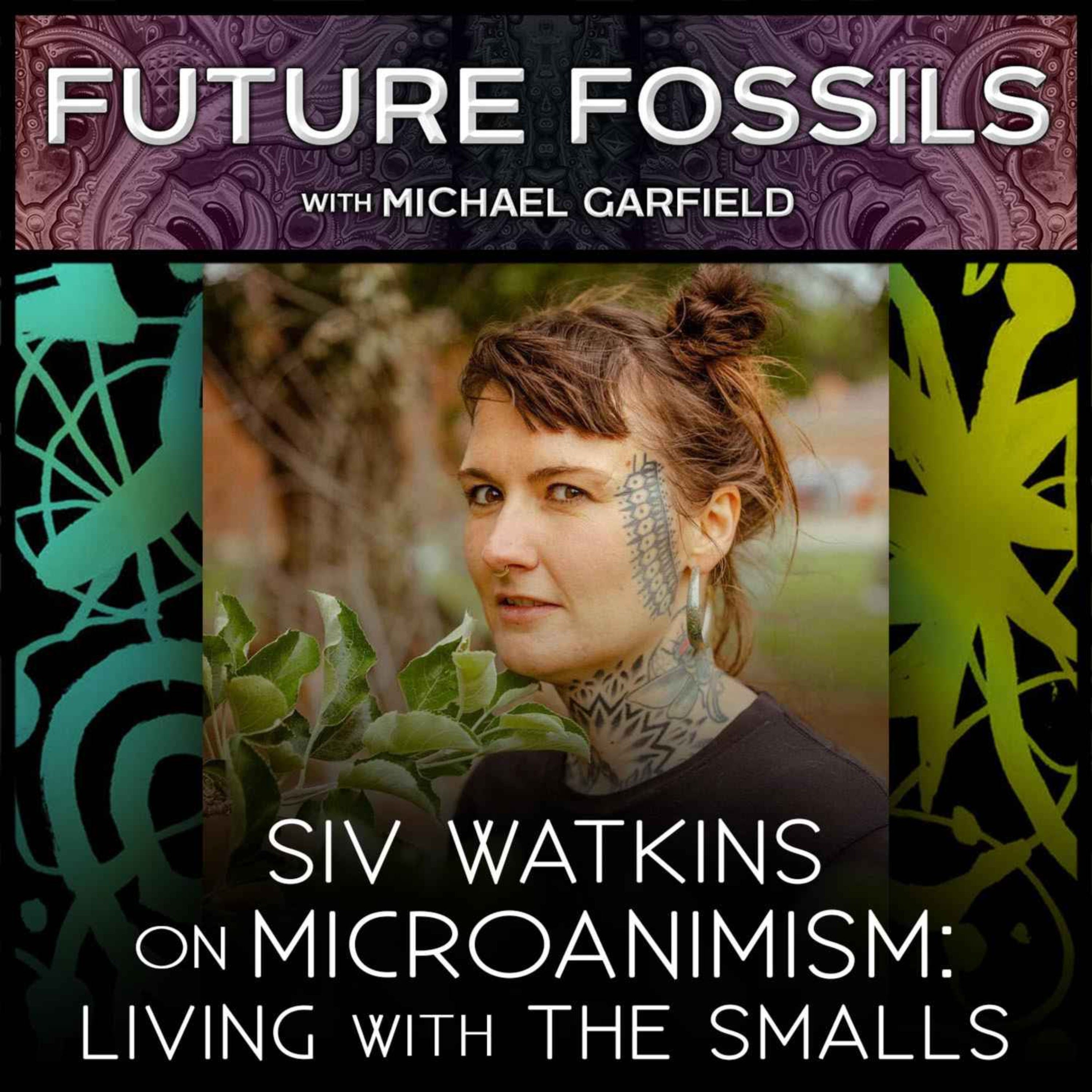
I don't want to say that I've taught students how to get right with the idea of being chronically ill through an infectious disease. But I have had discussions with people that seem to have helped them settle, helped them ground a little bit more into the idea that this thing is here and it's not doing me any favours, but constantly fighting against it with the sort of energy from myself and the stress of it is not helping. And there's kind of a spectrum, right? And one end of the spectrum is kind of, oh god, this is horrible.
I want to kill it. I have to fight it. I'm going to chuck every medicine that I can think of just to get rid of it out, out, out, out, interested in understanding it on any level. And then at the other end of the spectrum, it's not like, oh, I'm totally called this.
It's more like, all right, I have a better idea of why this has happened. And it's not personally against me. And I'm not personally trying to kill this thing, but I am going to defend myself. And I do recognise that this thing is doing what it's doing because that's what it's for.
And it's really good at what it's for. And I can kind of respect it. And I can also kind of recognise that it's probably an exercise in futility to just tense up against it like that. Thanks, Future Fossils.
Welcome to episode 182 of Podcast that Explores Our Place in Time. I'm Michael Garfield and most of you already knew that. So before I say anymore, let me just apologise for taking so long to get this episode out, both in the fine grain of being late, but also in the coarse grain of having recorded this extraordinary conversation with microbiologist and ritualist, Civ Watkins way back in October of last year. When Bitcoin was $65,000, I had not yet contracted the coronavirus.
And nobody was arguing about whether or not the book of Boba Fett was total crap. Just for the record, I loved it. But anyway, I think it's actually appropriate that it took so long to get this one out because, as I just alluded to, the last few months have been for me, one really profound teaching in relationship with the microbial world after another. Not just with COVID, but with a deeper encounter and reckoning with my own gastrointestinal flora that led me to wondering just a week ago whether or not I might have symptoms of something even more intense and terrifying.
Luckily, I don't. Lab work came back really conclusive. There was one night last week where I was lying in bed suffering from insomnia and cramps, burning away a mold with apple cider vinegar because it had grown in size. This is all way too much information.
But I was starting to wonder if I had cancer. And I remembered this talk I had gone to 12 years ago by a researcher who had forwarded this hypothesis largely unappreciated in the oncological community that cancer is actually due to intracellular microbial infections. And I found a paper published in 2018 while I was lying there gripped in a kind of rapturous sacred agony that resurfaced this hypothesis and put it in the light of a topic that I've been interested in for my entire adult life, which is endosymbiosis, major evolutionary transitions occurring by organisms becoming part of each other. Although this was highly contentious at first, it is now widely accepted that Lin-Margulis's theory of complex nucleated cells emerging through the merger of bacteria is quite likely the case.
And these authors whose paper I shall link in the show notes stare into the abyss of the possibility that cancer is actually that same evolutionary transition happening again within the human body. Those people who have listened to the show for a while know that I regard human technology coevolution as interestingly cancerous for very similar reasons and that a related metabolic theory of cancer states that these are cells whose luciferic will to power grows unchecked by the bodies in immune defenses because they suddenly have access to unprecedented caloric resources looks a whole lot like humankind discovering fossil fuels and internal combustion. So that's just a little bone I want to throw to the anti-natalists who might be listening to this episode, even though I think Civ is an extraordinary person and someone I'm deeply, deeply grateful to have gotten on the show. Civ and I take what I consider a far more appropriately nuanced position on whether any individual life form is quote unquote good or bad.
And in fact, it's her insights, her wisdom into this well, frankly, more Eastern view of things being neither normatively good or evil, but in or out of balance that I think really merits giving her more of a platform to speak and more people to hear what she has to say. But before we get into that, I just want to thank all of the new Patreon supporters that have stepped up to help me keep this show sustainable. No small amount of work goes into the show, typically 10 to 20 hours of preparation, perhaps another 10 hours in the edit room, post-production, plus all of the work I'm doing for the Future Fossils Facebook group and Discord server. So special thanks to the 240 plus folks that are helping me keep this thing afloat, including new supporters, Michael Hook, Stephen Gwarean, Timothy Clancy, K.S., Nine Lambs, Daniel Schmacht and Werner, Dan Stanley, and Krista Luach.
I will continue to shower early releases and exclusive recordings upon you as well as my deep, deep thanks. To you and everyone who subscribes and reviews the show wherever you listen. And with that, here is Siv Watkins. Thank you and enjoy.
Oh, and one more thing. Siv is teaching a course online called Thinking Link a Plague, Go to the Show Notes for more information on that and on registration, and of course for the many, many rabbit holes that you can follow if you find this conversation as fascinating as I did. Yeah, how are you this morning? This morning, I'm pretty good.
It's my day off and it stopped raining, which is helpful. And at the moment, it's the balloon fiesta. So every time I wake up, I can go outside and see all the balloons. So that was pretty good, not bad.
Yeah, you're in range. I saw someone with a basket at the gas station the other day and I was like, oh, we're going to miss it again. Yeah, I mean, it's definitely a thing. I'm not a big fan of crowds.
So I tried to go once and I stayed about 20 minutes. But yesterday I was teaching a young man how to ride a horse and a hot air balloon sort of descended above us. It's probably about 50 feet above us. So that was inconvenient because to a horse, that's, it's a dragon or something.
You know, so we've got five year old boy on this horse. He's like, what if so I could do without that. But um, aside from that, yes, it's glorious, I guess, and traffic's terrible and blah, blah, blah, blah. Grumpy old lady.
Right. Yeah. Well, okay. So you're not a fan of crowds and yet micro animism.
Yeah. Like, could you be more of a crowd? Right. Right.
That's the most deeply unsettling crowd you could probably come up with, isn't it? One that lives on you and in you and forms part of all of your sort of gooey bits, but also maybe parts of your personality and also that you have a really deep ancestral relationship with and you might have only just realized it and suddenly all of this information is downloading and it's like, what do I do is this? So I would like to dig a little bit into your backstory here because I feel like in understanding your approach to this conceptual space for which you are an exponent, then it helps for me to understand your background as a microbiologist. And then also, like really specifically how microbiology itself seems to have evolved over the last 20 years or so, like you alluded to in some of the stuff on your website, people are not thinking about these matters the same way that they were when I was in college.
So yeah, a bit of an autobiography, intellectual slash ritual or whatever. However, you want to tell it. Yeah. You'll have to cut me off if it gets too lengthy because it's, when I first started thinking about micro animism, I was in my head starting from scratch.
I was like, right, I've got nothing to go on. All I have is academic science and now I'm going to start thinking about microbes from a mystical perspective or esoteric perspective or have you want to say it and I'm starting from scratch. And then the more I thought about it, the more I was like, I'm not starting from scratch. I just didn't realize what I'm doing.
And probably I can pinpoint the point at which I became a microbiologist, which is probably when I was like eight or nine years old. And that was a result of growing up in an abusive household, my parents were alcoholics and sort of too long, didn't read version is I became obsessed with throwing up as a young child. And because I was precocious and kind of nerdy, eventually I came to learning about bacterial viral pathogens and all this stuff around what makes you sick, the process of getting sick, vomiting in terms of physiology, all of that kind of thing. And at the time I was very young, didn't realize how supportive that sort of nascent relationship with the microbial world was in terms of growing up and becoming a teenager and dealing with all of this stuff.
But now looking back, that's when it began. And then I went on and did a degree to PhD postdocs with a tennis track professor for a little while, didn't really think about this. I never know which word to use. Mysticism, spirituality, like whatever.
Never really thought about that when I was training. And I was actually incredibly dismissive of it. I was one of those students who was pretty insecure in themselves and their own sort of pasty as an expert in my field. So science was everything.
Numbers, logic, linear thought, everything else is, I was very, very dismissive of it. And then I moved to the States, got older and started thinking about that Venn diagram, where you have academic science. And then you have all the stuff that you don't know, that science doesn't know, that we don't know that we don't know, that we don't know that we do know all of this kind of stuff. And in the middle there is where I started my practice around micro animism and thinking about this stuff.
And really to best sum it up, it's regarding the relationship that the microbial world has with humans and human culture. That's sort of like the most accessible way of describing it. I am as well a ritualist and I'm a member of a spiritual tradition. I'm a student of a spiritual tradition and have been for the last five years or so.
And so ritual animism naturally became a part of how I studied the microbial world. But a lot of my students now aren't ritualists. They're not really interested in the spiritual side of it. They're interested in the kind of social human psychological aspects of it.
And it's really lovely because in the middle of that Venn diagram, everybody comes together and everybody bounces their ideas off of one another. So it makes it a real sort of rich tapestry of exploration around this really strange subject that I've just sort of made up and invented. And part of it feeds into what you were saying about how microbiology as a discipline has changed. Probably we could argue that that started happening when next generation sequencing became a thing.
When I was doing my PhD, I did my PhD in wastewater treatment systems. So I was studying lots of microbial communities that had very specific functions. And I was working with a technique called DGGE, which was sort of like a precursor to next generation sequencing. But when I graduated, that was the point at which deep sequencing was becoming accessible to every lab.
You know, the prices were dropping. And before when you could get paper in science for sequencing, I don't know, a gene or whatever, suddenly everybody was sequencing buckets of seawater and realizing what's going on with the viral world, the diversity of the bacteria world. We were finding microbes that were inhabiting niches in the natural world that we didn't even realize there was a niche there to begin with. And so sequencing PCR maybe, but before then really turned everything on its head.
And now if you use a human gut as an example, scientists are really now more equipped and more inclined to study that as an ecological system, as opposed to from just a medical perspective. And sequencing has sort of allowed that to an extent, I think. So yeah, I think one of the key breakthroughs as far as, like for the other podcast that I host for work, Complexity Podcast, I was talking with economist W. Bryan Arthur about this paper that he wrote about economics and nouns and verbs.
And he was talking about how algebra discloses different facets of the economy than computer science because in algebra, you can have to specify all of the variables. But the economy makes new things, like the economy is generative and it's novelty endogenous. And you can't see that very easily through algebra. But you can see it in algorithms.
And you know, he was embedding that revelation in this deeper thing about the difference between say like an x-ray and a pet scan and like the way that different forms of medical imaging reveal or emphasize different aspects of a body. And so you know, his point was kind of radically constructive, I guess, that the it that we observe in the world is contingent on the methods that we use to the tools that we use. And the tools in this case include like the concepts. And so there's something about, I mean, this isn't like hugely profound, I guess, but there's just something about like you're saying about being able to resolve the microscopic world with these tools that allows us to start thinking about the denizens of the microscopic realm as folk, as small folk, like the way that you talk about that.
And it just seems like part and parcel of this ongoing process that we humans have of selfing the other, I guess, you know, of like, you know, trans-oceanic trade opens up and people become exposed to each other's cultures. And you see just over the course of, for example, like Star Trek, it seems like all of the Star Trek series take the enemy of the previous series and then like they're on the bridge of the enterprise and the next series, you know, and like they're just constantly pulling the alien, they don't use the word alien after really after like season one of next generation or something like it's just gone. Right. Because they realize that what they're doing with this show is that they're making familiar, you know, so that's just something that I really like about your work.
And it's funny because I think, I don't know when you got your degree, but it seems like around the same time I was in college. And all of the stuff about not only the microbiome, but about epigenetics and all of this other stuff that seems kind of wrote now in the biological sciences was really far out at the time. And you know, I was glad to see that you're a proponent of Lynn Margulis, you know, it seems like she was on the winning side of history. I don't know.
Just feel free to coming off and riff at this point, I feel like. I was just going to say, you know, the the wrote stuff is science. It's true. Like the first time I sequenced something and got a bunch of data back, it kind of blew my mind.
I was like, I sort of don't know what to do with this. And I'm sort of really excited and I feel really powerful. And yeah, this is really cool. And the same with a bunch of other techniques as well.
And now of course everything's becoming everything just gets bigger and bigger and bigger enough to keep up with the microbial world at the level of diversity that we're trying to grasp for. But we have these really powerful technologies that are really accessible. Well, mostly accessible, I'll say. But their effectiveness or how relevant they are is still 100% predicated on how human scientists apply them and how human scientists are responsible with drawing conclusions from the information that they have.
Because if I go out in the yard now and I pull up a handful of soil and I sequence that, I can't really say anything about that sample other than at this given time, in this given location, this is what happened. And also it's probably completely biased because in order to generate these data, I had to pick up soil, remove it from where it was, take it to a lab, put it in the fridge for however long, fit around with it, PCR, all this kind of stuff. And so, I mean, we have seen in the last 10 or 15 years, some of these really sort of impactful results that have come out have later turned out to be not quite so impactful because the nature of academic science is to sort of cheerlead a lot and to go for the sexiest result. And that's an issue.
But all of these really powerful techniques have to be used responsibly and they're parallel there with developing these relationships and becoming familiar, like you say, with these ones. And I think a really great example of that is the one that everybody's heard about, which is the SARS-CoV-2 virus, like the way that people relate to that virus has been very important, particularly in the US. And what we see when we listen to TV radio, whatever, is people using words like war and fight and evil and all this kind of thing, which is a reflection of what I was hearing when I was growing up and I got my PhD in 2011 and even then the narrative was good bacteria, bad bacteria. And that's what we see with SARS-CoV-2.
But SARS-CoV-2 is an evil. It's a virus and it's doing what a virus does and unfortunately for us it's really successful. And so one of the most gratifying aspects of the last six months in trying to communicate with people about the pandemic is showing them, like this thing is not out to get you this virus, it's not dragging itself across the floor trying to fight your anger, you know. It's a completely predictable result of what is going on globally.
And once you can kind of come to terms with that idea and I've worked with folks who are HIV positive or have Lyme disease on similar themes, once you can come to terms with that idea, your relationship to that one, that virus, the pandemic, everything that's going on sort of shifts a bit and sometimes it's useful and sometimes it's a precursor to more work. But I still think it's important to rationalize what's actually going on particularly now. It occurs to me that we were talking about sounds a lot like this conversation I have with people in the anti-natalist quadrant, the folks saying, the world would be better off without humans. Oh, yeah, no, yeah.
The language around that is like we are a disease. That's eco-fascism, like essentially. Yeah, yeah, yeah. Which is funny because fascism itself means everyone in a body politic is bundled in the fascia, like wrapped up in this metaphorical or literal body of a given state.
So I mean, that's, yeah, that's a little on the nose. This is something I get worked up about because at the beginning of the pandemic, I heard this an awful lot and I heard it from lots of different types of people. I heard it from people like Robert and South Coast of England who's like working class British people. I heard it from a bunch of hippies.
I even heard it from scientists. This idea that human beings are a scourge on the face of the planet and that one of the things I heard with the virus is a reckoning center, reset the earth kind of a thing. That went hand in hand with things like, oh, it's okay. It's just going to affect old people.
And I object to the idea of humanity being a scourge because humans, I don't like crowds. I'm very anti-social, but I like human beings. And beings do good things. Like the other day I spent an hour outside with my friends kid rescuing frogs from a swimming pool.
You know, that's inherently a good thing that humanity needs more of. So I object to that. And I also object to the sort of ableism around the idea of, oh, it's just going to affect sick people. It's just going to affect old people.
It's like, this virus is just going to kill off all of our elders. That's how we're going to rationalize it. No. And of course, you know, now that's not the case.
Like it went through all of those guys. And now we're seeing optics and rates of children dying and things like that too. So it's that kind of sort of, I don't know, this sort of misguided, maybe Western perspective, where a really big, really frightening thing happens and instead of engaging with it and really exploring it and coming to terms with it and figuring out how to respond to it, it's much easier to just sort of do the whole, I guess, nihilistic thing of, oh, well, it's okay because all humans suck anyway. That's not what we needed at the beginning.
It wasn't useful. Yeah, it telescopes in both directions, right? So I remember years ago, I was visiting a friend in San Francisco and we went up to Mount Diablo in eight mushrooms and she was looking down over the city and just bit. It was great.
She was bitching about the light pollution and this might seem like an extreme position. I'm somebody that loves dark skies deeply, deeply loves dark skies. But I'm also somebody that recognizes that I am a German, the intestinal tract of Gaia or whatever, and that there are things that I don't understand about this world and things that I don't understand about even human beings that does a single ant really know what the ant hill is doing, what the ant hill wants, and if we can talk about it in that way. And so I was like, yeah, well, maybe human beings are really here to create light pollution so that the planet can use semaphore to communicate with other planets.
Like, you know, we like, there's, I feel like there's something in this frame in which both the micro, like say, micro animism and macro animism both provide me with, I won't call it faith exactly. It's not like, oh, this is just how things are supposed to be, but it is an epistemic humility. It is a space in which I find it easy to check myself about what I do and don't actually know and about the outcomes of various processes and the intelligence at work in them. And so yeah, I really like this notion.
I'd be curious to hear more from you about working with people who have HIV or other ailments that are publicly, you know, characterized in this kind of particular way. I think you pointed already to the problem of viewing these things in terms of a war, you know, and I think that just a link this to long-term former friend Charles Shaw was on the show back around like episode 58 talking about addiction and how people typify addiction in this particular way, but it's really what the brain is supposed to be doing. The brain is learning and developing habits. I mean, that's what it does.
And under traumatic histories in the light of or in the weight of traumatic history, then your brain learns to characterize its environment in a particular way. And so I don't know, there's this recursive thing going on here. It seems like the way that we talk about this stuff is itself indicative of a trauma. And you talk about it as a Western mentality.
It definitely seems kind of like, was it like Lapsarian, you know, like falling out of the garden kind of stuff, but then it informs the way that we relate to our own bodies when we're trying to like treat cancer and we approach it as like, well, let's nuke this cancer out of the body. And that looks a whole lot like the criminal justice system, which Charles and I worked on this documentary, Exile Nation, his project back in 2010, looking at the way that society tries to eradicate quote unquote wrongdoers, right, many of whom are actually like non-violent drug offenders or addicts. You know, it just, I don't know, there's like this whole thing I just like the oraboris is like eating its tail around this notion of, well, like eating your own tail, like biting your own leg, like attacking yourself. I don't know.
Yeah. I find it really weird to say Western, you know, in that context of sort of the US and where I grew up and all that kind of thing, but I don't know, I sort of just follow the conventions of other folks in the same way that, you know, maybe it's Gab or Matei talks about addiction and depression and other stuff as being quite Western afflictions. And in a lot of the, I guess, scholarly stuff that I follow, but also the spiritual lineage that I follow, a lot of that relates back to animism and the idea of having a relationship, like an honest to goodness, hands in the dirt sort of relationship with the continuum of nature. And sometimes I use terms like the natural world, which I don't really mean because there's no such thing as nature, like there's no delineation between me and outside.
But if you go far back enough, at some point everybody's ancestors were animists and they didn't have a word for it. They didn't walk around going, oh, we're animists, right? It was just how you lived because you relied on resources around you to thrive and you existed in a community and the support of the community and all that kind of thing as well. And I think that there's a lot of parallels in what you were just talking about and that, that there's also parallels between that and the microbial world as well.
So I mean, everybody from the dawn of mankind has had a really intimate, established functioning relationship with the microbial world. And my ancestors almost certainly didn't tell stories about bacteria or viruses, maybe mushrooms, but they still knew that there was something there and it was sort of grown from things like fermentation or agriculture or methods of treating disease, that kind of a thing. So it's always been there and then somewhere along the way, we lost it, you know, we kind of detached from it. People much more other me can talk about how that happened.
But this kind of reconnection and shifting the regard for the microbial world can be really valuable for folks who are in relationships with viruses or bacteria that are actively harming them. And I don't want to sound like a sort of love and light person kind of accept Lyme disease into your life because, you know, it's all for the greater good. If I got Lyme disease, I'd be freaked out. I wouldn't like it.
I would like to go away for sure because it feels like a violation, right? It feels very violent to be infected by something that you didn't invite in. It's a non-consensual thing. But that narrative of I am engaged in a constant fight with this thing that has invaded me is exhausting and that level of exhaustion doesn't help when you're unwell anyway, right?
And I don't want to say that I've taught students how to get right with the idea of being chronically ill through an infectious disease. But I have had discussions with people that seem to have helped them settle, helped them ground a little bit more into the idea that this thing is here and it's not doing me any favours but constantly fighting against it, like with the sort of energy for myself and the stress of it is not helping. And there's kind of a spectrum, right? And one end of the spectrum is kind of, oh, God, this is horrible.
I want to kill it. I have to fight it. I'm going to chuck every medicine that I can think of just to get rid of it out, out, not interested in understanding it on any level. And then at the other end of the spectrum, it's not like, oh, I'm totally called this.
It's more like, all right, I have a better idea of why this has happened and it's not personally against me and I'm not personally trying to kill this thing. But I am going to defend myself and I do recognise that this thing is doing what it's doing because that's what it's for and it's really good at what it's for. And I can kind of respect it and I can also kind of recognise that it's probably an exercise in futility to just tense up against it like that. And for some people, those conversations are useful.
For other people, those conversations don't help at all. But it's still, it changes the relationship from one that's like drinking poison and expecting somebody else to die to sitting with it in a sort of more stable, calm space. And as far as I can tell, that seems to be a good thing to strive for. I've never been chronicleal or anything like that.
But it's interesting how you can still have agency over your own sense of what's going on as opposed to just completely surrendering to all of the horrible, panicky, violent feelings that you have when something like this happens. And again, similar with the pandemic. Since you brought up agency and since earlier, you alluded to the role of the microbiome in our own conscious landscape in mood regulation, et cetera. You know, I'm curious more than just this question of being engaged in a non-consensual relationship with an invader.
But I don't know, I spent a lot of time thinking reflecting on this essay by Eric White called Theorotics of Becoming Xenogenesis and the Thing, I think. It's, I got it. I'll link it in the show notes. But he's looking at the ways that the Isle of Doctor Merow, John Carpenter's The Thing, Peter Watts's fan fiction of The Thing, which is told from the Aliens point of view, called The Things, where it's like looking at human beings with horror.
And then Octavia Butler's Xenogenesis Trilogy, which is, you know, about humans interbreeding with alien colonizers. And he's looking at the way that each of these works of science fiction acts as a lens through which we can observe a changing relationship between people and the notion of evolution, like the fact that evolutionary theory obsolets the idea of mankind as like an fixed ontological category. And he's saying that a lot of the horror, the body horror involved in these fictions in which this thing that we take for granted is going through some sort of transformation is residual of the philosophic horror that people experienced upon learning that humans had descended from monkeys. And I think that there's like something else.
There's like a harmonic of that in the conversation around the work of Lynn Margulis and realizing people realizing not only that there's this like microbiome that's you and not you, but also that each of your cells is a compound organism made out of simpler organisms and that you are this like nested plural thing that's constantly changing. And I don't know, there's this seems like the right time to shoehorn in one of my favorite works of science fiction, Greg Baer's blood music. I don't know if you've read this. No, I haven't.
You totally dig it. Oh my God. Okay. So it's the story about this.
This researcher who is trying to figure out how to make a general touring computer out of an individual blood cell, like how to use the DNA processing of a lymphocyte to make it basically a much, much smarter thing than a cell is. And he succeeds in it and they shut down his lab. So he injects himself with these ultra smart cells that then take over his entire body and transform him into like an entire civilization. Like every cell is as smart as a human being.
And so he becomes this galaxy of people, microscopic people, and then starts infecting other people and it transforms the whole world. And I won't say any more than that. But like this book came out in, I think, 1984. And so in the way that science fiction is prophetic of scientific discovery, it seems like it's really like leaning into this notion that we're made out of tiny people, you know, and like that there's this like looking glass that you pass through.
And then you look out and you realize that we are just, you know, to use a complex systems term, we're just coarse graining everything in a way that like, again, the level of resolution at which we're experiencing the world makes it hard unless you're, you know, going through this particular contemplation. Yeah, to see the fact that you are a multitude of things. And so I'm just curious kind of how you and your work relate to not only the animistically to pathogenic microbes, but to like your own mitochondria. Right.
Anyway, that was a complicated way of asking a simple question. No, it's good. And I'm going to get that book now because it sounds like my alley. One of the things that I really enjoy about doing this work with people is everybody has their own sort of flavor of micro animism, right?
Like my perspective of the microbial world and sort of interacting from an animosive point is that of somebody who's trained in microbiology for 20 years, right? And if you compare that experience to somebody who up until now has very little awareness of the microbial world, it's going to be completely different. And then I work with folks who are Buddhists and I work with people who are gardeners and they work with all sorts of people and everybody brings something different to the discussion because I always try and pitch the microbial universe is like, we've got the microbial universe. And that is probably 10 times bigger than the everything else universe.
Right. If you think about it as a concept and so you're never going to run out of things to explore over here and you're never really going to be able to investigate anything but a tiny sort of pimpric of it. And so everybody picks a different pimpric and it's great. We're never going to map the whole thing and that's fine.
We shouldn't. But it's nice to have this mixture of perceptions and sort of the different ritual technologies that people bring to it and all of the messages that come through. That's really, really great. In terms of agency and pathogens and all that kind of thing, if you look at the quite recent stuff that people have been doing around, pathobias.
So this is a term to describe an organism like costridium difficile or something that's present in people's gut and sometimes it's fine. You know, doesn't do anything. Just hangs out. And then in other situations, it can cause costridiumosis and horrible diarrhea and people die from it.
So in assigning this term, pathobion to some members of the microbial world, where you're saying under normal circumstances, this one is fine to have around. We're kind of suggesting that we know what normal is. And the deeper you go into understanding this idea, it's pretty funny. Now there are more and more and more and more bacteria that are labelled as being pathobions because it turns out it's not a question of what is happening for this bacteria to turn a single switch and suddenly become a killer.
It's what is happening, when is happening, what happened previously, what's going to happen right after, right? It's a dynamic system. It's not a costridium wakes up in the morning and he's like, oh, I'm going to cause costridiumosis today. So the microbial world is incredibly faceted, you know, and incredibly dynamic.
And there's no simple or not switch. Like nothing about it is binary. It's incredibly complicated and incredibly complex and it's linked to everything else in the universe as well. So we have this really, really meaty, juicy aspect of being alive, being a living thing that we've only really begun to pick the threads at the edges through modern science with a capital S.
And then there's an awful lot more behind that that science can't currently access, but we can probably access through coming at it from a different angle. So maybe that is ritual practice. Maybe it's scholarly approaches using animism. Maybe it's something else.
But what we also have to go with, like you referenced mitochondria, is this deep, deep ancestral connection with the smalls with microbes. So I spoke about fermentation and red making cheese, all that kind of stuff. But also we've had these really profound personal relationships through being in possession of a body that contains microbes that provide essential functions that can hurt us, that have a huge impact on our immune systems, on our nervous systems, potentially our personalities. We've got them on the surface of our body.
We waft around in a microbial cloud everywhere that we go. There's a signature and all of these microbes are dictated by our mothers, our fathers, the buildings we're in, the pets we have in our house, people that we mix with, the food that we etc, etc. But also we have these kind of sneaky little relationships that most people aren't necessarily aware of. So 8% of human genome is viral and origin.
That's a pretty big deal. Mitochondria, like chloroplasts in plants, probably as far as we're aware, originated from an interaction between a prokaryote and a eukaryote. So our mitochondria, as well as being a very, very tangible connection to our mother and our mother's mother's mother's mother's mother all the way back. That's a very tangible connection, ancestrally, to the microbial world as well.
We have that relationship going back possibly until the beginning of time. And then if you get even more sort of conceptual about it, you can think of the microbial world as being a conduit between humans and lots of other aspects of the universe. So photosynthesis is a process that was brokered by bacteria, cyanobacteria, the oxygenic photosynthesis, the same version that plants use. And we have that relationship with the s'mores, which links us directly to the heavens, the celestial environment that photosynthesis starts with with the sun.
So once you start really picking at these threads and undoing these knots, you realize that there are very reasonable links between us and the microbial world. And as a result of that, we have links to everything that the microbial world touches as well. And that's a really, really rich environment to go poking around in. And the process of poking is much less effective if you regard aspects of the microbial world as being enemies or malevolent somehow.
It's the same thing as if I go hiking in the sandiers and I get eaten by Black Bear. Black Bear is not evil or malevolent. The Black Bear is being a Black Bear. You know, and probably the reason why it's eaten me is because somebody left their garbage out and ate human food and blah, blah, blah, blah.
You know, so for a lot of people, I think it's easy to like a lion and antelopes or like bears or whatever, it's easier to be okay with that type of aggression. Like that's fine. That's just what lions do. But when it comes to viral aggression, like the rabies virus or SARS-CoV-2 or whatever, that's bad.
That's evil. That's come from an evil place. And so I'm asking people why they can't use their lion brain with the viruses too. You know what I mean?
Yeah, I do. I don't have any kind of like profound answer to that. Except I just add that it seems like the same pertains to cancers. Like as quickly as people are to think about humankind as a virus on this planet, it seems like within reach, people are just as likely to reach up and grab the cancer metaphor and then take it into the same place.
You know, it's like when people are remembering Agent Smith's rant in the Matrix, they will likely misremember it as human beings are. And the kind of interchangeable in a way that I think is one weird and two telling because here we have viruses which as you'd note, actually do constitute a rather large percentage of what we regard as the self. And there are questions about the early evolution of single-celled and multicellular life that suggests that the virus may have been much more instrumental in our early advancements, if you want to put them in that way. And like adaptations into greater complexity than we've historically ascribed in our narratives.
But then on the other side, it's like here's cancer, which is this thing that is you in a much more obvious sort of first-pass sense that we're treating as something outside of ourselves. And so I want to make sure that we get to your actual ritual work in this conversation and the tradition into which you were initiated because something that I notice in a lot of esoteric practices is the good ones have nuance when it comes to whether it's time to treat something as part of you or like when it's time to banish something. Yeah, so like my friends sit in and I wask of ceremony circles and I talk about like a malevolent entity entering the space. And I'm like, well, that's super not Jungian in the sense that you're not engaging this thing as like a rejected aspect of your own trans-rational being.
Anyway, that's just where my head's at with this curiosity pointed in the direction of what this actually means in the way that you engage this ritually. Yeah, and I don't want to make it sound like I'm not deeply respectful and also in some cases frightened of some aspects of my universe. I've done everything I can not catch Stars CoV2. I hope to never have to have a conversation with or be anywhere near the rabies virus or no serum in intertitis.
Like those guys very respectful of them, but I want to hang out with them. You know, I don't think they're evil, but I definitely know that if I catch one, then I will probably die and I don't want to die. I've got stuff to do. So that's quite like I'm okay with saying no.
And that's a really, really big part of any ritual work. And to make the distinction here like ritual is a word I think people use in different ways. So it's sort of like most reduced version of ritual is just something you do over and over again, right? And there are lots of scientific studies that suggest why they're supportive or useful.
Like my mum at the end of the day, when she gets home from work, she always has a cup of tea. And you can't talk to her before she's had a cup of tea. It's like, I'm going to get home. The cup of tea is my boundary between work and home.
And if I don't get my cup of tea, I haven't set that boundary. And so for the rest of the evening, I'm kind of fractious and uncomfortable. So there's that side of it. There's like the ritual aspect of repeating mantras and saying things out loud.
There's a lot of power in the spoken word. And for some people, that's as far as ritual goes. And that can be really useful as well, which is sort of the way that I try and make it more accessible to scientists who don't have any spiritual beliefs, because that seems a lot more palatable to them a lot of the time, that version of ritual. And then at the other end of it, you have, I guess, you know, like the highly ceremonial aspects of things like sitting in circle with plant medicine or some of them all sort of capes and ones tradition.
And then sort of in, I guess, somewhere along the middle of the spectrum is where I sit with micro animism. The spiritual tradition that I'm a student of, I haven't been initiated yet, is West African or research tradition. And part of the reason why I was drawn to that is because it's incredibly practical. It's super practical.
And a lot of it is based around this sort of pillar of reverence for the earth, which is just kind of what I do as a practical animist anyway. But one of the other aspects of the practice that I really like is that when you sit in ritual and you're asking questions of whoever you're asking questions of, you know, whether that's deity or your teacher or whoever, and you're going to get like a yes, no answer, should I do this or should I do this? The response is often, well, what do you think you should do? And I'll say, oh, I think I should do this.
And I'll go, sure, why not try it out, see what happens? Yeah, there's none of that sort of dogmatic. This is what makes you a good person. This is what makes you a bad person.
This is a good decision. This is a bad decision. It's like, see what happens, you know? And that really appeals to me too, because I can't predict the future.
I don't even know what I want out of the future other than I, you know, I'd like to pay the rent and feed my animals and have some experiences along the way. So the ritual aspect of micro animism that I teach, which looks a little bit to the one that I do personally, because it's linked in with that spiritual lineage, is more of a meditative approach to regarding different facets of the living world, particularly ones that you can't see. So a lot of folks who I work with have training in ancestral lineage repair, or they work with plant medicine, or they journey in some other way, and a lot of the processes are very similar in that. A very vague description of it is engaging in some sort of meditation, which allows you to sit with these tiny microscopic ones, sort of in a sea of other energies floating around that may or may not wish to elbow their way in.
So a really important part of these practices are being able to form a boundary around yourself. And what that really means is being able to say no. And that's a really important part of being in relationship with anything, right? That's an important part of me being in a relationship with my partner, or with my horse, or with a teacher, or with like a cashier, a grocery store, you know, because if you can't say no, then your yes doesn't mean shit either.
It's sort of like an authenticity that you bring to being curious about the microbial world. And once you can set up that boundary, and once you can say no, and once you're comfortable with hearing a no, and respecting that boundary from something else you're in communication with, the process is very simple. It's about observing closely in a way that feels good for you, and because we can't see them with a naked eye, observing the microbial world might be visually, it might be through sound, it might, you know, anyway that you can access the idea that there's something else there that we can't look at. And then formally with a degree of politeness starting to enter into conversation, however that looks again, that could be an honest-to-goodness conversation, or it could just be again visualizing changes, noticing changes in the environment, things that you dream about later on.
And once you've established that sort of polite relationship, then you can start working on something that looks more like a partnership. And that doesn't mean you can kind of train for a month and then say, hey, got my probes, can you help me out with my gas? You know, it's not, we're not talking about sort of magic in a kind of magic with a CK way where we're saying we're going to impose our way upon the microbes and they're going to do stuff for us. The reward here is the relationship.
The reward of the experience is the that you collect along the way of being able to interact with the universe that previously you had no concept of. And for some people, that's really enriching and really rewarding and for other people, less so. But that's the same with anything, right? Yeah, actually, I remember reading in one of your emails something to that point about like you can't just drink lactobacillus and expect this.
You know, you just can't hand wave away the stuff. And it's funny because I think that that does speak to, you know, I think a lot about there being the two kinds of magical intent. And one is control. I talked about this on the show recently with Daniel Shanken of Tam integration with respect to the psychedelic experience, you know, people going into, which I think, you know, in the Richard Doyle sense of the term, the work that you're doing is deeply eco-delic, right?
Like it's it is a a practice whereby, like you said, you know, the fruit is a deep into awareness of one's interbeing. But it's kind of predicated on the Western scientific tradition of understand in order to control. And the two forms of magical intent are no in order to dominate or understand in order to align with and that's kind of maybe more of like an aesthetic motivation or an ethical motivation, I guess, then. But you know, I mean, the microscope, gene sequencing, these things are very instrumental, pun intended.
It does take serious effort for people of a particular mindset to get around to, I guess, the term would be decolonize ourselves from thinking in terms of, I'm going to get to know you so that I can get you to work for me. Yeah, I've had a couple of people who have wanted to do sort of one of my online courses or study with me privately and that's been something that interested in. And I've always just said to them, like that is way above my pay grade. I spend a lot of time talking about how fundamentally powerful and ancient and embodied and grounded the microbial world is.
And I'm a tiny little squishy person like sat in the middle of New Mexico, I'm not going to stomp up to microbes and say, hey, I got some stuff I need you to do. Like, no, I'm sure somebody will offer that one day, but it's not me. That's intimidating power. And you know, arguably as a species, we're kind of trying to do that anyway, because microbes are already fundamental in the production of pharmaceuticals and things like that.
Now, people are using E. coli to produce large quantities of side-aside in and stuff like that. And microbes are always touted as a way to clean up oil spills and microplastics and probiotic industry is going to cure all of your issues with your skin and your gut and apparently give you bigger testicles as well. So I can't keep up with a lot of this stuff.
So I try to stay away from that kind of control or influence element because, like I said, it's above my pay grade. And I don't want to anyway, like I'm good, you know, and we're already pushing our interaction with the microbial world into capitalism. And I'm not sure how I feel about that really at the moment. And I'm still trying to figure all of that.
So, but yeah, I think you're absolutely right. I think there are two broadly speaking, two intentions. And it's it's nuanced, right? It's difficult to say that a person who is seeking plant medicine as a way to genuinely alter something that's really uncomfortable in their life, like addiction or like depression or sociality and say that's misguided, you know, because that's I guess that's kind of in there somewhere as well.
And I don't believe that that's misguided. I kind of do believe that if you're going to engage with that modality of treatment that you have to be respectful of things like the ceremony and the ritual around it, because that's part of the medicine. That's why I refer to the cannabis industry as not legalizing cannabis, but commercializing THC. And I can kind of see the same thing happening with psychedelic medicine, you know.
So it's tricky. It's tricky, but I'm not going to go out and demand that smallpox do my bidding or something. That's like not going to work for me. I mean, yeah, certainly again, to draw on Richard Doyle, who's psilocybin summit panel discussion.
I'll have on the feed for the show soon. The, you know, he gives this great riff at the beginning of Darwin's pharmacy about how extracts are not actually the removal of something from an ecosystem, but merely the transposition of a phytochemical, like THC or, you know, a fungal product like psilocybin from one set of ecosystemic relationships that in which it has evolved into another, which is the ecosystem of laboratory equipment that's doing the extraction. And this launched in me this whole thought about to carry animism kind of back into its home court about the material agency of glass and of our scientific instruments and how these things are also entities with agendas, I guess you could say in a little bit of a loose sense. So yeah, but I'd like to end our conversation or land it on horseback, right?
Because you, you also do equine therapy. And I think that your attitude toward the Smalls is for sure, informed by and informing your relationship to one of the most charismatic megafauna, right, which is the horse and and how, you know, being from the UK, my Scottish ancestors, as we're counted in Helen McDonald's excellent book, Ages for Hawk, where she's talking about the history of falconry and the way that the Scots and other people in that region would have themselves buried with the image of themselves on the tombstone was the guy on the horse with the hawk that like, that was me. And when I listened to William Irwin Thompson, he was like my favorite historian, talk about the entelike, you know, like the complete self toward which we are being drawn again. He was really trying to explore in his work the way that we would sort of rediscover this sense of magician and familiars, you know, this complete post like transhuman or post human identity that is a self that is inextricably in kinship and therefore like to the point where the almost like the kinship aspect of it dissolves into a broader sense of identity with the microscopic vegetal and the mineral realms embedded in our instantiated in our devices.
And so yeah, maybe that's a bit more like science fictional than I really wanted to like beg into with you. But I'd love to hear you riff on horses as we close this. I can relate to that. All of my ancestors way back a picktish and I got a lot of Welsh in there as well.
So tattoos and horses, they I only realized this like a short time ago when I was sat at my altar and somebody like bash me around the head of the stick and when horses and tattooed you idiot. Oh yeah. Okay, cool. But horses are charismatic and horses do have a really long and varied and intimate relationship with human people.
So there's kind of a parallel there with the s'mores, I guess. And I haven't actually haven't been working with horses for a very long time. But I have never been able, I've never been very good at connecting with human people, which is part of the reason why I came to animism because it's comforting when you realize humans are designed to be connected to other humans, but it doesn't always have to be a connection to other humans. You know, it's valid to have connections with animals, plants, you know, blowing 737, whatever works.
And horses really surprised me when I first started hanging out with them because a lot of the horses I've been around are challenging to have relationship with my horse now, whose name is Apollo, which is a fitting name considering what I do for a living. When I met him, he was a frightening animal, he's big, he's muscular, he had lots of opinions and he was not a happy chappy. So working with him and coming to terms with the fact that it was dangerous and that for a long time he didn't particularly like me and made lots of mistakes and blah, blah, blah. Now I have a perfect horse who I have a really, really strong relationship with.
And that is so valuable for humans in terms of confidence and being in their own bodies. And so the equine therapy piece is I really enjoy that work because you can see it happening. And mostly I work with children, you can watch it happening with a child when all of that good medicine coming from developing a relationship with a horse sort of fills them up. It's like an energy bar in a video game or something.
And you can see there's a very, very tangible physical emotional effect that horses give to human beings. And it's not automatic. You have to work for it. So it's sort of the embodiment of practical animism is that if you want to engage with these majestic beings who are expensive poop machines and sometimes they try and kick you in the face.
If you want to engage with them in a meaningful way, it's a journey and it's challenging and it's not for everyone. But it is deeply rewarding and deeply instructive and that is very similar to working with microbes. You never know what you're going to get. But the question is, is it worth trying?
You know? Well, I think it is and you think it is. I think therefore I am glad that I've had this opportunity to feature your work in some small way on the show. So thank you.
Thank you so much. Thank you. This is really enjoyable. Yeah, you're just right around the corner and I hope that we get to kick it in person at some point.
It's a doing so would require me to come to a new intimacy and surrender with the agency of my own smalls, meaning my kids, like the challenges of wrangling those expensive poop machines. I'll bring them down to write some horses. I'll teach them how to write a pony. That sounds wonderful.
Thank you so much. And I'll be in touch when this is ready to, you know, sneeze into someone's ears. Fabulous. I love, yeah, that's good way for it again.
Thank you. Appreciate you. Likewise. Thanks again for listening.
Follow me on Twitter or Instagram at Michael Garfield if you would like to steep more persistently and ambiently in the intellectual atmosphere of this program. Find the music for future fossils at Michaelgarfield.banke.com and please help yourself to extensive public archives of book club recordings and additional content that never made it to the main RSS feed at patreon.com slash Michael Garfield. We have some awesome episodes coming up. I'm excited to share with you.
Thanks for holding tight. And until then, have a most excellent now.