Hello, and welcome to classical stuff. You should cogitate. Oh, this is. Rebrandt, yeah.
So this is a podcast where we teach you old classical things, hopefully in a way that is objectionable. So we talk about philosophy, theology, books, sometimes art, which may, you know, be a bad idea. That's great. And yeah, that's kind of what we do.
And so I'm here. My name is A.J. Hannenberg, and I'm joined by my compatriot, Graham Donaldson, and Thomas Magby. Hi.
And at one time, all three of us worked at a small private school down here in Austin, Texas, called Veritas Academy. Thomas has moved to a math career. Was this trick? I'm a master's of data science program at UT.
Doing all sorts of math. And Graham is making no personal progress. Yeah, personal progress. I have a peak performance looks like.
And so I thought, because he's not moving along, I'd give him some advice. I tell him some things to know. And my first one was, man, hop in the shower every now and again. I would do some good.
Yeah, I would talk about it. I feel smelly today. It was a long teaching day. I feel kind of gross.
Yeah, so today we are going to be talking a little bit about advice. This idea came to me when A.J. was doing his last episode on existentialism. Giving advice?
No, no, no, no. It was all about that. A.J., you need some advice. Yeah, yeah, yeah.
No, no, no, no. I was thinking like, man, this is just a trainer. No, no, no, no, no, no, no, no, no, no, no, no, no, no, no. When A.J.
was talking about with existentialism, and I may need to get brushed up on this, because I'm not perfect on thinking through this, is it that your existence precedes essence? That's the phrase. And the idea being that you exist, and then out of your existence, you sort of tease out, or you form your own, is it meaning or your own nature? Kind of both.
You don't have a nature. Yes, it would be the right way to, you don't have a nature. And so you make of life whatever you want to. OK, cool.
You don't have to be meaning or purpose or whatever. So I was thinking about this. Is that a correct tradition? Yeah, I'm not sure if they would also, you don't have a nature, but I think they would say that you have the choice about what to make of your nature.
It will tell you what you are supposed to be. Society will say certain things, but you are here, and you will, you have to decide how to take that, or you follow it, not follow it. People are going to tell you stuff, and it eventually comes down to you, and you exist before you make any of those decisions. Yeah, and so this idea, I sort of, this was bouncing around in my head, and we were finishing up Romeo and Juliet in my English class, and there was this passage that kind of, I thought through this passage, with this lens of your last podcast, thinking about thinking through your nature, and specifically on the human interaction of giving advice to one another.
How do you give advice? So this is probably going to be a little bit of review for long-time classical stuff listeners, but we're going to talk a little bit about persuasive discourse and what persuasive discourse is. So they're classically speaking, when it comes to rhetoric, there are three kinds of discourse, there's persuasive discourse, there's judicial discourse, and there's ceremonial discourse. Ceremonial discourse is the type of speech that you would give on an occasion that is happening right now.
Gentlemen, I've gathered us here today in order to commemorate this 240-whatever episode podcast. I don't know where we are. What are we doing? I don't know.
We're getting that close to 200. We gotta do a party. Listeners, if you have an idea of what to do for our 200 episode party, or our 1 millionth unique download, which is also coming up online, I would really love to read, like, waiting for a dough as a group, but it's not in the public domain yet. We can't really control.
This will be episode 184. We're talking anyway. So ceremonial discourse, giving a speech for something right now. Best man speech, made of honor speech, eulogy, these kinds of things.
Judicial discourse is talking about judging a thing that has happened in the past. So-and-so and such-and-such happened. This is what it means. This is how we should feel about it.
And ceremonial is to judge a thing in the present. So to praise or to blame. To praise or blame something. And then persuasive discourse is to persuade something that ought to be done in the future.
This is what we should do. And that is the formalized speech version is having a persuasive discourse. And many classical schools have a senior thesis where they have a persuasive discourse be the capstone project. We, as Christians, should do x, we, as Americans, should implement y, and here are my reasons, persuasive discourse.
This is something we do at Veritas and something that AJ and I and Thomas have all been involved in at various points in our time here. The school and it's often a capstone project. That's sort of the more formalized version. There is the sort of the version of it that takes place in the church community, and that word for it is exhortation.
And if you were going to exhort somebody, you were trying to persuade somebody, and you're trying to sort of like move somebody off into a higher moral decision. When Paul exhorts, not, I think I remember as a kid, like sitting in a church service and the preacher came to the front and did the electionary reading and talked about the great exhortation, as opposed to exhortation, like I think they were talking about a lot of extorting, as opposed to extorting, which was very funny. This was also the same preacher who sometimes messed upwards, and I remember him saying once when he was talking about that we should refrain from sexual immortality. And I think, I remember my father saying something like that, it was like, that sounds kind of crazy.
That's sexual, sexual immortality. Anyway, that was a funny job. So to exhort somebody is to usually to call or persuade somebody to some sort of like higher moral thing. Paul exhorts us to not brag about our work, or to live peacefully and quietly and work with our hands, like in First Thessalonians.
There's an exhortation. And then I would say the common version of persuasive discourse is advice, giving advice to somebody. And when you're giving advice, you're trying to solve a problem. They've either come to you or they, you're giving advice and it was not asked for, and that causes its own, hopes of problems.
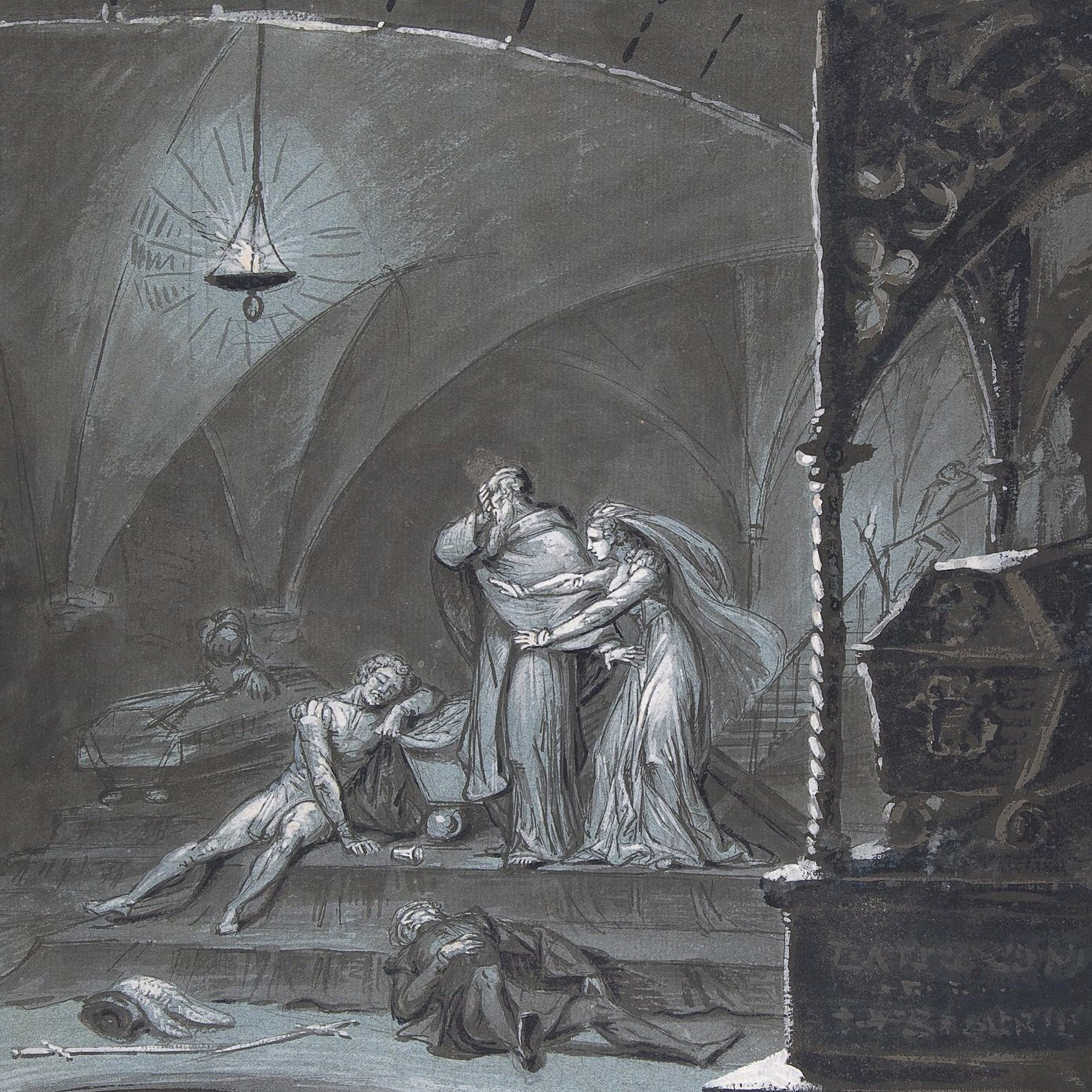
But I sort of was thinking about this idea of advice giving with this question of if our essence proceeds, sorry, if our existence proceeds our essence, then how is advice ever going to work on somebody? Like, okay, I'm sort of putting the cart before the horse. Let me go to the section in Romeo and Juliet that I want to sort of look at, and so setting it up. So Friar Lawrence and Romeo are talking about Romeo's predicament in Act III, Scene III.
So Romeo has killed Tibilt, he's married Juliet, and then on his way home from church, kills his cousin in a street fight, and he kills Tibilt, and then the prince of Verona has banished Romeo from Verona. That's a pretty busy Saturday. He's a very busy Saturday. And he has now been banished.
He hasn't even been able to be with Juliet on their wedding night, and he is very upset that he's been banished, and he is sulking, not even just sulking, he is near coming apart in Friar Lawrence's cell. And Friar Lawrence is trying to convince him that the prince's banishment is a mercy, and Romeo is saying that prince's banishment is a doom. He says we call the damned and hell banished, and there is no life outside of Verona's walls, and Juliet is like an angel in heaven, and I've been banished in hell, and he's very sort of poetic about it. And Friar Lawrence is like, well, screw your poetry.
Like, go to Manchua, buckle down for a week. Heck, even if you buckle down for a year, this will blow over, you're still gonna be married. Come back, and we'll make it right, and Romeo says he can't. And Friar, so Romeo goes on this whole big speech just to why he was not going to calm down, and why banishment is worse than death, and he wished he was dead as opposed to banishment.
Friar Lawrence says, thou fond mad man, hear me a little speak, Romeo replies, oh, that will speak again of banishment. To which Friar Lawrence says, I'll give the armor to keep off that word, adversity's sweet milk, philosophy to comfort thee, though thou art banished. So in those three little lines, we learn what Friar Lawrence thinks about not only reason, but also with the power of advice. Friar Lawrence is saying, listen, I can give you armor to keep off the pain of an idea, to adversity's sweet milk philosophy, to comfort thee, though thou art banished.
So Friar Lawrence says, listen, just by us sitting here and talking and me giving you reasonable advice that you can absorb and you can act on, I am actually going to cure you of this illness that you have, this ailment that is besetting you with my words, and Friar Lawrence is a medicine man, and a lot of his speech is tinged with, I have the thing that I can give you that's going to make you healthy. It sounds like he's Shakespeare's referencing Galicia's philosophy. Yes, and that may be very well-managed, it's almost the exact same thing. Exactly, adversity's sweet milk philosophy to age you in your banishment, and of course the idea of like, you know, milk isn't just like a drinky gift to kids, but milk being like something that is also very nourishing, and you can mix, you can mix sort of potions and tinctures and that kind of thing with it.
So Friar Lawrence assumes that reasonable thought is going to be able to sort of penetrate Romeo's heart and mind to be able to soothe him from the ailment that he has of being banished. So I will give the adversity's sweet milk philosophy to comfort the though that are banished, and Romeo replies, yet banished hang up philosophy, unless philosophy can make a Juliet, displant a town, reverse a prince's doom, it helps not, it prevails not, talk no more. And Friar Lawrence chastises him, oh, then I see that mad men have no ears, to which Romeo replies, how should they, that wise men, how should they win, that wise men have no eyes? Friar Lawrence attempts again, let me dispute the of thy estate, and Romeo replies, thou can't not speak of that thou dost not feel.
Work thou as young as I, Juliet thy love, an hour but merry, tibilt murder, don'ting like me, and like me banished, then might thou speak, then might thou tear thy hair, and follow upon the ground as I do now. And then Romeo throws himself down, pulls out a knife, and thinks that he's going to stab himself. Okay, here, and we get Romeo's view of experience, and the role that advice can or can't play. And he says that very interesting line, that thou can't not speak of that thou dost not feel.
And Romeo sort of amplifies it. He says, the only way your advice lands is if you were as young as me, you were in love with Juliet, you were an hour but married, and you'd murdered somebody, and like me, don'ting like me, so you liked her as much as I did, and like me banished, then might thou speak. And he says, and then might thou tear my hair as I do. So what maybe, why do you say that Romeo is right?
So I think we were talking about this before, that the problems of other people seem easier than your own problems, and so at some level, again, I'm drawing on your presentation of Friar Lawrence in the past, that he has good intentions, but often does not accomplish what he wants to, or, well, he doesn't, they are going to die despite his best intentions and his advice. Maybe Friar Lawrence isn't doing this, but I think there's an easy way to approach, so how old is Romeo in this 16 or something? Yes, 16, 17. I think there's an easy approach, like when a 16 year old has a problem, I think it is often easy for someone older than 16 years below off the problem, because it doesn't seem like that big of a problem.
I think of this having a two year old right now, that like, he fusses and he cries because he's a two year old, but the thing I have to keep reminding myself of is like, his experience of hunger is like the worst hunger he's ever had in his life, but in the grand scheme of things, he's actually like very well taken care of and well fed and all that. I think that's an easy thing to do to the problems of 16 year olds to say, this isn't really a problem that you're experiencing right now. But he's not saying this isn't really a problem. He's saying, let me dispute with the of the I state.
So he's saying, though, he's not belittling the problem. But Romeo thinks he is. But Romeo thinks he is. Romeo's point is you haven't been through this.
And so, yeah, you can give a right solution, but that's not the same as you understand the position that I'm in right now. You understand how hard this is for me. You're just trying to, you know, of course it's easy for you to say, go for a week and be fine and come back. Actually, it's so much harder than that.
Yeah. And so, yeah, go ahead. While I agree that dismissing teenagers and their feelings is a bad idea, especially for someone that teaches them and works with them. And especially if you want to persuade them to something.
Especially if you want to persuade them to something. But I don't think he was dismissing me just asking to speak. Like I will give you a little philosophy that might help. I think the notion that if you have an experience the thing you can't speak to that thing is a false notion.
It underestimates both the human imagination and empathy and sympathy, right? Just because I haven't experienced it myself doesn't mean I've never experienced it something like it. Like yes, everyone's experience is unique, but that doesn't mean I can't imagine what it would be like and then maybe see with a clearer head, a better way out. I think that you can't speak to something you haven't experienced is total hogwash.
Would you trust someone more who's been through that experience? So let's say you lose a close family member and someone who also has lost a close family member tells you, this is what helped me to get through this. Does that hit different than? Yes and no.
It depends on the head. If the head is a clear head, if I know this person is a clear thinker and has experienced the same thing, then maybe I'll take their advice. But I know a lot of people who are not clear thinkers and have a lot of feelings and if they've experienced the same thing as me, their advice would not avail me. What if their advice was like, what really got me through this was zodiac?
And you're like, oh, okay. Then you write it off and you don't do it. Exactly. Like I'm gonna go to somebody who is clear of mind.
And in this case, for me, if I was going through the same thing, there are a couple people I can think of, right, that were banished, was it Seneca, is one? He writes a letter to his mom about, hey, it's not so bad. Like people are everywhere. It's just a new place.
And Boethius, right? Those are the people I'd say, yeah, I haven't. I got a couple of dudes who have. But I think that could be a great, if Fr.
Lawrence doesn't do this, but for him to say, actually, there are other people who are in this position and here's what they did. That's what you're proposing. I don't have the great idea. But that would then lead to a, if you were proposing a Stoic solution, which would have a better outcome then, what happens for Romeo and Juliet?
But in the moment, Romeo doesn't receive it. I mean, like this is the point. Like Fr. Lawrence's advice actually is good advice.
And his advice is. Yeah, his advice is less, think strategically. Let's play some sort of long game. And Romeo is only sort of thinking tactically, like what is actually happening right in front of me right now.
And so this is, so I will tie this back up to the existentialist question that we started off this with. But to me, this is always like the tragedy of Fr. Lawrence, is that he is a man of strategy. And his strategy, he's got a questionable strategy, the whole like fake poison thing with Juliet.
He's a man of strategy, but the strategy never plays itself out tactically like he wants it to. And so you, pardon me, you get into that position where he almost sort of like exemplifies book knowledge or like, or systematic knowledge as opposed to like the practical application of it. Or if you're reading about government or reading about the leading of man in battle as a classical historian versus the feel of that. He's the fox until we have faces.
He's the fox until we have faces. Yes, exactly. And for reference, the tutor of the main heroine in one of C.S. Lewis's books till we have faces is very much this like sort of stoic teacher type.
And Fr. Lawrence is fitting that type as well. And he's a failure in that book. Yes, he is.
The fox has a lot of really great ideas. Very clear thinker, he's a stoic, but he underestimates the spiritual and he doesn't think it can happen, right? I guess what I was, I don't know if you're taking it that direction of persuasion, but isn't Fr. Lawrence essentially speaking a different language than Romeo?
Romeo wants pathos and Fr. Lawrence is offering logos. Well, this is my question. Yeah, and that's actually where the direction I was gonna go in is, is it that?
Does Romeo want to be persuaded with emotion? Or is there something fundamentally happening inside of Romeo that absolutely means that no amount of advice is going to penetrate? Is there something sort of much worse going on? So yeah, we could play those games where like, all right, what if Fr.
Lawrence sort of made some sort of appeal to emotions where he was like, but Romeo, if you were banished, think of like the sad love poster you could write that we could send to Juliet and she would love you even more and Romeo could be like, well, that's a great idea. Like, I don't know if that would have worked, right? I feel like he's got good advice. He's just giving it the wrong day.
What he needs to say is Romeo, look, where I'm gonna feed you some food, we're gonna take a walk, I'm gonna go let you punch a pillow for a while, then we're gonna take a nap and we're gonna talk tomorrow morning and then we're gonna see if clearheads can prevail. We'll tackle our problem tomorrow after a good meal and asleep. So the constraint of time is another sort of factor in here. I like thinking of Fr.
Lawrence as this doctor, this apothecary, this medicine man, because he's trying to cure Romeo, but there's all of these different factors at play. The virility of the quote unquote infection of Romeo, like how deeply he feels to sing, Fr. Lawrence seems to underestimate. And also the constrained timeline, Fr.
Lawrence thinks he has more time than he actually does to let this thing play out. And if you think about like, those are probably challenges that you face when you're trying to cure somebody of an illness is like you don't really, you can see the symptoms, but you don't really know how deep the problem goes or you don't really know how much time you're kind of working with in order to cure this thing. Do you need to go a lot more sort of violent? I mean, a lot more severe in your cure or less severe.
So this is the problem, this is the art of the advice giver is that you need to sort of diagnose your audience. And I proposed a question, I thought experiment to my class and I was pretty much, it was down the line 50-50. And my thought experiment was this. Would it be okay for Fr.
Lawrence to lie to Romeo to get him to be banished, to buy him some more time? And the lie could be like Romeo, I can get you Juliet to mans you at tonight, but as long as you get there right now, would that have been okay if Fr. Lawrence had done that? And half the class said yes.
Like, time is of the essence, Romeo, he's gonna calm down. If you can buy that time, even if it's with a lie, it's a noble lie and that's okay. And the other half was like, no, if Romeo's gonna be a punk and he's not gonna listen to this advice, it's not on Fr. Lawrence, Fr.
Lawrence, it's no skin off. I mean, yes, he's gonna feel bad that if this doesn't happen, but you have to give true good advice all the time and it really is up to the person to receive it or not. And that's kind of the ground where it falls down. Should you try to ensure that your advice is followed even though you need to trick the person?
Or should you be giving sort of advice the quote unquote, right way, but if the person doesn't follow it, that's their foolishness, not yours. I'm not convinced that Romeo would have received, just for the earlier question, I'm not convinced he would have received advice no matter what given the circumstance. Yeah, and that's the gamble of the lie. And the history of the play is that he essentially moves from big passion to big passion, who's not tight.
Rosalind, Rosalind, who's in love with, until he's not. And they're not telling what the next passion will bring. Our sea cars, which would be great, that would be much happier into it. No, I think the risk you take in, first off lying is bad, that's my, again, classical hot take is don't lie.
But also that you run the risk of making it worse. So you promise to bring her to Manchua that night, you can't do that, and then what does Romeo do? When you have a lie to him that you bring, oh no, it'll be tomorrow night. And then you're down a path that there's really no getting out of it.
That's right. Though I'm just trying not to be too precious with this, of the option, you know, Friller Lawrence could actually try to get Juliet out of Verona and to Manchua, and maybe just not in one night. You know what I mean? I mean, like, they know how to pass me tries to do it.
Yeah, and so there are more options than just anyway. There's more that he could do. So, no, I don't think that Friller Lawrence should, how does the wrong justify it? And I understand the point is that it's to save a life in the end, but he doesn't know at that point that Romeo will actually kill himself.
Even Romeo pulling the knife out, it's like a show. Oh, you know, he seems to feel this, but Friller Lawrence doesn't know that in the moment. I don't think he could. Yeah, certainly.
I wanna hear Ado take the outside, but lies are good. No, oh, okay. It's a bad idea. If Romeo ever finds out he'll never listen to you.
Yeah, so it is, it is like a car you can only play once, and it's pretty risky. If it works, they'll appreciate it, but if it doesn't work, you've burned everything. Even if it works, they'll appreciate it, but they'll still be. Can we speak just of everything for you?
Exactly, it is a complete, burn your fleet. That's the point that those teams make. That it is sort of expedient in the moment, that you kind of, you need to buy that time for Romeo to get some perspective. That's the argument.
I mean, you can say we're gonna drive around and accomplish a thing and just pick a really faraway spot and hopefully kind of calms down. That's fair. Now, going back to that question where Friller Lawrence says, I, from First Principles, can give you advice about your life and Romeo says it can only be done spun out of your own experience, which you don't have old man. When we were talking about AJ's episode, the idea that I had was, okay, if Friller Lawrence is correct in his assumption, he's assuming that there is sort of a human nature, that he's assuming Romeo has a nature that he can appeal to using reason and philosophy.
And I would say that Friller Lawrence, that assumption is a very classical one, that he is, that human beings have a nature, that nature can be appealed to. The very canons of rhetoric are built around appealing to our natures, in this case, to persuade us. So, Friller Lawrence is sort of coming at him with that sort of, that presupposition that human beings can be persuaded because, at the very bottom, we are all rational creatures that we can be persuaded by rational. But he's setting it up like that.
So then the failure of Friller Lawrence to persuade Romeo, are you then going to say that it's a failure on the Romeo's part to not be able to? Well, no, no. So then this is the question. Or maybe Friller Lawrence's assumption is wrong, and that that human nature is not something that we can have, he is mistaken in thinking that it is, he thinks it's easier to appeal to human beings than it actually is.
And now here he has a case study in front of him. Here he has a specimen, here he has a variant of a human being in front of him, and his methodology isn't working. And so the question is, is this Romeo's answer maybe give more weight to the idea of that it really does need to be our experience that forms relationships and bonds? Like Romeo's only going to be able to be spoken to and spoken into by people who have had similar Romeo experiences.
Friller Lawrence assumes that there's kind of like, if I'm going to sort of maybe, what's that called where you sort of exaggerated to make the point? Hyperbole? Hyperbole is to make the point. Friller Lawrence assumes that there's like a brotherhood of man that we can all talk to each other and understand each other.
And Romeo is presenting an idea that it's maybe a lot more ghetto-wiseed. Like our human experience is a lot more individualized, and really you can only enter into somebody's ghetto of experience if you've experienced similar things. And so my question may be Hanenburg to you is, is that kind of what you think the existentialists we're getting at when they're talking about that their existence precedes essence? So you think they're taking Romeo's view?
Yeah, or that Romeo is, you can say that but what Romeo is expressing by saying, you don't know me, Dad, or you don't understand me, Friller Lawrence, is an example of what they then sort of crystallized into a philosophy of existentialism. Is Romeo being existentialist in that pronouncement? What pregnant pause? Yeah, probably I think he's more to 16.
Okay, then this is ultimately my point, which is that existentialism is immissure. No, it's not my point. But that's the thing, if I say he's just being 16, part of what he's doing is trying to make decisions about the nature that has been foisted before him. That's what Lara Lawrence is doing.
He's saying there is a nature. And Romeo is having an existential crisis. He is having to say what is worth existing for? No, what do I think about this nature that you were telling me about?
You are saying that the experience is a man or common. He has to make the choice whether he's going to internalist. The good existentialist would say, both of them have made decisions about their essence. Both of them existed before.
Romeo existed before somebody came along and said there's a right way to do this. And now he has to make a choice. He's having an existential crisis is what's happening. But Friller Lawrence is saying there's a right way to do this.
And I'm able to communicate it and understand it because we are of the same nature. Yes. And so Friller Lawrence is assuming that. So then that's why it's not existentialist.
So if Romeo rejects Friller Lawrence's advice, does that mean that the existentialist have a point? Or does it mean that Romeo is, has a certain, there's certain qualities that he has where it's actually, he's broken the bond of human nature? I don't know. Both philosophies here have purchased.
So the philosophy that there is a human nature has a lot to say about what's happening. That Friller Lawrence is a wise man. He's saying here is what humans are supposed to do. And I can tell, I can walk you through it, right?
I've been through this before. This ain't the first rodeo where someone's been exiled and he's like my man. This ain't the first time it happened. I can give you all kinds of philosophy that will walk you through this.
So it comes from first principles. So the good like human nature non existentialist would say that is Romeo's essence. And Romeo is not recognizing, right? His essence proceeded his existence.
And Romeo is in his existence kind of saying no to his essence, which is one of human nature. The existentialist would say that both of them had existence before ever making choices about what someone said their essence was. Friller Lawrence has accepted it and therefore applied it to all men. He's doing the existential thing where I act a certain way and I assume all men should act this way.
And then Romeo is making the same choice but he is rejecting what the people have told him, right? And saying I will exist a different way. And all men should exist such that they can only relate to the people that have had experiences that are similar. Both would apply.
I don't think this situation proves either one correct. So do you think that Friller Lawrence is wrong in making that assumption by saying the thing that I experience as my human nature is something that is applied to everybody else? Do you think he's wrong in doing that? I'm not existentialist.
I think he's right. I think humans do have an inherent nature that they grow into. No matter where you, you know, what experiences you've had. Humans kind of function a certain way.
Okay, so then I'll agree with you. So then if Friller Lawrence is correct, then why isn't Romeo getting it? Is it immaturity? Yeah, he's immaturity.
Okay, cool. So let's say that it is immaturity. The reason that Romeo isn't getting it is because he is either because of his emotional state or because of his sort of moral character development. He is making it hard for him to, for the better angels of his nature to appeal to him.
This is, so to go back to what Thomas was saying about his two year old. What Romeo is experiencing here is the worst thing he's ever felt in his whole life. And he assumes that it's worse than anybody's ever felt because he's never felt anything like it. And this reminds me of a, I don't know if he's ever listened to this podcast, but a lecture I got from one of my professors named Adam Neder.
You know, I've told you this before, I'm sure. But he talked about, it was the best 10 minutes I've ever heard on youth ministry anywhere. He said, it is dangerous to dismiss the emotions of the youth because they don't have a great wealth of experience to lean on when they're going through something. And their brain is also not developed enough to run all of the emotions through the logic filter.
What they are feeling is more intense than what you have felt in 30 years by like 10 fold. So for them, this is the only breakup in the universe that's never happened before this bad. Like no one has ever felt this ever, ever, ever, ever. And they are having a wash of emotions they can't even think through.
That's what's happening to Romeo, right? He is experiencing this and he thinks it is magnified and could swallow the world. 20 years down the line, he's like, it's all right, we broke up, right? And I can go through another breakup.
Or I went to Manchu and I just kind of like, I did a little different week carpentry and then came out. And so not so bad, right? I mean, do you later together? So then how then do we not know that what the existentialists have spun into a philosophy about human nature and what it means to be a human person is not just a codified version of human immaturity, is my question.
Like they're looking at what they're looking at Romeo and or they're looking at that experience and saying like what Romeo's going through is, that's what really means, that's what human experiences like, Fr. Lawrence is like this old age, that's this old way that is trying to like, implement their, I don't know, superstition of faith upon the wildness of humanity. Your assumption stands on an assumption that the existentialists can't make. Your assumption is that there is a truth, there is a goal, there is a way Man should be, right?
The ideal type. You think there is a thing into which we should mature. The existentialist would say that is not. Except for instance on freedom, is this ultimate goal that we have?
So there is, he has an ideal type, it's a man that's truly free. And but Romeo isn't like, he's insisting on his own freedom, right? So I'm wondering if Romeo is the hero, the existentialist hero. Yeah, that's kind of question.
Yeah, he throws off all the background he's had before, he chooses his own destiny and come what may, he drives it to the end. And the end being like, so what if it's death, like he chose that death? Yeah, that's doing forced into a life of, like boring misery for the rest of his life, right? Yeah, and being held down by first principles, right?
So if there is no way for Man to actually be, there's nothing requiring us to act in a certain way, even though Sartre says freedom at all costs, which I don't think he can logically say, then it doesn't matter what he chooses, there is no such thing as immaturity because we don't have to mature in anything. He gets to make choices about what he is. Either there's that, I don't know, but there's not something immature about that Romeo at 16 should grow into Romeo at 18 and learn some things between those two, I don't know. I don't think it's logically to consistent to say, there is nothing that Man has to be and then to say he is doing it wrong.
So how would an existentialist give advice? Like, how would they persuade somebody of something? Or what would they see out like? Well, they can't.
Sartre does this. He said that. He said that I cannot judge, except that I can say you are making an error or acting in bad faith. Like you are saying one thing and doing another.
I can point that out. I cannot say you are wrong. He can't. So what's bad faith?
Bad faith is, I think, one thing but do another. Yeah, it's hypocrisy. Okay. So as long as Romeo is not being hypocritical.
She's not. And what's the other one you said? Oh, an error here in judgment. I mean, logic error.
You might say it's a logic error. So he ultimately won't make a lot of it. The management is worse than death. Yes.
But how can you even say that's a logic error? Just because I disagree with him. That's not really a logic error. I'm correct in all things is what I'm trying to say.
I've always known Thomas. Yeah, I'm sure. So maybe you can't, it feels like the weight's are different, but I also don't have a sense of exile the way that Romeo does. So maybe it's not a logic error.
That's what I'm saying. I think Romeo could be viewed as the existentialist hero of the story. I don't think Shakespeare views him that way. No.
I don't know if that plays into this. But Shakespeare writing those lines into Romeo's mouth is understanding something about human nature. Or how they are understanding about something about humanity. Which is that there is a, you know, I like to guess of like the not wanting to get advice from someone like maybe I'm just a punk 32 year old, but like I still have that too.
You're young. Oh yeah. Okay. I don't think it's only a six.
I'm just trying to say it's not only a 16 year old thing. You don't know what I'm going through. Like you don't live through whatever. So then, so then is this is this it, right?
Then are we like, are we really then broken into it? For Lawrence thinks there's one human nature that can be appealed through to reason. Maybe the father extreme is existentialist who say that it is, you cannot give advice except in these two things, whether or not you're actually in a good faith or whatever the other one was. And maybe something's in the middle where there's like, I don't know, like the any, there's nine anagrams and only the five can give advice to a five or I don't know.
Like. So my point from before is not necessarily, so in terms of whether persuasion will work, obviously it didn't work. And I think that's a failure on fire Lawrence's part. Do you?
Okay, give me your argument as to why I think that's a failure for fire Lawrence. We've talked about this. I think this is going to get back to the Charlie problem. Yeah, I'm in favor of killing people.
So my point being that I think fire Lawrence has all the right things and it doesn't persuade Romeo, which implies some type of failure there. Does fire Lawrence try and shift angles to persuade a different way? Or does he insist on his, I'm going to be high in mighty, I'm going to argue this the right way. And that's kind of your fault, whether you listen or not.
It's kind of a laissez-a toward the actual person who ultimately kills himself. Yeah, I mean, so this is maybe a bit of a stretch of analogy, but there are kind of two, I really like football, like European soccer, are real livable. I'm a big football. Everything's two different sports.
I don't have anything to say. And so I used to live in Amsterdam, and so I became a huge fan of Ajax, which is a team in Amsterdam, and they have a way of playing the game. Ajax. AJAX, it should be Ajax, but it's pronounced Ajax.
No, no, it's not. They have a way of playing the game. And they have a sort of a cultural understanding that if you win the game, but you haven't played the game the Dutch way, you didn't win the game. And then there's the other kind of, and it's really fascinating to see culturally how different European cultures and even South American cultures go about playing the game, because it really does express their own cultural identity.
And then there are very specific coaches. There are coaches that will play the game a certain way, and they will force their team to play that way. And if they lose, they won't deviate from playing that way. And then there are coaches who are pure tacticians, as opposed to systems people.
They will set their teams up to win against a very specific opponent they're playing, and the very specific way their opponent is playing. And they will change their style of play. They will do all sorts of different kinds of things in order to win the game. And I get the sense that Fr.
Lawrence is the first kind, that he is not going to think of other ways to persuade if the rational way isn't working. Like he is only going to give adversity, sweet milk philosophy. And he's not going to do the path I was wrote, or he's not going to do the ethos and say like Romeo, killing yourself as a moral, or whatever. He's very much like an idealist in that sense, or a purist, whereas you could get somebody who is a lot more pragmatic, who would look for all of those sort of different tactical approaches.
And I think about that little heuristic all the time, about being a systems person who is doing a certain thing in a certain way, and if you fail, you're going to fail doing it briefly, or the right way. Or there's also the hyper-pragmatic that it is all about the results. And if you huff the ball forward and like you know, battering around it in the goal twice, and then you set up 11 guys in front of the net, and they could never get in there, like so be it, and who cares about beauty. And I think about that in relation to Fr.
Lawrence giving advice to somebody. And of course like AJ pointed out, this is pertinent to us as educators, because we are people who are interacting with teenagers, and oftentimes are giving advice. And I really often think this, like do I want to give what I think is like the theoretical best advice, or do I really want to like make sure that it pragmatically works itself out, and that the student takes it, because I've tailored it to their receptors or whatever. You're saying that Fr.
Lawrence is an academic, not a youth pastor. Yes, exactly. And the pastors are practical, and know how to go through different tactics. Which is why the tragedy for me of Fr.
Lawrence is, here's an academic, who has high-minded ideals, who gives great advice to the whole play, and it doesn't land, and now he has people dead at the end, and he is a blubbering shell at the end of the book, and he's completely beside himself, decrying fate, and saying that like, he even says like a final line, but he says that a greater power, when he finds out that Romeo has died, he says to Juliet, a greater power than we can contradict has thwarted our intents. So he basically says like, listen, we play chess against the wrong guy, and he beat us, and Fr. Lawrence Ware. So doesn't this all give evidence to the practical mattering more than the academic part?
That's what I wonder. But then what is the practical for Romeo? If nothing was gonna get through to him? I don't think it's the practical, he's a poor veteran.
He's a better rhetoric. His job is to convince him. He doesn't hold him. Fr.
Lawrence Ware, Lawrence Ware. Yeah, sorry. He's in what way? So he gives a sound logical argument, we're us reading it now a couple hundred years later, it sounds great, why is it not good rhetoric?
Because he didn't consider his audience. It's the same mistake that Odysseus makes when he's talking to Achilles. He goes up and he tries to offer a bunch of logic, and a bunch of like, look, come back to battle, get stuff, fight Hector, get glory, I don't see what the problem is. What is Odysseus right though?
Odysseus is absolutely right. Like his appeal makes perfect sense, and he appeals a little bit to the feels, Phoenix does more to the feels, and I don't know, he is making the mistake of thinking that his logical, I will give you the ball of philosophy, is going to reach a 16 year old kid who just lost his wife and his home. That's the wrong assumption. You cannot make that assumption.
He needs to go to the feels, and he needs to walk him outside, and he needs to get him, and they're in his cell, that's the first problem. So you do think that Romeo is capable of being convinced in this moment? I think, yes, I don't know if it's in this moment. I think he needs to change a venue, I think he needs to change a timeframe, and I think he needs to change of medium, and that's the issue, right?
It's one of the reasons we teach kids great books, is because it's a medium other than us. So you definitely disagree with Romeo saying that thou can't stand speak of what thou does not feel? 100%, I agree. It's the same thing that happens that my seniors have come to tell me, that they go to a classroom and are not allowed to speak because they don't have the experiences that other people have in the classroom.
I think that is a folly, right? I can apply logic no matter what experiences I've had, right? You don't think that that logic is mediated through certain experiences that people, just like extreme experiences? So if I say I'm the logical one, I have the logic, and then doesn't that just say to you, you're wrong, like you lack the logic, like many people can be logical and still come to different conclusions, see the great books, see the great conversation.
I understand the point you're making and totally shutting people out of any kind of conversation seems wacky, but there's a place to say that like you and Graham disagree on things, you're both logical, right? You disagree on the trolley problem, I don't think one of you is wrong for your disagreement. Sure, but he can talk. And that's my point.
I've been agreeing with talk yesterday. And like granted, I would never go into a classroom where someone was talking about an emotional experience, they had and say like, I am vloggable, let me bring a little logic. That's what we're talking about here. I know this is bad at what he's saying.
No, but this is, maybe this is back to the beginning where we were saying, Fr. Lawrence and Romeo are assessing the gravity of the situation and maybe Fr. Lawrence is saying that this isn't as grave as you think it is, and Romeo is saying this is the worst thing that ever happened to me. Like if you sort of think of the bell curve of things that humans can experience in life, Romeo thinks he's on the far left hand tail of it, and Fr.
Lawrence thinks he's still kind of in the middle of this isn't all that bad. And that is the thing that's mediating their response to this. And Fr. Lawrence is misreading where what his audience is feeling.
Yeah, yeah. So if we sort of invert this question for us, and this is kind of the last question I wanna think about is, then how, if Romeo can't receive advice, that is good advice, that could have saved his life and saved a mountain of heartache and his marriage and his life, and maybe even still reunified. The family is the great irony is that Capulet kind of thinks Romeo is an okay guy, and he says so at the party. How then, what do we need to do to not be Romeo?
Like what needs to happen for a man or for a person to be able to receive advice, even if it's from somebody who maybe has not had the depth of the experience that you had. So I was reading a while ago, Xenophon Cyrus the Great, and Cyrus the Great, he sort of talks a little bit about advice, he says, don't let people flatter you, and then Machiavelli brings it back up in the prints. But Cyrus says that only the virtuous man can hear and apply good advice, this is sort of the statement that he says, which is a very classical thing to say. And I wonder if that's true, I wonder if there is a lack of virtue in Romeo that is kind of blinding him to receive Friar Lawrence's advice, and...
He's proud. He's proud, he's... He's young, he's young, so there's an immaturity there. Because if he had followed Friar Lawrence's advice, none of the stuff at the end would happen, correct?
So yes, but I don't know, some part of me wants to stand up for Romeo, who's clearly the hero of this thing, no, that sometimes the advice you get is not good. And again, Friar Lawrence starting from a place of, hey, actually the thing you think is devastating isn't that devastating? I don't think it's correct. I think AJ has spot on when he says that actually the loss of your wife and your hometown is pretty devastating.
So I don't know where to take it, but just to say that, of Romeo needs the discernment to see what's good and what Lawrence says, and then accept the good instead of the bad, right? Yeah, anyway, I don't have anything else to add to that, other than... Can I ask a question? He seemed very focused on the advice piece of this as opposed to Romeo's reaction to the entire situation.
Why not center this on, Romeo should have behaved differently. Like, you seem very focused on the Friar Lawrence advice giving in that moment, and the problem is that Romeo is freaking out, right? Yeah, last question on my last question is, how do we then try to be people who can receive advice as not be like Romeo? And maybe also be able to have a little more measured reactions to the vicissitudes of the world, of your life.
Yeah, I guess what I'm to oversimplify, it shouldn't be better if Romeo didn't need the advice in the first place. If he was a kind of person, that could just be better. Sure, yeah, for sure. It seems interesting to focus on the advice piece of it, as opposed to Romeo who's the one who's like messing up and should have done differently.
Well, it's almost like when you have somebody who's developing like Romeo and he's immature, you almost don't want big bad things to happen to them because they don't have the framework to deal with it, whereas if this happened to Romeo, the 35-year-old, maybe he could still have lost, but you know, Boethius wasn't 17 when he got exiled, and now there was Seneca. He moped for a little while. And maybe he moped for a while, until Lady Flossie said stop listening to your music. Like turn off our Spotify channel or whatever.
So maybe it's like, there's just no getting out of it that if like seriously bad things happen to teenagers or people who are still developing that virtue, like it's a completely different playbook than what Fry Lawrence thinks it is. Maybe that's fair, maybe it's, and that's what he's getting at when he's talking about fate is like all the advice in the world isn't gonna help somebody who is, who doesn't want to hear it. I don't know, who doesn't want to hear it. I don't want to like completely give like the 17-year-old and out from being mature and making the right decision.
Now that being said, whenever I teach this book, 80% of the class are absolutely incredibly frustrated by Romeo, they find him a frustrating person. Cause he is incredibly frustrated. He's a frustrating person. And then the 20% are like the people that just love everybody.
And it's like, you gotta feel sorry for him. The poor guy. Anyway, I just, yes. The reason I took it from the Fry Lawrence point of view is, I think that's more often how I find myself is the position that I'm in is the giving of advice and how much should I care about the quality of the advice, regardless of how the students go to hear it or how much should I care about?
Am I giving it in such a way that this specific student is going to hear it receive it and do it? I think the other part that's hard is that you don't, you will see a response in a week and you have no idea what the reaction three years on the reaction. And that sometimes you've talked about your example of water off a duckback, you're giving you this advice to like kind of tough enough and not appreciating it in the moment. It's something you remember 20 years later, whatever.
So that complicates it also. The thing that just keeps coming to mind is from the, I forget what we titled the episode. I think it was retrospective from the own buds of fun. But it seems like Fire Lawrence's failure is not making some type of connection with Romeo in the moment of, hey, I care about this too.
And hey, this is actually a devastating thing. And we can get to the advice later, but for the immediate reaction, am I understanding this correctly? There's an immediately, immediately Fire Lawrence that says, hey. I got an answer for you.
That seems like the failure. Take this, you'll feel better in the morning. He's almost got this like a medical way of dispensing advice. And I think what Romeo needed was a shock.
He needed to say, Romeo, what season is the best one to plant trees? You didn't think about something else. Like play some chess, right? Yeah, do something with him that isn't, let me try to dump logic on you while you're feeling emotional.
There'd be a time for the logic. Yeah, yeah, yeah. Romeo's a receptor too. Anyway, this is interesting.
Romeo as existential hero is an interesting question. I still don't know what to think about it. Anyway, but that's talking about advice in persuasive discourse. Or maybe the final word is, here's a book that I've taught for 10 years.
And by having AJ's podcast last week, have now found this other little nook and cranny and to be able to sort of flesh out and think through it. And the book is rich enough to allow us to go there. So that's an example of the continuation of a good piece of literature continuing to yield up. It's fruit over the years.
That's another, you know. Very cool. All right, well, this has been classical stuff you should cogitate. We're glad you are here listening to us.
We do this because we love it. I mean, that's why we're here. But if you like it too, you can also support us on patreon.com slash classical stuff. And we've got all kinds of goodies over there for you.
You can hear our between episode banter. We sometimes release little special things for our listeners. Monthly AMAs. Monthly AMAs and some of my old COVID episodes and some of our earliest episodes that you cannot get anywhere else now and they're available only there.
That's something you can find there and people feel like supporting us. If you don't feel like supporting us, you can also reach out to us on the twits at at clsscalstuff.net. You can find our website at classicalstuff.net and you can email us at theguys at classicalstuff.net. And I think that's it.
So let's all hope that Graham takes my advice and hops in the shower every now and again. And for the rest of you, listen to your friar every time he decides to speak up. Very good. He's not supposed to eat a deep fryer.
Oh, really?