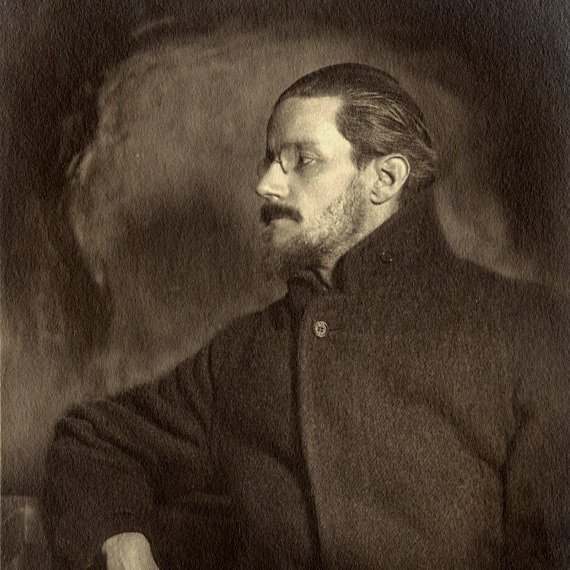
Hi, welcome to Classical Stuff You Should Know, a podcast about classical education, old books, old movies, all those things that are old, brought to you by three guys who have been involved in classical education, who, you know, just like this kind of stuff. Brought to you by James Joyce. No, not brought to you by James Joyce. My name is Graham Donaldson and I'm here with my fellow men of learning, Thomas Fletcher Magbee and Arthur Ion Hanniberg.
And we are going to talk about something absolutely incomprehensible. We just had St. Patrick's Day a couple of days ago, and did anybody have any green beer or celebrate in any way? I also did not.
Oh, no, it's not true. I had a Sam Adams. Sam Adams. That's the American Boston Irish, right?
Sure. Boston. Anyway, but in celebration of St. Patrick's Day, no, not in celebration of St.
Patrick's Day, but AJ, you're gonna talk to us about a book that is loved by few, but those few who love it, love it a lot. It's hated by the many. And that is James Joyce's Ulysses. Why are you doing this episode?
Because gosh darn it, I'm going to get something out of reading it. I did the work. I'm going to get the payoff. I just know.
I'm on Goodreads right now. History, Stephen said, is a nightmare from which I'm trying to awake. Wait, what? This is a quote from Ulysses, apparently.
History is a nightmare from which I'm trying to awake. Love loves to love love. That's a quote from this book that we're going to be talking about. Oh, yeah.
Why are we doing this? We're doing it. It's because I told you I'm going to get something out of my effort. I thought this book was like, doesn't it mirror the Odyssey?
Yes. So that's classical. That is classical. Yeah.
Kind of. Okay. So listener, we are going to be talking about James Joyce's seminal work, Ulysses. And hoo boy, is it a doozy.
So I've been on this weird string of episodes. One where I talked about a book about nothing. And this is literally the opposite possible book. This is a book about, it's maximalist.
Did we make you mad? Like, did we do something? He shoves. I don't know why.
From here on out, this is my pledge. I'm just gonna do philosophy. It's so much easier. There are questions to answer and I have clear ideas to deal with.
So last one was literally a play about nothing. The one that I did. And this one is a book that's so incomprehensible. It might as well be about nothing because...
Like a flower of the mountain. Yes. When I put the rose in my hair, like the Andalusian girl. What is this?
Oh, I think that's not like the last chapter. Okay, great. Okay. So first I'll talk about Joyce and a little bit about Joyce.
And then we'll talk about his work, Ulysses. And we might read a little bit of it, just a bit, just to kind of give you a feel of the work, because it is very strange and very different. And I'll kind of give you my experience with it and what I can tell you about what's going on. And then I'll just walk you piece by piece kind of through maybe how you should approach this book.
Although please don't. I've never thought about a title for a podcast prior to giving the actual podcast. I make up those titles at like three in the morning when I'm editing these and throwing them up online. This one is I read Ulysses, so you don't have to.
And that can't be more true than it currently is. All right, so James Joyce, born in 1882. He died in 1941 and he was born in Dublin, Ireland. He was the eldest of 10 surviving siblings.
10! 10 siblings! That's a lot of brothers and sisters. That's in my opinion, that's too many.
That's a lot of fights. Like that's every extra kid you add a whole bunch of whole bunch more fights, right? Okay, so his full name is James Augustine Joyce or Augustine, depending on how his parents pronounced it, whether or not they were wrong. He came from Fermoy in County Cork, where his family owned a salt and lime works.
Eventually they moved to Bray, which was 12 miles from Dublin when he was five years old. So in 1881, this was, I guess, right before he was born, they began to slide into poverty, right? Which was made worse by his father's heavy drinking and the mismanagement of the family. In fact, it got so bad that his dad's name was published in Stubbs Gazette in a blacklist of debtors and bankrupts in 1891.
So I guess this is, this has to be, I must have mistyped the date. So this is 1891 that the family begins to slide out of poverty. So he's probably nine. And then he eventually was suspended from work and then dismissed in 1893 with a reduced pension.
His father was? Yeah, his father was. Joyce began his education at 1888, so when he was six or so, at Clongowes Wood College and had to leave it in 92 when his dad could no longer pay. After that, he was homeschooled a little bit.
He also briefly attended the Christian brother's O'Connell school in Dublin. And shortly thereafter, his dad met a Jesuit priest who arranged for the boys to attend Belvedere College, which was a Jesuit school, without fees, right? So he kind of, which was awfully sweet, right? He spent five years there and he followed the educational instruction laid out by what I'm just learning about, a thing called the Ratio Studiorum, which is basically a codified volume of all of the procedures and things that the Jesuits used internationally in their schooling, which now I'm wildly interested in and really want to read.
It's really cool. I actually looked a little bit of it and it basically says how you should conduct a class and what the kids should do at the beginning. Like at the beginning of every class, they recite, I think it was the rules of prosody. I'm not even sure what those rules are.
I gotta go figure that out. I gotta go read this thing. It seems interesting. So he followed that and then he apparently was already good at English.
He won first place for English comp in his final two years there. After this, after graduating, he enrolled at university college in 1898 to study English, French and Italian. He was there exposed to Thomas Aquinas, who basically had a pretty profound influence on his life. In 1901, he was basically a student living with his parents and nine siblings in Dublin.
And he met a guy named Oliver St. John Gogarty or Gogarty, his model for a character named Buck Mulligan in Ulysses. I get the feeling, although I can't be sure that he didn't like Buck Mulligan very much or that he didn't like this Gogarty fellow. Stately, plump Buck Mulligan.
That's like the first sentence, right? Yeah. He said, he doesn't seem very positive on the guy. No.
And Buck Mulligan is kind of a jerk, I think, throughout Ulysses. Because you're unclear on what's happening. Because I'm unclear on what's actually happening in the novel. But I think that he's kind of low on the guy.
Have you ever thought that every life is in many days, day after day, we walk through ourselves meeting robbers? That's a quote. Are you really doing this? Are you really enjoying this?
Can you just pitch it every once in a while a little more? I really enjoy it. Okay, so he... It's not a really famous ending, right?
It just says yes all the time. Yes. Yes, I will. Yes.
Okay, well, we can talk about that. He graduated in 1902 and considered studying medicine, but he couldn't get the university medical school to give a tutoring position in Dublin. So he left there and went to Paris to study medicine. But by 1903, one year later, he had totally given up the study of medicine.
But he stayed in Paris and appealed to his family to finance his... Like gills and stuff. It's gross. It's gross.
Yeah. I don't want to do that. Yeah, like gills and stuff. Do you ever like pop stuff?
No, it's gross. And that's like base level. That's day one stuff. Yeah.
You're gonna pop something. Can't do it. In 1903, his mother was dying. So he returned to Ireland to tend to her.
And he would even read aloud for some of his drafts that he was working on. During her final days, she tried to get him to take communion and give confession, but he wouldn't. And he was listening to her drafts. You should pray.
And apparently after she died, he also wouldn't kneel at her bedside to pray for her like everybody else wanted him to. Oh, so he's one of those 20th century guys. He's got kind of a complicated relationship with religion. You said he got acquainted with Aquinas and then apparently went off the deep end?
Yeah, it's weird. I think the church, he and the church have a complicated relationship. He feels that they have failed him in a lot of ways. And I think that he was clearly not living by Christian principles, but it seemed like he came to, I don't know, cordial terms with his Catholicism later in life.
I'm kind of unclear on it. It does not seem, judging by his works, that he was a strict adherent to Catholicism or Christianity. I think it's because was after 27 years of relationship, they finally got together. He had chronic eyesight problems because of a disease he had had.
I think it was his left eye was practically practically blind in his right eye, like barely worked. He even in 1938 became involved in helping Jews escape Nazi persecution during World War II. After the defeat of France, he fled Nazi occupation, returned to Zurich and eventually died in Zurich of an perforated duodenal ulcer. Oh, yeah.
So at a certain point, he just stopped going back to Dublin. He did not have a great time there and things were rough for him. But this guy has been all over the place. He was in he was sometimes a national of one country, having originated in a different country.
And so when World War II was happening, he was actually watched by two different secret services as he was in Switzerland to make sure that he wasn't running information for the other side. Right. Because he'd been living in Trieste, but he was originally from Dublin. And so he was just trying to make money.
That's all he wanted to do was to make money on his books. As far as I know, there wasn't anything else sketchy going on, but he had a pretty storied life. Right. Had a lot going on.
And a lot of that does make it into Joyce's Ulysses. Did he have financial success from writing before he died, I guess. Eventually sort of, but he just had, I get the impression. He just had lavish spending habits.
Right. He always outspend whatever money came in. Exactly. He just, he just liked to spend his money, I guess.
And eventually he had a few kids with Nora. And so that, you know, and then sometimes his siblings would live with them and stuff. And so we had, I mean, he had a lot of people to provide for, which makes sense. So I'd say that he started a cinema.
Nope. No, he eventually did start a cinema because they had one in Trieste and they didn't have one in Dublin. And he went and he started it really well received. But then when he left, it fell apart.
So, you know, he, he had some successes. He's also got a few failures. Yeah. Okay, let's talk about the overview of the book.
So what is Ulysses? What do you guys currently know about the book? Well, what you just said, which is it's one day in a man's life. One day in a man's life.
I know that you hate it. That's really all I know about this. My feelings are, I would say that the needle lists a little bit towards hatred, but maybe a little bit more towards also towards curiosity, if that's the other side of hatred. Um, I don't know if that was the two sides.
Um, I know that it's about a man who has either a wife or a lady partner who's considering having a... Um, I know that it is touted as being wildly incomprehensible. Yep. Just to read.
Stream of consciousness, that's like a phrase I hear for it. Stream of consciousness. And then that last page, I know is famous where it's just like the word yes is repeated over and over and over. Okay.
That's all I know. This book is a bear. It's at times, I kid you not, it was like reading the phone book. And you know that feeling when you read a paragraph and you're like, Oh man, I just, I haven't been paying attention.
What did I just read? You have to go back and read it again that you have to have that. You have to read with your mind kind of blank or else you literally cannot get through the text. So you sort of have to space out and get into this Zen place where you just let the words come in because you're not going to understand them.
Like you're just not, you're not going to get everything. You're not going to understand all the references. You're not probably not going to get the Latin. You're probably not going to get the Italian.
Or the French. Maybe that's the point. You don't read the book. The book reads you.
Yeah, kind of. But that's, I really, I did have to get into this weird trance like state to read this thing because it's 600 pages. You're just not gonna get through it otherwise. Is it about the feeling, you know, Graham's making a joke, but like, is it about the feeling you have going through this?
Is it kind of like a type of impressionism where it's, again, what is your reaction to this paragraph you're having? So yes and no. There's so much going on in this book that there's one, one episode of classical stuff is not gonna do it justice. I hear that there's another podcast that a guy has been doing for like 16 years and he has not through the book yet.
He's going through it piece by piece to try to explain it. And I've heard, although I haven't confirmed this, that Joyce wrote this book to be something that someone could spend a lifetime doing analysis of that your life's work would be analysis of his book, Ulysses. When we did our T.S. Eliot episode forever ago, we talked about Ezra Pound having his cantos, which I forget how many there are of them, but maybe it's the 101, however many there are in Dante.
Anyway, but it's like, it's incomprehensible. And both in the sense that it incorporates many languages, it'll have, you know, Latin stuff in there, but also some of it, sometimes it's just a picture instead of there being words. And sometimes the words are just out of order. Like, is it that kind of incomprehensible or is it?
Well, I'm going to show you a little sections of it to maybe give you a taste and there are parts of it that are just flatly incomprehensible and there are parts of it that you can comprehend. It's written in so many different styles that it's, it's hard to nail it down to one place. But it's funny that you bring up Pound because they were actually friends. Pound became a big promoter of his work.
So, you know how Picasso was an amazingly accomplished classical painter and was very realistic in his painting and then developed his own style where it sort of broke it down and it sort of not cartoony, but you know what I mean? Like the cubism. Is Ulysses the same kind of thing? Like was Joyce actually a well accomplished writer and prose writer and somebody that was well classically educated.
And this is that version of it. Is he sort of feeding into that early 20th century? Like Dadaism or the sort of the, the encroaching nihilism of the modern world and, and, you know, the, the T.S. Eliot, uh, shoring up against my ruins kind of thing.
Is that what he's doing? Boy, I wish I could tell you. I wish I had read something else by him prior to this. I've been told that I should.
And I tried reading Portrait of the Artist as a Young Man, but it's the same stuff. It's the same. It's the same, but shorter. It is much shorter.
So if you, if you want to figure out if you're going to enjoy this thing, which you probably won't, then you can read Portrait of the Artist as a Young Man first. Is it one of these things where if you just blanket say, I love this and people say, I tried to read it and I don't understand it. You can, you can sort of double down on that and feel important. Yes.
And so here's, here's my theory. As I read this, I thought this must be how my ninth graders feel trying to read The Iliad. It has to be, right? Where it's just like, I don't know what's happening.
I don't know who's talking. I don't know where they are. I don't know what's going. I don't get any of the references.
I don't know who any of these people are. That, I was like, this has to be what it feels like. And I all of a sudden had a very deep sympathy for my ninth graders as they go through all of my books. Now I don't, you guys know that I was a big critic of Wasteland.
Right. I recall. I don't know if this falls into that same thing. Wait, wait, wait.
The Wasteland is worse? Yes. He's gonna say yes. Well, my theory is that yes, and here's why.
But I could be wrong. I could be wrong. I'm willing to be convinced. I'm willing to be convinced.
Here's why I think The Wasteland is worse. I hope you're watching on YouTube right now. Graham has left the building. So, are you trolling us right now?
So my, my theory, and you guys can tell me if I'm wrong, is that that one is obfuscation without the content. This one is all the content to the point of obfuscation. Now I don't know if that's better. I think this, this thing can be...
Can you say what you mean by that? So I mean that what happened in The Wasteland is that he took out so much as to make it only confusing to make one single point. Right. Just sort of like...
Just in agreement with AJ's point is you can see original versions of The Wasteland and there is more kind of supporting information as to like who's talking or what's going on. And Pound cut all that out because he didn't want it to be understandable. So just to say, yes, that is literally what happened to The Wasteland. Yes.
This one has so much in it that, that I would have these occasional glimpses where I'm like, Oh my gosh, I know what he's talking about. It's the maximal writing that you're talking about. I was like this reference, Pay his attention on the first object that meets his eye, but can never wholly rid himself of his obsession. At 10 o'clock, Mr.
Bloom starts his day's work. He is naturally sociable and anxious to please, and his métier of advertisement canvasser requires that he should keep in touch with many classes of Dubliners, businessmen, editors, potential clients of all kinds. For in Dublin, as in most small capitals, Bonhomie brings business, and the man who is known as a good fellow, a mixer, and cultivates relations with as many of his fellow citizens as possible, has a pull over an unsociable rival, even though the latter be more competent. His first visit, however, has a romantic object.
He obtains from a branch post office a letter addressed to him under the antonym of Henry Flower by a trusting typist, Martha Clifford. For Mr. Bloom, considering his wife's Spanish ways, one can hardly blame him, is himself no model of fidelity, though his sins are rather of intention than commission. In a meditative mood, hoping to hear some music, he enters All Hallows, St.
Andrew's church, to witness the end of a communion service. Then he orders from a chemist a face lotion for his wife and visits a bathing establishment. The next episode describes a funeral attended by Mr. Bloom, in the company of Mr.
Dedalus Sr. and others. The deceased, Dignam, was a friend, and when, after the burial, a subscription is opened for the widow, Mr. Bloom makes what is considered at his means a generous donation.
At noon, he visits the newspaper office to arrange for an advertisement. Stephen visits the same office a little after Bloom. He has drawn his salary at the school and so can invite the editor and his cronies to a neighboring bar for drinks. The invitation, needless to say, proves acceptable.
He just misses encountering Bloom. It is now lunchtime and Mr. Bloom feels the pangs of hunger. He looks into a popular restaurant, but is disgusted by the sight of the animals feeding.
His gorge rose. Finally, he takes the edge off his appetite with a sandwich and a glass of Burgundy at Davy Byrne's public house. The scene now shifts to the National Library, where a quasi-Platonic dialogue is engaged between Stephen Dedalus and some literary lights of Dublin. Mr.
Bloom makes a brief appearance. He has to look up an advertisement in the back number of the Kilkenny People, but again does not encounter Stephen. The next episode consists of 18 fragmentary scenes of Dublin life, concluding with a coda describing the viceroyal procession through Dublin. Each fragment is thematically linked up with the others and with the book as a whole.
It is now four o'clock and Mr. Bloom's hunger will no longer be denied. He has a belated lunch at the Ormond Hotel, where Mr. Dedalus Sr.
and others are celebrating the trinity of wine, women, and song, in the company of Ritchie Goulding, Stephen's uncle. At 5 p.m., we find Mr. Bloom at Barney Kiernan's tavern, where a charitable errand on behalf of the late Dignam's widow has taken him. The xenophobia of an intoxicated nationalist known as the Citizen leads to his precipitous retreat from the Patriot's den.
Weary and worn out after incessant peregrination, Mr. Bloom now decides to take the air on Sandymount beach. Under the last rays of the setting sun, he yields to the seductions of a precious, precocious Dublin shit, Gertie MacDowell, but does not follow up his conquest. At 10 p.m., he visits the Lying-in Hospital to inquire after a friend, Mrs.
Purifoy, who is being delivered of a child. Stephen is there, grousing with some medical students, and at last he and Mr. Bloom come into contact. Stephen is gradually becoming intoxicated and, Mr.
Bloom, attracted by the young man, decides to take him under his wing. When the band of revelers sally forth and Stephen makes for the Dublin night town, Mr. Bloom's paternal instinct prompts him to follow. The next scene, situated in the brothel quarter of Dublin, is the most remarkable in Ulysses.
Stephen, under the influence of drink, and Mr. Bloom, exhausted by his day-long odyssey, are sensitive to the hallucinating ambience and see their most secret desires, their fears, their memories, take form and live and move before their eyes. As a side note, my book club and I thought he was on absinthe. I don't know.
It feels like an acid trip. This scene, corresponding to the Circe episode of The Odyssey, is usually described as the Valpurgis night or pandemonium of Ulysses. If you remember back to when we did, what was his name? Faust.
Faust. The Valpurgis night was the crazy night with witches. It's the same feel. It really does.
There's a lot of parallels between that book and this one. The last three episodes describe Mr. Bloom's return. He is accompanied by Stephen, who has decided that he will not go back to the Martello Tower, which he shares with Mulligan.
On their way to Eccles Street, they halt to take a cup of coffee at a cabin's shelter, where they encounter a marine at Munchausen, who regales the company with tall yarns of adventure in far lands and other exotic night fairs. Later, in Mr. Bloom's kitchen, over a cup of cocoa, they compare experiences and, in the catechistic form of question and reply, the personality antecedents and past life of Mr. Bloom are scientifically dissected.
Last of all, when Mr. Bloom is asleep beside his wife, we have a long, unpunctuated, silent monologue of the latter, the refined quintessence of unrefined femininity. At this episode, Arnold Burnett wrote, I have never read anything to surpass it, and I doubt if I have ever read anything to equal it. Ulysses ends like the marriage service, with amazement.
So, okay, that actually makes it sound super interesting. Obviously, I don't fall. I don't know who the characters are and all that stuff, but that does make it sound super interesting. Okay, so the book is designed to mirror The Odyssey.
Thus, the first three chapters are to mirror the travels of Telemachus, right? So Telemachus has the first four books of The Odyssey, I think. And this, the first three, are Stephen Daedalus. And so as The Odyssey, the old Odyssey is sort of the coming of age of two men.
This is the chronicle of two men who are going through their day and going through their journey. And as Mr. Bloom is returning to his wife, his Penelope, she has found that she has kind of been unfaithful, very much unlike what actually happens in The Odyssey. Now, to kind of obfuscate that mythological underpinning, Joyce has actually deleted the titles of all of the chapters.
So you don't really know what chapter you're on. You have to go back to the table of contents to find the chapter names. And each chapter is one hour in his life. And so it...
So, sorry, it tells you when you're in a new episode, but doesn't tell you the name of that episode? Yeah, there's just a gap with no chapter title. So it begins at 8 a.m. and ends at 4 a.m.
after Penelope, which is her thing. Now, each chapter, and this is where it gets really complicated, is doing something completely strange. So each one has a scene. You know when you turn the book sideways that...
For those watching on YouTube, we got a sideways graph. So it has an hour, an organ, an art, a color, a symbol, and a technique. A technique meaning like a type of narrative. This is like wacky hermeticism.
Yeah. What do you mean? Oh, like hermeticism, you know, like the idea of like the unity of all the sciences together to like turn lead into gold, that kind of thing. The old...
Hermeticism. I don't know, how do you define hermeticism? So, for example, the lotus eaters happens in the bath. It's at 10 a.m.
Oh, so let's skip that one. That one's a little inappropriate. So Hades, it happens in the graveyard. It's at 11 a.m.
The heart is the organ. Religion is the art. So it will pop up again and again when they talk about religion. Colors are white and black.
The symbol is the caretaker. And the technique is incubism, right? So there's narrative, catechism, monologue, narcissism, dialectic, labyrinth, gigantism. Oh, I bet that one's cyclops.
Yeah, so in the cyclops episode, for example, that chapter happens in the tavern. It's talking about that guy, the citizen. And everything is way overblown. Everything they do is the most maximal, huge, amazing, florid language.
And it does these huge lists of things and describes people as, like, grand and barrel-chested when they're just regular folks sitting around a table, right? There's even one chapter, the chapter he's in the tavern, and he's kind of thinking about the two girls that run the place, where they do an overture at the beginning where you get snippets of the language. Kind of like, you know, in old movies when you'd get little bits of each song at the beginning, right when they did the credits, they'd do, like, a little bit of the whole score. And then you'd get the scores that went through.
It's the same thing I wanted to read you maybe the first sentence of the next section for me. It's page 30. Proteus, is that with ineluctable modality of the visible, at least that, if no more, thought through my eyes. Signature of all things I'm here to read.
C-sponge and C-wreck, the nearing tide, that rusty boot. Snot green, blue silver, rust, colored signs, limits of the diaphany. But he adds, in bodies. Then he was aware of the bodies before of them colored.
How? By knocking his sconce against them. Sure. Go easy.
Bald he was and a millionaire. Maestro to color. Limit of the diaphany in. Why in?
Diaphany. A diaphany. If you can put your five fingers through it, it is a gate. If not, a door.
Shut your eyes and see. Yeah, obviously I have no idea what that means. Yeah, I have no idea. Like, it's impenetrable to me, right?
So this is Daedalus is kind of hard to get through. I also wanted to read a section from the cyclops. So for me, it's page 214. It's a, I was just passing the time.
Yeah, I was just passing the time. Yeah, I'm not, this Joyce project thing is great. If anyone is really able to jump into it, this is. It's the way to do it.
Everything. And again, the hyperlinks literally explain all the references. It still makes no sense, but it's very, very good. So a little ways down, a few paragraphs down after that little bit of dialogue, there's one that says in Innisfail.
There lies a land. Yeah, I got it. Got it. In Innisfail, there, the fair, there lies a land, the land of holy Mican.
There rises a watchtower, beheld of menafar. There sleep the mighty dead as in life. They slept warriors and princes of high renown. A pleasant land it is, soothe of murmuring waters, fishable streams, where smortha gunned, the place, the roach, the halibut, the gib haddock, the grills, the dab, the brill, the flounder, the mixed coarse fish generally and other denizens of the aqueous kingdom too numerous to be enumerated.
Right, so that's kind of the bombastic language that he does here, which is, right, supposed to be gigantism, I think is the thing they call it. Which is then continued throughout this entire episode. Yeah, the whole episode reads like that, where everything is these huge lists of wonderful things and it's too numerous and too wonderful and too grand. I'm wondering if there is a, well, the style in it is to match that the episode is titled Cyclops, right?
So it's gigantism because it's a giant he's talking about. Yes, that's intentional. Okay, but then I'm not understanding, like, why? Or is there some narrative reason why the style switches to gigantism or that's just...
I don't know. I wish I did. Again, I mean, it would take a lifetime to get together this. The one, so a lot of these sections are very different, right?
The one where he's on the beach and looking at that young girl, Gertie, it's totally inappropriate what's happening, but that one is actually more incomprehensible because it's not his inner monologue. It is hers. And hers is well put together and thoughtful and easy to understand. And so when he switches characters, you will feel the difference in thought between your characters.
And I think the most, the place where this is most pronounced is in the final chapter, which is Penelope. This is, I think there are three periods in this whole chapter and it's maybe 30, 40 pages long. Yes. It is, it is mostly, this is the most stream of consciousness.
If you just even look at it, it is daunting to look at because it's just a wall of text. Yeah, there's no paragraphs and there's no anything. It is just a, yeah, a brick wall of text. Oh man, if I had to say anything about this section, apparently she's supposed to be a picture of nature, right?
She starts as like a woman asleep in a bed and then eventually she is the embodiment of nature itself. And there's a bunch of other stuff going on there. It's hard for me to follow. But if I had to call this anything, I would probably call it sexist.
Really. He's supposed to be in the mind of a woman and he does not portray her very well. Right. She is concerned with clothing and she hates other women and she's jealous of her husband and she cheats around.
Maybe it's just her, but it certainly doesn't paint women very well. When you've had a book full of men that are thinking fairly clearly. Gertie's was all right, but she was also incredibly impressionable and she was a teenager, right? She was flirting with Bloom in a way that was probably not becoming to herself.
Now, do you think that, that Joyce is saying this about all women or just this particular woman? Let me read the section and then I'll answer that question. Which section? Just I'll start at the beginning.
I'll just read the very beginning. Yes, because he never did a thing like that before, as asked to get his breakfast in bed with a couple. If you read it like that. I don't know how.
Okay, fine. I'll read it nobly. Yes, because he never did a thing like that before, as asked to get his breakfast in bed with a couple of eggs since the City Arms Hotel when used to be pretending to be laid up with a sick voice doing his highness to make himself interesting to that old Mrs. Riordan.
Though he thought he had a great, he had a great leg of, and she never left us a farthing off of the masses for herself and for her soul. Greatest miser ever. Was actually afraid to lay out 4d for her methylated spirit, telling me all her ailments. She had too much old Chatner about politics and earthquakes and the end of the world.
Let us have a bit of fun first. God help the world. If all women were her sort down on bathing suits and low necks. Of course, nobody wanted her to wear.
I suppose she was pious because no men would look at her twice. I hope I'll never be like her. I wonder if she didn't want us to cover our faces, but she was a well-educated woman, certainly. And her gabby talk about Mr.
Riot in here and Mr. Riot in there. I suppose he was glad to get shut of her and her dogs smelling my fur and always edging to get up under my petticoats, especially then. Still, I like that in him.
Polite to old women like that and waiters and beggars too. He's not proud out of nothing, but not always. If you ever got anything really serious the matter with him, it's much better for them to go into a hospital where everything is clean. But I suppose I'd have to drink it into him for a month.
Yes. And then we have a hospital nurse next thing on the carpet, have him staying there till they throw him out or a nun, maybe like the smutty photo. Like it just goes. It just goes on and on like this.
Yeah. It's not very flattering. But were the men flattering? Not necessarily.
So your question is he just talking about like the stereotypes of humanity, the men being like sort of drunks and louts and fighters and boobs and guys who like think they're smarter than they actually are. And yeah, that's her perspective. Types of women, which they are, which they're sort of concerned with only like, you know, how they look and gossip and all that kind of stuff. Okay, yeah.
So here's my argument for why it's good, right? We talked about why it's hard to understand. Why it's hard to get through and why you'll probably never read it, which you probably shouldn't. Oh, man, you've kind of like laid a pretty compelling case.
So here's why. Here's why I like it, or at least here's why I think that it might actually be something that I'll go back to. I think what he's trying to do is not only this artistic monolith of having all of these things at play in every chapter and doing all of these crazy artistic things with every chapter and like having references from basically an education that I could never hope to have in my life. It's like a classical education goes bad.
You classically educate a madman. Yeah, it's an antithesis to classical education, right? The references. I, even as a classicist, don't get.
But I think what he's trying to do, even with all the obscenity and with all of that, like seeming sexism there and the impressionability of that young girl and Bloom being kind of gross and kind of having a woman on the side that he kind of intends to get with. What I think he's trying to do is capture humanity, not in its glory, not in its baseness, but real in reality. What is really happening in a man's mind throughout the day. Like my listeners know and I know what I know, what goes on in my head, but they know what goes on in their head throughout the day.
And there's so many things that you filter out, things that you would never share, things that you think are inappropriate. But we get those we get those in Ulysses. And that's one of the reasons it's said to be so crass, right? Is because what you are getting is all of the deepest, darkest inner thoughts of all the people and all of their horrible motivations and all the things they do.
But along with everything that's mundane, you also get everything that's Fun episode to do one day. You can find us at classicalstuff.net. You can tweet at us. You can patronize us on Patreon and we have in-between episodes and we have all sorts of other little goodies in there.
And let's see, you can email us at [email protected]. And if you are on YouTube, smash that like and subscribe button. Let's get this up to 5,000 feet. No, I'm kidding.
What do they say on YouTube videos like... Like and subscribe. Like and subscribe. No, believe comments and Thomas replies to them.
I don't have a YouTube account. We are... Email account is tied to the YouTube account. You have that YouTube account.
I just... You know me, I've never commented on YouTube in my life. I don't even know if I know how to do it. You have the login to the email.
Well, someone, some of us will comment. You are the oldest 30-something I have ever met. You're acting how to log into an account right now. You can find us on YouTubes and we love you, Internet.
Thanks for listening and we'll catch you next Tuesday. Bye. See you later.