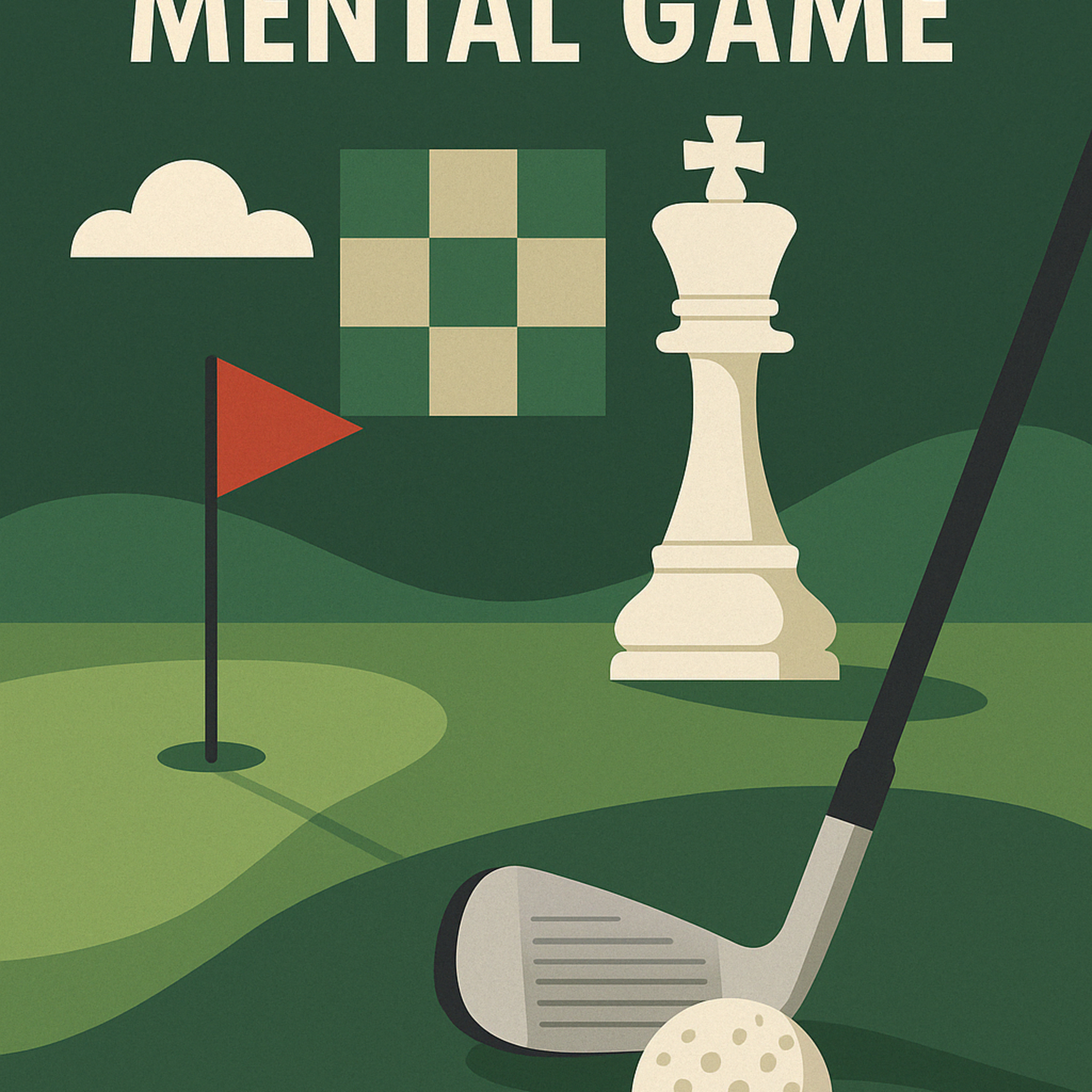
#196 The Golfer's Mental Game: Strategy and Course Management episode artwork

EPISODE · Apr 17, 2025 · 10 MIN

#196 The Golfer's Mental Game: Strategy and Course Management

from Golf 247.eu: The Global Platform for Innovative Technologies and Teaching Concepts. · host Golf247.eu

This excerpt from a podcast with Henrik Jentsch, Director of Golf Academy 360° discusses the mental component of golf as a key factor for success. Jentsch compares the game to chess, where foresight and strategic course planning are more important than raw power. He emphasizes the value of course management—making smart decisions based on ball position, wind, and hazards—and advises players to avoid mental mistakes. He also stresses the importance of the short game, particularly avoiding three-putts, and encourages players to embrace nervousness as a source of energy. In golf, several overarching mental strategies and mindsets are seen as essential for success.One core strategy is strategic thinking and course management. Jentsch compares this to chess, where top players think multiple moves ahead. It’s about analyzing pin locations, wind direction, and potential hazards, and identifying where a miss would leave the most favorable angle. This approach includes thinking “from the green back to the tee” to determine the best angle to the flag and increase the chances of a good outcome. This influences club selection, the desired swing, and the ball's flight shape. A key part of course management, Jentsch notes, is not forcing the course but allowing it to come to you—taking advantage of scoring holes while playing more conservatively in tougher situations.Another crucial factor is avoiding mental mistakes. Jentsch acknowledges that physical errors are part of the game but emphasizes that under normal circumstances, mental errors should be eliminated.The ability to handle pressure and stay focused is also vital. While nervousness is normal in golf, the challenge is to transform it into heightened concentration and intensity. Players must stay task-oriented while remaining aware of key information such as distances, time, and score.Risk assessment and decision-making are also central to the mental game. Successful golfers are willing to take calculated risks when the situation calls for it but know when to hold back when the odds are against them. It’s about understanding the possible outcomes of a decision and not being afraid to fail.Resilience and acceptance also play a role. Golf is viewed as a microcosm of life, full of ups and downs. It's important to accept uncomfortable situations and understand that in the end, each player shapes their own outcome.To prepare for a competitive round, Jentsch recommends focusing on the basics—avoiding three-putts and mastering chipping and pitching (up and downs). These seemingly small skills can save a significant number of strokes over the course of a round, tournament, or entire career.In conclusion, successful golf is a blend of strategic thinking, mental discipline, handling pressure, realistic risk assessment, and the ability to accept unpredictability.www.Golf247.eu

This excerpt from a podcast with Henrik Jentsch, Director of Golf Academy 360° discusses the mental component of golf as a key factor for success. Jentsch compares the game to chess, where foresight and strategic course planning are more important than raw power. He emphasizes the value of course management—making smart decisions based on ball position, wind, and hazards—and advises players to avoid mental mistakes. He also stresses the importance of the short game, particularly avoiding three-putts, and encourages players to embrace nervousness as a source of energy. In golf, several overarching mental strategies and mindsets are seen as essential for success.One core strategy is strategic thinking and course management. Jentsch compares this to chess, where top players think multiple moves ahead. It’s about analyzing pin locations, wind direction, and potential hazards, and identifying where a miss would leave the most favorable angle. This approach includes thinking “from the green back to the tee” to determine the best angle to the flag and increase the chances of a good outcome. This influences club selection, the desired swing, and the ball's flight shape. A key part of course management, Jentsch notes, is not forcing the course but allowing it to come to you—taking advantage of scoring holes while playing more conservatively in tougher situations.Another crucial factor is avoiding mental mistakes. Jentsch acknowledges that physical errors are part of the game but emphasizes that under normal circumstances, mental errors should be eliminated.The ability to handle pressure and stay focused is also vital. While nervousness is normal in golf, the challenge is to transform it into heightened concentration and intensity. Players must stay task-oriented while remaining aware of key information such as distances, time, and score.Risk assessment and decision-making are also central to the mental game. Successful golfers are willing to take calculated risks when the situation calls for it but know when to hold back when the odds are against them. It’s about understanding the possible outcomes of a decision and not being afraid to fail.Resilience and acceptance also play a role. Golf is viewed as a microcosm of life, full of ups and downs. It's important to accept uncomfortable situations and understand that in the end, each player shapes their own outcome.To prepare for a competitive round, Jentsch recommends focusing on the basics—avoiding three-putts and mastering chipping and pitching (up and downs). These seemingly small skills can save a significant number of strokes over the course of a round, tournament, or entire career.In conclusion, successful golf is a blend of strategic thinking, mental discipline, handling pressure, realistic risk assessment, and the ability to accept unpredictability.www.Golf247.eu

NOW PLAYING

#196 The Golfer's Mental Game: Strategy and Course Management

0:00 10:25

No transcript for this episode yet

We transcribe on demand. Request one and we'll notify you when it's ready — usually under 10 minutes.

Frequently Asked Questions

How long is this episode of Golf 247.eu: The Global Platform for Innovative Technologies and Teaching Concepts.?

This episode is 10 minutes long.

When was this Golf 247.eu: The Global Platform for Innovative Technologies and Teaching Concepts. episode published?

This episode was published on April 17, 2025.

What is this episode about?

This excerpt from a podcast with Henrik Jentsch, Director of Golf Academy 360° discusses the mental component of golf as a key factor for success. Jentsch compares the game to chess, where foresight and strategic course planning are more important...

Can I download this Golf 247.eu: The Global Platform for Innovative Technologies and Teaching Concepts. episode?

Yes, you can download this episode by clicking the download button on the episode player, or subscribe to the podcast in your preferred podcast app for automatic downloads.
URL copied to clipboard!