Hey everybody and welcome to classical stuff you should know we're a podcast about I guess you call it neo-classisism Yeah, we are profound. Yeah, it's a great point It's a anyway We are our aim is to bring to you the works of the classical world and old ideas and stuff in a digestible way In some way that is not horrible to listen to like a little wafer. Yeah tiny little knowledge cookie Right well cookie knowledge, but I'll tell you the one thing I'm really excited for is this season of lost you guys know That's happening on a green island What's mostly about I mean, it's it's it's singles they're turning into a reality show where they're they just soak them in alcohol And see who will date who yeah the titles paradise lost Yeah, I bet you guys are the one coming in you not until the very very end Great, but not practice my little like it's not into it. It's pretty good.
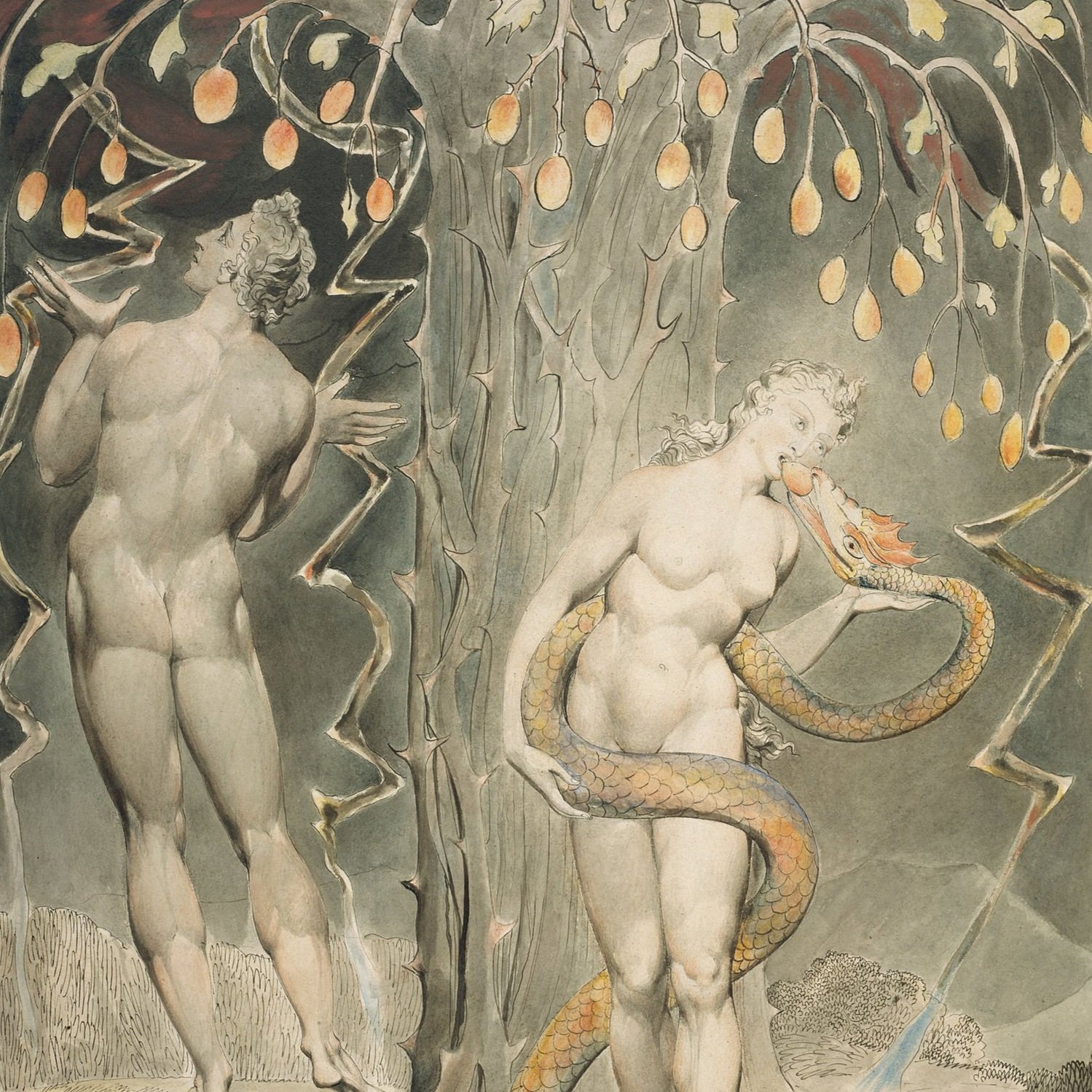
It was rough. I'll admit it It was not my best intro ever but you got us there the real the real you know the requirement was met that I begin with a bad pun sure Yeah, I guess we're kind of yeah sort of on paradise lost So you told me what is your not in like you said it was on paradise was based on it was based on it's good So if you Google anything to do with paradise lost or even if you go to the paradise lost Wikipedia page if you become like a fan of the book It's not I even wonder if this is on the cover of this book. No, it's something different But you eventually the art that is associated with paradise lost is almost inevitable inevitably going to be William Blake So I even think yeah, Satan around in the room. No, this isn't William Blake on the obstacle classic.
It's not it's Detailed from the creation of light by George Richmond. I don't know who George Richmond is a little William Blake pictures here so Judge team and yes, so I mean William Blake did a bunch of woodcuts I think they are or maybe not woodcuts were those things where you have you have seared in a metal I think the woodcuts were what does it matter? Yeah, the door. Yeah, yes, door I did woodcuts, but William Blake is I even was when I forgot my paradise lost book at school I went to the like a PDF from I think it was Dartmouth Dartmouth has like a Milton school I think it was Dartmouth and the banner picture on the top of the Dartmouth Milton blog is William Blake is a picture from William Blake This seems weird.
No, this is fine But my but the William Blake is a hundred years so William Blake died in 1827 Milton died in 16 something I thought it was way more reason. No, so Blake is like a fan of only Blake Blake is not a contemporary Blake is it's in 70 Yeah, so 16 what so like 150 years right is is Blake is death so this is and to have these guys be so closely linked And there's a reason for this and it's that the way Blake is well first of all Blake's crazy person We've talked about him on an episode before totally just an absolute episode that was published on his birthday I know we've got to have an accidentally published accidentally post on birthday was like retweeted by the William Blake society or whatever I think we did not really have this word about Blake. I think we ended with like we should never teach in the Christian school But William Blake is somebody who had and I made reference to this in middle of maybe his last episode where during romanticism There was this weird group of Romantics who dressed up a lot of romantic thought using Christian stories and Christian imagery and Blake is a big one This is we're not really gonna be getting into how Blake did you can go listen to the old Blake podcast But when you but for Blake people who love William Blake sort of have like a little like a replacement guide whenever you talk about Satan You're really talking about this whenever you talk about God the father you're really talking about this whenever you're talking about Satan You're talking about like the rebellious spirit of man wanting to be free whenever you're talking about God You're actually talking about like the stony law of nature whenever you're talking about you know the Holy Spirit You're really talking about like man's sexual desire or whatever it is I don't think that last one was right not the last one but I just mean like that kind of one to one yes So Blake does this and his whole like his tombstone says that he's like a poet and a prophet Like he really believed that he was coming and bringing this new packaging of Christianity or like the like what Christianity actually is Using all of the stories of the Bible well He was one of the precursors of once over the cuckoo's nest right the rebellious spirit Yes, yeah, the marriage of heaven and hell free and just got yes that God sort of laws try to repress our desire But he secretly wants us to like bust out anyway all this kind of stuff and that a lot of the romantics We're influenced by Blake and when they read Paradise Lost they interpreted Paradise Lost through Blake or at least through that sort of Romantic ethos where when you're talking about Satan you're actually talking about like you know the industriousness rebellious spirit of like impassioned man Well, this is this is a great question So if you ever go and this is how I was taught Milton I was definitely when I was in college at the University of Toronto and I had my first Milton class I don't even think I took a course on Milton I think it was just like a survey course of romanticism Milton was in it which is really because which is interesting as Milton is not classically or typically romantic, but There is a huge sort of school of interpreting Milton through romanticism that is almost taken as like canonical Like this is the way you interpret Milton to the point where it even colors Sort of Milton itself I was even looking for the Wikipedia article and there's a couple of times where the Wikipedia article of Milton I was just looking at I think this morning or last night There's a couple of like citations needed which is always a good sign Which is always a an indication that we're now getting into crisis land on Wikipedia Or it's like my favorite like back-handed like like come at me bro Somebody else is wanting proof But there's a couple of citations needed where it's talking about the motivation of what Eve did something Why Eve did what she did? I think it was like Eve was actually the smarter of the two characters and that's why she follows Satan and there's like a citation needed But there's so there's this history of interpreting Milton that comes through romanticism And it usually is always crystallized in that one question that probably every introductory Milton class starts with I don't ask this question in my class But the one that I was asking colleges is Milton is Satan a hero or not in Paradise Lost?
Is he someone to emulate or not and Romantic's would say yes Satan is the hero of Paradise Lost He represents like you know the true feeling self crushed by like the law of society And he wants to go like build his own society and just like just like you know The mind is its own place kind of thing. Can I read you though? We could be a part of us sure Satan's status as a protagonist in this epic poem is debated so they should need it Milton characterizes him as such And the thing is then you go and read and this is what sort of open my eyes to him is you go and you read oh So my own sort of personal story therefore reading Paradise Lost as an undergrad in my mind I go oh Milton's not Christian because he is Sort of subsumed into the romantics and and Milton is just like a proto Like a proto Blake You know he inspired Blake and since Blake was Like kind of whack it on or when Blake was sort of reinterpreting Christianity for this like romantic Mission of his and if Blaine if Milton is the guy who inspired that well that Milton must also sort of be in this category as well That was what my young undergrad brain thought but William Blake does count Milton as one of his influences I mean so I mean he does all the paintings of his work. Yeah Then you go and you read I then I read CS Lewis's introduction to Paradise Lost and you read it And the way that Lewis talks about Milton is he assumes he talks about Milton as if like he's one of us like he talks about Milton as a great work of the Christian imagination and And so he talks up There's a whole chapter about how Milton's theology is very much like Augustine or Gustin He talks a little bit about like that Milton does have a have a heresy maybe latent in the story where Jesus is kind of like Presumed to be created, but it's just sort of because you get into trouble when you're like creating characters that are God you know like You know like Jesus arrives on the scene.
Yeah being there always Yeah, so it's like Milton actually creating so it's sort of unclear is Milton actually here Or is he just like writing himself into heresy? Yeah, this ethereal this ethereal mold that they can turn into whatever shape they want Yeah, so Milton is yeah He's got crave license, but when Lewis writes about Milton He writes as if he puts Milton alongside with Dante as being he's sort of like the Protestant Dante It is according to Lewis and so this is sort of got me thinking about like that Milton kind of got absorbed into a Philist into like a philosophical debate 200 100 years after his death and he kind of got reimagined to be the banner of that movement I Is it retcon is that though sure is that what is that what I'm using that work? Wreckly so do you be right kind of minted minted differently got you later? It was changed to be actually meant to this way So what is that where like you decide that what you're doing is you're going back and you're like?
I don't know you're holding up this story Saying like what Milton was really doing was that he was like the first romantic ushering in this new age of like feeling and therapy or whatever Maybe it's not retcon but Going back and changing a piece of a story to fit what's currently happening I'm trying to think of like we actually have a lot of this kind of thing in our kind of reboot world where we are rebooting shows And where we are Sort of like reimagining These television shows or movies, but in that reboot we're also feeling like we're correcting the problems of the past That's I assume this is where you're going the question it would be a retcon if Milton meant it a different way Yeah, sorry, it's not a retcon so I'm not using that work But when you have nothing Milton didn't mean it the romantic way he didn't know I think you're correct Okay, so then you've got Blake doing these paintings of anything like here is a painting of the scene in Paradise Lost But it's all wrapped up in like Blakey and craziness And and so then we've now You know in 2022 have when we think of Paradise Lost we think of it as being this this book so much so that when we when we're putting together Our Blake website or our Milton website we get Blake Banner add pictures for it. You think they're wrong to do that I don't I don't think they're wrong, but what I What I think is it is an example of is that the romantic movement really was a Needed to have a violent reimagining of the past in order to like Coalesce into its own belief in its own thing, right? So Yeah, we'll get there in a second. So the best example I've been reading Carl Truman's The Rise and Triumph of the Modern Self I know you're looking up pictures of Blake yes, yeah, and from Paradise Lost yeah Cuz I thought I thought maybe what had happened is that they just took pictures from the marriage of good and evil and we're sort of Just sort of foisting those upon And Not bad like a good picture.
I'm assuming you're saying there's like an interpretation in the painting that colors Maybe I haven't really gone as far I mean if you are a someone who knows William Blake you wouldn't You can't look at those pictures without sort of knowing what William Blake's doing So when he's like drawing God, he's drawing the the giver of the stony law like like Which is not how God is portrayed in Paradise Lost so the God of book three of Paradise Lost where or even the God described in book 12 By Michael at the end when Michael's saying like listen here's how God's gonna fix your problem fix everything It is not the like the giver of the stony law it is the loving God that brings the truth that does the crucifixion of Easter Sunday so yeah, the Romantic so the romantic movement almost like Absorbed Paradise Lost and used it as it's like launch text into talking about romanticism and Blake is kind of the linchpin with that But you have characters you have people like Mary Shelley and Mary Shelley does this with Frankenstein So her story of Frankenstein is a pretty conscious retelling or she uses a lot of language and a lot of imagery from Paradise Lost And I'm teaching Frankenstein now to my kids in 10th grade and we just finished Paradise Lost And so my 10th graders are picking up on all the illusions. They're like oh Victor Frankenstein just said he carries the hell within him That's just like that's just like Satan. Oh the childhood that is described as Victor and Elizabeth He describes them in the same way that Milton describes Adam and Eve but one of my students this year says something that I thought was really insightful and they said Mary Shelley is describing is using putting Paradise Lost in Frankenstein, but it's a cartoon version of Paradise Lost like and the example was The childhood of Victor and Elizabeth in Frankenstein like Victor's this like kid who loves science and he wants to know everything and Elizabeth just loves flowers and all she cares about her like beautiful poems and flowers and that the students said was kind of like a Cartoon version of Adam and Eve in Paradise Lost that if you just took a cursory read of Paradise Lost and where to describe Adam and Eve You would describe Victor and Elizabeth sort of like science kid and flower girl Yeah, is that fair to call the romantic reading a shallow reading? Maybe not sure no, I don't think it's I think it's fair to call for any sign of shallow reading of Paradise Lost But what Blake is doing is not shallow a Blake is doing is like a total reimagining of Christian symbols for that sort of romantic deal But I think there's there's I mean there's a name for certain group people who thought saying was a hero the Satanist Yeah, she's you know confusing label.
Sure, but I think there's has to be a shallow read. He's he's not a hero Well, the joke is that Milton is that the romantic stop reading past book for like that's the joke is because as soon as Satan becomes a snake He's clearly pathetic and sad and and laughable like even though he shows up in the garden as a frog And then they catch him and they're like put him over there And they're like do you know who I am and they're like yeah No, who are you we don't care go sit over there? And they like just these random century angels that have no you know He has no power over them and some random little abdial angel even during the battle clunk on the head and just smokes him So it has to be shallow reading if you come out think he's the hero He looks like a fool isn't what age is saying a part of the romantic reading it is yeah, so no there's there's definitely a shall in us I don't necessarily know if it's a shall in us, but I think it's well let me so let Karl Truman I've been reading the rise and triumph of the modern self has a really great definition of romanticism that I want to Give you and let's see if I can find it here with pages on 27. So his definition of So this is what he says to talk about romanticism the Romantics grounded ethics in aesthetics in the cultivation of these are important words empathy and sympathy Confident that a universal shared human nature provided a firm foundation for such He's gonna go on to say that Nietzsche then sort of builds on that and changes it and marks go build his own version of that But his whole point is that what the romantic's arch are are essentially a Group that are trying to postulate a new ethic of how why human beings how what human beings should do why human beings should do stuff Grounding it in aesthetics grounding it in questions of beauty and taste and the reason but the reason they think they can do that is because they're confident that That humans that universal shared human nature was a firm enough foundation to be able to like build an ethic on so instead of talking about what They can talk about like what every what all human beings know they do they you know Feel what they either what they all feel or just like the famous Russo go look at savage man in nature and you'll find the Eartic, right?
Okay, so but those words of empathy and sympathy I think are key because this is a Big hallmark of the big romantic turn is that they saw Satan as the hero because they sympathized or empathized with him they felt sorry for him and By having him sort of by having his actual real inner turmoil and anguish depicted by Milton He's made to be sympathetic. I hate this. Yeah, and so when they see Satan say things like Wherever I go and hell myself and hell No more from misery for myself can fly like when he says these sorts of things the romantic's basically go Oh buddy, and and then there's that sort of sympathy for him I've been there pal. Yeah, exactly and then there's a building that so then that sympathy ends up becoming a The platform for building him up into some into basically somebody that they can either relate to or that he is in fact The hero so it's just a hero but like a tragic hero a tragic here You need to look at it from his point of view If you went through what Satan went through you would feel the same way don't you know judge a book by its cover kind of stuff But Milton means those punishments or those negative emotions differently.
I think so I think Milton I think this is still the debate. I think you can definitely read Milton as Satan legitimately feels that way the despair of the soul and rebellion against God is a real despair It's not he's not just like an evil cartoon like devil, you know with goat horns going Right like his despair is real but But his despair isn't something that should we should sympathize with like the despair is sort of justly deserved I think sympathy is okay I think what he's what Milton is giving is maybe a sorry no go for it No, I know it's maybe an honest depiction of evil like we either in the modern world either say evil is not a thing or we make A cartoon version where evil is like evil is that cartoon thing But real evil is often regretted by the person committing it and often what they have done is made their own life living hell It's it reminds me I think one of the best modern depictions like in popular cultures probably Thanos, right? You know he's got to do this evil thing. I know this is So he wants to be good for the world And he's tortured and he like it is made his life horrible He has to be horrible to his kids and horrible to everybody and and gosh I wish I would spend 10 more minutes thinking about it would have created double the resources instead of killing everybody But it seems like an actual good depiction of it kind of like in is it kind of punishment right his sin makes him feel awful Okay, so we're talking about sympathy So I'm saying is it's I don't think that sympathy is like I think maybe it's a medium right Satan's punishments are just and deserved and I think Milton is showing them that way Milton is also showing him as sort of a sympathetic character because we should have sympathy for someone who does evil and yet their punishments are still reserved it's a medium in between the two whereas the romantic are saying he's sympathetic and poor abused guy like God is all Up in his business.
You need to say yes, it's sympathetic, but that's the deal. I think I guess I guess the The romantic yeah, it's next move that's really important. Okay, so the sin of Satan of the fall of Satan can engender sympathy Okay, now what do we gonna do with it? What do we do with the character of Satan?
You can feel bad that he is in despair, but The romantic will then sort of normalize that despair and turn him into a hero So right so for the book Frankenstein is actually wanting to do that It's creating the monster and putting him in the same place kind of as Adam And then kind of as Satan And so here's the monster who was rejected by his creator and he feels bad he goes off He burns down things and he's a monster because of it because he never really got a fair shake so the difference between Tragedy and justice like Milton meant that despair as a part of the justice for his sin whereas the yes the romantic say it is tragic that he feels So the romantic don't yes would not see that what happens to Satan is just they would see what happens to Satan as a depiction of Us as well sure and so then yeah, so then the book Frankenstein is Taking and that's not what Milton is saying so Milton is saying that yeah that I think this thing is that it's just a spare that he feels Is sad but that's part of the old and it's German it's coming like Mary Shelley comes in and says that's not what Milton means What Milton means is actually like that God rejects us and because God rejects us We are in despair, but that despair should be turned back to be we should be angry that God didn't give us everything that we needed like Frankenstein is justified in his anger against Frankenstein And so then you have this like little reimagining of paradise lost so that you can't go and I mean you can but the romantic then Change the interpretation of paradise lost with their sort of absorbing it into their cannon That makes sense you know as Milton wasn't trying to muddy things up by making Satan sympathetic. I don't think you're I guess the He might have been maybe no, but the romantics will use that as a means to reinterpret the entire story because of the emotion of it And not because of the like actual facts of the case of yeah Yeah, and do you know what I mean like that he deserves the punishment that he gets yeah They will sort of ignore the rest of Christian Orthodox either book the book posits from basically book five to the end I mean the book is I think it's thoroughly orthodox all the way through But with some some filler room with it being like weird fan fiction you're always gonna have Because but it is the response before is like the right one isn't it of so it's fine to understand the emotions that the protagonist the right term the Emotions of Satan the main character of the story, but it shouldn't distract from The message of the story it shouldn't distract from Milton's intention with it I just I feel so easily pulled in the direction of if we're going to show sympathy towards Satan It's just very hard to avoid then blaming God for sure what happens to Satan And I think that's what the romantic sin of doing or if not explicitly implicitly and then I think explicitly later with Well at least with Frankenstein with the train signs a little bit more explicit and then sort of the further down you go You get to the points where people sort of take if so facto Satan is the hero of Paredes lost in God's big giant Jerkbeck and Milton that wouldn't be the reading that somehow was written right mean So that the affinity with Satan as opposed to Adam and Eve the two humans in the story who Sure they're kicked out of the garden, but you described that they have a they talk with one of the angels and they're told how it's all gonna work out Yes, and there's a similar thing that happens with Eve that that a similar kind of move happens with Eve where there's a reimagining of her motivations coming from Romanticism and sort of the burgeoning beginning of feminism with Mary Shelley and Mary Wilson craft Going back and sort of reimagining Eve's Motivations for eating the fruit is like I mean at some point you get it to the fact where it's like Eve's eating the fruit being like screw the patriarchy like yeah, and which is not in the story of Milton and so Yeah, the fact that that that that's something that is that see it when see us Lewis reads it He says ah, this is one of this is one of our stories This is a Christian story and then when the when the romantics read it they say hey Milton's Milton's like Starting to do this new thing Milton's got this new thread that we're gonna pull and of course Maybe he couldn't say exactly everything he wanted to because of his like you know backwards day and age Wouldn't have wouldn't have accepted it but deep down he was kind of one of us and so you kind of have these two camps claiming ownership and then building out these sort of interpretive frameworks around the book and and what I think This is a great example of Like the mission of what the Enlightenment is trying to do so maybe you not we're kind of even talking about this before We recorded the episode a little bit after we talked about your episode on the party and that was what was the definition that you had said? Maybe it wasn't the Enlightenment what was it about the term post-Christian it was from a it's a John Mark Comer podcast It's I don't remember the name of it now. Sorry.
It's him with them an Australian co-host But he was defining what the term post-Christian means and his definition was that post-Christian is seeking of Christian ends without Christianity Yeah, and one of the definitions of the Enlightenment that I've kind of heard talked about a couple times I think maybe Andrew Kern talked about it at Cersei But I've heard it better around before is that it's wanting it's an attempt to keep the fruit of Christian society without any sort of appeals to the Transcendent Christian story or or as we get further down any kind of appeals to anything transcendent So you want to have a grounded ethics you want to have a Yeah, so some sort definition of goodness you want to have some sort of appeals to truth and the realm of science You want to have some sort of appeals to beauty in the realms of art And you're wanting to keep sort of the fruit of Christian society without sort of using the transcendence And so I think that the romantic interpretation of Paradise Lost is like an example of trying to keep the fruit You know trying to keep the fruit of Christian society But getting rid of all that like nasty Christian orthodoxy stuff But then I'm missing some connections between the sympathy empathy point on the romantics to that so like what are these ends that they're trying to keep Is sympathy is that a new end or is that those two ideas go together? Yeah? So Truman I think what he doesn't part way through his book is he tries to draw the link between Romanticism as this sort of attempts to create an ethic apart from like objective morality like positing God and God's law And banking it just in sympathy so we even saw this a little bit in in the Candid episode right like Atheist character walks around and sees something somebody doing something terrible to somebody else and feels like this is a bad thing And that's all we need we just need to be able to like observe the world and then be able to draw our ethical conclusions We don't need to be told that bow shall not murder we see if we witness the murder we're gonna know it's wrong Why because we wouldn't want to be in that guy's place getting murdered so And so therefore the murder and the driver of that was a sympathy was I don't want to be in that dude's place getting murdered And so then a sympathetic analysis of somebody else's life should be the grounding of our ethical framework Which I don't think is I don't think is wrong, but I don't think it's Something that you can I don't think it's the sufficient condition for for the ethical framework the romantic I think try to argue that it is that if you just by being sympathetic we can build a a framework for Ethics of what we can do what Truman points out in the book is that this would be this actually starts down a really uncomfortable road of humanizing monsters Where you get this? you begin to Look at you know the other side of the coin so much or the are the bad guys point of view so much that we totally Blur the line between good and bad and we actually can sympathize with the bad guy because he's coming out of an honest An honest place and we can sympathize with him, but sort of do this writ large and and this becomes sort of a more can actually lead to some some places where we're just sort of creating people that don't have healthy fear of bad things So in our AMA we were talking about books that we didn't rate And I think I jokingly said the wheel of time and maybe you said one of the reasons you liked it was because of its Guys are good and bad guys are bad.
I straightforward. Yeah Do you think that that kind of book is Where good guys are good and bad guys are bad are still that's still like a wave That young adult stories are still centered around that framework. I don't know if I read enough Like in that genre to know again We'll times one of the best-selling sci-fi series of all time Brandon Sanderson had to write the last three because For the author's name, but he died before he could finish the series Some popularity there I take it my point is I just think What's really talking about it is he talking about little monsters like he's talking this you talk about Twilight and vampires and like that I forgot to be that specific, but like that's I think spot-on in Twilight is This is such a small subset of all books written But just think of like how what is historically like just like a clearly evil monster now is totally personalized actually is the hero actually is a good guy And what's the enemy? Well, it's a society that rejects him exactly and I think yeah We can kind of be you know tongue-in-cheek about it And but I even think if you start looking at lots of like kids shows and kids movies It is a lot of humanizing the bad guy or humanizing the other so you've got like despicable me well It's evil genius mastermind.
That's actually the hero or I don't know enough kids stories to know But there's an Whereas like you go back to like Sleeping Beauty and the witches evil But then I'm there even more like modern Disney where that's like the stories told from the which point of view like isn't Maleficent about the witch I don't want to but yes, she's main character and they have their Disney channel shows that have like the bad guys as the Like they band again, I don't exactly so it's that kind of sentiment now. I'm not saying that these shows are like Inoculating kids against questioning morality and therefore humanizing monsters and take a It used they know says the example from before like that's the biggest example of history movie of all time And it's like it's literally about how the bad guy has some good points Like that's that's an entire 30 run movie series to make that point Um even something even happen in Star Wars where all of a sudden the Empire has some sort of sympathetic sides to it with the Clone Wars and anyway my point being that like that That that taking the idea that it is a good thing to look at the world from other people's point of views that is That's a good thing. But The romantics start to sympathize Satan and then create Frankenstein the Ma or trade the monster in Frankenstein and you sort of Continue to get that move forward where? Satan then becomes sort of the actual hero and what we are is Not people trying to fit into an Imperium made by God But are people who are trying to sort of find our place by fighting against that Imperium or being on the outside and isn't that kind of like awesome?
and so yeah, so that's it that's an example of the taking of the the Christian whole and wanting to keep the fruit of it and but sort of discarding the orthodoxy and There's probably a whole podcast we could do on How romantic poets thought that they were rescuing beauty from like boring stuffy Christianity by creating their poems? But I mean it is pretty quick to go from like romanticism to impressionism to Cubism to Marshall Duchamp putting a urinal in the Louvre right, they're all in the same ethos of of of like looking at what's come before you and kind of like Smashing it and trying to reinterpret it moving forward to something Well, even the the Italian guy Like standards could be held on to for a little while But it's always that problem of like how do you train the next generation? So like your current generation would rain and these like methods of make stuff that's actual beautiful But then that's thrown off and not passed on and then you did not know I guess it's a century later whatever but Yeah, but that's kind of still the direction of it. The throwing off of standards leads to no standards being passed on right?
Yeah, so And then we have this then we almost have this like sort of this this thicket of interpretive Muk to to move through so that like it's even it's really hard to talk about paradise lost without talking about without also talking about the history of How it is interpreted We have the last episode we were talking about how like Dante is in a world that is done and Leo Party is in a world that we live in and so really a party Well, yeah, this guy understands humanity and you read daunting like what is this old world he lives like I don't even have a frame of reference for understanding what he's talking about because it's so different we don't believe in that sort of Imperium of sort of Christian order. I'm waiting for you to go the next step and then say that sympathy and empathy are bad or that The romantics were wrong all along. I was just gonna ask do you not like the romantics? I mean not you know those boys.
No, I don't I mean I think what they were I think the romantics have attempted to yeah, I don't know I think what the romantics are attempting to do is They are attempting to hold on to standards of beauty apart from Or if we think of like beauty as a branch like you cut the branch off from the tree It could flower for a season you could flower for two seasons There's still could be some vigor in that branch, but it's gonna die the romantics cut the branch off from the tree and are and are still Super jazz when it flowers the first time and then when it starts to die right poems about how sad they are about death whereas Yeah, and then everything and sort of lament eventually future generations like what tree you talk about yeah, exactly Yes, there are no trees. We talked about down because this Truman start his history of like the rise of individualism with the romantics He does yes pretty much So I do I think so I think that the turn to saying I mean you could go further back and go Descartes I think the turn to the individual as the man as a measure of all things was the beginning of that That's essentially like a very enlightenment phrase the man as a measure of the all things is kind of the ethos So I just kind of for my own self jotted down some notes that if we take the three big pillars of classical Thought classical education truth beauty and goodness the enlightenment attempts to give a framework for truth for beauty and for goodness Under that turn to the individual or as what Truman calls the therapeutic man, so Let me just so Goodness in the realm of ethics right so you it's you go from Descartes I think therefore I am or I doubt there for I am to Hume who to Kant to Nietzsche like that sort of That progression of thought goes from maybe who is this agent that is doing the doubting and it's like oh, it's me the human I'm the center of this and I'm gonna be the thing that works itself out to Hume who is sort of saying like showing the experiment to Kant saying Like how would you summarize Kant in a sentence? Yes, the basis of ethics is reason to Nietzsche saying like the basis of ethics is like no down right Yeah, and so that's a and so that's the progression of enlightenment thought when it comes to ethics is kind of this like this this trickle down to just Force I feel like Nietzsche would have loved MMA. Yes.
Yeah, right even the huge MMA fan He would love social media or he was just like can you can you just sort of wield your your your social cloud? Yeah, you're cloud. Okay, let's do the same thing with beauty and this is sort of where the romantic's more fit in Beauty you have the sort of the the idea of perfection or the classical ideal And then you start to get into the impressionist which is we're actually not gonna go with the idea We're just gonna have impressions of picked up of images We're not gonna move we're not gonna try to like depict something realistically. We're gonna depict an impression of it We get that feel we get that feel to answer the cubism which is we're gonna get the feel and it's gonna be a lot more Distorted to you know, as I said before like Marshall Duchamp which is talking about like You know, I'm in the yellow square exactly or the urinal or that kind of that kind of thing Sure, and if you're really interested in that would are just great If you ever read read the stuff next to those things it's just you know a paragraph Yeah, and I want to be the artist that just puts it yellow square and write somebody else where on a paper and see if itself so You tell them about a fan of modern art.
Yeah, I'm building up to something that that Which are called death works we'll get to that in a second That's not like a machine that where we put people in a juice or something German put him in the death rocks during metal band Yeah Yeah, so that that move of beauty is like we're trying to hold up to the ideal to the artist basically like daring the audience to say this is ugly And if you're interested in that movement, there's a There's a documentary put forward by oh a scrutiny About beauty which she sort of traces that specifically in the art movement Screws He does scrutinize it. Yes, and then And then when we're talking about so then truth so we've talked about or we talked about ethics we talked about our goodness in terms of ethics we talked about beauty in terms of aesthetics and then truth the romantics are Truth then becomes a subjective thing so truth is something that is Observed by the first of all the artists and so in those poems that we read in the last podcast or what William Blake is doing What their mantis are doing, you know, I wandered lonely as a cloud. It's the the artist is the The center is the observer and then from that you You get to Freud you sure yeah, well, they know that's where we're going You get Freud which is sort of like you know the psychoanalysis and then you get to the modern man or the modern self which is all centered around like identity politics and therapy and Or the what is the expressive individualism is I think what I'm saying consumerism like there's like a Exactly. Yeah, yes that um it's all oriented toward getting your happy.
So you're gonna give me money, right? Yeah, and you I think every everybody realizes at some point that there all these like sub genres or these like subcultures that you can Be a part of are just little economic machines that are a part of the same beast I'm gonna be a skater punk. I'm gonna be a goth kid I'm gonna be a jock and shop at amakrombie. Am I gonna go you know like there's a way to buy something?
That's right. You can fit into all those things. I want to I want to a mix Abercrombie golf Abercrombie golf punk well then and then you've created a new market and now it's gonna cater to you and you can Create on subreddit and then off the other crumbie awesome so Yeah, the the enlightenment experiment has reimagined truth-beauty and goodness and but as and this is not something that I've come Up with that there's a book called why the enlightenment fail or something like that or the and it's sort of tracing this It's it's you have this belief that human reason and putting man as a measure of all things is how we're gonna base our understanding of society and then 300 years later you have like what we were talking about in the in-between episode like teen depression rates at 47% Oh, she's we can't agree on we can't agree on the reason So he's right when he's like well, it's just them. It's gonna be whoever can throw down It's the romantic start from this and he doesn't romanticism and enlightenment you expect these common human things across everyone and then you realize there's Yes, well, what do you do about that?
Because all I can appeal to is this common sure to me and how many television shows do you have which are sympathetic to sociopaths? Like that's you know like Dexter never watch that show No, they die, but because because I was so fight or I was so turned off by the fact that it was like we're going to Sort of take something which is which happens in the real world is people killing people for the sheer joy of it We're going to put a veneer of sympathy on it in the narrative world We kill that guys re-kill where he's going to kill bad guys He kills serial killers and then you can watch it and like it But if you don't have the sophistication to be able to take what was re-out what was like fiction and not bring that into the real world Like you could have you could you know people could be like? Oh, well, maybe there are real nexters out there and this guy that I started, you know My emailing who's in prison is maybe the real-life Dexter and then you're on all sorts of problems Fair they didn't for one of the show. They didn't make the extra scene that's like he's not really person But he's still the main character and you know, they're still probably like You know Dexter fan Instagram pages out there.
So I have you guys can tell me why I'm wrong We there's there was a list. There's a push there's a push of air toss a few years ago against the humanizing of villains, right? That evil needs to be only evil really was it like a film thing? This was a thing probably seven or eight years ago, and I always bristle against it number one.
I think Storytelling is fine when we want to see the inner workings of evil I think what has what the problem is is not that we villainize evil and say this is evil and it's only evil and it's not good And it should be opposed to good, but that we've lost an understanding of what evil really is and that it is like a Crippling weakness coming to bear on a person and that if they stay in that weakness it will destroy them, right? I think that actually depicted in a show is sympathetic, but also just and if to bring up Milton, right? He showed Satan not as pure villain but as a person lost in his sin who was getting his come up and for the choices he had made which is what sin really is I Don't want Frankenstein to be or Frankenstein's monster to be only monster Neither do I want the same thing of like I kind of wish in Beowulf I kind of wish the bad guys were a little more sympathetic because they are depicted as Cartoonish evil and what happens when we have only cartoonish evil is I think kids lose the notion that like Sometimes a little slip like I'm still a pretty good person like I'm not a monster and it lets them slide down that thing without realizing Okay, these small steps This is what evil is is when good has gone a little bit screwball like I have to stop there because that is when things go wonky I have always been uncomfortable with the push to make monsters pure monster because it cartoonizes the whole thing and students don't learn that Yeah, I guess I've already said it, but they don't learn those small shades Yeah, I I I'm tracking with you until you say that the reason we shouldn't do this is so that the child themselves Doesn't feel bad when they mess up like I don't think worrying about How the child thinks about themselves therefore we should humanize evil no But but this is the point the reason we wouldn't humanize evil is to help teach them about evil But my point is that it doesn't teach them about evil real teaching about evil shows that it is like it is a darkness of wickedness and A weakness that comes over a person and it can look a lot like good. I just think it requires that last part So and I agree it's similar to what you said before I'm totally on board if it's taught from there are bad Be there are bad decisions that lead to punishment that shouldn't you shouldn't follow down that path That's one thing which I think is separate from there are bad people who bad things happen to them and we need to make them feel better That's not the same thing.
Yeah, that's not what I'm talking Correct, but I think that's more what Graham is commenting on and I agree with you that it's we all make bad decisions We should see that making those bad decisions leads to bad outcomes But that's not quite the same as what Graham is commenting on of we kind of lose all responsibility that I'm a bad person because My parents were mean to me when I was growing up therefore I'm not in charge of my actions right now therefore I need sympathy I need people to feel a certain way toward me Yeah, I agree and what I guess what I'm advocating for is not a full movement into the romantic view But the medium that actually happens in Milton where yeah, the character is a little sympathetic But it's it is painted as this is a weakness And yes, he is he's stuck in this place, but that is the right place for him to be stuck And this is what he will does I think that is what is good to teach kids not I know I think I kind of disagree like okay so think of going to think Goldilocks and Three bears no where's one where she gets eaten by wolf at the end Red riding the big bad wolf. What's a big bad wolf? Okay, the big bad wolf the big bad wolf wants to eat you right pretends to be your grandma pretends me the Whizman whatever the story is wants to eat you I so you have that story I think that's a great story teach you kids. They're big bad wolves out there.
They want to eat you I think this then when you've got the like I was the wolf then you got the like the Disney Pixar big bad wolf movie where it's like everybody hates them because they're scared Oh, they're in pig land or in Little Red Riding Hood ville big bad wolf Just can't get your break because everybody hates a big bad wolf and he's like why do people think I'm bad And the whole movie is about how you know It takes society needs to figure out the big bad wolf isn't as bad as it is and when he does all these great things He then becomes the mayor of like Little Red Riding Hood ville and the little kid who watches that movie is like oh The big bad wolf in the world is actually somebody that if I just got to know I would actually like them I think I'm dangerous Yeah, we are we are totally on board on that and by humanizing the villain. I don't mean Lionizing villain. I mean showing what is actually going on inside their heart I think that's okay. Well, I guess what I'm against is the 100% like we are we are only okay with black and white evil depictions I don't think that's a healthy way to be so coming back to Dexter Right, which we use as an example of humanizing the villain right in that show He is and then I have to admit that I watched it.
He is haunted by what he's doing He even though he does it and he's constantly almost getting caught like everyone around him is on the verge of finding out that he is This horrible person and yet he does it and he is conflicted about what he's doing because yes They're evil but does not mean he is evil and so he is caught in this I mean a place that I can I mean maybe I read the room wrong. He is a sociopath, but a place of despair He's constantly on edge. He's not enjoying himself He is haunted by the things that he's doing and I think that is a good depiction. So you get away with it or is you get punished?
I think he gets So much better if he gets caught and thrown in jail for life, and it's like well, I don't care your sociopath you killed a bunch of people But this is my point here that doesn't happen to everyone who's evil and as long as like I'm telling a story You're gonna finish. Let me finish. I advocate for depictions I like depictions where they show that one of the ends of evil is not necessarily just punishment by outside forces But internal punishment how many kids are actually gonna get caught for the stuff that they do I mean times do you but the We all we never get away with it right? I mean the whole point is that there is punishment and justice in the end at least that's the Christian understanding of it so I don't think that Satan's despair is is The end of it I think the fact that it's it's Satan's despair because what he really is he's despairing because it doesn't have God I think a story where you I think something like Dexter is They're trying to get away with it They're thinking like it'd be actually kind of cool if we told a story about like a good psychopath and like well people You know we got doing away and that's like people are gonna swallow it because we can't just like put an evil guy on I'm not gonna feel bad about it, but he still gets away with it at the end and It's like okay when the movie It does it does it does it's caught forever cuz it's like the movie Wall Street right one whoever directed Wall Street I wanted to write this movie because I wanted people to see how terrible greed was and then you like created an entire genre of like Wall Street Bros that love that movie because they're like this is awesome sure Coffee as foreclosures that all the same without all the insane with Scarface I think you know I think Gankstru movies are another great example of this where you you put up the gangster and you're like All he's just doing it cuz he loves his family and that's why he's like chainsawing women to death And and and so he's any cool that he dies on a mountain of cocaine at the end But I think like by even just depicting and showing that We just as like human beings We will always be looking for the sympathy in the person and by humanizing it you get to this point where Fast forward however many years since Scarface and Scarface is now sort of seen all of this is like weird folk hero And he's in like every dorm room poster.
Yeah, that's a mistake It's a misunderstanding by design because this because the story was set up to make to make him sympathetic whereas I don't So Dexter gets arrested from the throne jail forever. Yeah, I know I think it was that fun anyway He does get caught is that they just put out like a new last season is it from that? I have to look at it anyway my point being that like I'm saying that I think that the yeah That the season seven. Yeah, it is.
Yes. Yeah, he does get caught um that and I wouldn't say dying on a Mountain Cod can it's a good thing it's not wow. Yeah, wow. It's not a good thing, but I mean like it's it um by Putting it into the realm of imagination and by putting it into into pictures We're getting back to our can rp evil question which we always think and I think we are Largely agreeing and I actually kind of agree with you that when it is done in such a romantic way as to lion eyes or over romanticize the person who is Suffering then then that's probably bad like in starface right or in a fight club right those guys have end up with in a terrible place He shot in the face by a gun but you come out of that thinking oh man What a romantic guy like he's got any blows up a bunch of buildings He's got a friend he blows up buildings and he shoots himself in the face But you end up thinking he's cool and I'm with you that's not great Yeah, but and that's why I like paradise lost so much as I think it's a good medium between the two where Satan seems romantic for the first Little bit and you're taking in you're like oh man this guy I wish he's kind of a hero and then later you're like man.
He's just watching them like a frog That's kind of dumb and then he's like I'm so cool. Why don't you know my name? They don't care about him anymore. He's not as famous as he thought he was and then at the end He's basically just a hissing snake full of garbage Like it's just spitting trash and everybody knows it and I like that kind of ending and you're right I think maybe seven seasons of Dexter getting away with it and the wheelie won't leave won't he is is not good unless we see a Mental and spiritual decline over that time into total degradation, which is what would happen right to quote Chester Sin you can never maintain a level of bad right you always sink deeper into degradation You can't be romantic bad all the time never watch the show But if they had a companion character who like lived his who was like the police guy who like lived his boring life And he had like two kind of well-behaved kids who loved him and he never cheated on his wife And he kind of paid his taxes and live in like kind of a dumpy house in suburbia And he catches the guy at the end and you can kind of contrast these two people's lives Then maybe you're getting to the realm of doing something that's not just over sympathizing right the bad guy I think I think you might be talking about it's a long time since I've seen it and I didn't watch I didn't watch more than like half of these or whatever it was but But I think what you're talking about is the other cop but knowing cop shows she's probably tortured alcoholic That's just terrible my point being that like the and we're running out of time here my point being is that we've kind of as kind of modern storytellers and this has started with romanticism is that we've kind of got this shick of Take the bad guy or take the outside or take the other or take the despicable or take the thing that that that people kind of think are bad Put them in a story where you can massage in such a way that they look good and then use that as an example To point to the fact that we that morality is just relative And I think that let that program run over time over time over time over time and you get to the place where you can kind of start Lying eyes and really bad stuff.
I fully agree with you. Yeah, I think we're on But you know the romantic or that you go and you read the romantic thing like well They're not doing this or it doesn't feel like they're doing this but you take what you take the mechanism of what they're doing And then push that 200 years in the future and in art you get toilets in the in the Louvre And then in this is convenient and then in identity You've got you've sort of got the the modern therapeutic Sort of dis fragment itself and then in in ethics you've kind of got the sort of Nietzsche will the power so it's kind of this this Yeah, this basically like the sort of a more barbarous age and that's that's Truman's point and this has been classical On that happy note We'll see you later. I guess you can contact us if you want You know if anything matters in this world at classical stuff. That's our website You can email us at the guys and the guys telling good stories are is matter telling stories of like good people living like like ordinary lives And being happy is a bit anyway, whatever as long as I'm in the middle of it That's really as long as I'm the observer.
I think that's important thing if I can figure out what's right and wrong for myself I think that's important for the main character and then of course on the main character That's why I'm talking right now is I'm the main character of the podcast. We've always known and then What I want you can patronize us patreon.com slash classical stuff and you can tweet at us at at CLSCL stuff I think that's it for us. Yeah, we got some more stuff to do And if you get on the patreon you can hear them in between episodes and some other cool stuff like amas And we might even answer some of your questions if you throw at us and I'm talking I'll see you guys later Have a great and wonderful Tuesday cuz you deserve it. I mean if you do