Hello and welcome to classical stuff. You should know your podcast about I do this every time and I can never I don't know What to say what are we about talk about stuff we talk about stuff that's classical and you should know it My name is Thomas magby. I'm joined as always by mr. Hannenberg.
That's me and mr. Graham Donaldson me now today We are talking about something that I don't have a witty comment to make about it. I've really nailed it on this introduction I didn't know what our podcast is going really well, and I also don't I know the name of what your episodes about I have no idea how to make a pun about it. Not that I usually make puns anyway We are here to talk about a medical condition from the sounds of it.
Yeah, I know a lot of logical argument Yeah, I thought we're talking about the pros low-june both. Yes, yes, but I've got a bad case of ontology, so Ontology That's a right pun field right there Ontologists is good. I like this. Okay.
AJ. This is your episodes. Would you take it away? These are some funny words we use in our intro.
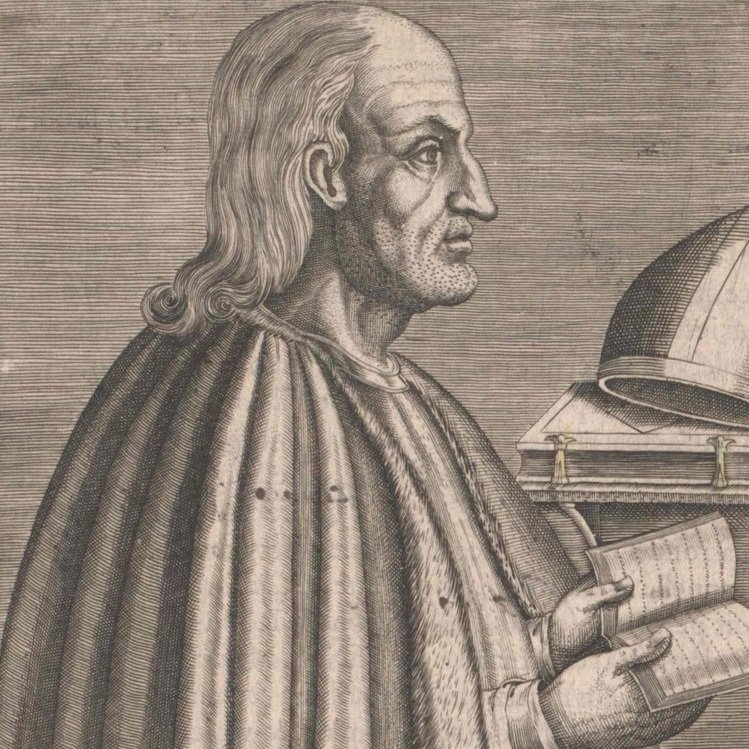
What are we talking about? This is the bead? No, this is Ambrose of Canterbury. No crap and some of Canterbury and some of Canterbury now.
I'm not gonna talk about him very much I'll tell you that right now. I don't have much on him I did not do a whole lot of research on the person I will tell you he was exiled twice the Samsung guy was the Samsung character. He's a monk to a golden mountain wasn't what are you talking about? No, it's part of the ontological argument.
No, it's not what you talking about the best thing that can be conceived. I Literally just read it this morning. What are you talking? I know maybe I'm making stuff a different translation I wouldn't worry about it.
I don't care about these golden mountains are the gold mountains in the room with us right now Graham I will tell you about Paradise Island We'll get there and we didn't lose it. Okay, okay, all right So I read the pros low-june which is by Anselmo of Canterbury And it is where one of the most famous philosophical arguments originates And I always use it as an example for my students when they are writing and they want to know how long their paper has to be Then I say one of the most famous philosophical arguments was written in half a page You probably can't do that so let's call it two pages right? My point is you know you need good ideas Don't don't you know throw words at a page until you have two pages tell me something good until it as briefly as you can and so that is the example that I use and I decided to read it this morning and It's it's pretty great. It's an easy to get through I think it's a cool 44 pages or so and you are I think it is easy for a listener to get through the I also read the one of the criticisms of it by another Christian of the time and he said here are the problems with what you're saying and Then and so I'm response now.
It was a John Don't's gotus I don't think that that name doesn't ring about right so I'll admit those were a little tougher to get through and I'll Show you an example of exactly why because I highlighted a whole sentence that might be the funniest sentence in English bros that you've ever heard And but we'll get there that's a big promise. Yeah, it's pretty good you guys. I think you'll enjoy it I think you'll enjoy it. Maybe I oversold it is the sentence greater than which no sentence can be thought wow I think Graham might be right about this golden mountain thing I don't know if it's in the process or whatever you're eating But when I start saying now and some gold mountain a bunch of stuff comes up tell me where's it come from?
Tell me wrong. I just told you you're wrong I don't want to back it up with any facts or details, but I just want you to know you're wrong. Okay first line to search in Yeah, I just want to search with the podcast all the bell every time we have one of those point Thomas Okay point Thomas for a blind assertion. Yeah, so we I really wanted to do was have Thomas read as the intro the very first section of the book Which I think you'll enjoy so pretend that we haven't actually started the podcast Okay, you've just arrived.
Yeah, and I'm gonna I'm gonna go ahead and play a little part part of it for you I can get back to it. I'm gonna never start on that one. Okay, just go ahead and read The first paragraph you highlighted the first sentence can I say that because I wanted you to read it well come now insignificant mortal Of course you have me read this Leave behind your concerns for a little while and retreat for a short time from your restless thoughts cast off your burdens and cares set aside Your labor and toil just for a little while make room for God and rest a while in him enter into the chamber Which is quoting Matthew 6 of your mind shut out everything But God and whatever helps you to seek him and seek him behind closed doors speak now my whole heart say to God I seek your face your face Lord. Do I seek good stuff?
Great. Isn't that a fun little intro? I always think we should start with come now insignificant mortal leave behind your concerns for a little while we should like what a great What a great start my class great, but that under your cat because I mean it's awesome kind of is great. I just kind of great Yeah, okay, so apparently in the intro it's actually by Enselm also He says that what he was trying to do was think up a proof for God that requires nothing outside of itself A proof for God that stands on its own two feet doesn't have to point any evidence or anything outside of it But it is clearly just a self-contained little proof for God that he can give to people that was the impetus of writing this For a long time he didn't find it and he was getting kind of hacked with it Because eventually it just was you know occupying his mind when it could be occupied with other things so he gave up But then he tried to give up and it came anyway eventually it kind of popped into his head Right?
I was doing it and that was where this book began and so I will try to gloss over those those bits That I think will especially appeal to our Christian audience about the greatness of God where he is just sort of doing the praising God stuff and I'll try to focus on the philosophy so if you're not Christian coming to this this is still an interesting Argument right as in the in the story of philosophy and one that I still don't know how to Controvert and one that is still discussed and there are even modern versions of it that consider Multiple universes and all kinds of stuff So just as a as a philosophical history thing it is worth your attention So chapter one is that just sort of intro business, right? So let's go ahead and jump to chapter two which is where the where the actual argument takes place And so I'm going to read it to you This is the ontological argument So even the fool must admit that something then which nothing greater can be thought exists at least in his understanding since he Understands this when he hears it and whatever is understood exists in the understanding So here I think that it's kind of convoluted because I think in the original it's two different words I think intellect this is one of those right and so I think they're using thought and intellect this and It's almost interchangeable for us But I think it had different shades of meaning for them So you'll hear understand and understanding and fought and fought and those opposed to each other sorry anyway So exist in his understanding and surely that then which greater cannot be thought cannot exist only in the understanding For if it exists only in the understanding it can be thought to exist in reality as well, which is greater Okay, because otherwise if it didn't exist then it wouldn't be the greatest thing you could think of yeah So if that then which nothing greater sorry that then which a greater cannot be thought exists only in the understanding Then that then which a greater cannot be thought is that in which a greater can be thought but that's impossible Therefore there is no doubt that something then which greater cannot be thought exists both in the understanding and in reality This is the basic version So let me let me track you through it Thomas think of the greatest thing you can not know sorry not the greatest because all that Has to do is be greater than everything else. Okay, so you have to think of the thing that nothing greater than this can be conceived So it's not just the greatest thing that exists right like a giant like a Gold Mountain right that's the greatest thing I can see but a thing greater than which nothing can be conceived I can see with something greater than gold mountain. Yes, I could so this is the greatest possible thing to be conceived You got any brain?
No, I like what what even fit like God is the obvious answer, but I don't under like what? Great, awesome. Okay, so it actually addresses like okay, you can't necessarily hold this in your mind You have the idea of the concept right? You can kind of imagine there's a thing greater than which nothing can be conceived But what do you mean by greater?
So it is maximally good. It is maximally powerful is maximally pure is maximally Existant yeah, right so you have this thing in your head. Okay. Okay now answer me this question Is it greater to exist in reality or to not exist exist therefore this thing you are thing that's applying to starshan ding I missed it.
I'm so sorry guys. Do you want the bell? No, no, okay? I'm sorry we're doing time flossy root ding that bell all the way.
I'm very excited Yeah, so it is greater to exist than not to exist sure therefore this thing you are thinking of to avoid a self contradiction Must have the quality of existing in reality. Then there you go. Go exist. Okay.
Let's let's say that again Give me that I love unicorns. I love unicorns true unicorns are the greatest of all possible anything the joy that they bring Under the world not true it is true because I love unicorns so like greatness is determined by the person It's not though. Okay, even if you say you love unicorns You can see of a unicorn that's better than just the normal unicorn I think it's wings. Okay, so now it's not unicorn anymore.
So you're not thinking of the greatest possible unicorn I think it's wings, which is not a Texas. I don't know a horn on the and gives you like a sandwich every time you see it Okay, so that's greater now. What if this thing supremely loved everyone in the United States this so much? Okay, yeah, that would be better.
Okay, okay, what if this unicorn instead of being present one place could be present everywhere at once Okay, it's pretty great. This is good. Yeah. Yeah.
Now. Now. What if it knew everything Wow? Okay, that'd be even better.
You're loved Wow, I was willing to die for this Okay, but I don't know okay, so my unicorn is now God apparently So you what you had tried to think of something it wasn't the greatest because we thought of something greater It wasn't the great the unicorn greater than which nothing could be conceived But in fact you love what you loved about that unicorn was really a love of God. I I so much I'll let it anyway, but okay, so but that leads me to them think imagining something that is all knowing all powerful whatever But then I understand that it would be better where that thing to exist But why is that necessary true because you you must avoid the contradiction So if you say in my conception of the thing greater than which nothing can be conceived And it has the quality of existing if you say yes, but it doesn't actually exist right well Then you're not thinking of the greatest thing anymore You are thinking of something that has the resemblance of the greatest thing but doesn't actually exist okay So to avoid contradicting yourself the thing that is greater than which nothing can be conceived must exist in reality Can't we hit the contradiction from the other side and say why is existing better than not existing? So that's that's one place that you could I think I think honestly It's not addressed in the entire pros Lojian the premise of existing in reality being better than non-existing It's taken as a given it's taken as a given and I think almost rightly so it is better to be in reality a corporal thing That has all these qualities than to be an imaginary thing I'm sorry, but I totally disagree with that. I don't ask me part about anything I really should not yeah, he's a perfect and tall entomologist But one about insects and flowers don't feel pain the same way with this guy this guy Lee party Lee savory guy this okay Sure, I still don't accept that last part like I understand you saying that anything that does exist is better than a an all-powerful thing that doesn't exist I think that's what that final statement means It doesn't I don't I don't see the connection from because you can imagine it and it's awesome that awesome thing must also exist It's it's to avoid country yourself you say look this thing I'm imagining yeah has the quality of existing But it doesn't exist well you are again no longer thinking of but then I'm back to the beginning of like courses are awesome So like unicorn would be more awesome, but they're not real so a real life horse is better than a fake unicorn So yes a real life thing is better than the fake thing But you can think of something better than of course it exists unicorn But because they don't exist the horses better No What what I thought I'm trying to follow what you're Lay out your your own horses.
No existence is better than non-existence correct so a unicorn would be better than a horse Correct, but a unicorn is not real. They're not have physical form ergo the horses superior to the not real unicorn Is that what this is arguing my using its tools correctly? I think you're using its tools correctly But I think you are but but but an existing unicorn would be better than what doesn't exist but yes unicorn doesn't but that greater than which nothing It seems does it has to by its definition of philosophy So we'll get a little bit deeper into it And I will actually come up against some of the criticisms one of which is the the Paradise Island criticism, so we'll get there Oh, so chapter three Basically God cannot be thought not to exist So this being exists so truly that it cannot be thought not to exist For it is possible to think that something exists that cannot be thought not to exist and such a being is greater than one that can be thought Not to exist so if you are saying I'm thinking of that which greater than that greater than which nothing can be conceived So it's the greatest possible thing. Well, if you think it doesn't exist well Again, you are not thinking of that great thing anymore.
You're thinking of something lesser something that can be thought not to exist right like a Unicorn in your answer. I can conceive of unicorn not existing right in fact. They don't exist right? I know this about unicorns right but by the very essence of the thing I'm talking about that greater than which nothing can be conceived It must exist right otherwise.
I'm contradicting myself. I'm saying yeah, I'm thinking about it But it doesn't exist yeah, I'm now in a contradiction sure the part I'm the part I'm misunderstanding is then okay You can find something real that exists but if you don't believe in God then you wouldn't say that God exists necessarily You would say that a conception of God who is not real is inferior to fighter jets or whatever sure But he's also inferior to a God that exists And that's the point if I come up to you and I say think of that thing greater than which nothing can be conceived Yeah, and you say yeah, I got God, but it doesn't exist well It would be better if God exists you are you are no longer thinking of that great thing You are thinking of something is this big question begging like quite literally honestly not really okay this The thing about the ontological arguments It's a lot easy to dismiss it and say you don't like it that it is to find the actual problem with it But aren't you haven't proved got you you are saying it would be better if God existed than if he didn't exist yes That doesn't mean therefore God exists so okay, so follow me it does I know so I know you teach logic or whatever So here's the thing if you claim to be thinking of that thing greater than which nothing can be conceived Huh then he must he must the thing you are thinking of must actually exist I'm not the end of the isn't that the end of the experiment just to say like I can't do that You can't conceive of a correct existing no, I can't conceive of something that's greater than nothing greater can be conceived I can't do it you can't conceive of the great thing. Yeah, you can't do it. I think you dumb I Don't know that's my take you right now.
You can't conceive of God is what I'm just saying why isn't that why isn't that the Because I think it's a cop out that no one can actually Support you can think of great things you can think of something that's not maximum at least hold that concept in your mind Doesn't it end up being the like empirical argument against it's like alright? I haven't seen it like so like but you can see the horse I've seen a sandwich I've seen a fighter jet those are all pretty awesome right But you can see but we are talking about the concept right now You can't claim that you don't understand what I'm talking about when I say that greater than which nothing can be conceived You understand that concept I guess I understand the concept of like What's the like of greatness of like things being better than things yeah, and then so you understand the concept of the greatest thing? You don't have to necessarily know all its qualities We could argue about it and eventually get there But you understand that concept and if you can say that existing is better than not why can't I just have an I'm saying like no what I understand is that there's no such thing as great as great great Est it's just greater and greater and greater and greater and greater in an infinite series So the thing you are thinking of is infinitely great infinitely great and in that infinite greatness is better to exist But it's sure but it but there we are Are all individual things what so there's there's there's an infinite plus one or yes There's the hundredth greatest thing and then the hundred first great thing and then one or two Yeah, so then I so which one is the one is the one well the one that encapsulates all of that data can see But I just thought you don't talk about yeah, you understood enough to say you couldn't conceive of it This is one you should watch on YouTube for granted my reaction. We're trying to think through this I Understand the words coming out of your mouth you do I I still don't see how the my ability to think of those things necessitates its existence I understand how a am I not explaining it correctly or no?
I think you've explained it clearly I or you just don't know I'm just dumb. Thank you But like okay, maybe I'll take it this way there are smart people who still don't believe in God Are they just illogical because in this case? Yes, they are self contradicting But that again just because something can exist and be better than something imagined and not exist Why does that necessitate its existence be because of the definition of that greater than which nothing can be conceived So it is specifically those words and not just the greatest thing You know always can see with something greater But it is that thing that nothing can be greater than it and so one quality of that thing is that it must exist Wait, why can't I say that a non that the idea of a God that actually doesn't exist is in fact better than a fighter jet? That's fine and a God that does actually exist is better than both How can it be otherwise?
He basically says in chapter 3 you cannot conceive of this thing not existing because again Then you are thinking of not the greatest thing anymore Right that that than greater than which nothing can be conceived. I'm not gonna say that phrase I'll just call it the greatest thing but and some is actually very sticky on this point later It's he says it's not just the greatest thing because that could be just a planful of gold right? That's a great thing where there's like ice cream and puppies. I'm you know wonderful Sounds awesome But this has to be for the sake of the argument that greater than which nothing can be conceived because that necessitates the existence because if you say Yeah, I get the concept of that but it doesn't exist well again You are self-contradicting you don't get the concept because the concept it must exist right so that is his proof of God now It makes a lot of people uncomfortable.
I think the same way it's making you uncomfortable And I think a lot of people sweep it aside as maybe not satisfying right like okay I hear your argument maybe it's a self-contradiction is kind of the answer yeah There's just like a mechanism there that I'm missing but that is not for you have a claimed it well and you are accurately conveying the argument It just doesn't again Imagine you go to your like the most anti religious person you know and you're like whoa I'm gonna prove to you that God really exists. They're not gonna be like wow AJ you did it No, I don't think it's gonna be convincing to them. That's what I mean. Yeah, I think you're you are correct with that But then ask them to say why and they'll have a hard time saying why that's that's the fun thing about the ontological argument Is again like I don't think that this is the proof that will bring people into the fold right?
I think it's cool to think about once you are in or even fun to think about if you aren't that I want nothing to do with it but Again, it's easier to say it's not convincing than it is to say exactly why it is not convincing because as a self-contained argument It's it's pretty bang on I remain unconvinced, but you have you have well conveyed this argument. Are you sure you're gonna explain it? I really don't I'm sorry Alright, so chapter five is about this applying not just to the existence quality But to avoid self-contradiction it must apply to all other qualities Which means it must be the most truthful the most happy the most powerful the most knowledgeable right all of those qualities that we traditionally associate with God to avoid contradicting yourself and saying yeah, I can see we've got this God is cruel well, then he's no longer that greater than which nothing can be conceived and He must have those qualities as well So he must be all of those things all unity all he must have existed through all time because to have a beginning or to have an end Well, that's not necessarily as great as having all of us or even well I guess we'll get there in a second. So that's chapter five chapter six is a weird one There's a couple ones in here that seem to be sort of fights over things that we don't fight anymore over like discussing like this one about how God perceives things okay, so He says God must perceive things because perceiving is trying to get knowledge right because God has all knowledge true before he perceives all baby That's chapter six It seems like I'm oversimplifying these but for example chapter five is a single paragraph.
Yeah, chapter six is also a two paragraphs, but that's that's the gist of it right that the If only corporal things can perceive because the senses exist in a body and are directed towards bodies then how can you perceive right? So that's the question and it's because he has all knowledge therefore he can perceive I think this is a bad argument. I think this is a firmly consequent so How does this argument differ from the rest of them? So I'll lay it out.
So if you Let's see if you have a knowledge you must have perceived Okay, so if you have knowledge you must have perceived it God has not it's the other way around so if you try to perceive something it will lead to knowledge God has all knowledge Oh therefore he has all perception right it works backwards in an offense statement So for example if I take shower I get wet God is supremely wet therefore God is supremely showered right that doesn't necessarily make sense Or if I take a shower I get wet I'm wet therefore I have showered well. I'm not gone out in the rain It's I think it is trying to establish a quality of God that he perceives all without Circumfending I'm actually much more comfortable saying God just knows all I was gonna say the problem is that there's like an intermediary step But the other ones don't have that so it'd be better for some some one or something to be wise therefore this God is has always done, but that's okay, but Wisdom comes from reading books. They forgot his right all book or is that the right way to do it? Yeah, therefore God has perceived all books.
Yeah, so it's an intermediary step that makes it worse than earlier in the book Yeah, I think that this one is particularly bad argument. He doesn't he kind of doesn't nail it There's another one in there that I also don't think it's very good Chapter seven is okay, so we've established that he is the maximum He has got all qualities to the maximum does this include evil qualities? No, how come because evil is a negation of good and because he has all good things he has We have a negative infinity of evil things which is the same as a positive infinity of good things I don't know what he says. You're not far out actually so I can't know why can't I know you're going with this But why not why can't you say things like?
A lot of ham is good Therefore God is infinite ham as well as infinite truth Infinite ham yeah, I love him. Yeah, it's a great point because I would I would wait for to say infinite ham is not good If it is not do you want to live in infinite ham? I'll live in a great It's not a great thing infinite ham is great infinite ham not great one who can create infinite ham last great I'm back to God. So okay evil.
No God's not evil. Yeah, so so a critic could say right well just like with the ham thing Okay, wouldn't someone who is a serial killer be better than just a killer? Right sure so to avoid contradiction this thing greater than which nothing can be thought must be the greatest killer ever I mean right so that that is one possible argument a person could make is that you kind of turn it around and say okay? This great thing you're thinking of and let's have all evil qualities as well as all good qualities Right, but he answers and says well evil and I think it's the answer you kind of give evil's really weakness Right and so what you're trying to say is that God is the most weak thing But that's not not the same as being the greatest It's not the same as it is literally the opposite I mean that is really what evil is is a mistake.
It's a weakness It's an evil is a lack of power is impotence and so those things are things that cannot be attributed to God because it was it's the opposite moving in the opposite direction So you're essentially right if he is the supremely evil thing It would be an engagement of all great things so he that cannot be part of the definition of that greater than which nothing We thought that's not the one that you have a big with is it no I think I was pretty good Chapter eight this is this is where his screwy one kind of gets screwy So he starts to talk about his his greatness in mercy versus his greatness in justice So he's like God justly punishes and justly spares Infinitely how does that work like he's trying to figure out the balance between justice and mercy and he kind of spins his wheels for a couple chapters And then the I'm not getting at the end. He's just like am I even getting it like God you improve what I'm saying I don't I'm saying I'm saying that he is just to himself when he punishes, but he's just To us when he's merciful, but that's not a contradiction He's really like working out at the end. Yeah, it seems like he's just working out by the end He just says well justice is what you do and mercy is what you do because you do it. It's good That's how it works And I don't think that is a good argument either right?
I think it would maybe line up with other theologians that say that justice is a one of God's qualities And we you know we can't set justice above God because it is essentially synonymous But this just isn't a good argument right where he kind of spins his wheels for a long time and it's just what you are So there you go. We just did not answer the questions So he had to end the chapter at some point But he doesn't talk about you can be just a merciful at the same time the justice he does He says your mercy is infinite and your justice is infinite and there are parts of your character And that's why you do them and that's why they're great like like a man died for sin But it was also Merciful for all of us like he doesn't talk about how the cross is the justice and mercy at the same time Not really but the weird thing is he doesn't talk about it here But the atonement theory the theory of atonement a toning salvation is and some is he curdias homo to he write curdias Why God man don't know I don't know but before that it was a ransoming Yeah, so he talks about that in curdias homo Yeah So before before Anselm the notion of the cross was that he had to ransom us back from the devil because essentially the evil owned us And so his death was like our ransom he paid the ransom for our sins But from Anselm onward it was kind of a an atonement thing God's justice required a death and so he fulfilled in his mercy the justice for that death and so both his justice and mercy are Arfulfilled so that's that's him but not here his answer here is just like it's just what you are So you had to write this other one day into that question Eventually, okay, how we don't know time you're halfway through 30 minutes. Okay, that's just about right okay Next section is he wants to address being no parts in God now This is something I don't think that we moderns would necessarily have an issue with they saw unity as a really great quality being all one single substance I think we are comfortable knowing that sometimes one thing is a lot of little things right We know about atoms We know about molecules and all of those things that go up to make up our world And I don't think we see it as a negative that they are there are parts to the whole I think he did right that unity As seen as one of one of those qualities that must be a part of the Godhead and so he said you are the most supreme one thing And then he has to do a little bit of backpedaling talking about the the Trinity And I think this is from him is partially where we get the heresy like saying it's a heresy trying to say that there are three different people or different parts Right where it's actually different pieces of God. He's saying no, it's a unity you are three in one single thing And so I think that's kind of this is one of the places it comes from I've never totally I know there's a whole debate around simplicity Complexity part of it I think is the possibility of Contricting wills if you have multiple parts which therefore there can't be in God I know it's a big deal in like ancient debates, but I don't know much more other than God must be only one Yeah, and I don't think we have that same I don't know if we have that same hang up now Do we do you have that same hang up Elton?
Right same that our understanding of like how things are made up of smaller things is yeah Yeah, I think we've come up ways and that and so live around eleven hundred so they had a different world you got that sure okay This next one I find really interesting chapter 19 is about eternal life versus eternal time So this is where he establishes that God is outside of time because if you say okay, this thing that I cannot think of anything greater is Going to end That's worse than if something kept going exactly so must not end and what if I said it had a beginning? That's worse than if it didn't have a beginning exactly so it might not have a beginning nor can it have an end And what if I said it is only in the present and has lost both past and future? That's not bad. That also sounds bad So it must be all moments all the time in present to this being right and this is to avoid self contradiction It must be eternal As opposed to infinite I think I'm doing this thing without a difference But what I mean is instead of a an infinite series of time it is a fullness of all time at once sure What you're presenting it is very much on the logic of it I noticed in the first paragraph I read he's quoting Bible stuff.
Does he is mostly a series of logical arguments? To prove these attributes of God. It's a lot of logic. Yeah, I just that's part that I'm finding fascinating of how he's getting to these attributes of God It's not a polite your verse and do that.
It's there are things we can know about God just through like reasoning through these things Yeah, well that was his goal He wanted a self-contained argument that sort of established who God was and he started with the the single argument proving his existence And it has sort of extrapolated that you can't think about to exist. He's got to be one. He has to have all the best qualities He's got to be truly an infinite being rather than just one that kind of lives eternally through a series of time And he you know can't have parts He's justly punishing and justly sparing all of his argument for that is not good and he perceives everything again Not a great argument. Okay, and also yeah, and is experiencing all moments of time at the same time I don't know how he describes it But yeah, not just stuck going one direction in time But outside of it as we would say now.
Yeah outside entirely. All right, so here's one fun weird chapter See if you guys can help me make sense at chapter 21 whether this is the age of the age or the ages of the ages Hmm, I'm gonna like ram take this one So is this the age of the age or the and it's it's just one paragraph full chatter So is this the age of the age or the ages of the ages for just as an age of time contains all temporal things? So your eternity contains the very ages of time This eternity is indeed an age because of its indivisible unity But it is ages because of its boundless greatness And although you are so great Lord that all things are full of you and are in you nonetheless you have no spatial extension So that there's no middle or half or any other part of it Graham what do you think age of age dang All right, let's move on so so that seems to be another one of those where I feel like I'm just I don't know the Controversy, yeah, exactly that there's a there's some sort of internal argument going on within There's like a monkey at a fight with at the dinner table and now he's writing like yeah It's a flip and age of the ages or it's both right and also you don't have any middle. I'm like, okay, all right I'm on board there and some great.
I hope you beat that guy there. Yep. Don't know rock and roll take that Borfus from Canterbury Orifice Borfus the monk, but he was a treat okay, and then we just sort of wind down until the end Okay, and that is the problem. So you think you think is logically coherent I have a hard time finding a hole in it.
What are the modern? What are what are the famous holes that people have been against it? So this the next chapter is sort of one of the famous It's like a it's guanelos reply on behalf of the fool guanelos. Yeah, and porfus yeah So he's gonna get into it, and I'll be honest I understood a chunk of it Okay, because it really leans into the I mean you guys know that in some of the passages I read there's so many negations it is not this and therefore on this and not this and greater than which not nothing can be And I'm just I get lost or and this is one of the sentences that I wanted to read you guys was them Discussing this bit Let's see.
So this is I think actually within and some reply Yeah, so I'll go guanelos criticism his big criticism the one that everyone can actually understand and then I'll talk about and some reply Okay, so criticism that guanelos comes up with after talking about some stuff about how he holds it in thought He's I think he had the same beef you did like yeah, I can see this thing doesn't mean it's real right and so and some has to you know Say more about he's he has to defend it more he has to defend it more again, but his is okay Think of the most the island greater than which no island can be conceived You got it now is great to exist or not exist exist therefore this island exactly right and has existed for all time Okay, so that is the greatest one of the most famous Robotles and some answers it essentially the same way that I answered your unicorn thing was okay now Do you want an island that is like sentience like or you know exactly what a centi I'll be better. Okay, but it'd be better if it was a if it could love you I don't know this island existed everywhere rather than just one place right what if it you know died for your sins I'm gonna Of course you sort of just end up in the same place as God I maybe that's maybe that was a I came up with and more than and some did but and some kind of points at the same thing He's like just because you could conceive of something greater than that island right I can conceive of a God who is greater than the island and therefore It sort of negates it right this is a single special case this argument only applies to that greater than which nothing can be It has to be at the very top of the heaps You can't do the same trick if you can't do the same trick for like a beer or an island or like I can play that beer Exists or like an afternoon or whatever yeah, it has to be only in the case of the greatest thing Otherwise you think if you have the greatest beer upon which other beer can be conceived please mail it to us At the guys the class of email us in address yeah, and we will we'll send you a bus drinking it and join it We'll talk about whatever you want us to whatever yeah, but if it is not the beer greater than which no beer can be conceived We'll talk about whatever we want yeah, whatever we dang well deal yeah, okay, so that's that's the biggest criticism is the Paradise island criticism, okay and the rest of them are just incomprehensible. I hate to admit it, but they're really hard to follow Let's see so for example. I'll just read one little I want a funny sentence.
Okay. I'll find you funny sentence. Thanks Let's see I'll just read you the first first paragraph someone who either doubts or denies that there is any such being as that then which greater than That then which nothing greater can be thought is told that its existence is proven the following way first The very person who denies or entertains doubts about this being has it in his understanding Since when he hears it spoken of he understands what is said further what he understands must exist in reality as well And not only in this understanding all right so far it's pretty clear The argument for this claim goes like this to exist in reality is greater than to exist only in the understanding now If that being exists only under in the understanding then whatever also exists in reality is greater than it thus that which is greater than Everything else will be less than something and not greater than everything else Which is of course the contradiction and so that which is greater than everything else Which has already been proved to exist in the understanding must exist not only in the other standing but also in reality since otherwise it could not be greater than everything else. We should have done a Prossalogion first.
What? We should have done a Prossalogion first. In our order of... Yes, I was able to track it.
Well, yes, but I don't think changing the order would have felt for me very much. He can perhaps reply. The only reason this is said to exist in my understanding is that I understand what is said, but in that same way. Could I not also be said to have my understanding any number of false things that have no real existence at all in themselves?
Since if someone were to speak of them I would understand whatever he said. Unless perhaps it is established that this being is such that it cannot be had in thought in the same way that any false or doubtful things can, and so I am not said to think of what I have heard or to have it in my thought but to understand it and have it in my understanding. Since I cannot think of it in any other way except by understanding it, that is by comprehending it in genuine knowledge the fact that it actually exists. I think this is what a headache feels like.
Yeah, exactly. It's rough. Again, that is actually one of the more understandable passages. So I wanted to read one that was the greatest sentence in the English language.
You guys ready? No, this is from... and some's reply. Okay.
Then I said that if it is understood, it exists in the understanding. Or does that which has been shown to exist necessarily in actual fact not exist in any understanding. But if you say that even if it exists in the understanding it still does not follow that it is understood. Notice however, that if it is understood it does follow that it exists in the understanding.
For when something is thought it is thought by means of thinking. And what is thought by means of thinking exists in thinking just as it is thought. And in the same way when something is understood it is understood by means of the understanding. And what is understood by means of the understanding exists in the understanding just as it is understood.
What could be clearer than that? There it is. There it is. So I am completely convinced.
But maybe that joke even brings us to the payoff of this. Let's say this is logically coherent. Let's say that this is the argument that throughout history no hole can be brought into and this is a slam dunk proof of God. Then why hasn't it done anything?
Does everybody listen to this and be like, gosh dang it. Probably. This is just blown off. This was ages comment from before.
It's not really dealt with. It's just kind of ignored. I think the problem is it's a semantical argument. Just to be, you mean it's just about words.
Yeah. People think it's just about words that doesn't actually have any purchase. Or this is an argument where the limits of our own words, what this argument proves is the limits of our own words not the proof, not the existence of God. Right.
So you guys know the other proofs for the existence of God. Right. The prime mover, the first cause. The Aquinas ones.
I think they're... What are you five? Yeah. Is there a beauty one?
I don't think there's a beauty one. I can't remember the theologian. You like him a lot. I forget his name.
There is one, but I don't think it's one of Aquinas. Is this the theologian like? Yeah. I can't remember.
I can't remember the part argument around it. The part. Yeah. You like our part.
So there's an un-mover, the first cause. The argument from contingency. Our existence is contingent upon something else's existence. The argument from degree, which is we see all kinds of things in degree, like more or less.
For example, the argument about goodness. Why can't it just be a series with... We stop low? Since you can perceive the degree, there must be something at the top of it.
Argument from final causes or ends. The objects in our world behave in regular ways. This can't be due to chance since they would not behave with critical results. So the behavior must be set, but can't be set by themselves.
So it must be set by someone. Someone. So those are the five proofs. But even those, I think most people don't find convincing, perhaps, because we have a big bang.
I think for a long time, maybe people did. Oh, that's interesting. Again, I just think they're not considered or dealt with. I don't want to just think of the way people engage with religion.
It's not primarily intellectual. And so I don't... Why would an intellectual argument convince people one way or the other? It's Hillsong.
Or it's an emotional experience. Or it's a community that you're part of. Like, it's... Love that music.
Yeah. Or I love the people or something like that. But even with these, I don't even know if these are as good as the ontological argument in my opinion. Because the first cause of the first mover, it's dodging the infinite series question.
Yes. Right? So could it just be an infinite series of causes all the way back? Yeah.
Well, conceivably, we could have infinite universes that never... It's just been always popping in and popping out. And we are kind of... I don't want to say begging the question, but God himself is on cost.
Right? And so we have to rely on something that we've said to start the whole chain. Yeah. I don't know.
Yeah, the Aquinas ones, I think they're from the summa. And they're like an aside. It's not saying these are the five reasons God must exist. It's like he's writing about something else and it's kind of inserted.
It's not... It's much less expounded on than the 44 pages you went through for this one. Yeah. So I think that's part of the difference too.
Because the point is obviously police that God exists. And what I really liked about this one is I thought the ontological argument was just self-contained in existence. I love that he actually moved forward to establish all the attributes of God from that one argument. Yeah.
Right? I never realized he did that before. But it's kind of cool the way in which he established that. I mean, with a few exceptions where he doesn't know what he did.
And does he say anything about... He's assuming some kind of typical rational actor thinking through these things. Couldn't someone be wrong in their conceptions of what is higher or better? Yeah, probably.
I think he's just assuming rationality. But didn't we already disproven the alignment? Yeah, some was like a Mars bar. I love Mars bars.
I mean, that was my unicorn example. I literally can't think of anything better than Mars bar. You can't. I think bigger Mars bars actually works.
What about the thing that created a Mars bar? No, I just want the Mars bar. He just got a great point about the creator of the Mars bar. I'm going to have to give him that one.
Sorry. If you have the creator, then you can have a Mars bar. I don't want it to be a Mars bar. I don't want it to be a Mars bar.
I just want the one Mars bar. This reminds me of what was the episode you did where we talk about Penguin Marriage for an hour. I'm worried about going in that direction right now. But I maintain that was a good conversation.
That was a good conversation. You were talking about like, Medic rivalry and then... Was that one? Was it that one?
I'm sorry. Apparently I like sabbatical arguments. I just had that one little throwaway line about animals don't rival each other. That's a load of trash.
It seems to be like, I don't want to do this. I really want to jelly stick back in. I think Grant's question still stands up. Why isn't this kind of subtle question of the existence of God?
Well, is it the thing that makes me come to God? Nope. No. Is it the thing that is going to stop me from walking away from God?
Probably not. There are other things, other arguments I have that are not. I don't want to do this. I don't want to do this.
I don't want to do this. I don't want to do this. I don't want to do this. I don't want to do this.
There are other reasons I stick around, but I can't say the ontological argument is one of them, but dang it, sure is interesting. It is interesting. I think one of the recent versions has, can you conceive of a world in which this exists? They add the best of all possible, like a world's argument.
Other dimensions and stuff. That's kind of fun. This is still a philosophical argument that's being developed to work on. It's all very interesting.
It's one that I feel like I need to sit with more to think about. I need to go into the old Stanford Encyclopedia of Philosophy, which this is interesting. You guys should check it out. It is killer.
I think Golden Mountain might have been Hume. I see, he whose name comes up when I search for golden mountain. So, all right. Well, if we're in an early weekend and early, we can end early.
Well, rock and roll. Thank you all for listening. This has been classical stuff you should know. You can find us online at classicalstuff.net.
You can email us at theguysatclassclassclassclass.net. You can find us on Twitter at cliskelstuffcls. You can find us on patreon.com slash classical stuff where we post in between episodes. Graham's trying to keep himself away.
I know we've done we did an AMA, which we post on patreon, which you can find there. And then three episodes right after that. Plus in between. We recorded seven things today.
It's been in the audience. Six hours, boys. Well, thankfully we like the stuff. So thank you all for listening and we're going to record an independent book right now.
So bye everyone. John B.