
EPISODE · Aug 26, 2020 · 24 MIN
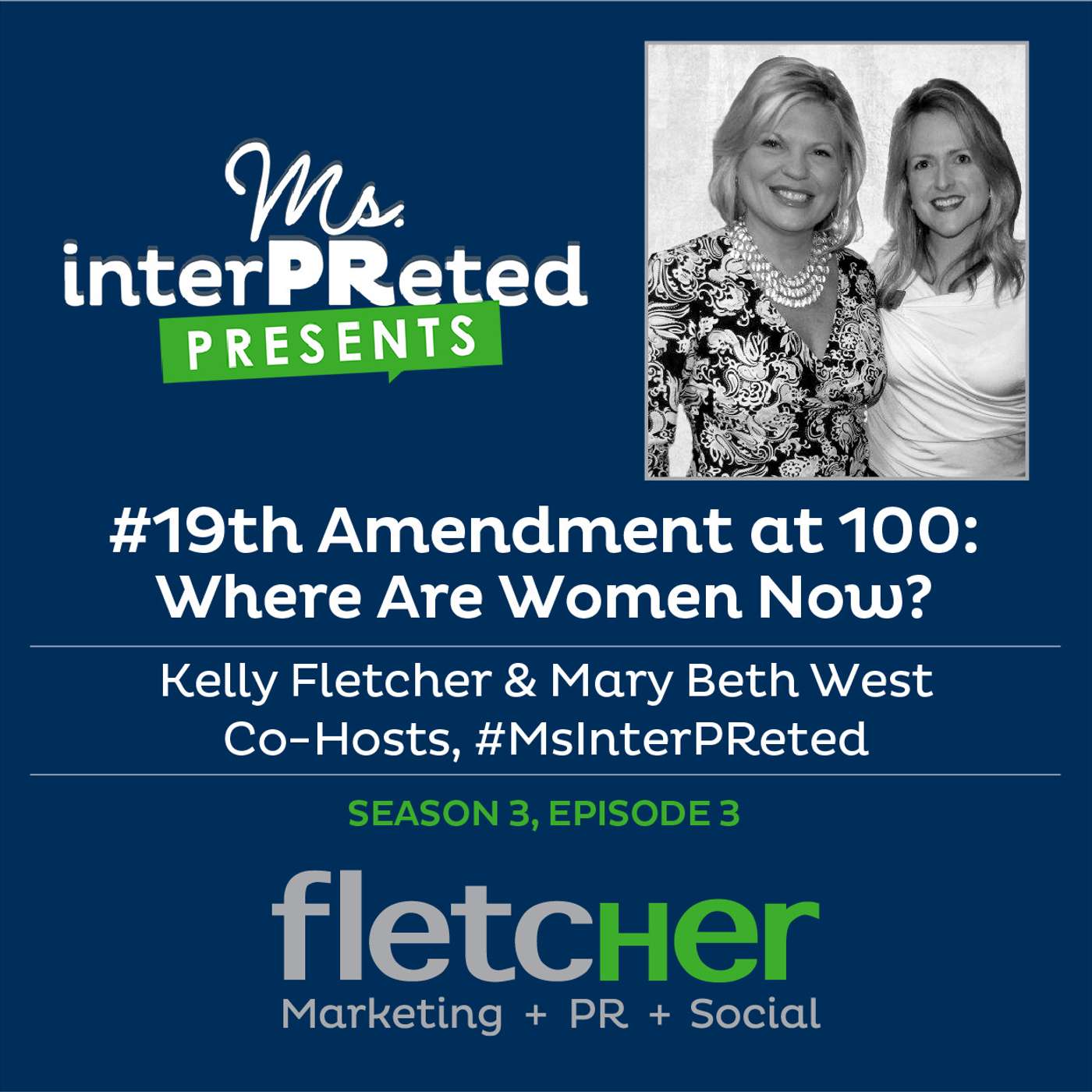
#19thAmendment at 100: Where are Women Now?
from Ms. InterPReted · host Fletcher Marketing + PR
In this episode spotlighting the historical significance of the 19th Amendment (and with a National Public Radio clip via Knoxville's WUOT referring to Tennessee's historic role), Kelly and Mary Beth discuss:How -- 100 years later (in the year of COVID-19) -- women's rights in the voting booth have evolved to rights in the workplace, albeit with shortfalls in rights of equal pay for equal workWhat the implications of COVID-19 have been, particularly in the PR industry, given disproportionate numbers of women in this workforceHow women dominating the PR industry have not translated into power in the executive or decision-making levelsMisogyny and male-dominated culture issues in the communications industry ... including particular sub-sectors (like ad agency "bro" cultures) that result in qualified and talented women being held back, passed over, dismissed, marginalized and otherwise treated in ways that create exit-ramps from career pathwaysKey statistics reflective of inequitiesAnecdotal examples of male cultures that demonize women and gaslight legitimate concerns or calls for accountabilityWhy women must push cultures of accountability -- not only for their own benefit or self-protection, but also for the industries they predominantly work within, such as public relations, to prove value and earn respectLinks: Follow the #MsInterPReted hashtagDiscover Fletcher Marketing PR: https://www.fletchermarketingpr.com/ Follow Fletcher Marketing PR on Twitter: @FletcherPR https://twitter.com/fletcherpr Follow Kelly Fletcher on Twitter: @KDfletcher https://twitter.com/kdfletcher Follow Mary Beth West on Twitter: @marybethwest https://twitter.com/MaryBethWest
Embed this episode
What this episode covers
It's Women's Equality Day (Aug. 26, 2020)! One-hundred years ago, women earned the right to vote in the U.S., by taking charge, stating their case, taking to the streets over decades, and pushing for the accountability of the vote. As ratification of the 19th Amendment to the U.S. Constitution -- giving women the right to vote -- celebrates 100 years and included a significant role for East Tennessee (with one determined mother of a young Tennessee legislator), Kelly and Mary Beth mark the significance of Fletcher Marketing PR's East Tennessee roots, its focus on lending voice to the power of women, and just how much women still confront in seeking equality, 100 years later ... including in the Public Relations industry, which is female-dominated.
NOW PLAYING
#19thAmendment at 100: Where are Women Now?
No transcript for this episode yet
Similar Episodes
No similar episodes found.
Similar Podcasts
No similar podcasts found.