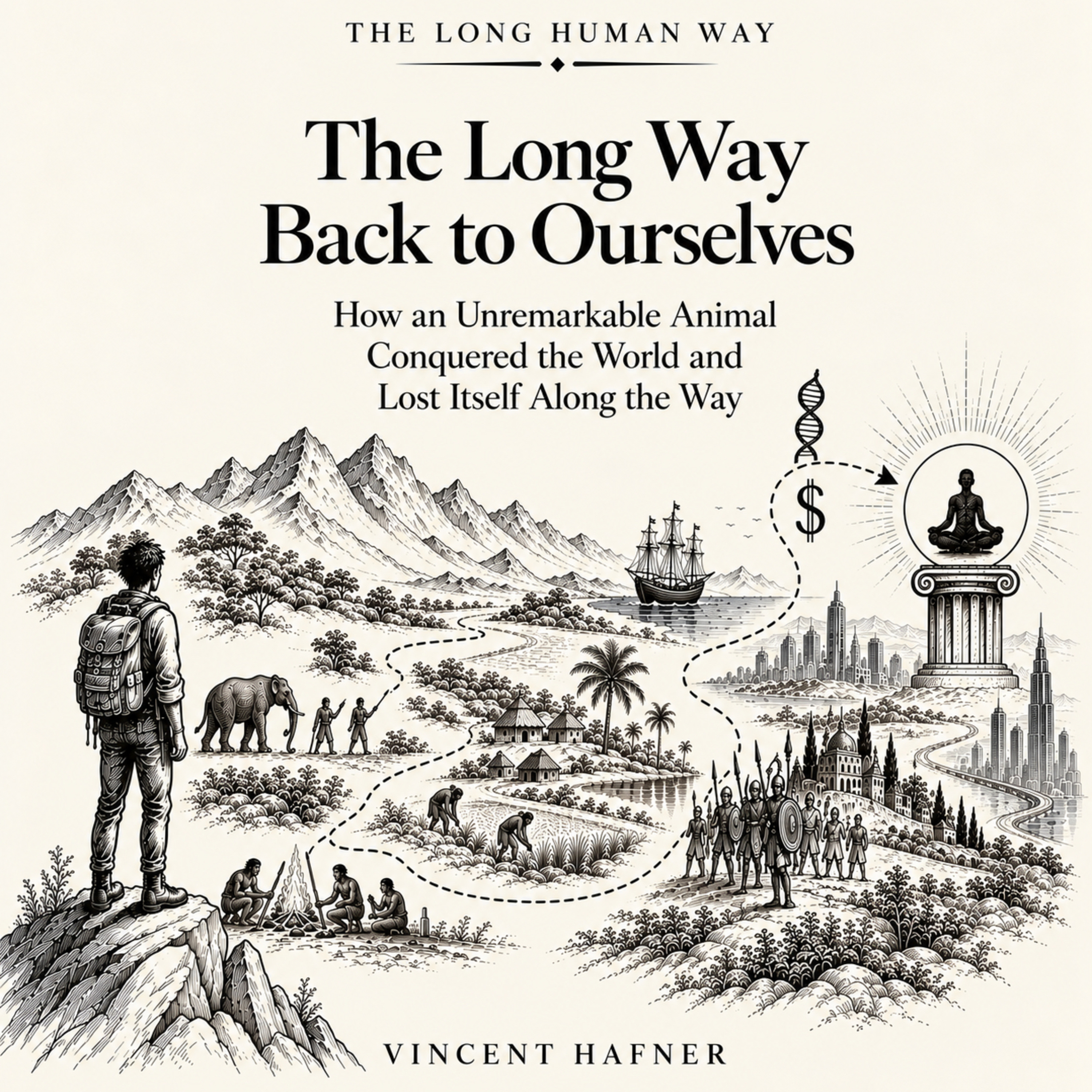
2.3 - Agriculture: Progress or Trap?
from The Long Way Back to Ourselves
This episode asks whether agriculture, which arose independently at least seven times worldwide, actually improved human life, and the skeletal evidence says no: declining body height, worse teeth, and new infectious diseases among early farmers. It tests and rejects Marshall Sahlins's claim that foragers worked only two or three hours a day, undermined once food processing and travel are counted. It corrects the idea that people chose farming as an improvement, proposing instead a ratchet mechanism in which each sensible step toward settlement raised birth rates, tested against cemetery data showing a demographic transition. It ends by naming the storehouse as the invention that first let a person own more than you could carry.
Embed this episode
No transcript yet.