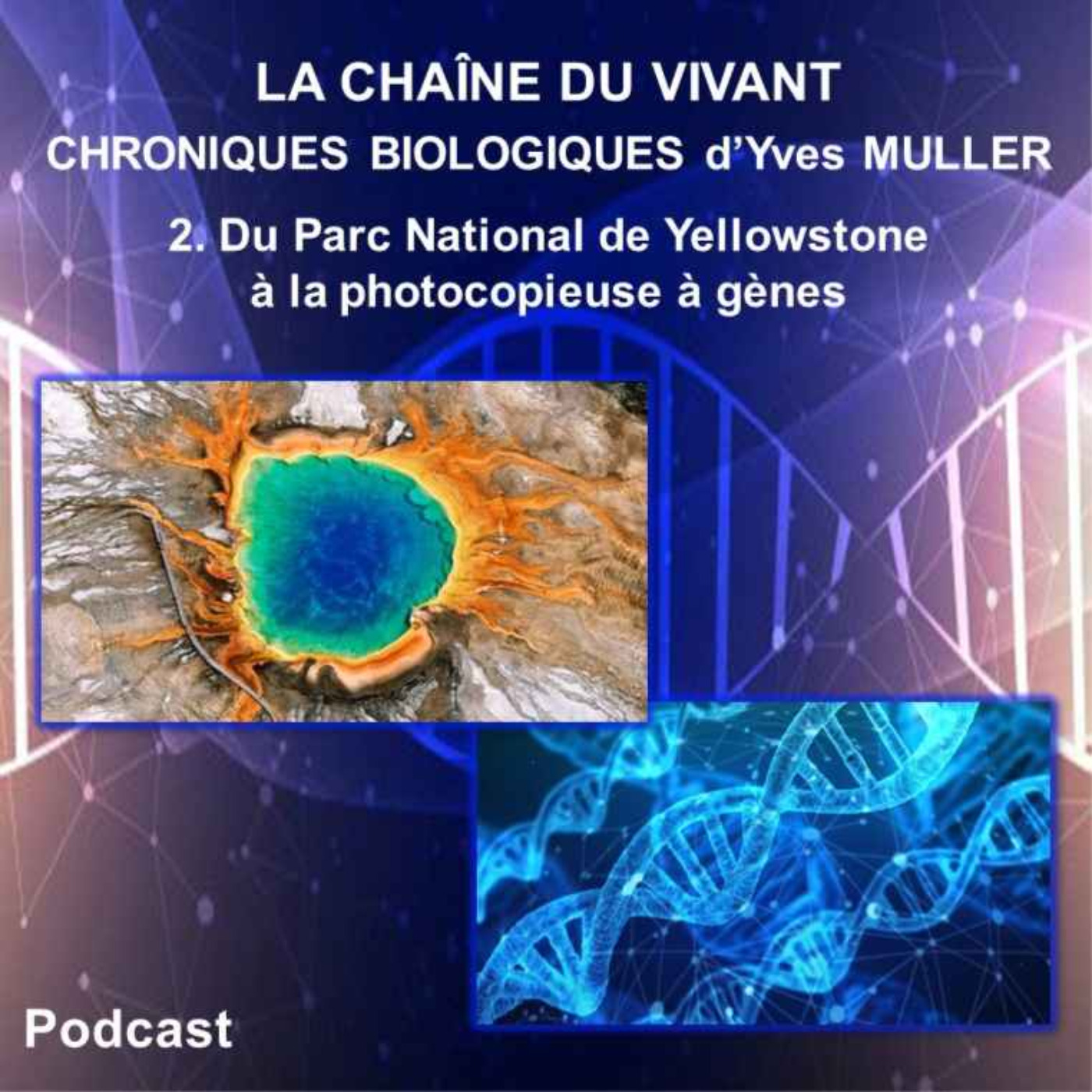
2. Du Parc National de Yellowstone à la photocopieuse à gènes episode artwork

EPISODE · Sep 3, 2021 · 32 MIN

2. Du Parc National de Yellowstone à la photocopieuse à gènes

from La Chaîne du Vivant - Chroniques de Biologie d'Yves Muller

Cette 2ème chronique biologique démarre par l’exploration du Parc National de Yellowstone aux États-Unis, un parc réputé notamment pour son intense activité géothermique. Dans les années 1960, un biologiste va découvrir dans une des sources chaudes de Yellowstone une nouvelle bactérie capable de vivre dans des eaux pouvant atteindre 80°C. La découverte de cette bactérie, appelée Thermus aquaticus, va ouvrir le champ d’étude des organismes capables de vivre dans des milieux extrêmes. Mais cette découverte va aussi conduire à une révolution en biologie moléculaire grâce à l’utilisation de l’ADN polymérase de cette bactérie dans la technique d’amplification de l’ADN appelée la PCR (Polymerase Chain Reaction).Auteur : Yves Muller – Professeur Agrégé de classe exceptionnelle - Docteur en Neurosciences - Université de Montpellier2. Biology Chronicles - From Yellowstone National Park to the Gene Copying MachineOur biological chronicle starts with the exploration of Yellowstone National Park in the USA, a park renowned for its intense geothermal activity. In the 1960s, in one of the hot springs of Yellowstone a new bacterium was discovered by a biologist that is capable of living in waters up to 80 ° C. The discovery of this bacterium, called Thermus aquaticus, opened the field of study of organisms capable of living in extreme environments. But this discovery also led to a revolution in molecular biology through the use of the DNA polymerase of this bacterium in the DNA amplification technique called PCR (Polymerase Chain Reaction).Author : Yves Muller – Associate Professor at Montpellier UniversityRéférences :Chien A, Edgar DB, Trela JM (1976). "Deoxyribonucleic acid polymerase from the extreme thermophile Thermus aquaticus". Journal of Bacteriology. 127 (3): 1550–7.Mullis KB (April 1990). "The unusual origin of the polymerase chain reaction". Scientific American. 262 (4): 56–61, 64–5.Ishino S, Ishino Y (2014). "DNA polymerases as useful reagents for biotechnology - the history of developmental research in the field". Frontiers in Microbiology. 5: 465. Hébergé par Acast. Visitez acast.com/privacy pour plus d'informations.

Cette 2ème chronique biologique démarre par l’exploration du Parc National de Yellowstone aux États-Unis, un parc réputé notamment pour son intense activité géothermique. Dans les années 1960, un biologiste va découvrir dans une des sources chaudes de Yellowstone une nouvelle bactérie capable de vivre dans des eaux pouvant atteindre 80°C. La découverte de cette bactérie, appelée Thermus aquaticus, va ouvrir le champ d’étude des organismes capables de vivre dans des milieux extrêmes. Mais cette découverte va aussi conduire à une révolution en biologie moléculaire grâce à l’utilisation de l’ADN polymérase de cette bactérie dans la technique d’amplification de l’ADN appelée la PCR (Polymerase Chain Reaction).Auteur : Yves Muller – Professeur Agrégé de classe exceptionnelle - Docteur en Neurosciences - Université de Montpellier2. Biology Chronicles - From Yellowstone National Park to the Gene Copying MachineOur biological chronicle starts with the exploration of Yellowstone National Park in the USA, a park renowned for its intense geothermal activity. In the 1960s, in one of the hot springs of Yellowstone a new bacterium was discovered by a biologist that is capable of living in waters up to 80 ° C. The discovery of this bacterium, called Thermus aquaticus, opened the field of study of organisms capable of living in extreme environments. But this discovery also led to a revolution in molecular biology through the use of the DNA polymerase of this bacterium in the DNA amplification technique called PCR (Polymerase Chain Reaction).Author : Yves Muller – Associate Professor at Montpellier UniversityRéférences :Chien A, Edgar DB, Trela JM (1976). "Deoxyribonucleic acid polymerase from the extreme thermophile Thermus aquaticus". Journal of Bacteriology. 127 (3): 1550–7.Mullis KB (April 1990). "The unusual origin of the polymerase chain reaction". Scientific American. 262 (4): 56–61, 64–5.Ishino S, Ishino Y (2014). "DNA polymerases as useful reagents for biotechnology - the history of developmental research in the field". Frontiers in Microbiology. 5: 465. Hébergé par Acast. Visitez acast.com/privacy pour plus d'informations.

NOW PLAYING

2. Du Parc National de Yellowstone à la photocopieuse à gènes

0:00 32:03

No transcript for this episode yet

We transcribe on demand. Request one and we'll notify you when it's ready — usually under 10 minutes.

No similar episodes found.

Capsules d'analyse financière de Dominique Jacquet Capsules d'analyse financière de Dominique Jacquet Lebe deine Wahrheit Larissa Geiges Was heißt es eigentlich die eigene Wahrheit zu leben? Und wie finde ich sie überhaupt?Für mich bedeutet es, die ehrlichste Version von mir selbst zu sein. All die Masken abnehmen, mit denen wir durch unser Leben gehen, den Menschen zu leben, der man im Kern ist.Wir dürfen immer entscheiden welchen Weg wir gehen. Den Eigenen oder den, den andere für uns gewählt haben. In diesem Podcast nehme ich dich mit auf meine Reise und wünsche mir, dass du viele wertvolle Impulse für dich und deinen Weg mitnehmen kannst. Ich teile mit dir welche Schritte ich auf dem Weg zu meiner Wahrheit gegangen bin und welche Prozesse ich auch heute noch durchlaufe. Ich teile meine Struggles und Ängste mit dir und meine Erkenntnise aus all den Phasen, durch die ich noch gehe und schon gegangen bin.Ich freue mich sehr, wenn du Teil hiervon bist und ich dich auf deinem Weg zu deiner ganz eigenen Wahrheit ein Stück begleiten darf.Alles Liebe für dich,deine Larissa La Corrobra Canal Extremadura El espacio de la radio pública que pone en valor las lenguas autóctonas de Extremadura: el estremeñu, la fala y el portugués rayano.Con Juan Pedro Sánchez. 21 Millionen - Die Bitcoin Akademie Marco Eberle Bist Du bereit für Deine Bitcoin-Reise? Wir stehen vielleicht am Anfang einer finanziellen Revolution, und Bitcoin ist erst am Start seiner Reise.Hast Du Dich jemals gefragt, was hinter Bitcoin steckt und wie Du ein Teil dieser aufstrebenden Zukunft werden kannst? Hier bist Du genau am richtigen Ort!

Frequently Asked Questions

How long is this episode of La Chaîne du Vivant - Chroniques de Biologie d'Yves Muller?

This episode is 32 minutes long.

When was this La Chaîne du Vivant - Chroniques de Biologie d'Yves Muller episode published?

This episode was published on September 3, 2021.

What is this episode about?

Cette 2ème chronique biologique démarre par l’exploration du Parc National de Yellowstone aux États-Unis, un parc réputé notamment pour son intense activité géothermique. Dans les années 1960, un biologiste va découvrir dans une des sources chaudes...

Can I download this La Chaîne du Vivant - Chroniques de Biologie d'Yves Muller episode?

Yes, you can download this episode by clicking the download button on the episode player, or subscribe to the podcast in your preferred podcast app for automatic downloads.
URL copied to clipboard!