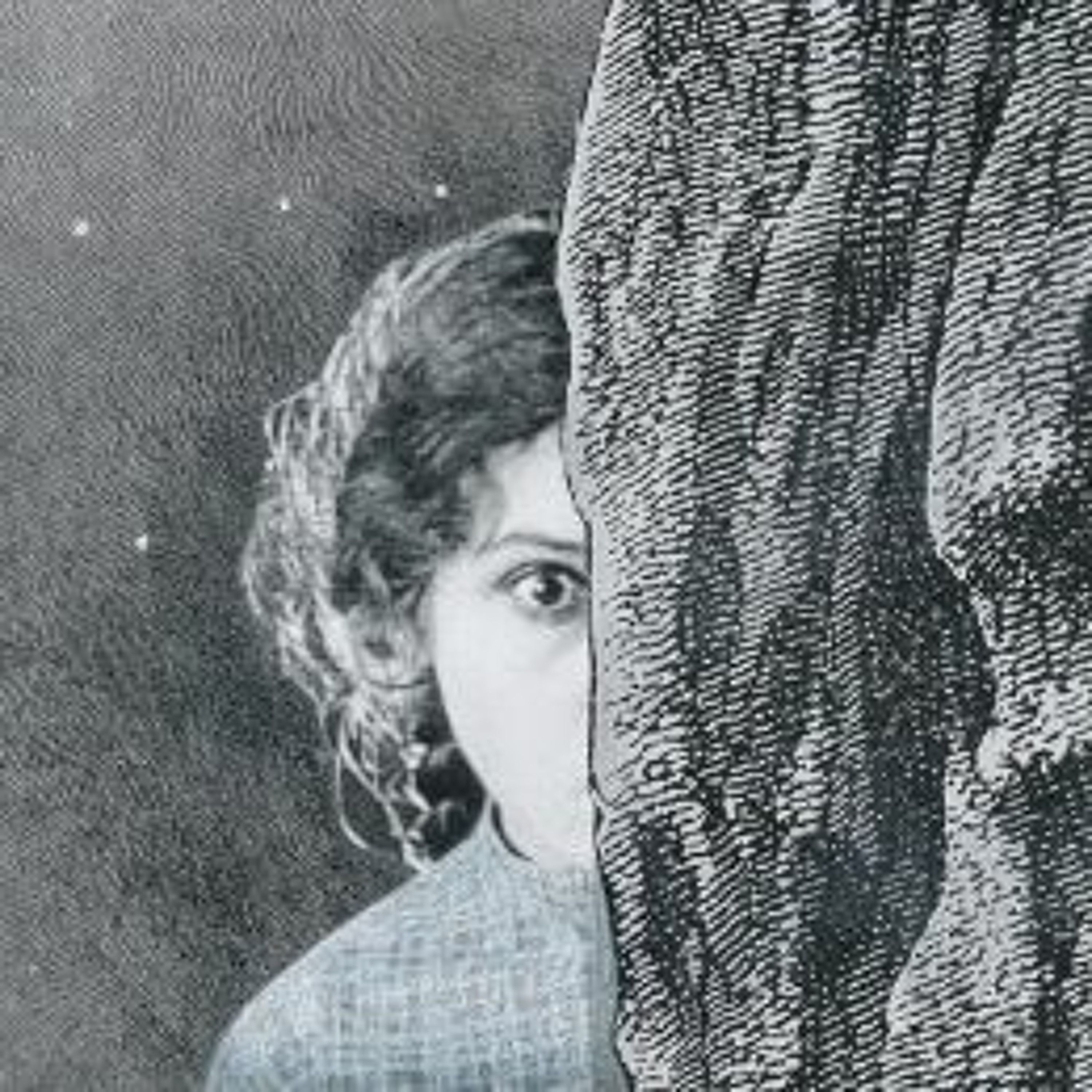
203. Night Hunter episode artwork

EPISODE · Feb 5, 2021 · 2 MIN

203. Night Hunter

from George Eastman Museum · host George Eastman Museum

This audio tour has been made possible in part by the National Endowment for the Humanities: NEH CARES. Any views, findings, conclusions, or recommendations expressed in this audio, do not necessarily represent those of the NEH. Transcript The second film in the trilogy is Night Hunter. After I completed Phantom Canyon I knew I wanted to continue working with collages, but I was looking for a way to add psychological complexity to the characterizations. I had admired a performance by Lillian Gish in the D.W. Griffith film Broken Blossoms from 1919. Her portrayal of an abused child is quite staggering and vividly emotional. I thought I might be able to lift her from the scenes in that film and bring her into my own world. I began to cut her out of printed film frames and collage her into a mysterious house with a snake and confounding eggs where she is very much alone. I used fragments of 19th century Pre-Raphaelite illustrations to construct the collages. I ended up incorporating images from 4 of her silent-era films. Night Hunter explores a loss of control, heightened emotions, and maternal impulses. Gish expresses all of those magnificently. I create my films intuitively and don’t plan ahead. I’m inspired by Surrealist techniques, particularly those employed by women like Remedios Vara, Leonora Carrington and Frida Kahlo. Like them, my working process is organic and allows the unconscious to play a role. I am looking for a poetic alignment of elements, not a rational one. My films bring incongruous or unexpected objects into a pre-existing film frame or a newly assembled collage. Overtime, I’ve learned that these unanticipated conjunctions of actors and print elements create a kind of visual, energetic charge. I decided to create Night Hunter House following on an opportunity to premiere the film Night Hunter at the Denver Art Museum. While I was constructing the film, I had the idea that it would be interesting to try to create a sculptural facsimile of the house where the film is set, with its many mysterious rooms. I worked with an architect friend, Mark Sofield , and we designed a 10 room miniature house with a video screen in each room. Michael Schliske finalized and fabricated the piece. As you move around the house and look into the windows, you can watch nearly all of the film in discreet loops. Along with the media, each room contains an assortment of miniature objects I placed there that parallel the action in the loop. I love using miniatures and I think the enactment of voyeurism as we gaze through the windows opens up the scope of film. I find the intersection of sculptural object and media help draw the viewer into the fantasy realm of the film and place the two elements in conversation with one another.

This audio tour has been made possible in part by the National Endowment for the Humanities: NEH CARES. Any views, findings, conclusions, or recommendations expressed in this audio, do not necessarily represent those of the NEH. Transcript The second film in the trilogy is Night Hunter. After I completed Phantom Canyon I knew I wanted to continue working with collages, but I was looking for a way to add psychological complexity to the characterizations. I had admired a performance by Lillian Gish in the D.W. Griffith film Broken Blossoms from 1919. Her portrayal of an abused child is quite staggering and vividly emotional. I thought I might be able to lift her from the scenes in that film and bring her into my own world. I began to cut her out of printed film frames and collage her into a mysterious house with a snake and confounding eggs where she is very much alone. I used fragments of 19th century Pre-Raphaelite illustrations to construct the collages. I ended up incorporating images from 4 of her silent-era films. Night Hunter explores a loss of control, heightened emotions, and maternal impulses. Gish expresses all of those magnificently. I create my films intuitively and don’t plan ahead. I’m inspired by Surrealist techniques, particularly those employed by women like Remedios Vara, Leonora Carrington and Frida Kahlo. Like them, my working process is organic and allows the unconscious to play a role. I am looking for a poetic alignment of elements, not a rational one. My films bring incongruous or unexpected objects into a pre-existing film frame or a newly assembled collage. Overtime, I’ve learned that these unanticipated conjunctions of actors and print elements create a kind of visual, energetic charge. I decided to create Night Hunter House following on an opportunity to premiere the film Night Hunter at the Denver Art Museum. While I was constructing the film, I had the idea that it would be interesting to try to create a sculptural facsimile of the house where the film is set, with its many mysterious rooms. I worked with an architect friend, Mark Sofield , and we designed a 10 room miniature house with a video screen in each room. Michael Schliske finalized and fabricated the piece. As you move around the house and look into the windows, you can watch nearly all of the film in discreet loops. Along with the media, each room contains an assortment of miniature objects I placed there that parallel the action in the loop. I love using miniatures and I think the enactment of voyeurism as we gaze through the windows opens up the scope of film. I find the intersection of sculptural object and media help draw the viewer into the fantasy realm of the film and place the two elements in conversation with one another.

NOW PLAYING

203. Night Hunter

0:00 2:49

No transcript for this episode yet

We transcribe on demand. Request one and we'll notify you when it's ready — usually under 10 minutes.

PMA: Sculpture Garden - Art Tours Philadelphia Museum of Art The Sculpture,Garden presents a superb and versatile outdoor setting for the appreciation of art, offering a lively experience of sculpture for both the casual passerby and devoted art lovers. Gracefully integrated into the existing landscape, the Sculpture,Garden extends the Museum’s vast galleries to the outdoors while strengthening the Museum’s connections to the city and Fairmount Park. Its pathways and vistas, green space, and water feature create a variety of spaces for art while maintaining an open setting that invites Philadelphia’s public to explore a new expression of the Museum’s goal to make more art available to an ever-growing audience. Song Against Songs, The by G. K. Chesterton (1874 - 1936) LibriVox LibriVox volunteers bring you 9 recordings of The Song Against Songs by G. K. Chesterton. This was the Fortnightly Poetry project for October 16, 2011.Chesterton was a large man, standing 6 feet 4 inches (1.93 m) and weighing around 21 stone (130 kg; 290 lb). His girth gave rise to a famous anecdote. During World War I a lady in London asked why he was not 'out at the Front'; he replied, 'If you go round to the side, you will see that I am.' On another occasion he remarked to his friend George Bernard Shaw: "To look at you, anyone would think a famine had struck England". Shaw retorted, "To look at you, anyone would think you have caused it". P. G. Wodehouse once described a very loud crash as "a sound like Chesterton falling onto a sheet of tin."( Summary from Wikipedia ) Talks Hirshhorn Museum and Sculpture Garden Browse through our selection of lectures and talks by Friday Gallery Talks, In Conversation, and Meet the Artist. Brochures Hirshhorn Museum and Sculpture Garden Read through brochures of Exhibits and individual artists' works from the past and present exhibitions at the Hirshhorn.

Frequently Asked Questions

How long is this episode of George Eastman Museum?

This episode is 2 minutes long.

When was this George Eastman Museum episode published?

This episode was published on February 5, 2021.

What is this episode about?

This audio tour has been made possible in part by the National Endowment for the Humanities: NEH CARES. Any views, findings, conclusions, or recommendations expressed in this audio, do not necessarily represent those of the NEH. Transcript The...

Can I download this George Eastman Museum episode?

Yes, you can download this episode by clicking the download button on the episode player, or subscribe to the podcast in your preferred podcast app for automatic downloads.
URL copied to clipboard!