
EPISODE · Feb 27, 2026 · 33 MIN
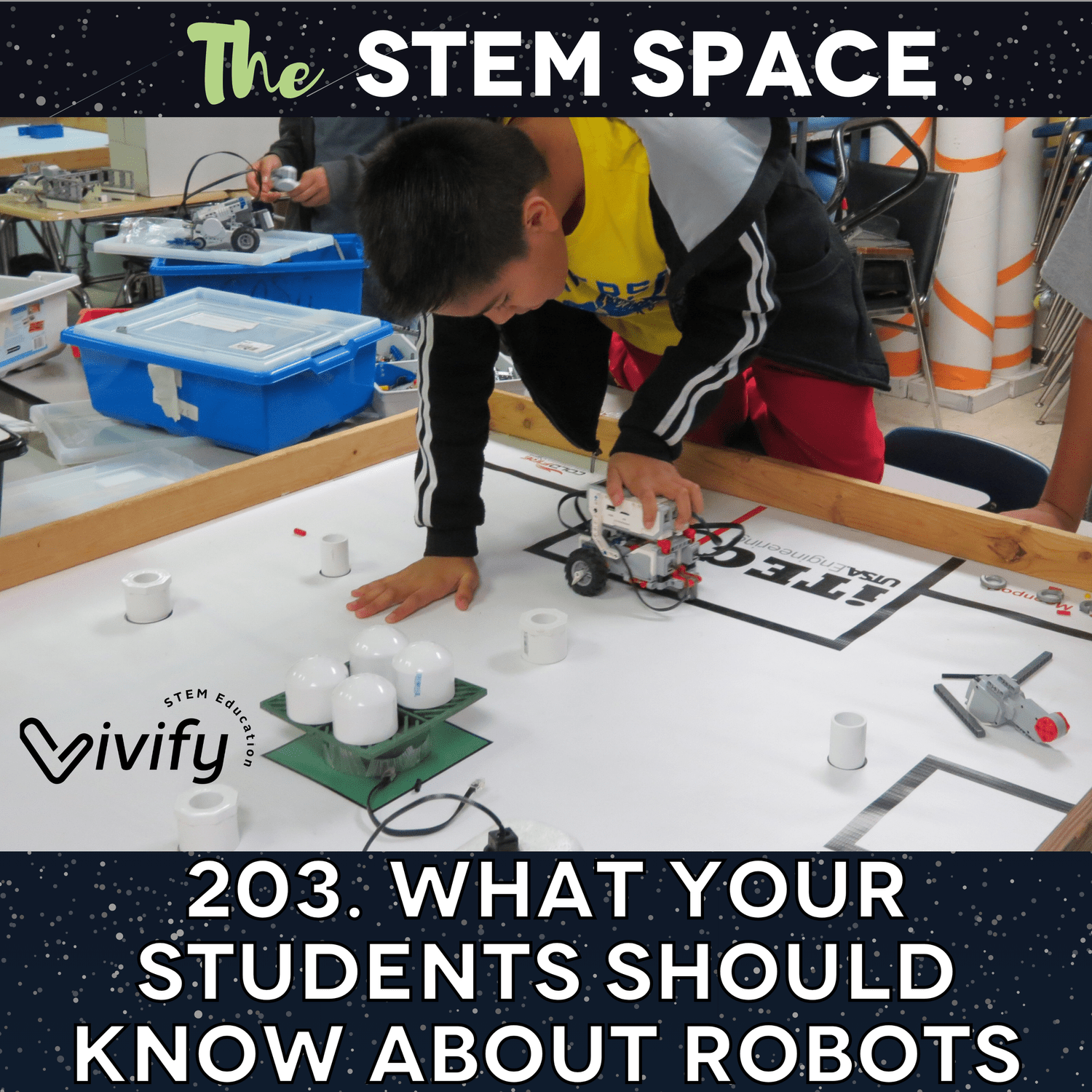
203. What Your Students Should Know About Robots
from The STEM Space · host Vivify STEM
Show Summary:In this episode, Natasha and Claire explore the fascinating world of robots and robotics—from the driver’s seat of their Tesla cars to the competition floor of First In Texas robotics. Natasha shares firsthand insights from her work in competitive robotics, while both hosts reflect on how robotics is already shaping our everyday lives.You’ll also hear the inspiring story of George Devol, the inventor who helped launch the modern robotics industry, and why his legacy still matters today. The conversation dives into how and when students should be introduced to robotics, practical ways to spark curiosity, and why robotics education is more important than ever in preparing the next generation for a rapidly evolving world.Plus, the episode wraps with exciting recent feats in STEM that highlight just how fast innovation is moving.Whether you're an educator, parent, tech enthusiast, or just robot-curious, this episode offers insight, inspiration, and a glimpse into the future.ENGINEER SPOTLIGHT: George Devol (1912-2011) was an American inventor who helped start the modern robotics industry. George, fascinated by circuits and mechanics, loved experimenting with electronics and machines. In 1954, he patented the first programmable robotic arm, a machine that could move objects automatically by following coded instructions. Working with engineer Joseph Engelberger, he built Unimate, the world’s first industrial robot. In 1961, it was put to work in a car factory, handling hot metal parts and doing dangerous jobs that once put people at risk. Devol’s invention changed manufacturing forever and helped pave the way for the robots we use today.Links from the Show:Related The STEM Space Podcast Episodes 105. Explaining the 3 Stages of STEM132. The Focus of an Engineering Design CompetitionVivify STEM Blog Posts Not all STEM is Equal: 3 Stages of STEM EducationHow to Teach STEM Through A Story5 Tips for Teaching STEM With RobotsHour of Code Resources + Unplugged Coding ActivityVivify STEM LessonsFREE! - Featured Engineer Lesson: George DevolRobot Hand Design ChallengeSimple Machines STEM: Levers - Operation: Secret LeverDesign a Pneumatic Device Middle School STEM Unit | Engineering Our CosmosIntro to Coding: Unplugged STEM ActivityAstro-Rover Space Science & Engineering Design UnitOther STEM ResourcesFIRST® LEGO® LeagueFIRST® Tech ChallengeFIRST® Robotics CompetitionNASA Robotics Alliance ProjectNASA Space Vehicle Mockup Facility (Building 9)Bee-BotOzobot Evo Entry KitHow to Teach STEMIn STEM NewsPerseverance and AI!NASA’s Perseverance rover has achieved a major milestone on Mars by navigating with routes planned by artificial intelligence rather than human drivers. Using a vision-based AI system, the rover analyzed terrain images, spotted hazards like rocks and sand ripples, and mapped out its own safe path.Do cows have the smarts to use tools? Read more about this fascinating study and use this free accompanying lesson plan from the New York Times!New Dinosaur Species found!Scientists have discovered a new species of massive predatory dinosaur in Niger’s Sahara Desert: Spinosaurus mirabilis. It is only the second known Spinosaurus species and features a striking 20-inch, sword-shaped head crest likely used for display.Eat pecans! A new review published in Nutrients finds strong evidence that pecans support heart health, particularly by improving cholesterol and other blood lipid markers.THE STEM SPACE SHOWNOTESTHE STEM SPACE FACEBOOK GROUPVIVIFY INSTAGRAMVIVIFY FACEBOOKVIVIFY XVIVIFY TIKTOKVIVIFY YOUTUBE
Embed this episode
What this episode covers
In this episode, Natasha and Claire explore the fascinating world of robots and robotics—from the driver’s seat of their Tesla cars to the competition floor of First In Texas robotics. Natasha shares firsthand insights from her work in competitive robotics, while both hosts reflect on how robotics is already shaping our everyday lives. You’ll also hear the inspiring story of George Devol, the inventor who helped launch the modern robotics industry, and why his legacy still matters today. The conversation dives into how and when students should be introduced to robotics, practical ways to spark curiosity, and why robotics education is more important than ever in preparing the next generation for a rapidly evolving world. Plus, the episode wraps with exciting recent feats in STEM that highlight just how fast innovation is moving. Whether you're an educator, parent, tech enthusiast, or just robot-curious, this episode offers insight, inspiration, and a glimpse into the future. ENGINEER SPOTLIGHT: George Devol (1912-2011) was an American inventor who helped start the modern robotics industry. George, fascinated by circuits and mechanics, loved experimenting with electronics and machines. In 1954, he patented the first programmable robotic arm, a machine that could move objects automatically by following coded instructions. Working with engineer Joseph Engelberger, he built Unimate, the world’s first industrial robot. In 1961, it was put to work in a car factory, handling hot metal parts and doing dangerous jobs that once put people at risk. Devol’s invention changed manufacturing forever and helped pave the way for the robots we use today.
Ready to play
203. What Your Students Should Know About Robots
No transcript for this episode yet
Similar Episodes
No similar episodes found.
Similar Podcasts
No similar podcasts found.