
EPISODE · Aug 21, 2026 · 28 MIN
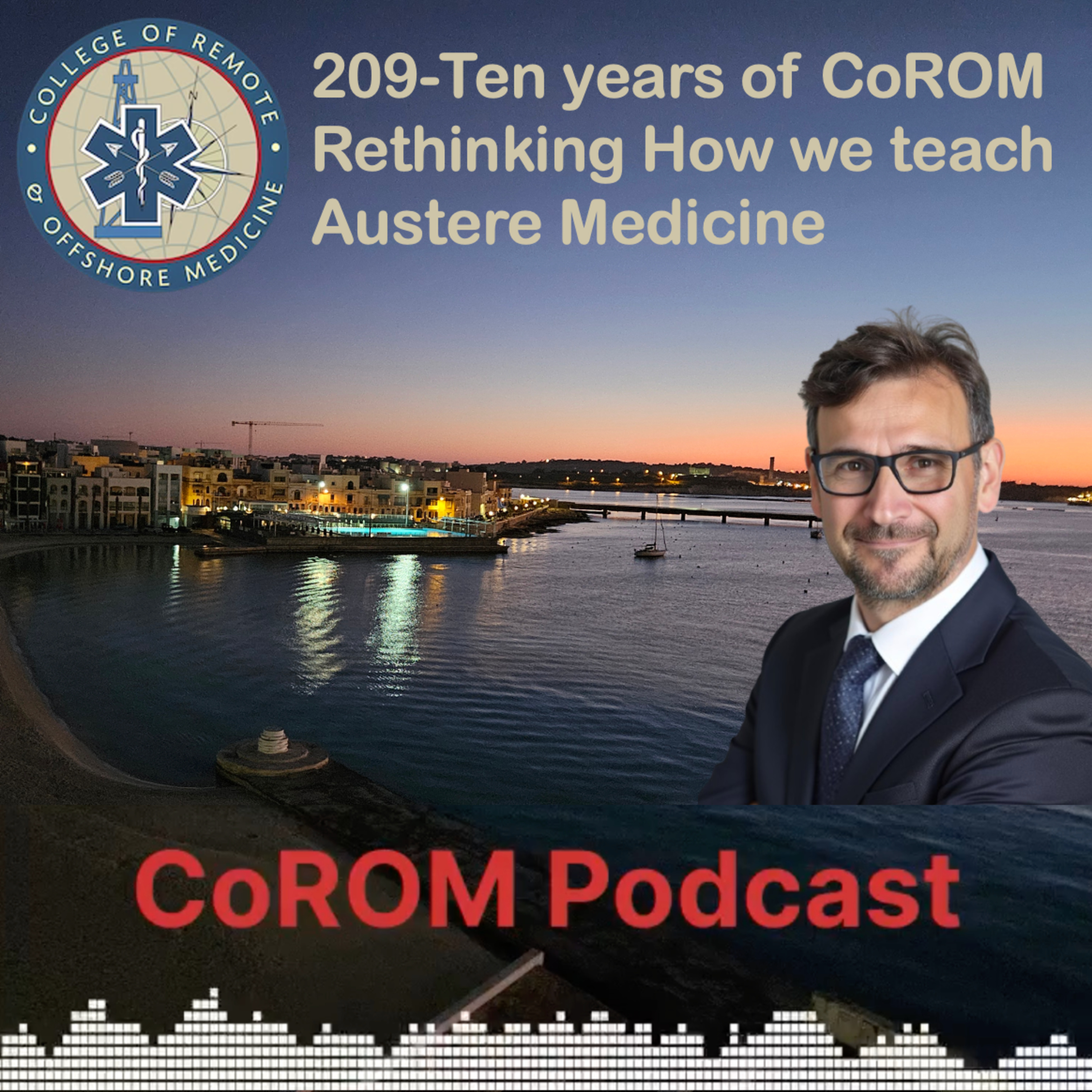
209-Ten years of CoROM Rethinking How We Teach Austere Medicine
from CoROM cast. Wilderness, Austere, Remote and Resource-limited Medicine. · host College of Remote and Offshore Medicine
Aebhric O'Kelly is joined by Dr Csaba Dioszeghy, CoROM co-founder and CEO, critical care and emergency medicine consultant, cardiologist, and experienced prehospital clinician.The conversation explores what makes education for remote and austere clinicians fundamentally different from conventional medical education. CoROM students work across the world in military, humanitarian, offshore and other resource-limited environments. Csaba discusses why education needs to adapt to these clinicians rather than expecting their professional lives to conform to a traditional university model.A major theme is listening to students. Aebhric and Csaba discuss how student feedback has directly influenced CoROM's curriculum, facilities, administration and teaching methods — including significant changes being introduced for the new academic year.They also discuss the redevelopment of the MSc in Austere Critical Care, including more interactive online learning, greater flexibility for students who cannot travel to Malta, and expanded opportunities for practical education. The discussion considers an important question for modern medical education: how much of postgraduate austere medicine can genuinely be taught online, and what still requires hands-on experience?Chapters00:00 – Welcome to Season 5A new academic year, a new podcast season and the changing face of CoROM.00:38 – CoROM's Next ChapterCsaba's role as CEO, consolidating a decade of growth and the College's ambitions for the future.03:02 – What Makes CoROM Different?Building flexible education for clinicians working across military, humanitarian, offshore and resource-limited environments.06:52 – Listening to Our StudentsHow student feedback directly influences curriculum, facilities and the way CoROM teaches.09:23 – Changing the Practical CurriculumRevamping classroom education, investing in facilities and placing greater emphasis on hands-on learning.11:34 – Rebuilding the MSc in Austere Critical CareNew modules, interactive education and moving beyond traditional recorded online lectures.13:07 – Can You Teach Austere Critical Care Online?Accessibility, international students and why the redesigned MSc can now be completed without compulsory travel to Malta.18:01 – Improving Support for Online StudentsHuman faculty support, central administration and improving communication with students.19:54 – Building a Better Student Information SystemModernising the administrative infrastructure behind a growing international College.21:02 – Building the CoROM CommunityThe future of CoROM's membership structure and strengthening the wider professional community.23:05 – The CoROM Digital LibraryBuilding offline access to field guides, publications and educational resources.25:41 – A New Digital and Physical CoROMNew content, facilities, Moodle, equipment and the systems being developed for the new academic year.28:05 – Quality Assurance and the Future of CoROMInstitutional review, reaccreditation and the longer-term direction of the College.29:33 – More Hands-On, Less PowerPointUpdating the BSc and MSc programmes and increasing practical learning when students come to Malta.32:17 – International PartnershipsGrowing educational, clinical and research relationships around the world.34:02 – Advice for the New Austere MedicWhat should a doctor, nurse or medic entering austere medicine concentrate on?35:00 – When Guidelines Don't Fit the EnvironmentWhy guidelines developed in well-resourced healthcare systems may not always translate directly into resource-limited care.36:02 – Your Brain Is Still a ResourceUnderstanding physiology, thinking beyond protocols, innovation and Csaba's final advice: be brave and don't give up.
Embed this episode
NOW PLAYING
209-Ten years of CoROM Rethinking How We Teach Austere Medicine
No transcript for this episode yet
Similar Episodes
No similar episodes found.
Similar Podcasts
No similar podcasts found.