
EPISODE · Mar 31, 2021 · 48 MIN
22: Theater Isn’t Just Entertainment—It’s a Cultural Organizing Tool for Saving Democracy
from ART IS CHANGE: Strategies & Skills for Activist Artists & Cultural Organizers
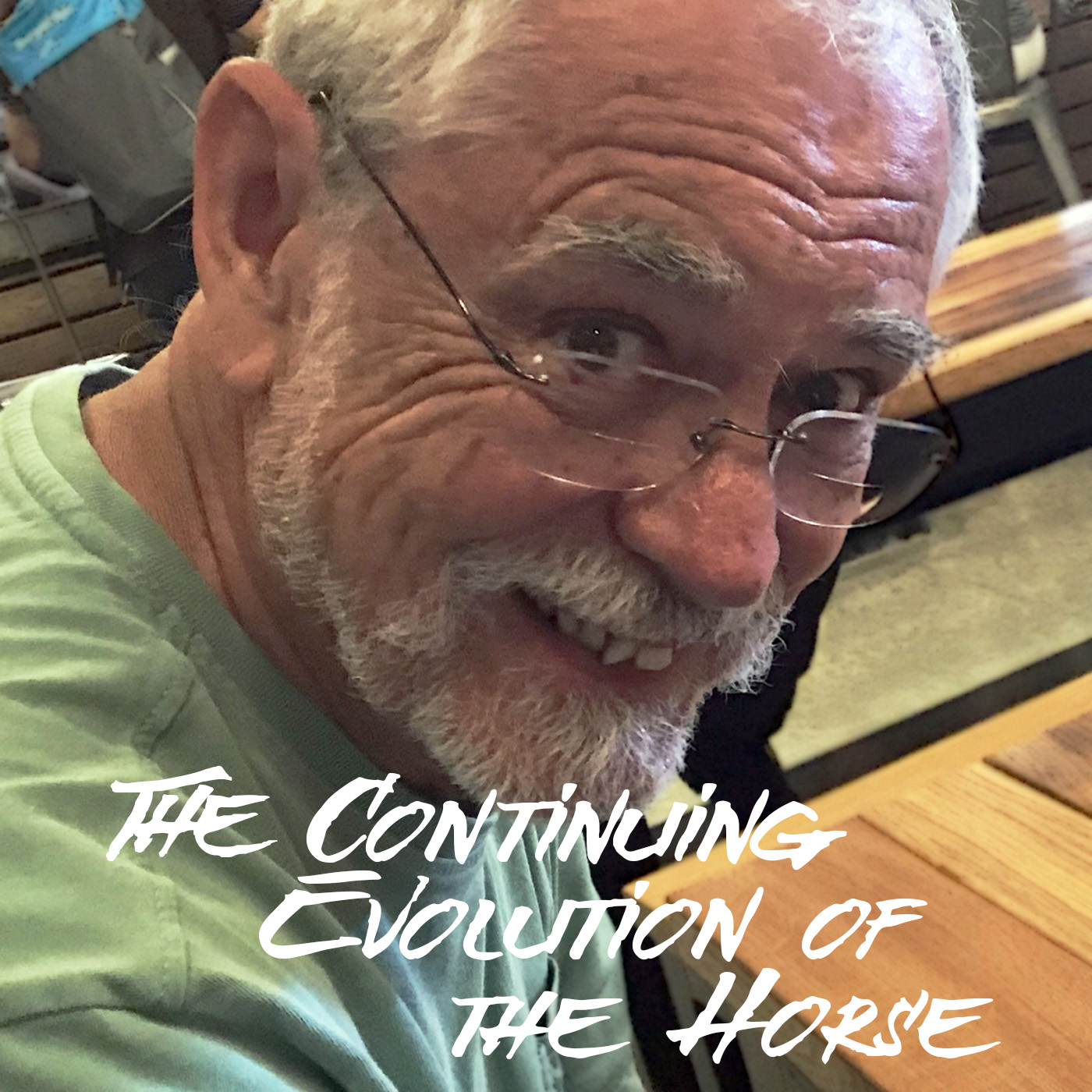
Episode 22: Bob Leonard - The Continuing Evolution of the HorseThreshold Questions and Delicious QuotesWhat is the artist's role in the altered and uncertain world we are entering?…there is a human, passion for justice, and it would seem that it's hard to get…as human beings, we rely on the stories that we tell each other to keep our sense of direction. I don't mean down a road, but where's North. … And we understand ourselves through our stories, and that includes that passion for justice. It's not an abstract, … They know when it's something is not just. ...And that struggle is enormously dependent on the stories that we tell ourselves about that, and artists are the people who do that.How has Alternate Roots manifested the struggle and evolution of American democracy?This was in the spirit of the times, both in terms of the, from my point of view, the American revolution continuing, but also the times were about finding out what democracy can do in the face of oppression. Whether we're talking about women's rights or civil rights or Vietnam war, there were a lot of people who were trying to figure out new ways of understanding the paradigm of democracy and democratic decision-making.So, we decided that the board was going to be everybody. It was not going to be representative governance. We were going to be a participatory governance, and what's absolutely really astonishing Bill, is that that still is the case. 45 years later, we have a board of 200 people, and it is functioning well. Is there a community arts, story telling aesthetic?And that can have all kinds of permutations and experimentations, with, with the aesthetic. Does it have to be told in a particular aesthetic? The commercial aesthetic of East Tennessee is Dolly Parton and the explosion of the stereotypes of a mountain people in East Tennessee, but that isn't necessarily the required aesthetic. You have to learn what the aesthetic is from the audience, as opposed to thinking what's the commercial version that will get the dollar. You're listening different things when you do that. There is what artists at Roots we're doing and have been doing that for now, for, several decades. And then roadside is a wonderful example of that.What does the evolution of the horse have to do with the art of possibility? I really liked the, the image of the horse, which in the age of the dinosaur, the horse was the size of a mouse. It was a tiny little creature and, things turned upside down. I don't know whether a comment hit the earth or something, but things turned upside down and the horse emerged over the course of a long time, and no one would have thought that little thing that might've been a sort of a shrew or a mole or something would become what the horse is.TranscriptBill Cleveland: You know, I like to think of all the people I've had the privilege to speak with on this podcast as threads of a massive woven story fabric. A vibrating weave of bright and colorful threads, with thick and thin fibers, warping, woofing, twisted and bound together. so strong and tight, that if you try to coax, to pull, to yank one from another that whole thing will lock tight, resisting all force because there is not one strand, not one story that is not held by the rest.Bob Leonard's story, today's story, is one of those caught up in that stubborn and infinite weave -- a crisscross of dialogue and music, lights and dancing, serendipity and surprise. Bound up with the layers of people and narratives that form the creative community fabric he’s fostered and served through his work In the theater of change.Bob and I have known each other forever, but I'll be damned if I can remember where it was that we actually met, maybe in Massachusetts, or DC, maybe at a Roots thing, maybe in a previous life. That said, this exchange held deep in the COVID swamps of 2020 allowed us to add yet another chapter to the conversation that we started way back then, wherever and whenever that was. I think I can speak for both of us when I say that we're happy you will be joining us.This is Change The story Change the World, A Chronicle of Art and Community Transformation. I'm Bill Cleveland. Part One: Duck Fat, Dirt, and StumpsBC: Mr. Leonard, I have had the enormous privilege of connecting with many of my colleagues in this way over the past year, and every single time, all different twists and turns and stories and anecdotes and perceptions about the world show up that are marvelously surprising and energizing. I have an incredible sort of festival of rejoicing over the people I'm privileged to work with, and you're one of them.So let me begin by asking you the simplest, most complex question, which is just describe, what you do in the world. What's your gig? Bob Leonard: I think I, make theater, to bring people together. I like bringing people together, and theater is a means to do that in a funny sort of way. I've gotten myself into a full haul, a long life of making theater. The processes and the making of the theater, seem to me to be needing to be grounded in the drawing together of people in in a place where they could hear each other and where they could. Here someone else.BC: And so, when you do that, what makes it worthwhile a good thing? BL: Well, sometimes people erupt into a kind of, tangible, shared emotional moment or series of moments, and can get up and sing and dance together without anybody telling them what to do, or how to do it, or why they should do it. They just… it happens.People […] in some simple level, people laugh together. That's a moment of breath breathing together. That's important in our human experience. So that's in the constructs of telling a story to get people to laugh and cry together, but there's also the breaking beyond the story. One of the great times in my life was a moment when the show finished, and the audience got up on the stage and danced. There was a transferal of the event into the people who were there, and it was just the celebration. That's in a kind of an immediate thing. I think about getting people together, in longer frames than just have a night. I've been working for a long time with the, ideas that came forward with a group of people to make Alternate Roots. And the coming together, when you do it right there is not about the momentary. It's about how an idea of, justice and, and, cooperative human, relationship can grow, and go through challenges that we didn't anticipate, or we might've anticipated, but thought we could duck and then found out we can't duck.BC: So, Bob. You’ve been un-ducking these hard issues. Are questions for most of your life through theater? How did you come to this life path? BL: I, played making characters with my friends when I was in grade school and younger. I'd like to put a towel on my head and parade around as a kind of circus character. We practiced, pratfalls, and telling stupid jokes to each other. So, there was something in me about performing that I really did. That's just something I was into.When I was in high school, my high school did one play a year. It was always the same play. It was, The Man Who Came to Dinner, and I was in a boy’s school, and The Man Who Came to Dinner was done in a very carefully arranged partnership with the local girl’s school. And so, I wanted to be in the school play, but it was only for the seniors. So, I went through three years waiting to be in the school, play in my senior year they decided not to do that anymore.I didn't get to be in the play, and I went away to summer work, down on Cape Cod, and I got a job washing pots in a fancy restaurant with 10 dozen ducks in big baking pans that I had to scrape every night. I was the only pot washer, and it was always a stack of pots by the time I get in of an evening, that was almost as tall as I was, and that's what I did all night long. It was pretty ugly work.But it turns out that the wait staff and bus staff were all going to a music school. I think it was the, Massachusetts Conservatory of Music. But the students got a job to be at the waitstaff in this restaurant, and they ran a musical review in the evenings, under the tent with a piano bar, and they asked if I wanted to audition. I said, you bet! I jumped on it. So, then my first experience. Actually, being on stage was with all these, undergrad pre professional, musical theater performers, putting on adapted musicals, adapted to Cape Cod, with the lyrics and we'd go out and sing hoofers and dance and so on and put this musical revue together while I was scraping duck shit, duck fat out of the pot, and it made it somewhat more worthwhile.BC: That's great.BL: And, yeah, that's what I. That's what I found myself doing, but it, I couldn't not do it. It was there and I was hungry for it. I had no sense of a career. I didn't think of it as a profession or anything. It was just what I had to do.BC: So, Bob was smitten. No, let's say bitten by the theater...
Embed this episode
What this episode covers
Bob Leonard's story is a crisscross of dialogue and music, lights and dancing, serendipity and surprise. Bound up with the layers of people and narratives that form the creative community fabric he’s fostered and served through his work In the theater of change.
Ready to play
22: Theater Isn’t Just Entertainment—It’s a Cultural Organizing Tool for Saving Democracy
No transcript for this episode yet
Similar Episodes
No similar episodes found.
Similar Podcasts
No similar podcasts found.