PodParley PodParley

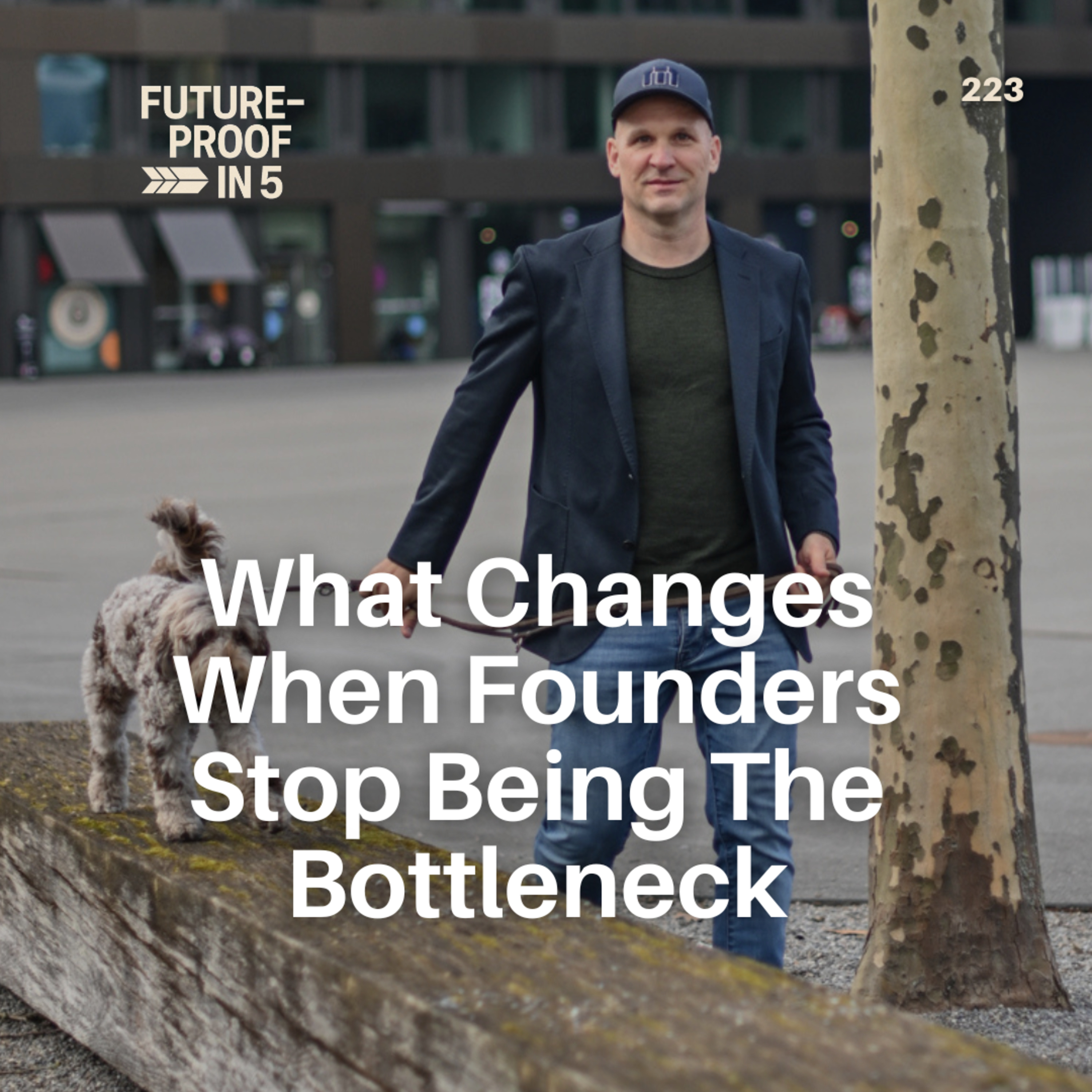
223 - What Changes When Founders Stop Being The Bottleneck

Episode 223 of the Future Proof in 5 by Marco Grüter podcast, hosted by Marco Grueter, titled "223 - What Changes When Founders Stop Being The Bottleneck" was published on February 26, 2026 and runs 1 minutes.

February 26, 2026 ·1m · Future Proof in 5 by Marco Grüter

0:00 / 0:00

Most founders believe their biggest problem is growth. It isn’t.Their biggest problem is structural dependency.In this episode, we explore a critical shift that separates a founder-led company from a founder-dependent one. The difference is subtle, but the consequences are massive.The Bottleneck TrapAt a certain stage, many businesses plateau emotionally before they plateau financially. Revenue might be growing. The team might be expanding. But internally, the founder feels trapped. Why?Because the company is designed around their involvement. Every key decision routes through them.Clients want access to them.The team escalates to them.Strategy depends on them.This creates a hidden fragility. The business cannot function without constant founder input. It is scalable in theory, but not transferable in reality.More Processes Is Not the AnswerWhen founders recognize this bottleneck, they often default to tactical solutions:Better project management toolsMore detailed SOPsHiring more senior talentDelegating more tasksThese actions help, but they do not solve the core issue.The real issue is architectural.Many founders unconsciously build businesses that require them. Their identity, control, and validation are woven into the operating system of the company.To remove the bottleneck, you must redesign the system so it no longer depends on you as the central node.Un-building Founder DependencyThe turning point comes when the founder stops asking, “How can I manage this better?” and starts asking, “How do I remove myself structurally?”This requires three deliberate shifts:From decision-maker to decision-architect. Instead of making decisions, you design the frameworks within which decisions are made.From problem-solver to capability-builder. Instead of solving issues, you build leaders who can solve them without escalation.From operator to owner. Instead of being needed daily, you become strategically involved at the right altitude.This transition is not comfortable. It often requires letting go of control, ego, and identity. It demands clarity in strategy, explicit operating principles, and disciplined system design.But when it works, everything changes.What Actually ChangesWhen founders stop being the bottleneck, Growth becomes more stable because it no longer depends on one person’s capacity.The team becomes more accountable because ownership is clearly distributed. The company becomes transferable because value is embedded in systems, not personalities. And most importantly, the founder gains freedom.Not just time off. But optionality.The ability to step away without collapse.The ability to scale without burnout.The ability to own a business instead of being owned by it.Freedom Is the Real KPIIn this episode, we challenge a common assumption: that success equals revenue.Revenue is a metric. Freedom is a structural outcome. If your company cannot operate without you, you do not own an asset. You own a job with complexity.The goal of a Future-Proof Business is different. It is built to be durable, transferable, and valuable   independent of the founder’s daily presence.The moment you stop being the bottleneck is the moment your company starts becoming an asset. And that changes everything.Highlights:00:00 Quick Story: The Burned-Out Founder at €3.2M Revenue00:16 The Real Fix: Stop Building a Business That Needs You00:32 Proof It Works: Three Weeks Offline, Business Still Growing00:49 The Shift: From Chasing Growth to Owning Your Freedom00:58 Invitation: The Executive Lab (8 Weeks) + Start Date & Spots01:08 Final Call to Action: Where to Learn MoreLinks:Website: https://www.marcogrueter.com/LinkedIn: https://www.linkedin.com/in/marcogrueter/

Most founders believe their biggest problem is growth. It isn’t.

Their biggest problem is structural dependency.

In this episode, we explore a critical shift that separates a founder-led company from a founder-dependent one. The difference is subtle, but the consequences are massive.

The Bottleneck Trap

At a certain stage, many businesses plateau emotionally before they plateau financially. Revenue might be growing. The team might be expanding. But internally, the founder feels trapped. Why?

Because the company is designed around their involvement. 

Every key decision routes through them.

Clients want access to them.

The team escalates to them.

Strategy depends on them.

This creates a hidden fragility. The business cannot function without constant founder input. It is scalable in theory, but not transferable in reality.

More Processes Is Not the Answer

When founders recognize this bottleneck, they often default to tactical solutions:

  • Better project management tools

  • More detailed SOPs

  • Hiring more senior talent

  • Delegating more tasks

These actions help, but they do not solve the core issue.

The real issue is architectural.

Many founders unconsciously build businesses that require them. Their identity, control, and validation are woven into the operating system of the company.

To remove the bottleneck, you must redesign the system so it no longer depends on you as the central node.

Un-building Founder Dependency

The turning point comes when the founder stops asking, “How can I manage this better?” and starts asking, “How do I remove myself structurally?”

This requires three deliberate shifts:

  1. From decision-maker to decision-architect. Instead of making decisions, you design the frameworks within which decisions are made.

  2. From problem-solver to capability-builder. Instead of solving issues, you build leaders who can solve them without escalation.

  3. From operator to owner. Instead of being needed daily, you become strategically involved at the right altitude.

This transition is not comfortable. It often requires letting go of control, ego, and identity. It demands clarity in strategy, explicit operating principles, and disciplined system design.

But when it works, everything changes.

What Actually Changes

When founders stop being the bottleneck, Growth becomes more stable because it no longer depends on one person’s capacity.

The team becomes more accountable because ownership is clearly distributed. The company becomes transferable because value is embedded in systems, not personalities. And most importantly, the founder gains freedom.

Not just time off. But optionality.

The ability to step away without collapse.

The ability to scale without burnout.

The ability to own a business instead of being owned by it.

Freedom Is the Real KPI

In this episode, we challenge a common assumption: that success equals revenue.

Revenue is a metric. Freedom is a structural outcome. If your company cannot operate without you, you do not own an asset. You own a job with complexity.

The goal of a Future-Proof Business is different. It is built to be durable, transferable, and valuable   independent of the founder’s daily presence.

The moment you stop being the bottleneck is the moment your company starts becoming an asset. And that changes everything.

Highlights:

00:00 Quick Story: The Burned-Out Founder at €3.2M Revenue

00:16 The Real Fix: Stop Building a Business That Needs You

00:32 Proof It Works: Three Weeks Offline, Business Still Growing

00:49 The Shift: From Chasing Growth to Owning Your Freedom

00:58 Invitation: The Executive Lab (8 Weeks) + Start Date & Spots

01:08 Final Call to Action: Where to Learn More


Links:

Website: https://www.marcogrueter.com/

LinkedIn: https://www.linkedin.com/in/marcogrueter/


Getting Through This with Tom and Scott Tom Saunders The podcast that's 40 years in the making, because they're both procrastinators. Comedy writer Tom Saunders and political comedian Scott Blakeman help you navigate The New Normal, which is The Old Normal for them, since their comedy careers already require that they spend huge amounts of time at home. Their show peers back into the past, stares unflinchingly at the present, and imagines a more hopeful future, with flights of fancy and many tangents as well. Microsoft Innovation Podcast Mark Smith [nz365guy] If you want to get your ideas or questions featured on an episode, please leave us a voicemail: https://www.microsoftinnovationpodcast.com/voicemail/Dive into the future of work with the "Microsoft Innovation Podcast," exploring the intersection of People, Business, Technology, and AI.  Engage with expert guests—including thought leaders from Microsoft, industry innovators, and community specialists—who are redefining the world with advancements in AI, Cloud technologies, the Power Platform, Dynamics 365, and beyond.Every episode delivers a blend of in-depth discussions, practical insights, and actionable strategies tailored for professionals driving enablement and innovation. Join us across our six shows:The Power Platform ShowThe MVP ShowThe Copilot ShowThe Ecosystems ShowThe AI AdvantageThe AI Unfilter SAATKORN Gero Hesse “Inspiring the Future of Work by Attitude and Worktech”: that's what SAATKORN stands for as a blog and podcast.Since its founding in 2009, more than 2,000 blog posts and 500 podcast episodes have been created—always with the aim of shedding light on the interface between people and technology in the context of work.WorkTech defines what is technologically possible. Attitude determines whether and how this translates into real impact. Intended Male Contraceptive Initiative Nearly 50% of pregnancies are unintended. Science has intended to get male contraceptives on the market for decades now. What’s happened? Why don’t we have The Pill for men yet?Intended covers male contraception, learning from the past, talking to the researchers of the present, and the users of the future.
URL copied to clipboard!