
EPISODE · Dec 23, 2025 · 15 MIN
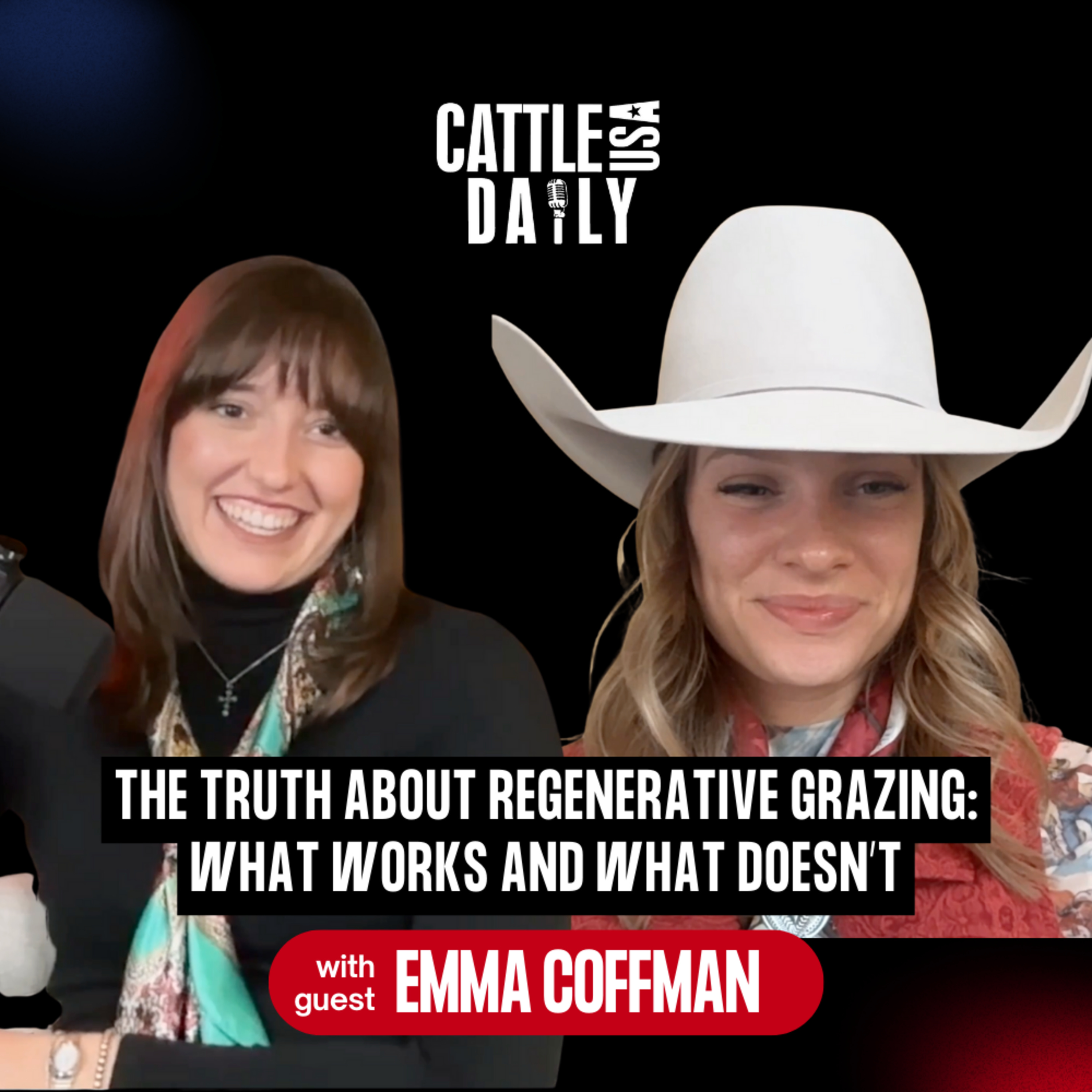
226: The Truth About Regenerative Grazing: What Works and What Doesn’t with Emma Coffman
from CattleUSA Daily · host Lauren Moylan | Cattle USA
Grazing management is one of the most misunderstood and most financially consequential parts of running a ranch. In this episode, Lauren Moylan and Emma Coffman break down what rotational and regenerative grazing actually mean, why overgrazing now can cripple your pastures for decades, and how to approach winter forage and spring planning with realistic, financially feasible steps. Emma shares what she has learned while traveling across the country studying grazing systems firsthand, why “start small” is the rule every rancher should follow, and how better grazing decisions today set the foundation for a healthier 2026—both for the land and the cattle.LinksEmma's Links - https://linktr.ee/doubleeranch CattleUSA Website - https://www.cattleusa.com/ Facebook - https://www.facebook.com/cattleusamedia Instagram - https://www.instagram.com/cattleusa.media/ Subscribe to our newsletter - https://www.cattleusadrive.com/ CattleUSA Media - https://www.cattleusamedia.com/ Lauren’s Instagram - https://www.instagram.com/_laurenmoylan/ Lauren’s Youtube - https://www.youtube.com/@Showboatmediaco The Next Generation Podcast Website - https://www.thenextgenag.com/Takeaways• Regenerative grazing isn’t a trend—it’s simply managing grass based on science and region, not social media opinions.• The biggest rule producers miss: start small and make changes that match your finances and landscape.• Leaving 2–3 inches of stubble is critical for regrowth; bare-ground grazing delays recovery for years.• Overgrazing today can create problems that last decades, especially in drought-prone regions like Kansas and Texas.• Pastures need rest, hoof traffic, and sunlight access—not continuous grazing.• Virtual fencing, poly wire, or simple smaller paddocks can dramatically improve rest and rotation.• Many ranches struggle because they try to change everything at once; sustainable grazing requires incremental adjustments.• True “low-input” systems rely on healthy soil first, not more supplements or chemicals.• Regional experts (NRCS, Noble Research Institute, Center for Grazing Lands and Ranch Management) are far more reliable than online fads.• Flexibility matters: grazing systems must adjust year to year, season to season, and drought to drought.Chapters00:00 Why Winter Grazing Decisions Shape the Entire Next Year01:07 What Rotational and Regenerative Grazing Actually Are (Not the Buzzword Version)03:43 Starting Small: The Financially Smart Way to Change Grazing Practices05:35 Overgrazing Consequences: Why One Bad Season Can Damage Land for Decades07:26 Lessons From Across the Country: What Emma Saw on Real Ranches09:45 Using Experts, Data, and Forage Testing Instead of Social Media Advice11:03 Setting Up Pastures for 2026: Rest, Recovery, and Realistic Adjustments14:57 Final Takeaways and Where to Find More Grazing Resourceswinter forage, rotational grazing, regenerative grazing, grazing management, pasture recovery, drought management, forage testing, stocking decisions, soil health, ranch profitability, low-input ranching, grazing systems, NRCS, Noble Research Institute, Center for Grazing Lands and Ranch Management
Embed this episode
NOW PLAYING
226: The Truth About Regenerative Grazing: What Works and What Doesn’t with Emma Coffman
No transcript for this episode yet
Similar Episodes
No similar episodes found.
Similar Podcasts
No similar podcasts found.