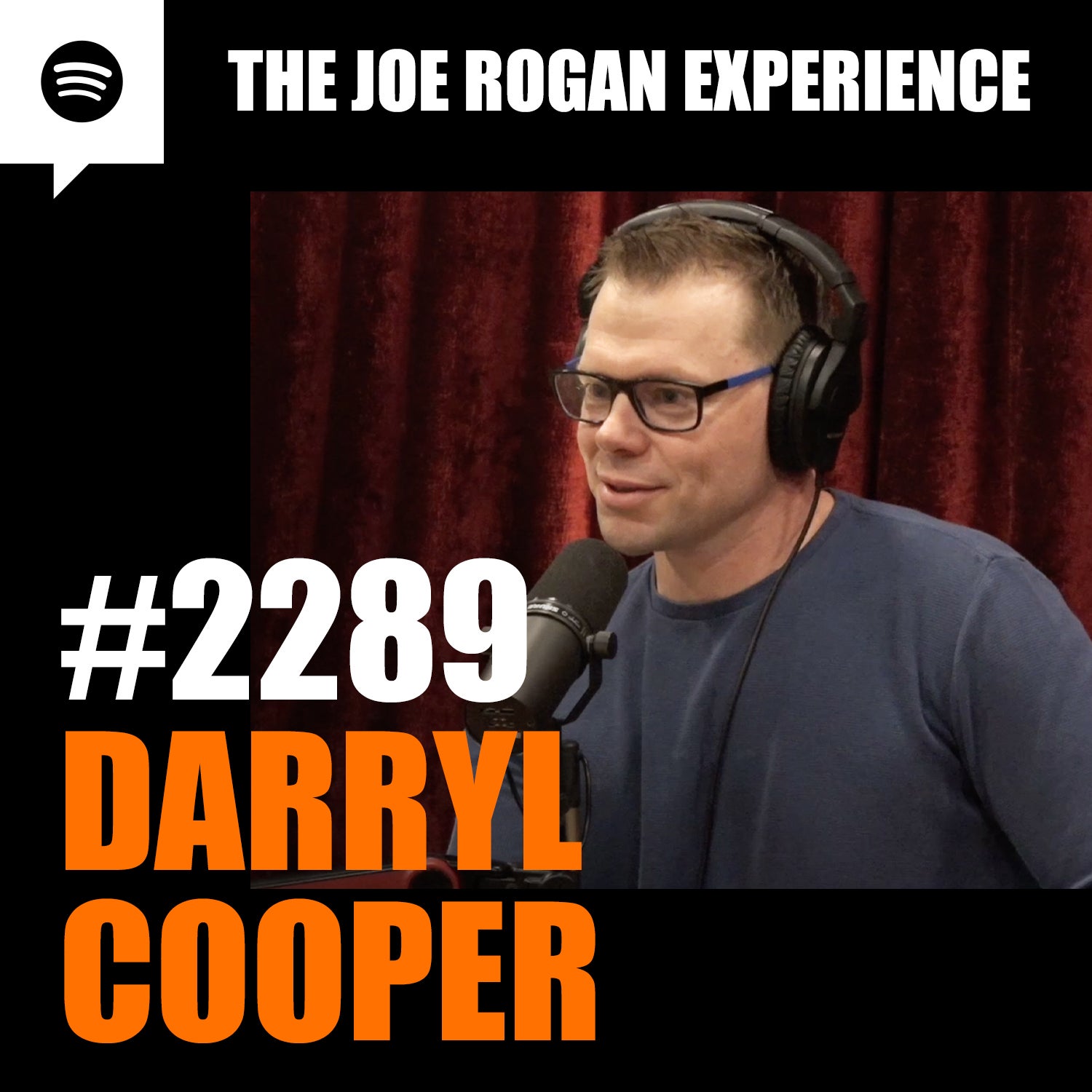
The Joe Rogan experience Train by day Joe Rogan podcast by night all day The guys today, I think they're the highest level fighters of the whole time we run Hey Darrell, let's go on man. That's a good one. We were just talking UFC. Yeah I think this is the we're talking about how exciting the ankle I of and perarified was even though people didn't they didn't like it Because it wasn't like some crazy result in a giant knockout like you get in most perarifieds But it was so technical and act alive just did a fantastic job of shutting down the scariest guy in the division Yeah, I just and the psychological aspect of it I've just he made him back up and second guess himself And you know that's you can't just do that by being aggressive You know you really got to get in there and you got to hurt him a little bit You just have to put that on him and it was amazing to watch that was a great fight Well, it was so interesting because the consequences of exchanging a prayer are so high But also uncle I have uncle is knocked a lot of people out We always look at prayer is knockouts But uncle has knocked out some of the best guys in the division and he only lost one time and that was Paul Craig has the nastiest fucking triangle It's so sneaky and so quick and you don't expect it He's so high level off his back and he caught him I think was like one second to go in the third round a fight that he was losing Yeah, you he broke Jamal's arm or his elbow to he's one of those guys like a You know like Ryan Hall, it's like, you know, they're on the feet dancing around It's like, you know, what do we really watch in here kind of but man as soon as they hit the ground Yeah, there's a giant disparity between his stand up, which is good his good stand up You know and the bow nickel fight was entirely stand up.
It was a good fight You know, he was he looked good on the feet But you would never say you know, there's like an Israel out of Sonya type character doesn't have that level proficiency with striking But God when he gets on his back, you're in such danger like nobody else in the division It's weird because most guys you're on their back. You're not really worried about it with Paul Craig Everything has to be tight, especially guys that size Yeah, it is often no you don't especially in an arrow when you know the off your back Jujitsu is kind of I don't want to say like, you know, they figured out the game on that yet But you know, it's not quite to that level You still have your craigs and all the various people like that who really are dangerous off their back But it's it's not as common anymore You know, well, it's really hard to do and also most people don't want to be on their back So they don't even practice off their back and the common thought amongst coaches is when you're on your back There's two minutes to go you're probably not gonna pull a submission off You got a constant getting back up to your feet minimizing whatever scoring your opponent's done Why taking you down and whatever shots they've landed mitigate those as much as possible and get to the fees quickly as possible Yeah, that's what everybody's trying to do now, especially in a three-round fight I mean, it's like, yeah, you let yourself get laid on for three minutes in the first round Nothing really happens, but you lost that round better win the second one Well, look at like the arm and sarukian fight if you if you think about that fight with Charles O'Lavera Charles O'Lavera caught him multiple times in like deep submissions Which I think should count for a lot which I thought if I looked at who won that fight I would say O'Lavera won that fight O'Lavera had him in deep trouble It was a very it was kind of a controversial opinion But I think a tightly locked triangle or a dar's choke or anything along those lines should be considered winning You're doing something very difficult to do your opponent doesn't want it to happen You've dominated a position to the point where you're you secured a submission and then this guy sneaks out with sweat and technique and fucking grit Yeah, but he was in fucking trouble. Oh, deep deep. Very endless.
Yeah. Oh definitely I'm a little biased on this one because I'm an adopted member of the Armenian community But yeah, but but it was a great fight. I'm a giant fan of Armenians Oh, you know what I love about so many great fighters in the UFC all the way back to Carl Parisian Then our median but just like the style of the people yeah, exactly the thing I love about him is Armenians love being Armenian Yes, it's just it's great to be around. I love it.
Yeah, very friendly people to um So this podcast like there's pocket I never say who's coming on the podcast I just like put it out there like everybody knew that Trump was coming on and there's been a couple times people knew that I was interviewing people for the most part I just like to do it have the conversation and then put it out But you put it on Twitter that you were coming on and then the campaign began well I put it on my sub stack behind the panel apparently some of my enemies You know pay me five bucks a month to follow my sub I saw what happened with you on the Tucker Carlson thing And I spoke about it almost immediately on the podcast when whenever I felt like it came up I don't remember how many days afterwards, but I've been listening a podcast for a long time and it's it's so charitable and comprehensive and so thorough and so you Put so much weight on the real lives and suffering of human beings on all sides of any conflict the regular people that didn't want to be dragged Into any war that find themselves on the front line the stories that you tell and the way you tell them is so comprehensive and so Again charitable like you the humanity of these people is so well expressed That your fans know you I'm a fan. I know you I know how you view things. I know how you portray things I know how honest you are about all aspects of conflict and against charitable as possible the way you lay this out So when I saw these attacks on you and when people were calling you an anti-semite and a Nazi apologist I was like good Lord. This is not gonna work on people who know him, you know I've been through that ringing before I know what that is but with you It's like all anyone needs to do and I encourage you if you're like I can't believe you had this guy on listen to fear and Losing in the new Jerusalem listen to it Just you don't even have listen the whole thing listen to the first hour of it And there's no fucking way the person who made that is anti-semitic in any way shape or form and that That's just one of the things that you've done that show that it's like the problem is when someone says something and They're trying to be hyperbolic or they're trying to get a reaction or you're shit talking or you post a meme online Or something like that like this bizarre culture We live in that wants to reduce people to the worst possible Interpretations of what they said or who they are and to ignore everything else but for one small tweet or one statement made in you know trying to be Trying to get a reaction trying to be outrageous Like it's a stupid thing that we do and as someone who values your show and listens to your show all the time I Don't fight it's not just stupid.
It's it's bizarre how many people fall for this kind of stupidity and I know how this whole thing works I guarantee you probably gained a bunch of fans and you probably gain a bunch of people who listen because most of the time when someone gets Discredited in the media or someone gets shamed a lot of people will immediately hop on board But a lot of other people will go well What is this guy saying like what is this about like what what's their content like and they if they listen to your show? They will realize like it's one of the very best long-form history podcasts that's available online It's fantastic. It's really good. So it's so unfortunate that There is there's these attack vectors that they could use to try to change perception of who you are But the fortunate aspect is there's so much of your work out there that anyone could just comb through and you know You're not hearing that side of it from any of these people any of these detractors No one's saying yet, you know, listen I listen to some of his stuff and you know Maybe you shouldn't have said what he said about Winston Churchill But I think he was just being hyperbolic and if you just listen to actually what he says about the whole conflict you kind of get understanding of who this guy is and So there's a lot of resistance to have a new on but I was like fuck that resistance I know what you actually do and so that's why we're well.
Thank you. I appreciate that Yeah, you know I mean the Tucker interview was I could have been clearer and what I was saying I'm not gonna like Explain what you said because you were talking about what you say to Jocko, right? Yeah, that's how it originally came because Jocko's wife's English right so Churchill's like a sacred figure in their pantheon And so I said that you know I maybe I'm being a little provocative here I like to provoke Jocko with my Churchill takes whatever but that's only part of it I'm very critical of Churchill's role in my opinion in turning The German invasion of Poland into the second world war basically, you know that you know, it's As I get older, you know, I posted something on X today that Somebody had posted a video the drone is going toward a Ukrainian or a Russian truck or something and it hits it and it doesn't blow up It's like boom boom and tries to doesn't blow up doesn't blow up and I was watching that thing I felt like that when it didn't blow up and the video ended I felt like this this really strong sense of relief that it didn't blow up, you know, and I what I posted it And I said you know as I get older like I just don't have the stomach for this kind of stuff anymore And I see something like that and like I don't care who's in the truck. I don't care if it's Russians I don't care if it's North Koreans or you're gonna be I just like I'm just glad that they're okay Like that's what I actually felt at the time, you know, and as I get older like that's just how I feel more and more about these things Like whether any any conflict is just like it's not like a young man's thought I guess but like I'm just I'm happy when they're over and they need like I mean the damage that they do to people and Not only to the people who were in it fighting but that it does to the societies and cultures that are involved in these things It does real damage to our spirit, you know, like you should go back to 04 when Abu Ghraib Expose they came out, you know Americans were horrified by that, right?
At least oh, you know, they saw those pictures But the thing that was interesting is that they were horrified Yeah, partly because like look how awful this is that they're doing to these people or something But you know for all they knew they knew these people were in prison They might have thought they were terrorists or something what people were really like feeling at the time was what are we doing to our people? What is you know, what are we putting them through that our people are being reduced to this, you know, and You know kind of the sad thing now is like I don't know if we would have the same reaction today I think the war on terror has sort of Decentatized us to a lot and hardened our hearts in ways that are not good for us And so when I do my podcast, you know whether I'm talking about the Israelis and Palestinians I did a long one on Jonestown seven episodes like 35 hours long and Whoever it is like my rule is that I don't record anything until I feel like I can put myself in the shoes of the people That I'm gonna talk about and really kind of understand how How their actions made sense to them with the information they had in the context of their time, you know I mean and so when you do something like that with the me-ligh massacre for example I did that with with that story the Jonestown one I mean Jonestown you're talking about like this raving lunatic who took a bunch of people out into the jungle and they all committed suicide So, you know putting your it's very tempting very easy to just write off any responsibility to understand what was happening there Because you're like well, we know what's happening these people were nuts, you know But the thing is like if you really think about the consequences of taking the wrong lessons from things like that You know the the the response that we that the federal government had to the wake of a standoff in the early 90s was very much informed By the way people thought about Jonestown, which is that you know, we'd like this go on too long The problem wasn't that you know that maybe we have this this paranoid group of radicals out here that you know Maybe we shouldn't have done so much to feed into that paranoia We need to ease these people out of it and try to deescalate instead We should have we could have prevented it if only we'd have gone in hard right at the beginning and taken this guy out And so then you get wait though, you know And so there were real world consequences to taking the wrong lessons from these things and really just kind of forgetting that it doesn't I mean look you may have like your Jeffrey Dommers or something out there that are an exception to this rule But they are the exception that proves the rule it doesn't matter who you're talking about you'll be talking about Uday Hussein, you know Saddam's son just a sadistic monster of a human being But you know that kid was a three-year-old at one point or that guy was a three-year-old kid at one point who did not like It's not like he was waiting in line in the spirit world before he was born and they're like who wants to be Saddam Hussein's son He's like I do I do that's the world he was thrust into you know and you see a guy like that and then you You're horrified by the things that he does but then you say look man You know if the stories are true at least like Saddam Hussein used to take him and his brother when he was six years old to go Watch torture sessions and executions because he needed to harden them for you know ruling the country one day And it's like I don't I don't want to pretend like I have the remotest idea of You know how a kid is supposed to respond to watching torture sessions when he's six years old and coming up in that world Like what do I know about that? You know I mean so I like I try to stay humble as I'm reading about these people not assume that I'm better than them or different than them I really just try to understand them on human terms You know and again it doesn't when I did that in the in the Tucker interview with regard to the Germans in the second world war in the series That I'm working on right now, which is the second world war from the perspective of the Germans You know it's people people who it's not just people who are purposely Misinterpreting things or anything, you know a lot of people who are in good faith They see something like that and they think you're trying to justify rationalize what happened, you know Because there is this there is this thing where I mean the Jones down story This really did kind of happen to me where you know when you get when you get past a certain threshold of understanding people It's you're butting right up against empathizing with them I mean it's like that's that very you know that's like the next step you got to take one more step and you're empathizing with those people and so people see that you know and you're Empathizing with evil people you know whoever it is, but I really believe that it's it's really good for us like individually You know and as a society to to I think it has a positive effect on us to like when we force ourselves to understand You know people we don't like as human beings You just understand that their motivations are really no different than ours Well, this is one of the reasons why you're podcast is so important because you talk about things in this way And this is one of the reasons why I knew you were misconstrued or you would be misconstrued if something like that came up That's doing that is fine with Jonestown, you know with Jonestown everybody's like well How could these people have convinced these people to drink the Kool-Aid? Who why would the people do it?
Who what kind of a monster turns into this genocide on maniac and brings people to the jungle and does this? But when you do it with any other subject You can kind of get away with that until it gets to Nazis until it gets to World War two And then there people have these red flags that pop up that just completely block out any objectivity They remove all nuance you you lose all objectivity You just anything you're saying imagine being a young man drafted into Hitler's army at 17 years old and not knowing what you're doing And becoming this monster, that's a not see biologist, right? This is we've had this reductionist perspective on anything that has to do with that horrific moment in history that if you even Attempt to do this very comprehensive process that you do with all other subjects where you look at the human angle You look at these people the conflict. How did this get started?
It's not there's good people on one side There's evil people on the other side now There's genuinely just human beings and there's horrible circumstances And then there's evil people who lead these people in horrible circumstances to do evil terrible things and people are tribal and they can buy into All kinds of crazy ideas and go forth and do horrific atrocities and believe that God is on their side This is a part of being a human being that has existed fucking forever But in our culture in our media environment where everybody is rightly so so terrified of anti-Semitism because there's real anti-Semitism out there And real anti-Semitism is horrible just like real racism is horrible the problem with calling everything racist and everything anti-Semitic When it's clearly not is that you diminish what that word means you're you're essentially crying wolf You're doing it in ways where rational logical people who know your work have a very good argument against it like this doesn't make any sense In the context of which it was said if you look at the body of his work you look at how he talks about things This is how he approaches stuff this whole being provocative is part of what you do It's part of what makes the the audio come to life in these podcasts when you're talking about these moments in history This this subject is just so sore with people and particularly right now after October 7th where you know I just I remember all the sudden going on X and seeing anti-Semitism just like white right out in the open blaming Jews for everything going Whoa like is this been hiding like what and then you start thinking the way your paranoid Jewish friends think that everybody's anti-Semitic Well now I kind of understand why they think that way so I kind of understand the over reaction But it is still an over reaction and I think what you do is very valuable It's very valuable to me and it's very valuable to human beings that want to hear this nuanced comprehensive perspective on these conflicts and from a person who obviously cares deeply about them and cares deeply about the human cost of these one of Things you do so well and I was just talking to Dave Smith about this yesterday The the gravity of war the the the toll it takes on the people that are engaged in the people that are just outside of it And what is left of their civilization? It's fucking horrific and it should be avoided at all costs But we don't you don't avoid it by exaggerating you don't avoid it by Distorting someone's perspective and turning everybody into a monster so that everyone's scared to talk at all because this is the main objective And most over reactions like that that are public and hyper aggressive and constant and continuous. It's not just you It's to stop anybody from ever doing anything like that in the future to let them know this consequence It's there's gonna be financial consequences. It's gonna be your your your status online You're whatever you're you know, however you're viewed by people will be now marred forever with this ugly stain of being not just an anti-semite But in Nazi apologist, that's what I read Nazi apologist like you can't say that unless you listen to his stuff You can't unless they listen to your work.
They should they can't say that because they don't know what the fuck they're talking about It's it's like someone trying to opine upon a culture that they've never read about it. Never visit you don't know what you're saying Yeah, I've been told by people who should know that there are a few European countries I shouldn't try to visit because they probably won't let me off the plane. Yeah because of that podcast I stay in Texas if I was you I'd hold up They don't want to try north I though. Yeah, it's yeah, it's a wild place.
Yeah wolves and bears It's just this is just part of what people do and I was gonna say to You know that overreaction is really counterproductive to yeah Because to go back to what I said a second ago like understanding brings you right up to the brink of empathy, you know That you know more understanding to these issues and I found this a hundred times You know cuz like look anti-Semitism is a weird thing and we can talk about some of the history that if you want but you know It's a it's this thing that people get obsessed with you know I mean like it's not like part of their ideology I've watched this happen to like good clear thinking regular people they start listening to a few podcasts that you know They can't repost under their real name on Twitter because they're funny or interesting And then pretty soon you can't bring that dude to a party anymore because he just can't go 10 minutes without in neutral company Like bringing up the Jews and it's like that happens you see that happen I mean the you know what you see on social media a lot I mean it's like a snow doubt there's been like a big explosion of that kind of rhetoric You know yeah, and I think a lot of it is online trolling and it's you know the fact that People are so sensitive about it that like it's just the easiest way to get a huge reaction, you know from from people I think a lot of it has to do with that But I think a lot of it also has to do with the fact that so many of these of these questions have really been made You know it's not like they're off limits like they're illegal and you're gonna go to jail if you talk about it I'm I'm still sitting here. I mean I'm on your podcast and I've so it's a big platform to talk about these things Not like that, but the attempt is to make it so that you can't be in any kind of respectable society Yeah, the term just to make you radioactive Yeah, and and that again I think it's just completely counterproductive because you know people look at something I think Theo was talking about this in one of his recent interviews You know you somebody sees what's happening in Gaza right now And they just see kids getting pulled out of rubble and it's shocking and horrifying and they see that and they find out that the u.s Ascending money and weapons Why is that happening and they start looking into it and they go to the websites that are gonna tell them the truth about it and pretty soon One link leads to another and when they go ask one of their you know history professors at school or something like Hey, you know uncle 8 off 1488 in the comment section like told me xyz like you know That you go and ask about it He gets like shouted down and attacked for like asking the question and then you know what that doesn't have the effect of him saying Wow Like I guess that really is terrible and I should never ask that again They think hmm that's weird like why are people responding this way? I was asking that question in good faith, you know And so it really has like the opposite effect of of the one that is at least ostensibly intended, you know I think there's a bunch of things going on simultaneously I think some of this is coordinated and I think because I think that with everything now online I think there's a public momentum opinions that aren't necessarily organically shaped and There's there's groups that will mass tweet about something and now we know that there's AI programs that will devise various different tweets and people running them through hundreds of computers if not thousands of computers all with multiple accounts and They're posting things constantly there doing this There was a call to make it illegal for any employee of the government to post on social media And this I was like that sounds outrageous. That sounds like something that would stifle political discourse I want congressional people to be able to be excuse me to be whistleblowers and to talk about what's really going on This is why this bill can't get passed This is why they added this to this this is bullshit But then someone explained to me that what they're trying to stop is astrophying is that if you're working for the government or for now This is with USA the concept of the non-government organization comes into play so people realize that NGOs are actually funded by taxes So it's a non-government organization doing the bidding of the government and some of that may or may not include social media campaigns about specific issues And I think this happens with everything.
I think this happens probably on the free Palestine sign I think they probably do it. I think it happens on the protect Israel side. They do it. I think everybody does it and it's It's confusing because you'd like to know how do normal human beings actually think the actual world thinks versus massive amounts of people that are being financially Incentivized to post these things they're being paid.
They're a part of an organization that gets paid They get funded they have a directive they go out and they pursue this campaign and they do it relentlessly and they do it through organic ways like people who are Aligned with their cause whether it's free Palestine or Israel first or whatever it is you get people to post about it They'll do it just they'll do it willingly because they want to show everybody they're on the right side And they also want to proclaim on Twitter that they are you know They're this is their political perspective and I'm aligned with you people. I'm one of the good guys And so there's that that happens to and this is this chaos of social media and people looking for likes and audience capture and all that stuff That goes on but at the end of the day We rely upon people that we trust we rely upon people that are supposedly objective and rational and reasonable and consider it and Charitable people who look at things and go okay. What is what's really going on here? Like what is like before I cast judgment?
Maybe I should pay attention to some of the things this guy's done Maybe I should pay attention to his work Maybe I should look into this instead of just repeating Nazi apologist because someone wanted to take a Just an overall comprehensive look at what happened which is We should all want to know what happened from a bunch of different perspectives so we could prevent any of this shit from happening in the future Yes, I mean the interesting thing about the World War two question is something I found through talking to people who you know Disagree with my with my Tucker interview is if you put the question to him and maybe if you put it directly like this They would give you a different answer But you kind of get the you know you get to understand that this is how they feel about it Which is if there was two options one of them is that the second world war doesn't happen at least in Europe 40 million people don't get killed but you know the national socialist stay in power and Maybe Hitler dies 10 years later like the Soviet Union Stalin dies and make things move on people really kind of feel like and maybe this Is because they're not involved in it like 40 million dead people is that was a that was a cost worth paying and I think that is completely insane man Like it's it's like if there was a sliver of a of an opportunity to deescalate that situation and bring it back down Like you know if I'm the emperor of America or Britain or whatever I'm taking that chance and it turns out that Hitler's bullshit and you know he stabs us in the back first chance He gets all right then we'll have our war but this is pre or post concentration camps This is pre or post the beginnings of the Holocaust Yes, this is where it gets into that like should we decide to stop something in its tracks at whatever cost of life because ultimately That is the right thing to do because we're witnessing the genocide of people And then we're also witnessing a group that will remain in power that is not just committed genocide But is committed to genocide right so what we were talking about and all of the points I was bringing up on Tucker were all from before that in fact they were from a full year before this German invasion of the Soviet Union I was June 1941 and that's where most of the Jews lived there and so if you know if Hitler never invaded the Soviet Union He never even would have access to those people now Hitler didn't like the Soviet Union You know all the way back in my comfort everywhere else I mean the central to his ideology that communism socialism were the enemy and everything he may have invaded the Soviet Union someday and gone and Gone after all the Jews when he did when did Hitler start going after the Jews? You mean in terms of in terms of rhetoric? Oh, so yeah, like if you take him in his word in my comp which is You know, it's a piece of political propaganda You know that he wrote as a sort of a politician in Germany in 1924 And so you have to take it was sort of a grain of salt But it's also one of the few sources we have like given his audience at the time You probably didn't have a lot of reason to make this part up Is that you know he had been from like small town Germany, right? And he was from a middle-class family His father was a civil servant respectable people and nationalism back then was very much like a middle-class Ideology and the middle-class people nationalists would complain about the workers and you know the proletariat I want to be socialist and none of them have any national feeling and everything and Hitler really didn't grow up with any Really even knowledge of the Jews He says his father He never heard him say the word and you know if they had any in the small town that he lived in like they were Apparently well assimilated because he didn't know about them And so then he moves to Vienna when he's a young adult and there's a lot of Jews in Vienna and He starts to you know, he's he's at the bottom of society now, you know, he's literally living in shelters He's hungry all the time.
He's like down with the underclass after having grown up in them in the middle class And so he's starting to get a look at what the German people the German masses You know that he's like sort of as a child and a young man has like worked up this deep sense of like nationalistic fervor He's actually getting an up close look at the underclass in Vienna And what he sees is not particularly impressive, you know, which is often the case when you know you can you can have sympathy for and Want to lift up, you know the underclass in any society But the reason you want to do that is because they're often living degraded lives and degraded circumstances So he gets an up close look at this and he doesn't like what he sees and he says in my comp that it really caused him like a moral crisis You know an ideological crisis. He's like are these the German people like really? This is what we're talking about and then he says And you know, this is the way he relates it He says it was actually the key that unlocked everything else for him is that you know He would say he realized we could say he came to believe that yes, the these German masses They are in a sorry state right now But the reason for that is that they're being manipulated by the Jews by the Jewish press by the you know The Jews who own the theaters and put out them, you know the films and whatever else all that they're being manipulated and corrupted by these People and so for him it became like I think you know he has He had a lot of the same explanations and reasons you would hear from any anti-Semite then or now, you know banking and whatever like all those things were like in there But I think the thing that gave it emotional valence for him is that his anti-Semitism was what allowed him to love the German people You know like it was like the only way for him that he could get around the revulsion He was feeling it actually being up close with the German underclass is you know He excused their faults by blaming by blaming Jews and so it his his sense of love for his people and I mean look Hitler's one of those guys. I noticed this when I was reading all the Jim Jones books and stuff Which I think I read all probably all of They're not very good You know some of them are interesting like they're good reads But you can't help but but notice especially after you've read several of the books that the authors just cannot help but Be like cynical and turn it into a polemic on every page like even the thing Jim Jones or Hitler did as a child They have like negative editorializing to it and everything and it's like you know It really kind of it's a lot of them are still good books You know you read like the most recent sort of great Hitler biography by Ian Kershaw is a great book He's a good historian an excellent writer and you know you have to learn to kind of see through that Polymic a little bit and then you have you know a good history on your hand It's almost like it's an obligation if you're gonna cover a horrific figure you have to look at that way Yeah, exactly.
Yeah, and um, you know it's a and so I think that like people who knew Hitler pre before World War one And we have like memoirs and interviews with people who didn't know him pretty pretty well They say pretty much unanimously We never heard him mention the Jews back then and this is the period in Vienna when Hitler says his anti-Semitism was developing He was figuring these things out and what I think was probably going on like my read of it at least up to this point is that His anti-Semitism just like a lot of people in Europe at the time was it was theoretical and abstract You know what I mean? Like the Jews had never you got to remember like the Russian Revolution all of the things that people like Hitler would associate with with the Jews like none of that stuff had happened yet like he might not like them You know you might think that whatever all the stereotypes that go along with him But it was just sort of an abstract thing that it wasn't dangerous, right? but then the first World War happens and You know it's it's really impossible for us today to understand the level of just trauma and devastation That that war had on I mean the European countries that were in all the countries that were involved I mean it was you're talking about a war where? You know for several Olympics Olympic games afterwards.
There were a whole sports that like France and Germany just didn't participate in any more because they didn't have the people for it I mean it was you're talking about massive chunks of the young male population being killed out there, right? You take a guy like Hitler who volunteered early like right away and he survived the whole four years of the war And you think about him as just an example of this generation of people who you spent like their most formative young adult years in the trenches I mean in constant terror of doing things that I Mean forget about just like the the physical discomfort of living there I mean you're in the mud you're covered with lice and fleas all the time so is everybody else you're Especially later in the war you're like living off of starvation rations if you're German or in Austrian and you're watching I mean, you know Dan his Dan Carlin's series on World War one is like probably my favorite piece of Oh, it's so good and like um you know one of the things he's so good at way better than me at is Kind of capturing the scale of events, you know And so when he talks about like the battle of the Somme with the British lost 60,000 guys on the first day You're like I don't even know what that like what that even means like it's it's just so overwhelming You know and so you have this generation that spent their formative years in all of these countries under those just circumstances We really don't have any context for us to relate to you know I mean think about like you see these stories of like people sleeping in trenches and Over there in the corner is their dead friend who's been sitting there decomposing and being eaten by rats for three or four days because you Can't go up top to bury them because you get shot and you can't bury them in the trench In the dirt under the trench anymore because there's already bodies just completely walled wall down there You've already taken up all the space right just that kind of I mean if you think about somebody today if you walk outside your door on The way to work your average person today and there's a dead body on your on your you know steps The average person today is gonna be in therapy for years over that You know I mean that is a traumatic experience very difficult So you have these young men who go through this who go through this just unbelievable experience and from Germany eastward after You know if you go back and think about what the map of Europe looked like in the year 1900 It didn't look anything like it looks now is basically like just a few big chunks You know you had France you had Germany there the German Empire the Austro-Hungarian Empire and then you had the Russian Empire And there were a few like Spain the Balkans and stuff little things going on But really it was just a few giant empires controlled everything from the Pacific Ocean in East Russia all the way over to the coast of France Right and everything east of Germany in 1917 1918 those governments literally evaporated They went away and so you know you get to Immediate post-war period after these guys have just gone through this unbelievably harrowing experience You know their their lives have been defined by violence for years You know at this point and all of a sudden there's just state collapse everywhere from Germany to Siberia and you literally have You know private militias groups of veterans communist militias like they're running cities They're running the streets like having running gun battles in the streets of you know of Berlin and Munich and this is this goes on for a few years You know just total social and economic chaos and so you're talking about like the four-year war But then a few more years after that so you're 18 when you get in in 1914 now It's 1923 when things kind of start to stabilize and you know you've been you've been at this room like the first nine years of your young adulthood right this is the world that you live in and it's a When you try to think of you know I talked about like Uday Hussein being brought to watch torture sessions or something This is not this is not exactly that but it's it's it's an experience that like we really have no way to relate to and if you grow up in that world Especially when you know if you look at like what happened in Russia 1917 the Russian Revolution the Bolshevik Revolution and they won You know they actually took over the Russian state and created the Soviet Union You know it lasted past the long past the lives of anybody who had fought in World War One for the most part And so people saw that and they took the lesson both from World War One itself But also from the aftermath and the revolutions that happened the lesson they took is that violence Can accomplish our goals, you know and whatever we do to accomplish those goals as long as we survive People accept it eventually, you know Roosevelt normalized relations with the Soviet Union in 1933 when Stalin was literally still clearing bodies from the millions of people he starved in Ukrainian holodomor and in Kazakhstan other million people and like at that time is when we knew what was going on obviously and yet, you know Roosevelt normalized relations with Stalin and people got over it It's like with Turkey Turkey does the Armenian genocide and it's condemned at the time You know they were on the other side of the war and everything but a couple years later like look Turkey is an important Strategically placed country like in the world and we kind of need them on our side And so you know sorry Armenians, but you know get over it That's and so people took that lesson is that violence will accomplish our goals and as long as we accomplish them and survive people will get over it, you know Again, I think this is what's really important about your work is that you do take into consideration all these aspects Which again with Jim Jones, that's fine. Yeah, but you even what you're saying is It's obviously very relevant to what we're trying to more trying to understand how World War two happened How did the Nazis rise to power like what what are we talking about? That's what we're talking about.
We're talking about this horrific environment That's not considered it's not making a Nazi apologist. Yeah, it's important to know too that It's not like Hitler was going and giving big speeches at city square in Berlin going on and on about how we're gonna kill the Jews And the German people said right on like let's go do it That was like the speeches that are out there where he is talking about the Jewish question like almost all of those are like internal Nazi party like rally speeches, you know They're not him He had to be careful about that like in 1938 Which is pretty far down the line when Kristall not to happen It was kind of a nationwide Bagram against the Jews in Germany that was launched by primarily by Goebbels the propaganda minister But there was outrage in German cities people in Berlin a lot of the places were outraged by what was going on Hitler had to actually get on the phone with Goebbels and say cut this shit out Like this is not this is not good Like not because he loves the Jews all of a sudden obviously But because this is bad propaganda people are not going for this and that was the year before the war started You know and so these are just nuances that you know that become pretty obvious when you just remind yourself that you're just talking about people They're just people. I mean the Germans were sophisticated Advanced political and cultural you know place They didn't suddenly turn into demons for 12 years and then go back to being the nice normal Germans that we know now Like these things happen the same way every other Historical event you know ends up happening which very often is not you know what you find is it's not um It's not So much is not really like the result of a of a plot or a plan or anything people are often just reacting and when you You see this with the Bolshevik revolution in Russia You see it with the Israel Palestine situation right in those two situations like the means that The Bolsheviks and the Zionists used to establish themselves and create their state and like sort of get their foothold the means that they used were So violent and so over the top that it came to define in a lot of ways the subsequent history of those countries You know if you look at like Stalin's purchase in the 30s and a lot of stuff that was going on during his reign It was really that like they had pissed so many people off and done so many terrible things to take power And that was really like that was Lenin's philosophy is again Just you know take it up to 11 and go and as long as we win people get over it But all of a sudden when you've killed all these people and done all these terrible things you look around the country and you see a lot of Dangerous people who probably don't like you even if they're not saying it right now and you start to get a little paranoid And it becomes kind of the definition of how your state works You know I mean Israel one of the things I really tried to get into in the early part of that series especially is that the Zionist project? And the more I think about it this is kind of a theme in so many of my podcast You know it started out as an idealistic venture You know it started out as something you know you have these people who are in really like kind of a unique situation Maybe the like the realm of the gypsies are like the only other group of people you can really point to of like a widespread transnational group of people who do have a sort of cohesive identity, but they don't have a homeland they're just living in other people's countries and You know I think the the lesson from World War II and much of the 20th century probably He's kind of it's kind of the opposite of the one that people have taken from World War II Which is nationalism is bad and it's dangerous and bad things happen when people start to think that way I think the real lesson from World War II is and we're from you know what happened to the Jews specifically is everybody needs a country You know you need to have a country that is looking after you and looking after your interests because living in other people's countries They can go well for a long time, but you know It's not just the Jews like minorities in general like you know bad things happen over time You know minorities are just easily scapegoated, you know they're easily made the sort of the outlet for the frustration and resentment of people that are You know upset over unrelated things and it's an uncomfortable position to be in there's also general suspicion when cultures move into areas And don't assimilate and then try to bring with them the rules of their land Which we you know we're particularly scared of in America when we hear the concept of Sharia law You know people start to freak out with people that move here that want that You know and they don't want to simulate and they don't want to be a part of this homogeneous culture They want to change it so that scares people to and America's very you know It's one of the you know America's a very unique country in a lot of different ways But one of the ways that we're so different from the European countries I mean you can I guess you could point to a lot of things You know the the lack of a feudal history that we were emerging out of we kind of just started out as a liberal republic You know the fact that we we have like the frontier experience, which is just you know No Europeans can really relate what's going on out there.
I don't you see that new Netflix series American Prime Evil It's amazing dude and I Peter Berg on here. That's right. That's right. Yeah, and all I kept thinking is I'm watching this It's like man.
This is not like the US Army that's out there like on the frontier confronting these situations These are like the regular people who went out there and lived and this is an experience So you have those things but it's very accurate to yeah, it was fascinating. I loved they had Jim Bridger in there That was I've always been a fan of his so yeah, that was amazing too and how about the Mormon guy do people young? Yeah, people don't realize today unless they really know the history the Mormons were off the hook they were gangsters They were fucking dangerous foes. Yeah, fuck with the Mormons back there.
They were they were they've been fucked with they were Ultra cohesive and they were serious about what they were doing these people were not playing games This was not like a thing to do for fun. They were dead serious about it and they had already been ran out of several states Yeah, so I was gonna say like the thing that's so different about America from a lot of the European countries and when we talk about nationalism Like this is something that really you know You have to keep in mind all the time is that America like we've been renegotiating our identity by generation by generation ever since America started From the very beginning if you go back to the American Revolution and you know the founding of the country in the late 1700s before those guys were dead A bunch of the major cities and eventually all the major cities like very quickly by the middle of 1800s They're not majority Anglo anymore. It's not English people. It's a lot of Irish a lot of Germans still a lot of Anglos But you know you have to and the fact that different religion You know you've got Irish Catholics coming into this Protestant very Protestant time country A lot of the Germans that were coming in were German Jews who you know were coming along you think of people like a Like Astor you know the famous Astor family that was a German Jewish family that was in New York And so that that happens and you're talking about again in flux large enough to To really swamp the Anglo population in many of the big cities well not another you know a generation later early 40 years after the you know the the Irish migration really hits its peak huge influx from southern Italy from Eastern Europe a lot of Ashkenazi Jews coming in and pretty soon.
It's not just you know Anglos well assimilated Germans who were well assimilated to the Anglo culture and then the Irish which is what it was before now You have just as many Jews just as many Italian Catholics who are Catholics like the Irish But there's still not quite you know There's still different communities and we've just had to do that all the time even in 1924 when we kind of shut down immigration after the first World War You know we basically shut down immigration from 1924 to 1965 there was some but very limited and very selective But as soon as that happened soon as the immigration pipeline was kind of from Europe was cut off That's when the great migration of African Americans out of the South starts and in about 40 years you get Six seven million African Americans coming mostly from the country south into places like Detroit and all the places that you know You kind of associate with large African American communities now. It's kind of crazy to think about but if you go back to like the first World War You know Detroit's African American population was like 2% you know all and that was Philadelphia But I think both more like eight or nine But like that was how it was pretty much all African Americans still live down in the South And so over the course about 40 years they all move out to all the big cities and you have to still like they're from America obviously but like you got to renegotiate like your your identity with these people and figure out like a new political compromise in these cities in the various places and When the great migration of African Americans starts to Peter out 1965 we reopen the floodgates of immigration with the hard-seller act And that's the world we're kind of in now And so that's and look you know especially back in the day in the first like two two big waves of migration to the US the Ellis Island You know migrations Like those were like America would not be here today if we didn't do that like there were not enough out of work English people You know over in England to come over here and take over this whole continent It was just never going to happen the only way it was ever going to happen is if we were radically open and tolerant to people You know cuz you go back to there's a there's a Naturalization law. I think it was the first naturalization law on the books in the United States 1798 And you see a lot of like racialist types point to this as if it kind of backs up their you know Their idea of what you know of what America's history is and what it should be because it says all person all white persons of good care All free white persons of good moral character if you come to the United States can become a citizen People see that and they focus on the white part and they say see you know They wanted America to be a white country or whatever that is totally the wrong way to understand that law I mean if you were to go to like France or Germany or England or whatever for them to pass a law that said Anybody in the continent any European you know you guys can come over here And we will make you a citizen with the full legal rights and privileges of our richest citizen You know you will be an equal citizen. You can just come here radically open I mean really like a revolutionarily open kind of law especially back then you got to remember like the European still had another 150 years of just wantonly slaughtering each other, you know left still ahead of them, you know you had like Today I mean if you have like a person on you know Who lives to the left of you and they're the Thatcher family and they're vaguely you know English And then you have the McCoy family on the other side and they're vaguely Irish They're just kind of white people to you now like it all kind of seems like what's the difference dude go tell an English Niners person they were the same thing back in 1798 like these they didn't they did not identify with each other at all A lot of bad blood a lot of hostility and so to say all you people with all your differences you come over here and get with the program And you can be one of us just radically open and again We had to do that or else the country would not be here or it would be a you know an Anglo country sort of Clustered around the 13 colonies and maybe moved in a bit But you know we wouldn't have been able to hold this whole continent against the French and the Spanish and everybody else He was around unless we were that open and so that was like a prerequisite for America becoming what it what it is today In Europe, it's very different man Like there's like there's such thing as a Polish person and Poland is the country where Polish people live you know what I mean and like over here in America like we have we have a much more fluid identity we're constantly having to renegotiate it and It's mean we think it's difficult today, you know to integrate the immigrants that we've gotten to try to renegotiate that It's always been difficult and and to try to transfer our way of thinking about social identity Our way of thinking about you know what a nation is to the European countries.
It just it does not apply it really doesn't work It's also there's a thing when an all-white country wants to stay all white where people get very nervous of if you have You know, let's say China like China is Chinese people we all agree that it's like It's filled primarily with Chinese people there's people who live there from all walks of life all over the world But it's mostly Chinese people if China Had decided that they wanted to remain Chinese and stay Chinese and that being Chinese is very important to what China is No one would have a problem with that. Yeah, when a country like Poland does it you're like all those white people You want to keep everybody out they want it to be all white. Yeah, and because we're you know, that's post World War two That's that's post-Aryan race talk that's post-Nazi stuff. That's what people are legitimately freaked out about That's the most recent stain in our history where we look back and say wow that was close evil almost one I think it also has to do with you know The interesting thing is you know Poland hungry a lot of these Eastern block countries Even though communism was extremely hostile the national identity You know really I mean took a lot of brutal measures to try to stamp it out because they want everybody to be a kind of new Soviet citizen, you know That's that those countries that are over there now Are much more comfortable sort of saying hungry is a country where Hungarians live and this is a Christian country And we want to keep it that way whereas all the countries that were on the other side of the Iron Curtain under the influence of the United States Kind of had our traditional way of looking at these things kind of imposed on them You know what I mean or they absorbed it through us Moses I don't know if it's like a program or something But they you know we were the dominant sort of cultural and military force and everything else political force And so they kind of you know absorbed the the American Openness intolerance of all comers that we kind of had to have as I said in places where it really makes no sense at all I mean you have you could at least say like with the British Empire or something You know they colonized all these places and so now like those people in the former colonies like they're moving to Britain and You know you could you could I don't I don't I don't really think of it this way you could look at it that way though If you look at a place like Ireland Ireland they didn't colonize anybody you know Ireland was a colony They suffered terribly under the British for a long time and yet It's very interesting that you know they were willing to be brutalized be occupied Be starved you know all of these things for centuries to defend their little slice of the world where their people could Work out their destiny among themselves, you know Endured so much for that and then you know you get up to about the 1960s 1970s And you know you can look it up It's like a this isn't like a conspiracy theory It's the first thing to come up on Google if you look it up that you know Ireland is on track to be minority Irish by like 2070 or something like that It's like I don't like that You know people think of diversity is like every place on the planet should look like Jackson Heights in New York and like then we're diverse But that's to me that's not diversity at all diversity is like go to Ireland and it's Irish I go to China and it's Chinese like you know what I mean like right and turning it all into sort of homogenized like mixed You know soup.
I think when you when you put it in those terms nobody really wants that and you know people But people get very uncomfortable, you know and in America with immigration specifically It's really hard to like you know the fact that it's not like we're a Christian country in the sense of it being worked into our political culture so much Or anything anymore But still like the values that most people even a CS and everybody else kind of that inform their moral outlook are derived from that legacy of Christianity, you know and It could be very hard for somebody who who is working from that moral base To come up with a reason that I mean look imagine you're in a room and you're sitting at a table and across from the table Is a man his wife and their two kids and they're from some poor part of the world and they want to come you know You they want to be a part of your country You're not gonna be able to come up with a reason that justifies keeping them out I mean the only one that you could come up with is that when you open the door to that room There's 65 million people standing in line outside and you can't you know you can't do that But like on an individual level like people really have a lot of trouble And I think this is a credit to Americans in a lot of ways even if it causes us a lot of confusion that You know it is hard for us to turn people away like that you know and Yeah, it's I think to go back to like what you originally talking about I think the World War two story It's a huge part of that You know it's a huge part of why people I think that some of the lessons we drew from that war were kind of not Maybe not the right ones to take and that they have led us to the point where these you know culture like Ireland who was not involved in Second World War never colonized anybody feels like they don't have the moral right to say this is an Country for the Irish people this is a little island where the Irish people get to live together and work out our destiny Well, here's the question is it coordinated immigration? Are they going there because there's job opportunities? Are they going there for a better way of life? Are they being told to go there like what what's causing the mass immigration?
It depends on the country. I mean it's like it's Ireland and specific Yeah, Ireland is a lot of like Polish folks in Ireland people from Eastern Europe who go there for work, you know That's that's the the primary like source of migrants But there's a lot of you know there are a lot of third world migrants or global South migrants there now But a lot of Eastern Europeans come in there for work. Yeah, it kind of varies from country to country It's interesting because I do agree that it's cool that you go to places and they're uniquely like I love Scotland It's uniquely Scottish, you know, you go to places you get to take part in their way of life Like to see the world in through their culture in the way they view things It's interesting, but I also love the melting pot of America I love it and I come from here. My grandparents came here during the early parts of the 1900s And so I'm thankful that they were courageous enough or their parents were courageous enough to get on a fucking boat before YouTube No idea what was going on over here It was just promises and hopes and try to carve out a life and that's where I came from So it would be insanely hypocritical of me to deny someone who came from another country an opportunity to partake in this place but I Also think that there's it's coordinated and I think that they're they're doing it in America for a lot of bizarre reasons that you could Attribute to trying to stack states and trying to overwhelm Democratic voter registration in swing states and allow people to vote and give them a pathway to citizenship and allow them to vote and You know get them on the dole get them on whether it's Social Security We've talked about this before where people were encouraged to say that they had bad backs or headaches So they could be permanently disabled on social social security and just then you have a customer You have a client and then that that client is gonna you're gonna call upon them to vote for you And if you only need 10,000 votes here or 20,000 votes there and they're objectively shipping in 10 times that much to some of these swing states you got to wonder like this is not just this is kind of taking advantage of the charitable aspect of Americans how we view people wanted to come here for opportunity which most of them are just doing that most of them are people that Unfortunately, we're born in a place with no possibilities and a lot of crime and a lot of danger and they have a family And they want to do better and they came here and I love it.
I love that they do that I love that they make it. I love it. This is a place for that But that can be taken advantage of that can be taken advantage of in order to control the political parties in order to tighten down on the laws Tighten down the surveillance state get everybody use an app put everybody on central bank digital currency because it's more stable How a social credit score system to make sure that everything goes well and the next thing You know everyone self-centered everyone is Twitter before Elon bought it It's just it's a dangerous place for freedom and that's ultimately what America has to say that we stand for above all With this is the place if there's a place on earth well, you can be free. This has got to be that place This is what we came here for or it's where the founding fathers with this what they were trying to do with all the flaws and all the terrible things It took place here.
Yes, absolutely land acknowledgments. Hallelujah But at the end of the day this place is supposed to represent freedom But freedom can be manipulated and you can you can use your your empathy and they can use it against you and unfortunately You have to be aware that there's nefarious forces that are involved in all areas of society where enormous amounts of money can be transferred And that's how you have to look at it. This is ultimately about money and whether it's about money bringing in people for cheap labor Which I think is fucked because I think if you're in America if you're here if you're here We're gonna call you an American you should get paid what a fucking American gets paid You should get health coverage you should get everything shouldn't be able to like get people just because they walked over here And you get them to work for slave wages. That's ridiculous.
That's insane. That's anti-American, you know But I mean giant holds you up. It might be like anti-American ideals, but that's the history of it is it is the whole history It's true. It's true and that's the dirty little secret construction sites You know you go back to like you know the 1850s 1860s and you know Irish dock workers on the east coast Immigrant Irish dock workers their life expectancy was 14 years from the time they stepped off the boat And these weren't 60 year olds coming over and working on the docks You're talking about young guys who came over to do that 14 years, you know and marble brutal jobs With I mean completely expendable human resource We all remember the photos of people working on the Empire State Building walking on the beams Yeah, just no safety nothing leather shoes.
Yeah, fuck off I'm like there's a lot of you know They have those those political tests online kind of tells you like what you are if you answer what are you I always end up Right in the center. I always have to tell people that I'm the last the farthest thing from a centrist It's just I have a whole bunch of views that are very far right and a whole bunch that are very far left According to this thing at least and one of my far left views before this World War two series got kind of pushed to the front of the Cube because of the Tucker controversy I was working through a series on the history of the American labor movement and you know people today think of teachers unions and corrupt big Labor organizations and so forth But I mean to me the American labor movement the first part of it. It's America's best story in my opinion. I mean because You know you go back to 1880s 1890s, right?
Did one on the Battle of Blair Mountain in West Virginia when 10 11,000 coal miners who were just being brutally exploited By the mining companies in their in their mercenaries I mean they took up arms and they were ready to like they were marching on the county next door to go freeze some of their compatriots and hang the sheriff I mean they only stopped because the US Army finally showed up This is right after World War one the US Army showed up and a lot of the guys who the miners were World War one veterans And they you know they weren't gonna fight the army like they were sort of not not even because they were afraid or discouraged by Their prospects they just weren't gonna you know their their problem was with like the sheriff and the mine You know the mine operators and stuff not with the army They don't want to fight them and so I defused it But you know you go back to those early to those early decades of the labor struggles And I mean people I really have to like it was not some aberration when Striking workers, you know got a bunch of people killed You know like where a bunch of Pinkertons or other mercenaries or even government forces I mean you go to like you know a mine a coal mine in Colorado back in I think it was 1912 and And the National Guard of the state which was completely there's not a lot of people in Colorado at the time So the National Guard and the state government was completely run by the mining operators because they were the most important thing in the state And the National Guard took up positions with machine guns up on a hill overlooking the striking miners encampment and the miners are mostly all gone because You know there were authorities looking for and stuff a lot of their wives and children and so forth And they just opened up on these people and killed like 22 women and children and like that kind of thing was that that's an extreme kind of Example I guess you know the brutality but smaller versions of that that's how it was like people didn't believe back then or a lot of people The capitalists didn't believe back then that you had a right to strike today. We're like yeah If you want to go to work you don't have to go to work and if you all do it together That's a strike like you know of course people can do that's not they thought about it back then You know they thought you were they thought of a strike is like a form of sabotage And so the authorities would be brought in mercenaries would be brought in to like deal with these people and you're talking about like people think of Like socialists today or something like right-wing people I really try to get this across to him that like today you think like a left-wing Socialist or whatever and you think like a blue-haired college student who's screeching to you about this side of the other back then Then you know you're talking about guys who and women to actually in certain cases But guys who spent 12 to 14 hours a day turn in a wrench or swinging a hammer and then after that Then they go to their meetings, you know and they get home to their family and they sleep for four or five hours That you know in a basement to room apartment That's got mold growing on the walls and they have a bowl of cabbage soup with their four kids that live in this horrible place And they go back and do it again the next day these were like working people who were I firmly believe if it was not for their sacrifices We would all still be working under those kind of conditions like that you know the the Capitalist class and I'm not trying to sound like some kind of a you know Marxist or something I'm just you know, that's what they were like they were not going to compromise with the people unless they were forced to and those people You know they went out on the picket lines they fought they died, you know in fact, you know if you go up to a little bit later in the early 1900s You know probably the thing labor unions are most famous for these days is like the corruption the mob involvement and so forth labor racketeering And that kind of got started in the early part of the 1900s But the interesting thing about it is the way it started was you know the owners of the businesses they were hiring like real thugs I mean the Pinkerton's the different groups that they would hire they would get people just out of prison You know violent people war veterans and they would send them against against the striking workers have them spy on the workers have them kidnap Like guys who were trying to kind of get people into the union and so forth and get rid of them You know it was kind of thing was happening and so the unions started to say what we need some muscle too And so who's the muscle? Well if you got a bunch of like Irish and Italian guys working on this dock the toughest guys They know or the gangsters and so they'd be like, you know We'll pay you we need you to defend us from you know make sure that we don't get our teeth kicked in by the Pinkerton's and so they would do that You know they ran into the trouble that you know, they always presents itself in situations like that is the you know The people you hired to come in his muscle start to look around and be like why don't we have to take orders from these people again? Right can't we run the show and that kind of started to happen you started to get these you know the unions that were Racketeering or organizations and so like you know these are things about You know history is extremely messy, you know We have to always remember like people are often making this like the crucial decisions that like turn history this way or that You know zig instead of zag are often made under crisis conditions by people who sometimes they're great men and women But a lot of times you know they're the person who happens to be there at the time and they're doing their best and they're taking advice from the people that are around them And they're you know they're making the decision that's gonna determine if we head off in this direction of that direction, you know and You can't you know there was one time right like probably I can tell the story because it's probably It's back in the mid 2000s when I was still in the military I was over at my friend's house He was at the hospital picking up our other friend who had a vice-golax in her to set and he was picking them up and coming back with him And so I was gonna meet him there so we can hang out and like welcome him back from the hospital and so forth So I get there and I call him up because he's not home and I say you know Richard I'm here like what's up?
He's like the doctors being slow whatever so I'm gonna be a little while Well, I got a big 20 ounce of empty you know Starbucks black coffee and so I pound that thing in my car Is I'm reading a book and pretty soon I start to feel that pressure and I got like I gotta take shit like I have to take it It's like that caffeine shit, right and I call it my friend like where are you like this? I mean you get home now I'm the doctors having brought into me and what's going on He's like go see if a door or windows open or something and so now I'm getting up and moving so that's making things worse You know and I check all the doors I check all the windows nothing's open and I'm in the backyard And I'm like this close to just digging a hole in this flower garden and taking shit It's my garden, but then all of a sudden I look up and there's a balcony from the master bedroom with no stairs down to the backyard But it's balcony, you know There's no access to it And I'm like I bet they didn't lock that door And so I kicked my shoes off so that I can you know They were loose on my feet so that I can more easily like climb up the pole and pull myself up there And so I'm just in my socks and at this point just like the effort of the effort of You know the strain of like pulling myself up to this thing like it's ready to go It's coming right now, and that's just that's what's happening And so I run into the I run up the doors open Thank God and I run in and run to the master bathroom and for some reason but again like this is a crisis moment You know I'm not like taking everything into account as I'm making decisions here I get in there and as I run in there I see that there's no toilet paper Now the obvious answer there is cross-average when you get to it You know take you should go but at the time I was like oh no and so I ran out of the bathroom I'm up on the second floor I run over to the stairs and they have one of those stairs that you know Kind of goes down halfway in there's a little platform and then right angle goes down the other way and I have to go so bad That I just jump down the first flight of stairs and then I jump down the second flight of stairs my socks hit the tile floor slide Out I fall on my back bang my head and shit I mean it's like going up my back. It's horrible And I know my head is like ringing and I'm ashamed to say that like I laid there in my shit for like at least ten seconds Because I was sitting there thinking of like all of the opportunities that I had to like you know Change course and avoid this that are so obvious in retrospect And you just sit there and think about like when you're in that situation like you don't even stop there You think back on like your entire life and you're like How did I how did I get here? It's like a record scratch You're probably wondering how I got into the situation like that's where I was this doesn't have anything to do with like the overall Point I was making but the you know the really shameful part of it is I Cleaned it all up and you can still kind of like in the grout in the tiles I could get also still kind of smelled shitty and when my friend got home I didn't tell him this for years afterwards when he got home.
I blamed it on his dog And he yelled at the dog that got by the athlete I told him years later, but So yeah, like you know how old we were at the time too old I Mean but that's like you know that's like that's a funny way of putting it But like that's history a lot of times, you know You're making decisions on the fly that you're not necessarily having time to reflect upon and you know You get into a situation where you're like how did we end up here? Yeah, you know, I'm glad you brought up the labor movement because I feel exactly the same way and Knowing the the history of the way people striking were treated and what could have happened? How they not been successful, you know the people want you know you think about unions you think about corruption and waste and fraud That's unfortunately that that happens a lot and and greed people make you too much money I mean they blamed a lot of the unions on the collapse of the American automobile industry in Detroit You know that they were they wanted too much money They were too greedy and they sent everything overseas and then you know the whole Flint, Michigan thing Michael Moore's documentary Roger and me it's one of those things where Unfortunately, we look at negative aspects of it We don't have a full perspective of what where we would be without that when the powerful And this is what everyone's afraid of on the left and rightly so when the powerful Have so much and so the resources are so vast that they can control everyone else and that they could stifle your ability to earn an income They could siphon off all your money They don't have to pay taxes they fuck everybody over and they just want more and more and it's a blight on society And I think there's like I think we both agree there's like some sort of a comfortable middle ground I don't believe socialism is a way to run a country But I do think there's socialism aspects of our country that we can't ignore a powerful and important one of them that I bring up all the time Is the fire department fire department is a totally socialist idea like you don't have to pay the money You like if you were if you live in a house that's worth a million dollars if you live in house That's worth two hundred thousand dollars. They they put out fires if you can't afford it.
They put out fires That we all agree you got to put out fires. We all kind of agree You should have a good education but obviously States are different in the resources and local districts are different in the resources and you see very nice neighborhoods that have really good schools And you see terrible neighborhoods that have terrible schools So we don't really completely treat that the way we should so that should be a socialist thing that everybody should get along with that Everybody should say yeah, that's good for everybody another thing is and this is very controversial, but socialized medicine The idea that you should go broke because you broke your leg is fucking crazy if we're a community of people that are supposed to be supporting each other And helping each other the best thing we could do is help one of the members of community become active and productive and contribute to society that makes everybody better and greater and we should be willing to contribute to that but I want my orthopedic surgeon driving a fucking Mercedes I want that guy to be a bad motherfucker who gets compensated for because that's the type of guy who becomes an artist That's the type of guy who works on the Lakers needs that's the type of guy you want like oh, that's Mike He does the cowboys whenever they have shoulder injuries. That's the guy you want that guy with a nice watch what the guy lives in a big house Because that guy's fucking dialed in and focused you don't want a guy who doesn't feel like he's being compensated enough You don't want a guy who feels like he's expendable. You don't want to you want a guy who feels like he's a fucking rock star That's what you want if you want your mom getting brain surgery, right?
You want a rock star surgeon doing that so I believe in competition and I believe in merit and I think it's very very important for our society as a whole But I also think there should be a much larger safety net for individuals So they don't go broke if they have a fucking knee surgery or if you break your back You shouldn't have to fucking go bankrupt. That's kind of crazy and I think labor unions are very important It's very important to not allow a Corporation that is entirely designed to make as much money as possible dictate how much money its work is get because the Poor you are the more desperate you are the less likely you are to do anything about it Right when you get comfortable and you want to be more comfortable and you say this isn't fair We could sit out for six months That's gonna be dangerous Yeah, right when you have the ability to strike when the writers union in Los Angeles strikes like that's a fucking real problem That's a real problem That shuts everything down and they get recognized because of that and then they get hopefully fairly compensated because of that it's an important part of our society If there's also I think do our unique history, you know of kind of having demographic turnover generation after generation more or less since the beginning that You know if you look at the development of things like the public school system for example or a lot of the social welfare programs and other social programs a lot of those things emerged because there was you know all of a sudden a huge influx of Irish in the 1830s and 40s and their you know their parents are both working 14-hour days and the kids are just running the streets and everything else and there's no public schools they didn't have any first you know And so it's like a response to this they're like we gotta do something about this We got to take these like little Hellions and turn them into Americans somehow, you know And so you had philanthropists was all private first and then like they were transferred to the city governments and stuff But they were responses to like demographic crises right do that they were emerging due to like the migrant influxes And I think that that being the case it's kind of given Americans like a because you know the native population who was already there when that happened They didn't like it. They're like wait So these people came over here and now I have to pay to like set up a school system for their kids like what it created like that sort of resistance to you know the question of Of what we owe each other as members of a society, you know like the idea of like I Feel like we've kind of take like America's the best country in the world if you are smart motivated You got a great idea and you want to make something of it go to America like America's the place for you throughout most of our history If you were just like a person who you know You could turn around or swing a hammer or something Mary was not built for you know It was built to create opportunities and push competition for people to compete for the top of the mountain But the people at the bottom like you out a lot of our history were just kind of forgotten You know that the real question is in a country that is so it's so geared toward competition at the top Whether that ever would have changed without a real push, you know and I mean one of the other things too is like when people think about You go back to like in Europe where they were really worried about communism We were never really justifiably too worried about it in terms of having a revolution here or anything like that was never really a danger But if you go over to like especially after the Soviet Union came around from basically Germany eastward, you know Communism like it was a very real possibility like in the 1920s that the German Communist Party Which is the largest political party in Germany? It was taking its marching orders directly from Moscow that they were gonna win and they were gonna take over and you were gonna be like what's going on over in Russian Ukraine like that was a real thing that could have happened to them, you know and The when people hear that they think that you know again They try to put it in the context of like a modern left-wing person or something like that It's like when people are working under these conditions and the socialists the communists are like literally the only political movement That's even vying for their support nobody else was even really even courting them or asking for it, you know And when you add to that like this whole idea of like a working class Like this isn't something that has existed forever like this was something that was emerging in different times in different places But like really in that like most like in some developed countries you start to see it like the 18th century But it's like a 19th century phenomenon where all of a sudden you think you go back to feudal times You've got the aristocracy you got the church and you got the peasantry and then you have like another group of people who kind of serves a unique Function but kind of a uniform function across Europe in in the Jews You know they would very often be like they played a very kind of critical role in the feudal in feudal Europe You know because they were the only ones who had a network that kind of stretched across the whole place And so a lot of times like the the rulers would have Jews working for them who you know They were basically like your diplomatic channels kind of you need to like talk to people over there Or if you needed to raise money for something they had large capital networks They could help you raise money for things like that But they weren't you know they weren't serfs or peasants they weren't the aristocracy they weren't the church obviously They were kind of their separate thing and most most of the time They were they were allowed to sort of abide by their own laws like run their own Little little societies like how they wanted you know, but this was at a time when it was just taken for granted that different Different classes of people had different privileges and different rights, you know It was just no everybody took that for granted It wasn't even something that was imposed a peasant or a surfer would have believed that as much as the king did It was only when you start to get up into the industrial revolution that all of a sudden you start to see these cities Just teeming with people who have no land, you know They don't have any means of like immediate self-sufficiency What they have is their back and their shoulders and their hands and you know they trade that for the means to survive And you know this happened very rapidly in a lot of countries so that you have this whole new kind of Politically awakening demographic, you know because that's sort of kind of the key to is it first You know they it took some time for them to sort of have a political awakening where they recognize that wait I'm not just a worker I'm a member of the working class and we have you know, whatever our difference is a working class has common interests that are in opposition to the interest of These other classes and we're gonna start to you know organize and act politically To extend those interests and to achieve them.
That was something was very new and so people were kind of figuring out again on the fly like how to deal with this like what? You know the idea that just regular poor people who? Who you know that they that they should have any say and like how the state is run how the economy's or it was just completely foreign Idea like everywhere on the planet basically until you know 200 years ago or so Which is pretty bizarre. Yeah, we've had to adjust it that so quickly, you know that so many changes so rapidly changes in transmit The ability to move people transit the ability to take people from Europe quickly relatively to America trains Machines industrial revolution all this happening cities emerging like enormous populations and then the squalor and which those people are living it Which is I mean, that's really the dirty secret of the beginnings of all these cities These people are shitting in house houses.
Yeah public ones on the street everybody lived in squalor rats disease Horrible nutrition in the winter. You don't get any fresh vegetables. There's it's not there's nothing there to get Everyone's malnourished everyone's living terribly and everyone's terrified that they want enough money to put food on the table And they're all under the oppressive thumb of whoever has the most money who could provide them with jobs Yeah, and you know there's a world where you know the husband breaks his back You know you better hope that you're a member in good standing of the nearby parish church because there's nothing else for you Right, there's no I mean, it might be some charity or something that you know some Rich lady set up or whatever, but like that was not gonna say everybody I mean there was nothing you know It's a scary thought when you think about the history of the human race about People generally had sort of specific roles in society that you could gravitate towards and that would be your trade And that would be your way to you know integrate with society You were a blacksmith you were you know, you did this you did that everybody found a thing did the thing and it all sort of Cohesively worked and then all of a sudden you have jobs then also you a bunch of people waiting in line and soup kitchens And then you know you have this oppressive factory environment where first of all everything's coal powered So you're breathing mean they do a great job in peaky blinders of highlighting that like the streets are gray Everything's a dull dark gray. So everybody's getting polluted Everyone's sick period.
You're sick cuz there's shit in the streets everyone's riding horses the horses shit everywhere There's shit everywhere your your whole existence is hell. Yeah, and then you have math massive organized crime violent horrific gangs of New York style Organized crime all throughout your city violence everywhere. Yeah, the history of organized crime is actually like for people who really want to understand America in the late 19th and the 20th throughout the 20th century like reading a few books on the history of organized crime is a good window Into that it's gonna give you a perspective like from the bottom up rather than sort of from the top down Yeah, so when you read history, I mean, you know further back you go the more true this is and it's something you really have to stay humble about You know, you consider the fact that like today like things that are happening today, right? We can't seem to agree on things that are just extensively documented and there's like in various papers and video Whatever else we can't agree about what's going on or what?
You know the president's motivations are blah blah blah blah blah and you go back further in history and you're dealing with like scraps of Information a lot of times and further back. You go the worst it gets You know the idea that it's you should really like be careful when you really feel like you start to understand people You know from a from a time long ago, right? I mean for one thing I mean even if you I mentioned I was like look here first of all you're dealing with sources written sources Which automatically means your you're getting your information from the very very very few people in that society who knew how to write Right just like just that and even in more in more recent days when you know if you go back just into more recent history You have like a diaries and stuff, right? It's like we had even then you're talking about like the kind of person who would keep a diary That's not everybody you're talking about a certain kind of people and you know This is still something that like really affects the way we like the news is reported about places around the world all the time right you'll remember back during the the Arab Spring when things were jumping off in Egypt and They were interviewing I was like CNN or one of them I don't know interviewing their correspondent who was like there in Cairo on the ground like talking to the people or whatever and going to her these are just these are all a bunch of liberal people who want freedom and they want democracy and like da da da da da da da da da and you know people people see stuff like that and maybe sometimes there is like an aspect of this to it But people see that and they're like oh this is propaganda This is bullshit and she knows it's not true and CNN knows it's not true, but they're trying to sell this stuff a lot of times It's like no man look you have this lady works or CNN or New York Times or whatever it is who goes to Cairo Who do you think she's gonna talk to like how would she even know how to find like your raggedy person like living in the slums or something?
Or how to communicate with that person in their own terms? She's gonna go to the people she knows there who are all gonna be educated people middle class or higher and say hey Can you put me in touch with people I can talk to and who do they know you know what I mean? Yeah, and that kind of the same thing is true in Russia, you know with Russia You know there's there's a faction of people there's always been a faction of people in Russia. We're not fans of Vladimir Putin and interestingly It's it's sort of the same social class That really doesn't like Donald Trump in the United States You know a lot of civil servants and bureaucrats a lot of the professional like urban people who those are the ones who don't like them Well, if you're a Russia correspondent for one of these major media organizations These are just the people that are gonna be around you and who are gonna be influencing the way you think things are going And so a lot of times that makes it over into our news is like the people are ready for a revolution the people are ready to get Putin out of there He's actually hated and everything and it's just a distortion of reality based on the sourcing, you know, right like going on blue sky I'm talking about trying to And I mean this is sort of postmodernism 101 yeah the the the useful side of postmodernism You know the unpoliticized useful side is going back through and you know reading the text we have and looking at the information We have and sort of doing an archeology on it, you know and understanding that um You know like you could I would say like an early example of like that type of postmodernism is Euripides play ancient Greece the Trojan women because like what he was doing It's like you know everybody knew the Iliad they knew the story of the conquest of Troy and all that But he wrote the story from the perspective of the women who actually lived in Troy and went through the you know the conquest And it's like you know You have to remember that like almost everything and again I sound like some hippie blue-haired college student when I say stuff like this But you really have to keep in mind that you know when you're reading history that is written exclusively by men Exclusively by adults exclusively by the upper class and the small cast of people who are actually literate and writing things down And for even leaving aside like the the political circumstances They were putting constraints on the way that they could describe and write about things just the just the class buys it's interested you're getting a very very narrow perspective would be like coming over to the United States and Asking a random person on the street.
Hey, you know who's this Donald Trump guy like what's he about? You're an alien You don't know anything and they say he's a fascist dictator who you know is gonna ruin the country destroy the country and then going home and being like Yeah, the Americans hate this guy. He's a fascist dictator and like he's gonna destroy the country You know and if you if you think about it like that and then imagine that you know those people or people around the other side Whatever, but one side are the only ones that are writing anything down a lot of times our understanding of history is very much based on like that Kind of a narrow view, you know, I mean yeah when you are putting together a piece like if you're in loathing the new Jerusalem How do you account for that? Like how do you how do you try to have this balance nuance perspective when you're getting in the many cases?
A biased perspective that you're researching from yeah, and like the biased perspective is there's one that I can't avoid I guess I could with you know enough work, but is that I only speak and read English Right, so just that by itself like if I when I was doing that story specifically like the early history of Zionism in that conflict I'm reading English sources, which especially if you get back before you know the last couple decades Are almost always telling you the perspective of design is too large extent Just because you know there's not a lot of there weren't a lot of Arabs in Britain and American stuff writing books about what was happening And so you have that by his by itself and which you know the thing that somebody asked me on X the other day I was doing a Q&A and they said how do you know how can we what do we have to do what is some of the steps We have to take or whatever things we have to take into account to make sure like we're getting an objective view of history And I told him like I don't think that's a viable goal You're doing this stuff like you know the goal should be understanding You know on a human level and just you have to just maintain a sense of humility and a sense of the limitations of your own ability to really To really understand what's going on and just constantly keep in the front of your mind that these are human beings making human decisions Based on human motivations, you know and if you do that You know, maybe you won't have like a perfect picture of the events that took place because again We're just limited, you know, it's a lot of like there's a lot of history like huge historical figures Somebody like Alexander the Great or something like what we know about them is based on extremely small stack of papers, you know and like and so yeah, that that that sort of humility which was kind of imposed on me at the very beginning because the Israel Palestine series was first when I did and I You know, I was reading and after I read maybe like six books or so something like that I was like, okay I kind of get this I'm ready to start writing this first episode and plot it out And so I do that and it takes me a while I'm still working my day job at the time So it takes me a few months to kind of get it to the end of it And by then I've read 20 books or 30 books or something and I went back and went through like the notes and the plot and everything that I'd laid out And it was Embarrassingly bad I mean it wasn't just like you got this wrong or that wrong It's just like whole sections of the story that I am so far off base that it's not even you can't even call it wrong And I thought about that I was like and I'd read six books about this topic You know many topics there are that I've read one book on that I will just pontificate about for hours unless you stop me And so like it kind of it kind of forced that that that sense of humility on me a little bit You know, I made me realize that you know, even if you're well educated in a subject Like there was just this is one of the reasons to one of the one of the I'm convinced in way that one of the reasons I'm like Tucker interview got as much of a response as it is Tucker obviously very clever about courting controversy, you know You know, it's what he's doing and at the very beginning he you know, he introduced me It's like the the best and most important, you know, contemporary historian in America today or something like that, right? And I know the guys like, you know, the historians that came after me afterwards were just inflamed by that And I'm sure that was Tucker's, you know goal, but I've always you know, I say the same thing Dan Cornell always said I'm not a historian, you know, I read the books and the papers and the other things that historians write and then I tell Story about them, you know, the historians are learning the languages going into the archives interviewing survivors It's I'm not that's that's a historian, you know, I'm a I'm a storyteller who uses historical stories to try to you know To tell my stories, but like I'm yeah It was funny to because the night before he was kind of saying that and because we were having dinner the night before And I was telling him this field, you know, I'm not a historian historians do important work Dada-da-da-da-da and he's like, yeah, well, I'm gonna say that on the show tomorrow, so don't fight it. I was like, okay I would let you say it. I think you're an educator like an unconventional educator I mean, I think that's the best way to describe it if you're the way you describe like say the Jim Jones Does that the guy on a tragedy the way you describe that if I was in high school?
I'd be like this fucking teacher rules. My favorite so popular that class my favorite emails to get from listeners, right? Or well my favorite email my favorite two emails probably had to do with it is Rayleigh Palestinian thing, you know One of them was from an active duty IDF soldier was serving in the West Bank who said that he listened to the podcast and that it actually altered the way he deals with Palestinians on a daily basis in his job, so that was pretty awesome That's amazing and then I got another one from From this 20 year old girl who lives in the West Bank, but she'd only been there for about two years She'd gotten permission to move there from the Israelis her whole family was in Gaza And she wrote me about two or three months after the war kicked off after October 7th And she heard the podcast and you know she said you could tell I mean for sure like there was a lot of anger like the way the Israelis Were conducting the war and the way the tree Palestinians and all that very justified anger But you know she said she listened to the podcast and it made her realize that the Jews are just like her and that the you know They say Jews over there and they mean Israelis, but like it's just they use the word Jews because that's what they are You know they that's how they understand it And she said you know there's probably a Jewish girl who lives in Tel Aviv Who's just like me, you know she loves Harry Styles and ta-da-da and like you know and that was anyway those were amazing emails to get but My other favorite this one I've gotten probably a hundred times is it'll be from somebody who will tell me it kind of tell me their story A little bit they'll say you know I was always kind of the kid who sent back to class like I was not one of the smart kids You know maybe not one of the dumb kids, but I wasn't one of the smart kids and reading things like history books That's what smart kids do and I'm not one of those people and so I just never even never even shifted into that year Anything's like but I heard your podcast on Jim Jones Whatever cuz my friends sent it to me and now you know that was a year and a half ago now check it out This is my bookshelf I've read all these books and what you know and the best part about it is you find that That experience like changed the way they think about themselves. They really like opened up their own human possibilities Yes, you know and I don't want to take I'm not taking credit for that they're doing it But I really feel like you know we can think of kids like we all know a million of these people like back in school where you know That's the dumb kid, right?
He's just like gets sees if he's lucky and he's not you go to you math whatever but then you get him talking about Cars, you know and he's like and he will break down I mean everything about a Honda Civic engine that you can possibly I mean and you realize really quick like oh This is actually a really smart guy He's just nobody's been able to engage him on these topics before and so he thinks that those aren't for him and he's not engaged But you get him on something He's really engaged with this dude super smart if you could give him an IQ test that like purely drew from like him when he's talking about cars He would be above average and that's like almost everybody You know It's a matter of just like being able to get people engaged and that's my favorite thing to do with the Podcast is you know when people who didn't think they were into this kind of stuff realize that you know You pull him in with a good story and a good presentation, but then they kind of take it from there themselves It's it's really great. Well, it's engaging and it's fascinating to learn about human beings and We've been told that everybody has a 10 second attention span. This is the TikTok generation and I think that's one of the things that I'm most happy about with the Emergence of podcasting is that it's kind of throwing a monkey wrench into that people are curious. We're still the same We're still interested in things.
We're just easily distracted and we're constantly being bombarded by Information and data, but you don't have to opt into that you can step out of that and you can actually be interested in things and it will enrich your perspective Which will help you as a human being it'll help you it'll help you navigate life It'll help you navigate relationships and friendships and careers the more you know the better the more you consider other people's perspectives the better The more you get a chance to listen to how an expert describes What they know about a specific thing and what's fascinating about it and how it engages them and how it's enriching their life? Like that's good for everybody. That's good for everybody who listens. It's good for me to be able to sit here and talk to these people You know, it's good to be stimulated.
It's good to be curious. It's good to expand your understanding of life This life that we're all experiencing together, you know, and I think that's where Podcasts and your podcast is very different than mine. Obviously because yours is actually really planned out It's almost like it should be a different category than just a podcast But that's where those things are like really important because they do engage people and they do get people that as you said I might not have thought that that was for them and also they're like Jim Jones How did he do that like and then you get into your series on it? It's utterly fascinating like I am particularly fascinated like a lot of people with cults because we all have this thing in the back Of our head when we see something like the Jim Jones cult or wake over and what would I do?
Would I be one of those people would I be in that group? Would I be would I be drinking the Kool-Aid would I be with them like how does a person get sucked into cutting their balls off and putting The purple Nike's on and waiting for the spaceship. Yeah, how does that who what causes that wild country? I'm sure you've seen that incredible my my grandmother's my uncle's mom But she babysat me all the time as a kid we all call her grandma Sheila Monon Sheila was her sister-in-law Oh my god, she was hiding out I didn't know this until after I saw wild wild country I was like have you guys seen this just casually dropping out there like oh yeah You don't know about Sheila and they like she used to stay and she was hiding out before she fled the country She was like being hidden in my uncle's bedroom.
Oh my god. Yeah, so that's fun. Wow. That's crazy That's crazy, but you know to answer your question though as far as how people get sucked into it the thing that The thing that you know is just shines through again and again no matter what you're talking about whether it's it's any of the stories Is it very often people get sucked into it because Not because of like some latent evil in their heart, but because their virtues get hijacked You know Hitler is a good example that is somebody who say whatever you want about him He loved the German people and he cared about the German people and but that love I mean it's very I mean it's like that you know that I read an article a while back about the neurochemical oxytocin and it's the chemical They basically make sure that you know a mammal mother doesn't eat her baby when she gets hungry You know it gets that in obviously takes the form of like increasing trust and empathy and and so forth But they've also done research and found that it also that it increases trust and empathy and all those things for your in group But because you're more protective of them like feeling that way it actually increases distrust toward anybody considered like in the out group And so it's like makes you love your child more and makes you hate like the foreign or more or something like that You know and a lot of things like that where it's really your virtues that get hijacked I mean if you think of I mean yeah, you were talking about Jones town I mean that story sucked me in so much You know part part of the reason for that is because I just got obsessed with it But part of it is that you know that the US authorities found like a thousand hours of recordings at the Jones town site after the massacre And they're all available online and it's like sermons of his it's them just having meetings in the middle of the night It's just all kinds of different things.
Well for like three or four months I had that in my headphones for like at the time I was working overseas when I worked for the Department of Defense And I was working by myself overseas and so I'd be working I'd have my headphones on eight hours a day I'm listening to Jim Jones just oh my god I was dreaming about him for real but through that experience what I found is I And even to this day like I say I will still say even after I'm separated from it's all over is um I really sympathize with those people the same way I sympathize with like you know I get into this in the series too like you know the radical movements and civil that emerged out of the civil rights No, you know the Black Panthers and whatnot who you know they went down a dark road But when you put yourself in their shoes, you know cuz they want about like if Jim Jones It's like for people out there who don't know I mean go listen to the podcast But you know Jim Jones was a guy who in like 19 I think 53 is when he started his first church in Indianapolis and And it's a totally open like mixed-race church in Indianapolis and he and his congregation are going out and Getting busy putting pressure on businesses to like start serving you know to desegregate and start serving African-American customers This is a couple of years before Martin Luther King and Birmingham or whatever He was like out front on this right and he was he would you know his wife would uh They adopted the first they were the first white family to adopt an African-American child in the state of Indiana His wife would walk down you know the walk down the street with with their adopted child and she'd get spit on called and we're Love all these kind of things. I mean he was getting death threats from like the American Nazi party from KKK Which is very strong in Indiana back in the day and he was but he was still doing all this and if Jim Jones would have gotten hit by a bus in 1962 He would 100% be remembered today as like an early hero the civil rights movement like he really would and when you say like How did people get sucked into it? Like you think of somebody like one of the first things you notice if you all fall You know about the Jones down story is don't drink the Kool-Aid You know you've heard that the first thing stands out to you when you pick up a book about it is that 75% of the people who died out there were black and You know as soon as I had been doing another project about the the great migration of African-Americans out of the south around that time And so I thought about it was like man These are all like first-generation people out in San Francisco where the Jones town cult was based because I mean you didn't really have The big migration out to the west coast until the second world war and after the second world war And so you know you take just like as one example there was one of the women that died out there She was like 72 years old or something in 1978 when they all died So she was born in you know She was born in whatever 1906 in Alabama Her life under Jim Crow in Alabama going through that and then her and her husband decided to you know They get up the gumption to you know get on a train or get in a car whatever and go out to California And this is again pack when you know the world was a lot bigger for people back then you were going off California It was goodbye for the most part You know and so they were going they didn't know what they were gonna find out there But they were gonna go give it you know give it a try and so they get out there and her husband's working on the Oakland Docs And they live kind of in that Oakland Docs area that today is you know so rundown? He dies early just from over work and like everything else and she's there now in her In her little stupes you know front porch house street site house living by herself in a neighborhood that is just completely falling apart You got drugs and you got gangs and like she gets you know harassed when she walks down the steps and all these kind of things And so this is her life now It's like arguably I mean not I wouldn't even say arguably like other than just the the indignity of being told you can't drink out of that drinking fountain Or something her life was actually more comfortable in Alabama under Jim Crow than it's become in this Oakland ghetto You know as she safer she lives at least over there She lived in a place that was a community It was you know a group of people that knew her since she was a kid and she lived among them over here She's completely alone, you know, she has nobody her whole experience of her whole life with white Americans has been virtually unanimously negative at the very least like you know if not if not abusive or something it's been like condescending, you know and Somebody tells her somebody that she knows from somewhere says hey, you got to come check out this new church that I'm going to It's called the people's temple come on down.
He's this guy Jim Jones He's amazing and so she goes down there and what she finds the group of people It was not there there like their sense of like real equality between people not just racial but just across the board That was not a game. They were 100% serious about it They mean so she shows up to this place and she's not treated like in a condescending sort of social justice way where it's like Oh, let us help you, you know or anything like that They're like family these people were a family and like it's you know the first thing to understand about the Jones town You know incident is that these people loved each other they cared about each other and this woman comes in after her whole life experience Being alone now and you know in Oakland and just everything else came before that and now she's like babysitting the white ladies kids And they're calling her grandma and sitting on her lap and she's not treated like she's a charity case She's treated like a member of the family and so you get those people who feel who've had that that experience that side of things Right, that's gonna bind you together in really significant ways and they end up you know going down because of the because of the just the Tempere of the times, you know, this is civil rights organization If you look at what happened with really like both both threads of the protest movement in 1960s You see this thing happen where it starts to build up in the 1960s And you have like the campus anti-war kind of hippie type protest side And you got the civil rights side and both of those are kind of within their the energy's being channeled into You know into into outlets that are they're not anti-social, you know, I mean like you got Martin Luther King like leading a movement telling the people basically like it's an American civil rights movement It's not a he's telling them We're not getting our the rights we deserve as Americans and that's what we you know want You guys like Malcolm X who didn't think of it that way They thought we're an African diaspora and we're a people and we need to like focus on that But as long as Martin Luther King was alive He had the moral weight within the movement to sort of fend off the emerging black power elements and stuff that were coming in On the other side like the campus anti-war left If you go up to like 1968 the year of you know the big riot at the Democratic Convention in Chicago Eugene McCarthy was was senator running for president He was like the only person political spectrum was gonna be available for the office of president who was he was he wanted To end the Vietnam War and when you think about like this is a time this is not like today We want to end the Iraq war or whatever It's like no like this is a matter of life and death with these protesters like you know It's a matter of like are they gonna get drafted and sent over to this jungle to get killed for something that almost everybody at that point even like the president Secretary of Defense we have their like backroom dialogues and stuff now new was a lost war and a pointless pointless to continue other than for like vague reasons of national honor and you're gonna have to go do this maybe die definitely kill you know and go do this is important to these people It wasn't like a just a ideological thing and then the Democratic Party just completely openly ridiculously like just steals the nomination from Eugene McCarthy, you know the you were at Humphrey who they put in he didn't win a single primary He wasn't even put into the process until way way that he was just installed It was Kamala Harris kind of thing like in the last election where they just decided it and so you had all these these people who were like They had the clean for gene movement, which is all these hippies all these like you know college radicals and stuff We've been letting their freak flag fly all this time They all cut their hair and they shaved and got good and clean cut so they could go door to door to like normie middle-class people and talk to him about Eugene McCarthy in other words, they committed to like they got with the program they were like okay, we're gonna do it the right way We're gonna do it, you know through the right channels and institutions when you do that civil rights movement was doing that under Martin Luther King Same year you have McCarthy gets, you know, robbed of the nomination They try to protest it and they get the living shit kicked out of him by the Chicago police on the other side Obviously Martin Luther King gets killed and what you saw after that is all that energy that had previously been channeled into these Productive and pro-social outlets. It just scattered to the winds, you know, they those things got delegitimized and all of a sudden It just goes in every direction. That's when like in the you know, starting really in like 1969 That's when the weatherman came about, you know, like weatherman came came about like after you know most of the stuff We associate with the 60s, but then into the early 70s You just see this massive proliferation of cults and violent radical movements, you know You had like an offshoot of the Black Panthers out of New York called the Black Liberation Army and they were just hunting down cops and killing them You know dozens of cops across the country.
They just hunted down and killed you had just truly insane groups like the Sydney and East Liberation Army You know, they were like just led by guys like legitimately mentally ill had been in and out of institutions And he went to like, you know, one of the like, you know bitter, cleaner like last holdout sort of radical enclaves in Berkeley and found a bunch of lesbians there who were like radical feminist lesbians It got them to follow them. They're the ones that kidnapped Patty Hurston, you know, got her going and everything and Jones sounded like the reason they're such an interesting Story to tell like and this is really like the angle I took on it Is there a microcosm of the whole movement, you know in the mid 50s? They're idealistic. They're in it for the right reasons.
They truly believe in what they're doing They encounter resistance, you know from political resistance social resistance and is that resistance diffins and then gets really serious? You know when you you've got people coming into the church who worked for a a Modesto TV station telling them that hey I'm coming to you because I was just approached by the FBI asking me to come spy on you So I don't know what's up there, but you must be doing something right? So you join them, you know, you got that kind of stuff going on and these people get radicalized and then they turn violent and you know Out of paranoia and drugs was a big part of it. They lose their shit.
You know what drugs are the doing? Well, the Drugs were not they were still done sometimes, but like they weren't really technically allowed for like the members themselves But Jim Jones was on he was basically for the last 10 years of his life It was amphetamines when you got up our bit you was to go to sleep and it was every day for 10 years And it's not the best for perspective. No, no, and it's like that's a thing with Adolf Hitler, too Yeah, you know you keep yourself going that way and you know somebody who I had read a little bit about the effects because of the Jones down Story I read a fair amount about the effects of long-term amphetamine use the parent paranoia and may have it can result And so as I was getting up to the last episode I asked one of my buddies who he was a police officer in so-called if he had any like ways if you could figure out get me some like police reports that were Incidents where there was like usually like a husband and father who had taken his family hostage and specifically if he was like hopped up on Methamphetamine's that resulted in a murder suicide and he got me a big stack of these and then we got him or he was supposed to but like He got these for me And I was able to read through him and about half of them they ended in a murder suicide The other half like some of them the guy got shot by the cops some of them he gave up about half a minute a murder suicide And as I just read through these just again and again again I mean it became very obvious like this is what happened except at a larger scale in Jonestown You know it's hard for people to kind of accept when you're talking about somebody like Jim Jones who was like a raving lunatic By the end but he loved his people like he actually did people say well if he loved him That's not possible. How could he do that?
That's those are people who have never been around like domestic violence before it's very complicated You know you can have husbands who are absolute monsters to their children and their wife But they still love them and it's weird and like they have like an emotion like a serious emotional crisis if they leave or something You know and like it's just it's very complicated and and Jim Jones was like that way and actually like you know Having gone through that process of reading about it and understanding it in this way You know it remains to be seen if I still think this when I finish all of my reading by the time I get up to the end of the World War Two series But I see a lot of that in the Hitler story because you know Hitler was like If people think of him as like a politician They're missing a big part of what he was about like if anything he was more like a profit figure He saw himself is like almost like a not a religious figure in the sense that he was sent by God and anything like that But that he had this like sacred mission to save the German people and these were not political questions You know It's why he would just he never compromised even when it seemed insane not to compromise like in 1923 when the French invaded Western Germany to take over A lot of their industrial area all the parties right left and center all came together to like oppose that in Germany And he stayed out of it You ordered all of his whole party to stay out of it because he was not gonna come except the compromises that were gonna come with working with the other groups And so you know you read about like you read some of the reactions that people would have to this is just like Jim Jones Where if his stick works on you? Man like you read some of like like Joseph Gerbels is his propaganda minister You read his diaries like him describing meeting Hitler and you know and going through and it's like almost homo erotic He loves him like truly and he was not almost sexual But like he loved it all fit but truly loved him and that's the effect he had on his followers like across the board If his stick didn't work on you you were just like yeah, how could anybody follow this guy's crazy? He's like vulgar. How is this possible same thing with Jim Jones and Same thing with all cults with all cults like if he doesn't work on you you're revolted by it This is what so fascinating about all cults in the beginning.
They seem great Like the Jim Jones thing in the beginning. What a great idea bring everybody together. We're all family You know that it's complete equals let's all live together in harmony. That's wild wild country to in the beginning It looks great.
Yeah, my friend Todd. We went on dinner after the wild wild country came on and he goes in the beginning I was like I want to join It seems like a way better way to live life. I was probably already buying his plane to Oregon Yeah, it's just they all turn bad and they all go the same way it all goes to like sex and drugs and I don't understand it. It's so weird.
Yeah, well they all sort of start off pretty fun Yep, and they always have hot women too. Oh, that is a big part of the program I don't know how this works or what it maybe it's just because the cult leader type like even if he's crazy It's still like an alpha male type so he attracts a you know stable a good looking young ladies or something But it's like as I was going through reading about all these cults all of them There's hot women everywhere you have to have them whether you can't get the Mendes. Yeah, exactly that was the cult out here There's a cult before we bought the comedy mothership on 6th Street, which was the old Ritz Theater We were in contract with this place called the one world theater that was owned by the people that were running the this cult called the Bodhi tree That was the subject of the documentary Holy hell. I didn't know about that until under contract my friend Adam was like Have you seen the documentary?
I'm like oh no this fucking documentary and then you watch the documentary and that's what it was It was a guy who was a gay porn star and a hypnotist who starts this cult and he gets all these yoga people He's teaching yoga classes gets all these yoga people to live together in the beginning. It looks amazing It looks like so much fun everyone's doing yoga. They're eating healthy food. They got community together.
They live together They grow food and then of course it goes sideways, you know talking about the The Cimini's Liberation Army in 74 they you know there's a huge firefight in South Central Los Angeles where they were holed up in a house And it was just a 500 cops thousands of bullets flying in the house burned down and they all died inside and I read this somewhere I don't I don't have like firsthand knowledge of some I don't you've ever heard it before but that big John McCarthy his dad was an LAPD cop to and he was like a major figure in that He liked one a medal for valor like for like doing things during the during the shoot out there Oh wow, I didn't tell me if I'm wrong about that, but I guess I know that I didn't know that shout out to big John the original Yeah, yeah, it's it's just so strange that the pattern repeats itself over and over again of One person with the answers one charismatic figure who believes they're right and gets a bunch of people to go with them and in the beginning makes a very very attractive environment for these people really does foster the sense of community and belonging and and then eventually it all goes sideways and It almost always has to do with some sort of either amphetamines or something along those lines I mean that's something that really happened that that derailed the protest movement like through like not just you know The people's temple cult but like in general like if you read about you live in San Francisco for a while Yeah, so I was seven so there was a 71-ish, okay, so just like 74 is around this time you read about how like Everybody thinks about the summer of love and it was all chill or whatever But like by the time you get up to 67, you know That's really kind of like in a lot of ways like the end of the flower power like era the 60s not the beginning of it Like a lot of people think like a summer of love in 67 kind of kick the whole thing off It didn't like by that point all the people who You know I've been in they were smoking urban doing mushrooms and LSD and everything things that started to switch over and people were doing speed like crazy Well, especially after 70 right yeah, they passed the sweeping psychedelics act what it didn't cover prescription amphetamines Yeah, you know in the pool player community where you know I was I was playing pool all the time guys would take amphetamines and play for 36 hours in a row And it was a war of attrition the whole thing was like to see how long the other guy would be able to hold up and what kind of mixture He was on and it changed the culture, you know, of course because I mean a culture that's based around LSD and weed Whatever is totally different than culture based around speed, you know Look at cocaine movies look at the 1980s. Everything's a cocaine movie. They're terrible Yeah, you go watch like Lamont's go watch like some of these like really interesting films from the 1970s or 1960s And then you go 20 years forward like what the fuck happened cocaine happened? Yeah, everybody started Believing that everything they did was awesome.
Yeah, it's it's one of the reasons like you know I know people talk about the beginning of the war on drugs and you know that A big part of it was about having a way to like get in prosecute like a civil rights activist. Yeah, that's all true At the same time like I look back on those people you know Richard Nixon I don't maybe it was like 50 or 60 or something in 1970 So he's born in 19 sky born in 1910, you know We just closed the frontier like a few years before that and like born in 1910 and people are watching like the transformations that are taking place in society that already just culturally are so mind-bending in terms radical and Yeah, and seeing like the increase in violence the you know All of the things that are coming with a new drug culture especially once it started to move away from psychedelics into you know Street drugs and stuff and you know thinking like this is I mean I think that they had those motivations like they thought you know This is a way to get at these people we need to stop but I also think that they really believe like this is a real problem We've got to do something about it. I mean, you know, there's a there's a one of my episodes I it's it's part of the labor series, but it centers around this teachers union strike that happened in New York City in in Brooklyn in 1968 and It became like a it turned into a big blow up between Actually expanded even past the city But especially within the city between the black radicals and activists and the Jews in the city because the teachers union in the New York City Public Schools at the time the teachers and administrators like 75% Jewish and In this one particular school where the parents the kids everybody are getting radicalized by like the black power ideas that are emerging in the latter half of the 60s Especially in New York because they got Harlem up there and Harlem was always kind of the fountainhead of that kind of thing They came into conflict over, you know How the school was gonna be run but part of it, you know, the way the conflict kind of really started off was the teachers were like going to their union and They were going on strike not because they wanted like more pay or anything like that It was because like teachers were getting raped they were getting beaten one of them got set on fire It was like crazy like what was going on and they there was um, it was one of the books that I read about it It was talking about it wasn't specifically just about that But they quoted a the the head of the agency in New York City that dealt with like drug addiction services and stuff And they said in this one school there were more drug addicts among the students heart And they actually said more hardcore drug addicts among the student body than we have at our city agency the resources to deal with one school And so it's like that's those are crazy times, you know I mean my Jesus I think about like the 60s are so wild because you know there were uh, there were pilots in Vietnam who got shot down and taken prisoner in Like 1963 and they got released in 1973 and just imagining like they were listening to buddy Holly or whatever when they came out and Or went you know before they went and they come back and I mean all the 60s has happened And they're like what in the hell is going on right? Could you imagine?
Could you imagine? Also, could you imagine being held in a Vietnamese prison for ten years in a war that you there's no way you can justify it? There's still like no one has and they probably know the Gulf of Tonka was bullshit Five and you come back to America and you see Led Zeppelin like what happened? Yeah, what did I miss from buddy Holly to Jimmy Hendrix?
Yeah, you know your man's are just dead at this point No, it's so you have to like go back and listen to recordings and go what the fuck did I miss? You know you can't even watch it on YouTube like how's this guy playing the star spangled banner with his teeth like what happened? What the fuck did happen? You know your your wife if she stuck around for those ten years It's like, you know she used to be nice and obedient now She wants to go out to work and she's not taking your shit You know like things that just changed so rapidly and whenever a society goes through like that kind of a rapid transition You know they're always gonna be just people who fall through the cracks There's always gonna be people who spin off in wild directions.
Yeah always like and this happens like in microcos cosmic levels, too You know you think about like um Like my father's side of my family They all came out from like Kentucky and Alabama during the dust bowl right there like crazy Scots Irish like Appalachian folks who came out to California during the dust bowl and so I know a fair amount about like the okey migrations and everything and the Appalachian migrations up to the Midwest like a couple decades later and one of the things like people It's just not a well-known history is that a lot of the stuff you saw with when African Americans started moving out of the South and facing Resistance like nobody wants them in their neighborhood and all these other kind of things the okeys and the Appalachian folks in the Midwest got Saying nobody liked them. You know there was an incident when a bunch of okeys were coming into Los Angeles County and as they were approaching They thought he's found out about it the sheriff's went and blocked the road They're like no you're not coming here get out of here You know they were not liked and the thing is like you know part of the part of the reason for that was You know it wasn't just like straight up bigotry or something These people were they had they had habits and in a ways of life They were very different than the people you know the settled people in California were used to it's a crazy country people They drank a lot they fight a lot, you know, they're poor as shit so there's like a higher percentage of like the criminal class like among those people and so people really look down on them and and isolated them at least for that first generation and You know you see it when like you have these people who you know, they were farmers. That's why they came out here They were farmers the dust bowl came they can't farm anymore. They're at least farm workers So they're rural southerners who are used to working in agriculture And now they're they got to go move into like a big city and try to find a job You know that's gonna be a huge adjustment a lot of their like the community that they had in the place They're coming from a lot of times the marriages don't hold up under the strain of like the the transition the communities They kind of scatter and fall apart you lose that and people just start to fall through the cracks, you know And you saw that with the African-American Great Migration you saw with the okeys and you see at any time There's like a rapid transition that people have to go through that you know Some people are gonna make it but some people are not gonna make it and and very often, you know the unfortunate thing is the people People who don't make it through that transition in one piece very often like form the reputation of the rest of society sort of attaches to those people You know what I mean?
Yeah, yeah, and do you ever read gladwells take on the appellation folks to that they emerged from hurting populations? And that hurting populations had to be particularly violent because you had to defend your cows because someone could come along You're sheep and steal all of them whereas if you're a farmer, it's very difficult to steal all your corn It's very difficult to steal all your crops like it takes time You have to pluck them you know pick them carry them and that these people had a very violent past because they were used to Defe like if they stole your sheep They stole your food you starve to death winter's coming. Yeah, you had to defend it and they were particularly violent This is why you get into some of the feuds that happened in those areas Yeah, they all came from or at least all the early settlers who kind of set the tone for Appalachian culture They were all Scots Irish and like North English borders who were basically like right on the other side of the the aisle from Ireland there And these are people like this was like a lawless part of the country This is a place where the central government was far away And it was infinitely smaller than anything we think of a central government now There's people were up there on their own and so you had you still had clan feuds You still had like all these in and over in Northern Ireland with the British settled the plantation there You've got conflict between Protestants and Catholics between Irish and the Scots and the Scots that they brought over there And so these people were from a hardcore culture You know and even little things like people would talk about they would complain when they came to America about like these people don't take care of their houses And the reason for that is that over there like your house can get burned down You got to build another one like they just didn't think of these things as like permanent fixtures the same way like you here in Boston Do or something so it filtered down to just like cultural ways that we're very off-putting to the people who already settled here, you know those Appalachian folks are they're tough man and they You know, I mean you go all the way back to the Revolutionary War and every war ever since then they've basically been the core of the American Like combat forces and that continues right up to this day and You know, it's interesting to like it's another one of those things to like you just wrap your head around like who our ancestors are and what they went through, you know the Puritans like the part of East Anglia that a lot of the Puritans came from in England there was this isn't like This is a hundred years into like the settlement of America So you're trying like the early 1700s There were still a couple churches in that part of England that the doors had the human skins of Danish raiders who had come over to like Plunder their shit who they had killed skinned and put them on their church doors just as a sign So it's like shoot two of these people are hard. It's like another species Holy shit.
Yeah, yeah, it's uh, it's very difficult to take people out of the context of the world that they live in right now It's it's very difficult to even imagine living at a time like that. Yeah, you know, I think that's one of the more Fascinating and important parts about history and long-form history podcasts in particular because they're so entertaining and engaging I like Dan Carlins and yours and Dan Yelly Bolelli and he's created it too. There's a bunch of people to do it now and it's um It's it's a very difficult path mentally to try to even imagine yourself in a time like this Yeah, you know, I'm a giant fan of Dan's series on Genghis Khan and the Mongols I would just try to imagine living in a time where there's a group of people that have formed a super army for the very first time And they've killed 10% of the population of Earth and they're sacking entire cities Burning up to the ground piling up the bones in the middle of the city to where people walking up to it think it's a Snow mound they don't even know what it is from the distance Yeah, and like you live in a world like before modern communications or anything So it's not like over the course of five years like tensions with the Mongols are increasing We think there might be a war anything It's not a horseman like speeds up to your city panicked and says there's a huge army over there They'll be here in right 36 hours, right? You got to get your shit together and go deal with that crazy It's crazy and this is the reality of people who are unfortunate enough to be born at that time And we are very fortunate to be born at the time that we're born but still we're We are going to be looked back upon by future more enlightened civilizations the same way we look back upon the Mongols We will look back upon what's going on in all the wars in the world all the things that we've done all the things that we continue to Done the lies the propaganda the taking advantage of people for financial gain all the things that we do right now They're gonna be farming.
That's my big one. Yep. I'm a hundred percent certain that like eventually down the line They're gonna look at us the way we look at slaveholders because of the way we do factory farming. Oh, it's disgusting It's a horrific way to live and unfortunately when you have enormous populations of people that constantly require food and don't grow anything You you have to come up with some way to feed those folks And I'm a giant fan of regenerative farming, but I'm very skeptical that that could scale out right where you could just go in and out And get a double double just like that from regenerative agriculture I don't know I don't mean maybe it can be done.
There's a lot of land that's not utilized in this country Maybe it can be done. What do I know? But what I do know is that factory farming is fucking disgusting and when you have ag gag laws where a person working there Who's horrified can't even alert the general public or they face consequences legal consequences You can go to fucking jail for telling people about something that's absolutely horrific that shouldn't be legal. Yeah, that's crazy That's just a crazy thing and that's just a byproduct of protecting corporations above our moral and ethical structure And then the reality of needing food for all these people and how do you how do you mitigate that without upending the entire industry?
Like instantaneously and how would you do that? How does it even scale out? How do you take? You know we've had People on will Harris particularly from White Oaks pastures in Georgia where his family owned a industrialized farm and they used industrial fertilizers And all that jazz it took him 20 years and who knows how many dollars to convert his farm to regenerative agriculture and the results been Incredible.
I mean just soil richness the way they've been able to show that they can have these animals exist and what's basically confined Nature you just sort of manipulate nature and let them do what they would naturally do if they were all living together on the plains And then that's how we're supposed to grow food and this is like the most ethical way the healthiest way the best way for the land It's zero carbon footprint. It's it actually sequesters carbon this way. It's the way the earth is supposed to exist with all these animals But we've sort of we bastardized that and I think you're right that in future generations They're gonna look upon that and go what the fuck were they think they knew they had the internet they knew they watched the videos They saw it they saw it and they just like put the blinders on and kept buying cheese burgers Yeah, you know, it's interesting like the you know the shift to industrial agriculture when you look at the like the social changes that resulted from it reminds me actually a lot of After Rome conquered Carthage and then the rest of the Mediterranean, you know You really became like the Roman Empire that we think of even though it's still a republic You had this influx of just hordes and hordes and hordes of slaves that were coming from these conquered places back in Italy And so you had before that you had like a Roman republic where each citizen was a soldier He was like an independent farmer small farmer and he was a soldier and those were the Roman the Roman people But all of a sudden you get these huge influx of slaves and the guys with the larger farms start building out industrial building out economies of scale So now you have these massive plantations and they're putting the smaller people out of business You know because they don't care if you know if you're off to war if that means you don't get a full crop this year And you can't pay for next year's crop well, there's no welfare program for that You got to sell it to the guy or take a loan from a guy that then you know becomes a whole thing And so all of these independent farmers that were scattered around the countryside got concentrated into a couple just a few You know a handful of gigantic lot of fun And all of those people used to live in the countryside They had to go into Rome and like looking for work looking for something to do And that's how you got like the Roman mob that led to the Volta Republic and Caesar and all that And if you think about it in our modern day We had something similar happen only wasn't with an influx of slaves It was the industrial revolution all of a sudden like you know Having a family farm that you could actually like run profitably and sustain yourself on became extraordinarily difficult because prices of things went So far of all like agricultural commodities dropped so far down I'm talking like 95% you know prices took a hit because all of a sudden you're you got combines and tractors and ships You're putting out so much more food that it becomes just not viable to be a small farmer like making his way back And so all of it got you know consolidated into gigantic industrial farms and all the people used to live in the countryside Which is most people back in the day They all got heard into the cities to go work in the factories and on the docks and everything and you know It's interesting because you know over here that process was like sort of ad hoc and semi-voluntary, you know I say that with qualification, you know if you were a farmer who couldn't pay your debt and you would get evicted I mean a sheriff would show up with his gun and be like get out of here So I mean there's a little bit of implied force there But the same thing was happening like if you look at what Stalin was doing in the late 20s in the early 30s is over there They were far behind like the level of industrial development in Britain in the United States and Germany and he wanted to change that And so you had all these small farmers These are the cool locks as people call them You know that he targeted small farmers who lived down the countryside and had their communities But he wanted these to be Consolidated into efficient industrial farms and you wanted all of those people to get in the cities and work in the in the factories And so over there they did by like brutal violence in a very accelerated period of time Like something that we did over a longer period of time that it was more more or less voluntary And but you know at the end of the day like the The the like social effects were the same You know all of those people from the country had to move into the cities and work in industry and that was I mean It was inevitable, you know I mean if like you know Russia would be speaking German right now if they didn't industrialize and you know get into a place where they could Actually find off that invasion. I mean you had to do it just to compete but You know it creates I mean if you think about like I just think about like the history of Europe You know in feudal Europe where the aristocracy Virtually all the wealth that anybody had it was inland like you were rich because you were aristocrat who Collected rents from the peasants on your land.
That's where that's where wealth came from So wealth was like distributed throughout the countryside a lot of times you have guys who you know a lord who you go to court sometimes whatever but his power base was out here in the countryside and we're all spread around and As that started as the industrial revolution like really kicked into gear all these guys whose wealth was derived from agriculture and the whole aristocracy You had like by the time you get up to the mid to late 1800s You've got guys who are lords like aristocrats who are completely penniless like they have no money They still walk around like start around like aristocrats but they don't have any money Meanwhile you have a guy who owns a bunch of newspapers in London or whatever who's super rich and you know a guy who owns a factory Who's super rich and it really changed the balance of power between you know the aristocracy and this commercial class They really like didn't even exist like a couple hundred years before but now is like a sentence and really like asserting itself politically And I mean that right there is and what we talked about earlier as that's happening You're also getting you know the the former the former peasants and former small farmers are coming to the cities becoming the new working class And all three of these groups are getting politicized, you know, and And you know these are just these are it's why the the question of you know Dan likes to talk about you know the debate between The great man theory of history and the trends and forces theory You know is it like just broad social forces and so forth that just you could get rid of Hitler it would have been a guy named Otto You know who would have started second-way is all just we're all pawns in the you know the grand scheme of history Or does it take like is it based on personality like somebody who really moves the chains himself? It's always a little bit both but that's something that'll never be really fully resolved because you know there are times like that where Like take like the emergence of slavery in the new world's perfect example, right? If you're a European country and this is like when we started colonizing the new world It was a Spanish and Portuguese started colonizing it first This is like right on the tail of them finishing up the reconquista So they had spent the last 700 years in a state of constant war because it's crazy to think about but Muslims actually controlled Spain and Portugal For a longer period of time than Spain Spanish and Portuguese people have controlled it since then right? So it goes hundreds and hundreds and hundreds of years and they're in a constant state of war to push the Muslims back in North Africa So you have a very like Spartan war-like people because you just had to be their whole society was geared toward like this conflict It was centuries long and so you take those people and they're the first ones who show up in the new world, right?
So right there you've got like a certain bias in like the relations between these European and the people in the new world Well, they come over there and this is pretty soon just like you know 1492 and then just a few decades later the Protestant Reformation happens So there's religious conflict and religious wars and things you know wars between different kingdoms now Have a little bit higher stakes because you're not just talking about you know, they're gonna take this piece of territory from us or something It's like no, they're gonna change our religion, you know, really high stakes And this is still at a time when you know, Europe politically like geopolitical was an anarchic place I mean, it's people were at war all the time and nobody even thought that war was immoral You know, it was actually like part of the natural order of things if you're a stronger neighbor and your weaker neighbor has something You should have it, you know, and there's nothing really like considered wrong about it Like in a moral sense, especially since back then wars were generally fought between you know, the aristocracy themselves You know the knights and people it wasn't like they were rounding up peasants and sending them off as cannon fodder and so Given like the high stakes once the Spanish and Portuguese came over to the new world and just started extracting so much wealth You know from there almost immediately you get Charles the fifth he takes over huge chunk of Europe you know becomes the holy rum and emperor and You know, it's just becoming overwhelmingly powerful and If you're any other country in Europe at that time, you're looking at like we've got to get in on this new world thing Or else we're gonna get swallowed up and so you start getting on the new world thing and what you find out really quickly is Oh, we don't have enough people actually to go over there and like do all the mining and all the agriculture and everything else We're gonna have to find somebody else another population to do that We couldn't take any Europeans as slaves or anything because whoever the you know, you needed your own people here And if the kingdom next door was not gonna let you do that take take their people and so Um, they started resorting to west african slavery Which was sort of served up to the Spanish and Portuguese because the muslims in spain and portugal have been engaged in that for centuries And so they had been sort of you know, the Spanish and Portuguese already knew The trade networks. They were very familiar with african slavery, you know, which had existed in spain really since like the time of the roman empire before like, you know, they had a constant history with slavery going all the way back um And so they get over there and they start using you know slaves to uh to set up their their colonies and extract it well from those colonies And the interesting thing to me about it is that, you know, if you were a ruler who said, yeah, well, I don't think slavery's right So i'm not gonna do that Okay, then you will get swallowed up by somebody who has less groupals and is willing to do it They're gonna get richer and more powerful and they're gonna take what you've got and guess what? Their slavery anyway, it's just that you're not, you know, around anymore That's it in the same like with the west african kingdoms and the rulers and warlords down there who were selling the slaves to the europeans You could be a guy who's like, you know, I really don't think we should be selling our fellow africans to these uh europeans to be, you know, taking His slaves, that just seems wrong to me. Well, okay, that's fine.
Your neighbor who is getting gold and guns from the Portuguese or whatever is gonna conquer You and take you all the slaves and send you over. It said almost becomes like a game theory problem Where, you know, there's no overarching authority to tell all the people hey, we're not doing this And so you each individual actor does it just really as a matter of like expedient survival at the time And when you look at when slavery did when the slave trade was put to a halt It only happened after the british empire became like the real dominant power on the seas And they were the ones you know, they were the ones with anti-slaverships who were going around putting a stop to the trade And that could never could have happened until there was like this big overarching authority who could actually make everybody else make this change that they didn't want to make You know, it's a crazy history. It really is and it's again It's so hard to put yourself into perspective those people that are living life back then where you have completely different expectations completely different norms And I think that's uh one of the reasons why your podcast is so valuable. So listen man.
Thank you very much for being here. I really appreciate it I'm sorry that all that stuff happened to you, but I think ultimately just made more people wherever you show up, which is excellent. So Thanks, man. Thank you very much.
Appreciate you. Uh, it's smarter made. It's available everywhere. Uh, audio only So yeah, I don't want to make people stare at my every month for a seven hour episode.
All right. Thank you. Bye everybody