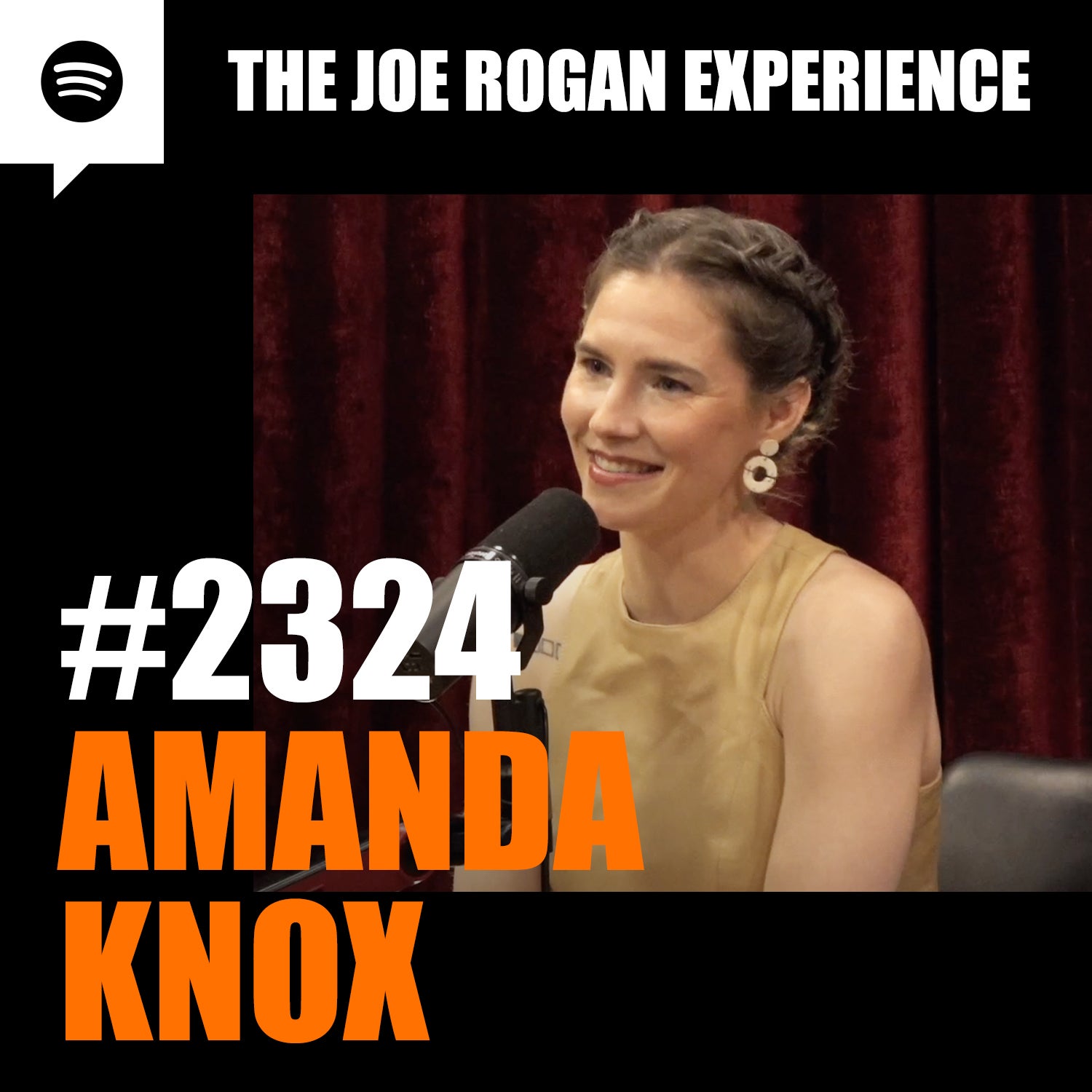
This episode is brought to you by Squarespace. Once you've got a great name for your business, you need a great domain. And Squarespace makes it easy to lock in a domain. You just search the name you want, buy it, and then you're ready to build.
No hidden fees, no weird upsells. Go to squarespace.com slash Rogan for a free trial. And when you are ready to launch, use the code Rogan to get 10% off your first purchase of a website or domain. The Joe Rogan experience.
Train my day, Joe Rogan podcast my night. All day. Hey, good to see you again. Yeah, I do.
Yeah, I hope you like it free. That's great. Yeah, well, it's on point. Yeah, it's on the nose.
Yes. Well, that whole question of what does it mean to be free? And what, you know, yes, there's the physical like, oh, you're out of prison, but then also, is your life the thing that you expected it to be? And how do you make your own freedom when you feel hemmed in by all the things that happened to you?
So yeah, you're connected to that forever. That's always going to be a part of your life. It's not like anything else that didn't really happen. Like you didn't do anything and you're connected to something that you didn't really do forever for people that don't know the story.
Yeah, yeah. We should do a little recap recap. Okay, recap friends. Real quick.
Recap friends and you can go back to the episode of Joe Rogan. What number was that? Do you have an off the top of your head? If you just Google Amanda Knox, you'll go, holy shit.
Go down a crazy rabbit hole. Yes. So in a nutshell, what happened? Yeah.
I was studying abroad when I was 20 years old in Prusia, Italy. My one of my roommates was raped and murdered by a burglar who broke into our home. But I was accused of having orchestrated a murder orgy and I was sent to prison for four years. I was sentenced to 26 years.
I was put on trial for eight years and it became this international scandal where it sort of pinged all of the buttons in all the right places that happened in 2007. So, you know, early 2000s when the internet was, or the internet, the social media was really becoming a thing. The iPhone was becoming a thing. I think that that played a huge role of people sort of going into their little echo chambers and fighting online.
And so I think that there was, yeah, it was a case that for whatever reason, rose above the level of other cases, like, ultimately, this case was actually very simple and it wouldn't have risen to the level of international infamy were it not for the series of mistakes that the prosecution and the detectives made at the very beginning by trying to pin a man's crime on me, a woman. Yeah. And if anybody wants this documentary, yes, there's Netflix documentary. I wrote a book called Waiting to Be Heard.
And then more recently, I wrote this book free, My Search for Meaning, which covers, like, you know, you can read it and learn about the case, but it's mostly about how you come out of experience like that and make sense of it. And then part one of the big stories in it is how I then developed a relationship with my prosecutor, which I think you'll probably be in the camp of people of thinking that I'm utterly insane for having done that. Maybe, maybe, maybe you won't. I just remember that when we talked about this back in the day, you were like, this motherfucker.
You become friends with him? Friend is an interesting word. What is a friend? Someone else asked me that like, I was like, it depends on what you mean by friend, because, and they said, well, do you trust him?
And I said, well, I think that at the point that we are now in our relationship, I do trust him. I trust that he's telling me the truth about what he really thinks and feels about the situation. So I feel like I have very privileged special access to the mind of the person who put me in prison. And that is a very interesting, uh, awkward, but also empowering place for me to be, because one of the things that really bothered me about this experience was not understanding why it happened to me.
Why did this man look at a 20 year old girl with no criminal history, no motivation to commit this crime? Why did he look at me and think, there's my rapist and murder? And I didn't understand it. And I didn't feel like demonizing him in my mind or vilifying him in my mind was going to actually give me a satisfying answer as to the why of it all.
A lot of people said, well, it's just because he's a bad dude. He doesn't care what the truth is. He's just covering his ass. Like these were all really simplistic ways of framing his motivations and I didn't really buy them.
Um, so instead what I was interested in was going to the source and confronting him, asking why, but to ask someone, why did you hurt me, which I think is a really common thing that people who have been hurt want to know is they want an acknowledgement that they've been hurt and they want to understand why and they, they want to know if that person's not going to hurt them anymore, not going to hurt other people. Like that's really common for people who have been hurt. Um, the, the challenges that people who hurt other people don't like to be confronted with that fact. And so how do you start a conversation that's not going to immediately become adversarial?
And that was one of my biggest challenges, but I came up with this methodology that I actually became so important to me that I tattooed it on my arm. So this is it, um, there are four steps. And, uh, the first one is find common ground. So this is Venn diagram, find common ground.
I promise you that every single person on this earth, you have something in common with them, find it. So I asked myself, what could I and my prosecutor have in common? I didn't know this man. I didn't know what his history was, what his background was.
But I did know that he, like me was part of this really big scandalous in the media case and he very likely felt misconstrued or misrepresented also in the process, maybe dehumanized in the process. And so I reached out to him and I acknowledged that fact. I said, Hey, I don't know who you are. I only ever encountered you in the police office and in the courtroom, where you were someone who was trying to ruin my life.
So you were a big, scary, boogeyman and I saw you in the media and I, you know, I've seen how the media represented you, but I knowing from experience, I know how that can be very misrepresentative. So I said to him, I want to know who you really are. And I hope that you might be interested to know who I really am because I don't think you know who I really am. I don't think that you would have prosecuted me if you knew who I really am.
And that was the beginning of the dialogue. This, like, I went out of my way to acknowledge that he might have had noble motivations, even if he was wrong. And I think this is like a really important thing is I, I wanted to give him radical benefit of the doubt, maybe, just maybe this horrible thing that happened to me could have been the result of understandable mistakes. And if anything, I think coming into contact with the innocence movement and criminal justice system stuff and reform, all the stuff that I've learned after having gone through this experience has made me realize that like some of the most horrible things can happen and can be enacted by people who have the best of intentions.
And so I assumed that of him and I gave him that benefit of the doubt. And as soon as I like opened that door, like, hey, you hurt me, but maybe that wasn't your intention. Maybe your intention was something else. He filled that void with his story and his message and what he wanted me to understand about himself.
And I mean, one of the wildest things about this book is that I talk about, like, I do not sugarcoat what I went through, like, and especially what he did to me. Like, I very like clearly set out like, here's the fucking up shit he said about me in court completely without evidence, like totally made up bullshit, like, and it ruined my life, right? Here's what it is. Acknowledge these facts.
And also, and also, here's a person who might have had, like in doing so might have been coming from a place of trying to rationalize things in his own mind, which is a thing that we all do. We all do on a regular basis. We're all just sort of interpreting our reality in the way that suits us. And so I, and I wrote this book from my perspective, I translated the entire thing into Italian before it ever got published so that I could share it with him so that he would know what I was saying about him in public.
But was imminently going to come out. And his response was, I have never felt more seen. That's what he told me. That's not like something teenage girl would say.
Well, that's an interesting observation because it's become quite emotional, especially on his part. I don't know. I shouldn't go there too much. You're protecting his privacy?
That's what it is. Yeah. Yeah. A.G.1 has been a long time part of the show and I'm excited to share some big news.
The new A.G.1 next gen formula is here. They did a bunch of research and approved their formula to make sure it's the best it can be the same single scoop once a day, same subtly sweet flavors with those hints of vanilla and pineapple, but now with upgraded probiotics, vitamins and minerals for even more comprehensive formula. A.G.1 next gen is clinically backed with four human clinical trials and it's shown to fill common nutrient gaps, even in healthy eaters. Plus A.G.1's next gen travel packs now come in upgraded packaging.
They're easier to tear, pour, shake and go. So your daily nutrition is even more seamless, wherever life takes you. So subscribe today to try the next gen of A.G.1. If you use my link, you'll also get a free bottle of A.G.1 D.
3 K2 and A.G.1 Welcome kit and five of the upgraded A.G.1 travel packs with your first subscription. So make sure you check out drinkag1.com slash Joe Rogan to get started with A.G. 1's next gen and notice the benefits for yourself. That's drinkag1.com slash Joe Rogan.
Yeah. You're a very nice person. You're so much nicer than me. Well, I don't know.
I've just had really bad stuff happen to me and like I don't wish bad stuff on other people. And it's a beautiful way to live your life. It really is. I mean, that's what all Christians aspire to is what you're doing.
Yeah, I guess I'm not a Christian. Yeah. You know, it's funny. I didn't really set out for people like point to that.
They're like forgiveness, forgiveness, you're doing forgiveness. And I was like, is this forgiveness or is this just communicating with him? This forgiveness in some way and not having extreme anger. Well, that's the thing.
I do have extreme anger. Like that's all part of it. And this is where like the Buddhist in me comes out where you can have extreme anger towards a person and at the same time hold them in your hand as this like tender, fallible creature that is capable of violence against you, but is also capable of being hurt just because someone hurt you doesn't mean that they're not capable of being hurt. And I certainly don't want to be in the position of hurting someone.
Like that's just who I am. And if anything, like one thing that I've communicated to him is like, look, I don't know if you're ever going to really wrap your head around what you did to me. But if you do one day, I know that you're going to feel really, really bad. And I just want you to know that I I don't wish suffering on you.
I don't ask him if he had gone over any of his previous cases and wondered whether he did the same thing to other people because I don't think that's something you do once. I don't think you are an ethical prosecutor who just really objectively analyzes the evidence and puts forth a case based on what you think is the facts. I don't think you do that your whole career. And then this 20 year old bitch, I think she's too cute.
I don't like how she's smiling. Yeah, there was that element to it. Well, yeah, I think that and I do feel like there was some kind of pornographic nature to it. Like, I don't know, like, I think that well, there's a lot of men that have like a deep resentment for beautiful women from feelings of rejection.
Yeah. Yeah. Yeah, because they are attracted to them or they find them to be beautiful or desirable and they know that that woman wants nothing to do with them. Like they are completely repulsive.
And so you see it a lot with unfortunately unattractive men. They develop a hate for women. I've seen it. I've seen it evolve over years with people that I used to be friends with, you know, just constant rejection and then it becomes like fuck these women and fuck them.
They just want this like, okay, put yourself in their position. You're gross. What are they supposed to do? Like, the people that try hard.
What are they supposed to do? Like, be with someone that they're not attracted to to make that person feel better? Like, that's not what people do. Like, give a short window of life.
Yeah. You're supposed to pursue what you like and you're, you know, you're fucking hand a card sucks. Sorry. You know, this is how it goes.
But that thing where, you know, they look at you like you have it too easy. You have too many gifts. There's life has given you too good a hand of cards, you know, and you should be punished. You should be knocked down a peg.
You see that in particular in the media with celebrity. It's a big one with celebrity women. If something goes wrong, like they just can't wait to dunk on them, mock them for weight gain, whatever it is. For getting out of a car in the wrong way.
And they were the ones who were like showing up to get up their skirt. Yeah. And you sort of that stuff was on purpose. Oh, is it?
Yeah, I think the Paris Hilton stuff like back in the day where a lot of women were like, it was like an epidemic of getting out of cars. And photographers just happened to be on the ground. Like you're a woman. You've worn skirts.
It's not easy to look up someone's skirt. If you're standing up and someone gets out there, how the fuck do you get down that you you'd have to be on your knees? I think they were doing it on purpose. I think it was a way of going viral.
Before viral was a thing because it went away. Like what was the last time we had a skirt shot? Well, I don't know what you have anywhere on. That seems weird.
Well, panty lines, you know, that's a real thing. Yeah, sure. But that's what G-strings were invented for, right? Those still create lines, my friend.
I guess. You know, you're that concerned with lines that you want to go bareback? I've not gone bareback at a premiere. I have a little skirt on how you have a car and the way they did it.
It's just, I think it was like, you know, with the same people that had sex tapes that leaked air quotes were engineered. I mean, the whole thing was it was on purpose. Like, sure, sure, sure. Yeah, but in terms of your of like trying to take beautiful women down a peg, I think you're right.
I also think that something that was going on in my case that I think you also tend to see in those situations where you're trying to take beautiful men down a peg is this idea of like pitting women against each other. Like that was a huge thing in my case where they were suggesting that, you know, here I was this like free spirited, but also hoory, you know, American girl versus the uptight, judgmental British girl. And and therefore they hated each other. And with, you know, with a vengeance with a lethal vengeance.
And then then this idea of like a murder orgy appeared where this pornographic fantasy of women, like expressing their own violent fantasies towards each other in real life and using men as pawns in that in that game of violent hatred towards each other. I think you see that a lot, you know, even in like a person I write about in this book who's become a dear friend of mine is Monica Lewinsky and how I feel like people really wanted to bring her down a peg in part because they wanted to bring Hillary down a peg and the whole like, the person who actually committed the affair was sort of, I mean, he definitely got his part, but he was all like a political game of they're trying to take down the man, but they're also taking down the women and they're specially railroading this young woman who made a mistake. And it became known as the Monica Lewinsky scandal and not, you know, the Bill Clinton affair or whatever, like it matters what you name a thing. And it seemed like the legacy of that and the person who became defined entirely by that scandal happened to be Monica, the one who was the person with the least amount of power and agency in that equation.
And so 20 years old. Yeah, 23 years old. Yeah. Who did a very normal thing, which was fall in love with a charismatic powerful man.
And he was handsome as fuck back then. Oh, yeah. I mean, he was the president of the United States. He was the president of the United States.
He was charismatic. He was handsome. He showered her with attention and it makes sense that a young, inexperienced person would fall in love with him. And yet she was the one who got railroaded.
She was the home wrecker. She was the one who became the subject of all the rap lyrics and her entire life and her entire identity became identified with this mistake she had made. And that was not the same thing with the president of the United States. And I think that that impulse to define women by their worst moments and to tear them down for their worst moments is is prevalent as from what I have seen.
Because they know it's so devastating to the person. You know what I mean? It's like there's that the bully instinct when they know that you're weak and vulnerable to attack. But why?
To what end? People are cruel because they've been hurt. You know, it's hurt people hurt people think. I think it's like shot in front of just as an audience.
Like we want a story, we want a real life story where we get to passively enjoy the destruction of another human being. Right. And also you don't know her. So you're disassociated.
Right. Like if she was your friend and you did that, you'd have to be a special kind of monster. Like that woman Linda Tripp who did it all. That's a special kind of monster.
Special kind of monster who trots that out to the whole world to try to take down Bill Clinton. Yeah, which didn't even work. No, and that's what's fascinating. It worked to destroy Monica.
But also like when you look at Bill Clinton, this handsome president and then you look at Linda Tripp who was very unattractive. That's also plays like I want to take him down too. And probably I want to take her down as well. Like there's a lot of like everybody else.
There's a lot of that. You know, when you're, you know, you're unseen to use the same vernacular, you know. And then you see like other people getting attention and it's just like the fact that she did it and she knew her and she. But also this is like, this is the game of cards that they're playing.
This is House of Cards. This is, you know, this is literally what they do anytime they have a chance in the political realm. Right. Right.
Any window, any vulnerability. Yeah. It's the dirtiest game in the world. Yeah.
It's a disgusting game. You know, and if you get sucked into it, you'll find that out. You know, it's the most evil. It's really is like when I see people that are running for president, I'm like, what are you doing?
I know. I would do that yourself. Yeah. And then you have to spend the rest of your life like with, you know, secret service, following you around so you can't exist in the world as a normal human being like that.
I do feel like there is a you have to be a special kind of person in order to be attracted to something like that. Yeah. And ironically, that's the kind of person that's attracted to that in general is not the kind of person you want in a leadership position. Right.
You know, which is like, wow, what do we do that? Yeah. Yeah. So is democracy completely and utterly flawed because it relies upon the ambition of the wrong people or heroes or legitimate heroes, like someone who's like, you know, I'm going to tolerate this.
I'm going to carry the burden of this on my back because I think I can help people. But does anyone ever like actually arrive at the like at the seat of the president as that person? Like here's the question. Do they stay that person?
Because I just think Obama was that person. I really did. You know, I was like, wow, we got a good one. You know, I was sad.
I missed out on that. Yeah. It was pretty cool. But in retrospect, you know, when looking back, like probably not really, like probably got corrupted by the system or was corrupt originally, you know, and it's now willing to openly lie.
Yeah. It's a it's dark. It's dark. You know, and I think it's just a it's a strange social position that I don't think is manageable for anyone.
I don't think the human mind is prepared to be in that kind of a position of power and not have it completely distort what you are. And then there's the relationships that you have to have with all of these various politicians and then special interest groups and lobbyists and then foreign leaders and then how do you manage all of that heads of defense contract companies like what? Yeah. Can I tell you a story?
Yes, please. Okay. So this story didn't actually make it in my book, but it is one that I wanted to tell you because it talks about how my weird relationship with other people who are in positions of power, like police officers, right? Like, you know, I'm an advocate of criminal justice reform.
I talk a lot about like I go and testify in front of my, you know, state Congress trying to get certain laws passed to protect, you know, innocent people. And one thing that I like to point out is that I'm not anti law enforcement. If anything, I was a victim of crime before I became a victim of the criminal justice system. Like someone broke into my home and raped and murdered my roommate.
And then I called the cops and then the cops went on to betray me. And but that doesn't mean that there isn't like I'm not one of those, you know, fuck all the police. We don't need them, you know, abolish the whole system. That's not what I believe.
But as someone who has had this complicated experience with police, I don't really know what to do when something bad goes down. And I want to tell you a story about something bad that went down. It was in LA. I was staying at a friend's house with my husband and our two kids were doing work down there and our friends were not there.
But in the middle of the night, we hear someone yelling out in the, you know, out in the street. We think there's some drunk guy out there, but it gets closer and closer and closer and closer until finally, there is a huge bang. And my husband gets up in his tidy whiteies and says one thing to me, call the police before he marches downstairs. We were upstairs in the second story and we hear a bang.
We hear yelling. He goes down there in his underwear. And I don't know if the last thing I'm ever going to hear from my husband at that point is call the police, which is an interesting final words to get from the love of your life when you're me. And my, you know, infant son is crying.
My two year old daughter at the time is going, what's going on? And I'm trying to calm him while re-assure her, while looking around the room thinking, how do I barricade a door and can I jump out of a window with two small children? All of that before I think dial 911 because the last time that I dialed the equivalent of 911 to call for help, I got thrown into prison. I realized that there's nothing I can do to protect my kids.
So I call 911. And eventually, you know, my husband is able to get this intruder to leave the house. The police arrive and I have a very strange encounter with them because they are very nice to me. And I was not expecting that.
And they are very nice to my daughter. And they give her a nice little, you know, police badge and I'm sitting here thinking, great, now I'm going to have to throw a police themed birthday party for her because now she's going to be super into police. And I'm just like, what is happening in my life? And I'm scared that they're going to recognize me and I'm scared they're going to think maybe she faked a break.
And like, all of that is going on in my head. And I don't know how to resolve that. You know, somebody broke in to I have broken in my home once, murdered my roommate, broke into the place I was staying again. Thankfully, didn't murder anybody.
But like, how do I make sense of my relationship with people who are empowered to protect me, but also are empowered to hurt me? What do I do about that? You tell me, Joe, what do I do? There's no way I could know what's going through your mind.
You know, the experience that you had is that no one can even pretend to have those thoughts in their head because this is not just paranoid fantasy. This is your actual lived experience for years. Yeah, that's a good question. What, what had happened?
Like the bang? Was it someone kicking down the door? Yeah, he had kicked in the door through the deadbolt. What was the yelling?
The yelling was he was just a friend. Yeah, he thought that he someone had stole that house from him and he was yelling for some name of a person who didn't live there. Clearly was just like either confused or mentally ill in some capacity. But and thankfully not armed, but like my husband didn't know when he walked down the stairs in his underwear without any any like he grabbed a broom on his way down and that he was between putting himself and a broom between whoever this person was who had just kicked in the front door through the deadbolt and his family.
And that might have been the last time I ever saw him, you know, and I did not know what to do. I try to like joke about it now where I actually had to stand up at about it a while back about how I was like testing my butt to see if it was bouncy enough to like jump out of the window and bounce. But like when I think back on it, it's just it's still scary, you know, and I don't I don't like how I feel right now that when I'm scared, I'm supposed to call the police, but I'm also scared to call the police. And so, you know, when I go and do advocacy work for, you know, I'm now in the board of the organization called the Innocence Center, Innocence Center.org, which by the way, just got a bunch of federal funding taken away.
Thanks, Elon. You'd think that they would be interested in supporting organizations that clean up the messes of the criminal justice system, but apparently not. So if you want to support us, Innocence Center.org. What happened that they got their funding taken away?
What was the circumstances? I mean, there's a federal funding that is designed for Innocence organizations. And I think what I heard is that there are certain words that sort of became taboo within the administration that if you were using these words or these terminologies that they associate with like the that then they're that sort of puts you on the list of being cut for federal funding. And one of those words was like the word fair.
And in a organization that is interested in justice and for in getting innocent people out of prison, the word fair is going to come up quite a bit. So is it just an algorithm? They're just scanning the mission statement of whatever these organizations are? Yeah, I mean, I think that that's a first step is they'll just use this.
They're going to use algorithms and AI to help them identify potential things to cut. And I think as a as a new Innocence organization, we were considered not worthy of the federal funding that we have relied on and to help innocent people. And now you want the founders of this organization? Me?
No, I'm on the board. But yes, this is formally the California Innocence Project that has since sort of turned into the Innocence Center. But you're seeing this all across the board of Innocence projects of getting their federal funding taken away. And there's no accusations of impropriety or misuse of funds or high salaries for certain individuals or nothing?
No, just it's deprioritized because I think we're considered leftist organizations, potentially, I don't know. But I know that like I have always thought that Innocence and getting injustice were bipartisan issues. And I thought that we had been making great strides in sort of welcoming in both liberal and conservative partners in this ongoing fight. But because these sort of these things disproportionately impact people of color, you're going to see language around that that acknowledges that fact.
And I think that that has been sort of put in, we are Innocence organizations are now being put into DEI camps and we're being stripped of funding. And I think that's, I hope that that's an oversight issue and that they're going to recognize the mistake that they're making. But as it stands right now, Innocence organizations, not just the one that I'm associated with are scrambling to get the funding that they were promised to continue doing, you know, doing the things that cost money. Like filing, you know, filing all of their work and going through all of the casework and doing the DNA tests and doing investigations to see if you can reach the witnesses that maybe have changed their stories in all these years.
It takes a lot of money and resources to prove a person's innocence. You have to reinvest a case and we don't have the funding that we used to. This episode is brought to you by Zipper Cruder. Speed dating is an interesting concept, isn't it?
Setting an allotted amount of time to get to know as many people as you can. It increases your chances of finding a good match and there's not a whole lot of room for bullshit. You have to cut to the chase to find what you're looking for. Wouldn't it be nice if you had something like that when it comes to hiring for your business?
Well, good news. There's Zipper Cruder. Zipper Cruder has a new Zip intro feature that helps speed up the hiring process, connecting you with qualified candidates faster. You can try it for free at zippercruder.com slash Rogen.
As soon as you post your job, Zip intro will get to work. You could even be talking to candidates in back-to-back calls the very next day. All you have to do is pick a time and it'll start scheduling top talent for you to meet. Enjoy the benefits of speed hiring with the new Zip intro feature only from Zipper Cruder.
Rated the number one hiring site based on G2. Try Zip intro for free at zippercruder.com slash Rogen. Again, that's zippercruder.com slash Rogen. Zip intro post jobs today.
Talk to qualified candidates tomorrow. I do a lot of work with Josh Dubin and you know Josh? Yeah, I mean I never met him personally. He was with the Innocence Project and now he's with the Iqpro Mutter Center for Legal Justice and same kind of work.
Ironically, Iqpro Mutter is very close friends with Trump. I mean, I would have thought that that would have been of interest to Trump considering... I think it's a baby with a bathwater type deal. But there's a lot of what you would call almost like slush fund NGOs where they're inappropriately moving funds around and doing stuff.
And I don't know if you've ever seen any of Mike Benz's work, but he essentially says that USA is really there to do things that are too dirty for the CIA. So the extraordinary amount of money that was being moved around, there's a certain percentage of it that was inappropriately being used. I imagine so. Yes.
Sure. Enormous percentage. So there's a lot of money. But unfortunately, there's a lot of good that also is coming out of that money.
And that's what's difficult. It's like when you round up all the quote unquote gang members and you fly them to El Salvador, are you sure they're all gang members? Or do you care? Right.
Exactly. I think that's... Or is it just like we're just here to clean things up and if we throw it in a synagogue... Right.
Are innocent people the price of us getting to be efficient? Don't become a monster when you're fighting monsters. Yeah. And that's what I think we're brushing up against right now.
And as someone who really is just interested in keeping especially this issue, this is a human, we all should be on the same side about this. 100%. Yeah. Why is it being turned into a left or right issue?
Well, maybe I can get this in front of Josh and he can present it to some people and have them recutend their position. That would be great. And if you need to put me in contact, I would be happy to... A lot of things through working with Josh and just through this podcast, we've gotten a lot of people released that were wrongfully convicted.
And when you go over the amount of corruption that's involved, and I think there's an issue with human beings whenever there's a binary position, a one or a zero, you win or you lose. Yes, the adversarial system. Yes. I have to be, I have to win this side.
Right. And I cannot at all acknowledge some truth that might be to the other side. Right. And then you have this game where you hire a guilty person.
You hire the best defense attorneys that probably even know you're guilty, but their job is to get you off by any means necessary to. Well, their job is to make the government prove your guilt. Right. That's what a technically a defense attorney who's really good.
Right. But that's not really what they're doing. Yeah. Fair.
Fair. Fair. Yeah. Yeah.
Of course. Yeah. Yeah. The goal being is you can't actually prove it then.
Well, their goal is to win as often as possible so that they're the person. Like this is the guy you want. Mm-hmm. Although I have talked to some really interesting defense attorneys, the defense attorneys represented Larry Nassar, for example, famously for those who don't remember was molesting young gymnasts.
You remember him? Oh, the Olympic guy. Yeah, yeah. And I interviewed them because it was two women who represented him.
And so a lot of people were like, how dare you represent this man as a woman? How could you? And their position was, well, we didn't represent him to prove him innocent. We had him plead guilty to these crimes.
We just feel that everyone deserves to have a defender. We're defenders. We represent people in the law. And they were getting demonized for even taking him on as a client.
And I thought that was interesting because they weren't trying to get him off. They were just trying to represent due process. And I felt like that was a really interesting case of people confusing the, what is the role of a defense attorney? And I think you're right.
Like some defense attorneys really don't care if their clients are guilty or innocent because they are also in this adversarial system. Yeah. And so they are also in this position of just wanting to win and wanting to make the lives of law enforcement difficult. And they're willing to throw victims under the bus in the process.
Like I've had really frank conversations with friends of mine in the innocent world where they talk about how they were trained to just destroy a victim in order to to diminish their credibility in court and to really put them in a really bad position so they didn't want to pursue justice for themselves. And I think that, and they look back and go, oh my God, I can't believe that that's how I was trained to be a defense attorney. But like that was just part of the game. And I think that's where this whole course of justice gets completely distorted.
Because it's like, well, what is the point of all of this? Like it should be about like arriving at the truth and then doing and then having there be like some recognized consequences for acknowledging what really happened. Like you need to address the issue, which is somebody got hurt by someone else. What do we do?
Now what? And instead it's become, well, I'm on this team, you're on this team fight, fight, fight, let's see who wins. And as a result, the whole issue of truth gets distorted and becomes about making the best story that that captures the people's attention. And I think, I mean, that was a huge lesson for me was realizing that like the truth didn't matter.
Like nobody cared about the truth. They cared about the story and was it a story that spoke to them and was it a story that lingered for them. And that's, you know, an ongoing thing that I write about is like, okay, here's this crazy story that is not true. That took over my life and that still has this huge role.
Like I'm still in conversation with that crazy story that was written about me. And the fact that like my entire identity is now wrapped up in the death of my friend that I had nothing to do with and I'll forever be defined by because it's such a captivating story. And because the prosecutor was dead set on winning and wasn't necessarily interested in the truth. What he says and it's very, again, it goes back to like, what are we telling ourselves and what is the cognitive bias.
And I think this is where it gets super interesting because winning is interpreted in some people's minds as doing their duty, right? Like the way that my prosecutor has always talked about it with me is that he maintains that he was doing his duty. This was his job. His job was to make a case that made logical sense to him based upon certain premises and then to win that case in court.
That was his job. That was his duty. And he believes that he was doing the right thing because that's what he was trained and incentivized to do. In the same way that like journalists, if you ask journalists back, who covered the case back in the day, they'll be like, well, we were doing our job.
Our job was to sell the best story that we could to our audience. And right. And so that's when it gets like fucked up because like how have our institutions that we've relied on to be truth seeking institutions been corrupted from the inside by ultimately what is a question of money or power when politics gets brought into the equation with criminal justice. Suddenly, your prosecutor is now wanting to win cases not because they're the right cases to win, but because they want to be elected.
Like all of that gets distorted and the motivations behind all our institutions become warped. But the media is even more disgusting because it's not about politics. It's literally just about getting people to pay attention to their story and buy newspapers or click on links. Right.
Right. And then they hold their audience accountable for the kinds of stories that they are then incentivized the right. They say, well, I wouldn't be writing the story if you weren't clicking on it. And it's like this vicious cycle.
That's crazy. It's like I wouldn't rob your house if you didn't have nice stuff. Exactly. Exactly.
That's fucking crazy. But like that's how if you're in that little echo chamber of a system and that's what your reward structure is, of course, that's what you're going to end up delivering if you're somebody who doesn't have the introspection to question like, OK, wait, what am I doing? And what is the point of all of this? And do you have certain principles?
But again, the people who rise to the top are maybe the ones who are willing to question those principles in order to achieve certain ends. Yes. Yeah. And then there's also the problem with you're working for a corporation if you're in the news.
If you're not an independent journalist who has like rock solid personal ethics, you're working for a corporation and your job is to make money for your shareholders. Ultimately. And the way you do that is again, as many people to click on those links as possible. And maybe the person who's on the ground has a certain vision for what they want.
They're like on the ground reporting to do. But then once it gets in the hands of editors and other editors, like it becomes completely warped from the thing that they were originally reporting on because the person who's over here is so divorced from the actual on the ground story. And they know instead the story that's going to sell. Yeah.
So yeah, it's dark. I mean, it's the same sort of distortion. Excuse me. Salute.
Sorry. It's the same sort of distortion when you're talking about prosecutors, prosecutors just trying to win. It's this thing where and ultimately it's it's a severe distortion of what the best case scenario is. The best case scenario is prosecutors don't care about winning.
They care about finding truly guilty people. And in cases where someone whether they withhold evidence that could have exonerated an innocent person or whether they distort things or twist things around in order to win, they should be forever removed from that system. You should never be allowed to do that. But this is Kamau Harris did that and rose to be vice president and also became president.
And she is absolutely guilty of doing that. Yeah, I know. It's she tried to withheld withhold DNA evidence that would have exonerated someone. I know.
Yeah. She was not a popular choice among the innocent community. I'll tell you that. That was stupid broke her down on my show.
But when she was here together, no, no, no. He broke down what she was guilty of when she was a prosecutor in California. Yeah. No, it wasn't.
That's why I was so mad that our party never actually gave us a choice. Right. There was no primary. No, there was no primary.
They were just like, here's the person now and if you don't work for her, you're a bad person. Exactly. You're a fascist. Yes.
Yeah, no, it was that, that this whole like path. But then again, that's also just trying to win. Yeah. It's the same kind of thing.
It's just the focus is on winning at what cost. I mean, and then that's a very slippery slope. Because if you're willing to accept that, guess what? Guess what?
That slope keeps slipping. And then next thing you know, you know. You don't have breaks. Right.
You have to put a fucking blinder on because you're part of the problem. You're part of what's destroying society. So then you have to like reshape your own personal narrative and lie to yourself about what you're doing and why you're doing it. Right.
It's a little bit of like self brainwashing. And that fascinates me like in conversations with my prosecutor, how has he convinced himself that he's the good guy? And how has that changed when I have approached him, not as an adversary, but as someone who is, I wouldn't say like tolerant because I've never put myself in a position of sort of saying, oh, what you did was not a big deal. Like when I approached him, I was like, what you did was a big deal.
And you were wrong. And you hurt people. But like acknowledging his humanity and the complexity of him and acknowledging that he's not an evil person. Well, what is evil?
Intentional malice, maybe? That seems like he was doing it intentionally. If he was paying attention to the facts of the case. I mean, there was DNA evidence.
There was all sorts of stuff that pointed to you not being the guilty party. And they ignored that. If that's not evil. I mean, what he did, it's interesting, he wrote a whole book about the case.
And he talked about how when he first arrived at the scene, he immediately knew that it was a conspiracy because he looked at the broken window of how the person had actually broken into our home and said, there's no way, zero chance, that a burglar would have broken in to a house this way. He just was like 100% convinced that immediately, that the break-in was staged. And if you take that, if you and your brain truly believe that, then what logically follows is a lot of what he then came up with. Well, someone in the house is trying to cover up for a crime that they were involved in, who lives in that house.
Well, there are three other girls, one of whom was in Rome, one of whom was another Italian girl, who was with her boyfriend and friends, and one of whom was the American girl, who was with her boyfriend that night, but who also happened to be the one who called the police and brought attention to the house. So maybe because we found her, the scene of the crime, all of it starts to make logical sense if you begin with a false premise. How do you reconcile that in the book? In his book?
Yeah. I mean, he makes logical leaps. So he goes, OK, well, then we discovered that all of this DNA of the person who actually committed the crime, they finally got the DNA back, and it's all pointing to this guy who has a history of breaking and entering and aggression towards women. And he doesn't go, oh, no, we made a mistake.
He goes, oh, how can now he be involved in this thing that I know Amanda is involved in because I know the break-in was staged. And so this is how a person with genuinely good intentions can have false beliefs from which one can logically derive an insane story that requires him to now believe. One of the things that I pointed out to him that just drives me nuts, that he continues to somehow hang on to, is this idea that I was in a threesome with, I was in a three-way relationship with my actual boyfriend, Rafaela, and this burglar, Rudy Gadde. And I was like, where are you coming up with that?
And he was like, well, whenever I interviewed Rudy, like he talks about interviewing, interrogating Rudy, Rudy always seemed to have affectionate things to say about. He always seemed to be interested in you. And from that, I can logically deduce that you guys had a relationship. And I was like, I didn't even know his name, but there's no record of us ever communicating with each other.
No one ever saw us hanging out with each other. What are you talking about? And he's like, well, if he was involved in the crime and you're involved in the crime, and he's sort of talking about you in an affectionate way, then logically, it makes sense that you were in this three-way relationship with Rafaela and Rudy. And I'm like, that's not true.
And he's like, well, that's what made logical sense to me at the time. I think the issue is an egotistic idiot that has power. That's really what I think it is. Because I think someone who has a belief and a confidence in their own abilities as a logical thinker, and I think anyone who is in that kind of position has to believe in themselves in that kind of way.
But not just that, you have too much power. Like, there's not enough oversight, you have too much power. And then you say something, and if your initial assertion is incorrect, you then have to defend it. So then you do mental gymnastics to try to defend it.
At the expense of your fucking life, he was willing to put you away forever. Like, he had to know. At some point in time, the back was a stupid brain. He had to know that you were innocent.
And he was willing to push forward and concoct some sort of a three-way relationship narrative they still stick to. Fuck that guy. Well, and sometimes that's what my brain says. Sometimes I.
Brains should say that. You know, I mean, forgiveness is really important, but some people just can't forgive. Like, some people, it's like, no, you need to come to grips with the fact that you're a piece of shit. That's what's wrong here.
It's not me forgiving you and you having this hall pass just to be a piece of shit because you had this theory that you're still accusing me of. No, that's not, you're bad at what you do. And sometimes people are bad at what they do. Sometimes you get bad teachers.
You get bad cops. Sometimes you get a bad electrician, your house catches fire. Some people suck at what they do. And to like have this like eternal forgiveness.
Like sometimes it's not smart to do that. Well, certainly. And I think that's really- Is he still working as a prosecutor? No, no, he's retired.
He has retired. He's being jailed. Like literally. I do not wish jail upon him.
Okay, that's sweet. But that's crime. I would have to say that I agree that there's, I always wanted to, I always wondered where the adults were in the room. Like, you know, the whole first two years of my imprisonment, I was like, this is all a huge mistake.
And it's really obviously a huge mistake. And when I're like, the mommy's and daddy's gonna show up and say, okay kids, stop your squabbling. Like let's straighten things out. There's no mommy's and daddy's.
There aren't no mommy's and daddy's. That's the thing that freaked me out. It's like, we're all adults now. And this is all we are.
We're just a bunch of screaming toddlers. Just screaming at each other constantly. And here I am now, I feel in a way, trying to mother my prosecutor through his psychological tantrums. Which is a weird position to be in.
Because now that I've developed the relationship that I've developed with him, I care about him. Like I don't think that you can, I set out to understand him. I wanted to understand him. But in the process of like really understanding a human being and having them like be really open to you, I don't know, I feel like you inevitably begin to care about this person.
Even in their flawed fragility as a human being. And so on the one hand, I'm very angry at him to this day. And on the other hand, I care about him and I have to give him some props. He didn't have to respond to me.
He didn't have to meet with me. He didn't have to sit there and hear me talk about how he had fucked up my life and he shouldn't have. I did not, like it's not that like me being kind to him does not mean me tolerating injustice. And it does not mean me not setting boundaries.
And it does not mean me sugar coating what really happened. Like he knows what I think really happened. And he says, well, we can disagree about our perspectives in some ways, but ultimately what matters is that you reached out to me and saw me as a human being. And in response, I also inevitably came to see you as a human being and I care about you.
And so in a way, we're still in this awkward dance of like one part of us is stuck in that adversarial system and one part of us is in a non-adversary, very accepting of all the things, space. And we're paradoxically existing in both of them at the same time. And I think that that's just kind of how life is. One of the paradoxes of life is that if you really just sit down and sit with yourself and your life, just the way it is right now, if you really do, just notice right now, you and me, here we are talking, we are OK.
You and me, we are good. And also, there's still fucked up shit in my life and there's still fucked up shit in your life. And things could be better. And all of those things can be true at the same time.
I'm still fighting to clear my name in Italy. I don't know if you have you kept up with the latest with my case. Oh, yeah. So still.
So I've been cleared of all the crazy horrible murder, orgy, all of that stuff cleared. The thing that remains, and this is just the bane of my fucking existence, is when they cleared me of having anything to do with the crime, they left open the possibility that I was present when the crime occurred. And I believe the reason that they did this was because they wanted to find me guilty of something. And the thing that they found me guilty of was the way lesser crime on the list of all the crimes that were there, which was slander.
They accused me of knowingly and willingly falsely accusing an innocent person of having committed this crime. Because during my interrogation, I was coerced into implicating myself and my boss, Patrick Lamumba, of committing this crime. And I immediately retracted it, all of that. But that was one of the things that they were holding accountable for.
And they, to this day, I am still convicted in Italy of knowingly and willingly accusing an innocent man. And for me to knowingly and willingly accuse this innocent man, I would have to have been at the house and known who really was the murderer at the moment that I falsely accuse this innocent person. Like, I would have had to know that he was definitively innocent for this to be the case. And for that to be true, I would have to be physically present at the crime, even if I was not participating in it.
So the legal standing right now to this day is that I was there, and that when I was interrogated, I knowingly and falsely accused an innocent person. I appealed this, by the way, to the European Court of Human Rights. And they ruled in my favor. They said that because I had been denied the right to have an attorney and an interpreter when I was being interrogated, that none of that should ever have been convicted of that.
And I took that back to Italy. I took that ruling back to Italy. And they overturned it. I was actually acquitted of that for a second, but then sent back for retrial recently.
And recently, yeah, this is 18 years later. Recently was put back on trial for that. This was last year. And I was found guilty again.
Oh my god. On the basis, not even of the statements of the police coerced me into signing, but on my retraction. So I hand-wrote a retraction of those statements of the police, forced me into signing. And I was like, I'm so confused.
I can't testify. I don't know if Patrick did it or not. I just don't know. And they said, well, even a confused statement where you're not sure what the truth is, if you were physically present at the crime, is slander.
And you falsely accused an innocent man that you need to be innocent. But they have no proof that you were there. Exactly. So we're in this cyclical thing where they're like.
They just don't want to admit that they fucked up. That's what I think. And I'm at this point where I'm like, OK, now what? Because I'm definitively convicted of this thing.
And the legal truth in this case does not represent the actual truth in this case. Are they trying to protect themselves from some sort of a civil suit? Maybe. I think even more than that, I think they're trying to protect themselves from admitting that they tortured innocent man.
Oh my god. Oh my god. So they can say, well, she is guilty. She did do this.
She's guilty. And so it's not crazy for us to think that she might have been involved in the murder. Because here she is. She probably lied about being there.
Yeah. And all they were ever able to do was prove that I lived in the house that this happened in. Like sure, my DNA is in my house. It's not anywhere near Meredith's body or where the crime occurred.
But they're saying that I was there. And it's sort of this cyclical reasoning. Amanda said she was there. Therefore, she was there.
Therefore, she said she was insane. Cyclical reasoning. And I'm at the point where I have to ask myself, how do I fight this? And if so, do I.
And that's where this whole question of freedom comes in. Do I have to definitively prove my innocence in a court of law to feel that I have definitively proved my innocence? Or do I need to definitively prove my innocence in the court of public opinion in order to feel free? Or to feel like I'm not, regardless of whether I definitively prove my innocence or not, am I ever going to be free of this?