
EPISODE · Jan 1, 2026 · 18 MIN
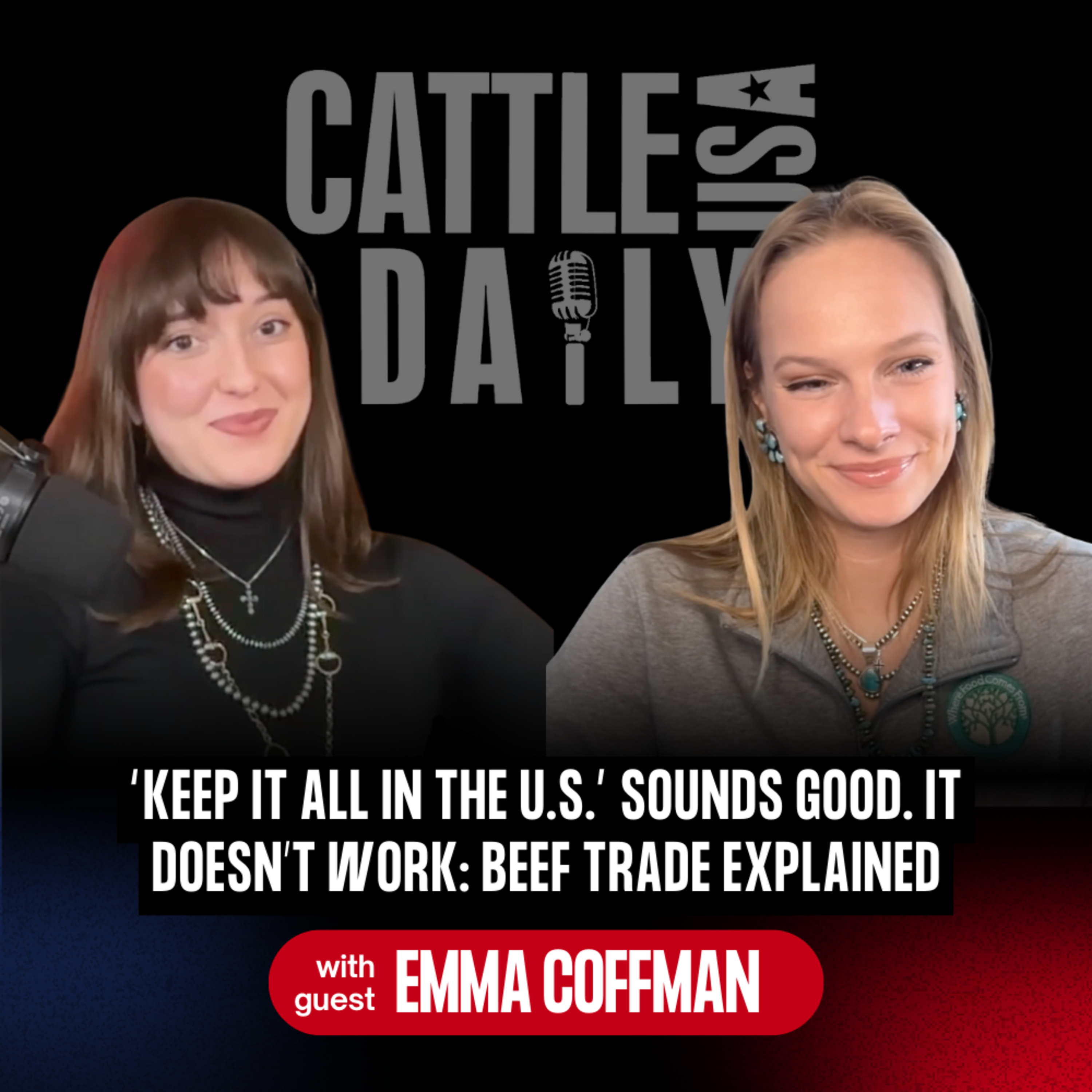
233: “Keep It All in the U.S.” Sounds Good. It Doesn’t Work: Beef Trade Explained with Emma Coffman
from CattleUSA Daily · host Lauren Moylan | Cattle USA
Emma is back, and today we’re tackling one of the most misunderstood conversations in ag: why the U.S. exports beef while also importing beef. If you’ve ever seen “we should just keep it all here” in the comments section, this episode is for you. Lauren and Emma break down what we actually export (high-value specialty cuts and off-cuts other countries pay a premium for), why we import (lean trim to support ground beef demand and maximize carcass value), and why stopping exports wouldn’t magically make beef cheaper. They also hit the bigger picture: global trade relationships, why countries like Japan, Korea, and China rely on U.S. beef, and the consumer habits at home that shape what ends up on our plates.LinksEmma's Links - https://linktr.ee/doubleeranch CattleUSA Website - https://www.cattleusa.com/ Facebook - https://www.facebook.com/cattleusamedia Instagram - https://www.instagram.com/cattleusa.media/ Subscribe to our newsletter - https://www.cattleusadrive.com/ CattleUSA Media - https://www.cattleusamedia.com/ Lauren’s Instagram - https://www.instagram.com/_laurenmoylan/ Lauren’s Youtube - https://www.youtube.com/@Showboatmediaco The Next Generation Podcast Website - https://www.thenextgenag.com/Takeaways• “Stop exporting” isn’t a simple fix because exports aren’t just steaks. A big share is off-cuts and items the U.S. consumer doesn’t buy at scale.• The U.S. exports products other countries treat as premium or culturally preferred (think tongue and other variety meats), creating higher carcass value.• Importing doesn’t mean “lower standards” by default. Imported product still supports the domestic system by filling gaps in lean supply.• Ground beef demand is a major driver of imports because the U.S. market wants lean trim to blend with domestic fat.• If we tried to keep everything domestic without trade, consumers would either pay more or have to change what they’re willing to eat.• High-marbling and specialty beef (including Wagyu and crosses) often finds its best-paying home in export markets when domestic demand is limited at that price point.• Global trade is a two-way relationship across all commodities, not a beef-only issue.• The U.S. is one of the most efficient beef-producing countries in the world, and that efficiency supports our role as a supplier to land- and resource-constrained nations.• Export demand strengthens the value of the whole animal and supports producer profitability.• Resource pressure and urban expansion matter long-term. Losing productive land pushes countries toward import dependence, and Emma argues the U.S. shouldn’t follow that path.Chapters00:00 Christmas Recaps, “Hawaiian Christmas,” and the Crud01:25 The Comment Section Debate: “Stop Exporting, Stop Importing”02:55 What We Export (And Why Other Countries Pay a Premium)04:45 Why Imports Exist: Lean Trim, Ground Beef, and Carcass Balance06:20 The Best Resource to Track It: USMEF and What to Look For07:45 Who Buys U.S. Beef and Why: Japan, Korea, China, Mexico09:15 “You Want Your Cake and Eat It Too”: Consumer Habits vs Reality10:55 The Broader Issue: Resources, land use, and self-sufficiency13:10 Why the U.S. Beef System Wins: Efficiency, genetics, and nutrition15:05 Bottom Line: Trade is a “dance” and it protects carcass value16:30 Wrap-Up: Why producers should care and where to follow Emmabeef exports, beef imports, US beef trade, why we export beef, why the US imports beef, lean trim, ground beef demand, variety meats, beef tongue, offal exports, carcass value, meat export economics, Japan beef imports, Korea beef imports, China beef imports, Mexico beef trade, US Meat Export Federation, beef supply chain, beef consumer demand, Wagyu exports, beef pricing and trade
Embed this episode
NOW PLAYING
233: “Keep It All in the U.S.” Sounds Good. It Doesn’t Work: Beef Trade Explained with Emma Coffman
No transcript for this episode yet
Similar Episodes
No similar episodes found.
Similar Podcasts
No similar podcasts found.