
EPISODE · May 24, 2025 · 15 MIN
#233 Winning the Mental Game of Golf
from Golf 247.eu: The Global Platform for Innovative Technologies and Teaching Concepts. · host Golf247.eu
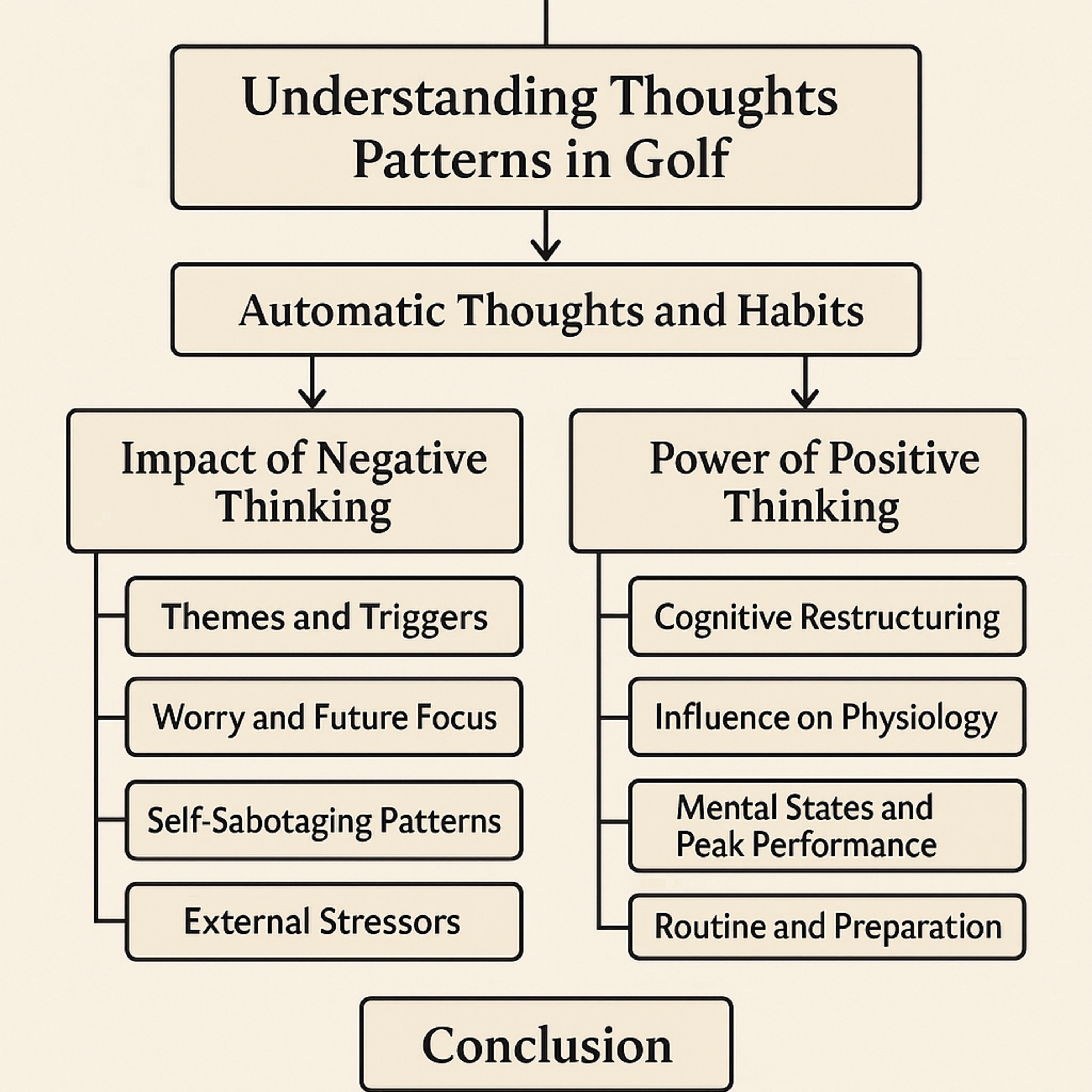
This Podcast explores how thought patterns influence golf performance and everyday life, emphasizing the benefits of cognitive-behavioral techniques to enhance mental resilience. It demonstrates that automatic, often irrational negative thoughts can trigger anxiety, disrupt focus, and diminish performance, while positive, present-focused thinking fosters optimal states of concentration and calm.Understanding Thought Patterns in GolfAutomatic Thoughts and HabitsMental routines are learned behaviors, often deeply ingrained and triggered automatically. These thought chains—where one idea cues the next—can either enhance or undermine performance. Identifying what conditions activate helpful or harmful thoughts is key to gaining mental control.Impact of Negative ThinkingThemes and Triggers: Common negative thoughts include worry, judgment, fear of failure, and outcome-focused thinking. These contribute to frustration, anxiety, reduced focus, and physical tension.Worry and Future Focus: Worrying about future outcomes—e.g., score or specific holes—creates anxiety and disconnects the player from the present moment. Golf requires complete focus on the now.Self-Sabotaging Patterns: Dismissing success as luck, fearing collapse (“when will it fall apart?”), or obsessing over scores disrupts both mental and physical routines.External Stressors: Carrying unrelated concerns—family issues, job stress, or financial worries—onto the course creates a distracted, anxious mindset that weakens performance.Power of Positive ThinkingCognitive Restructuring: Techniques from cognitive behavioral therapy help players reframe negative patterns, leading to greater emotional control and enhanced performance.Influence on Physiology: Thoughts directly impact the body’s state—becoming aware of this connection enables athletes to manage their mood and tension levels.Mental States and Peak Performance: Optimal play occurs in a state of relaxed concentration—complete focus, confidence, and calm—without intrusive emotions or thoughts.Routine and Preparation: Knowing your plan, trusting your club selection, recalling past successes, and using a swing key can center your focus. Top players often think very little—simply executing the shot at hand with confidence.Rational Dialogue: A tool for redirecting unproductive thought loops. It involves recognizing irrational thoughts, pausing, relaxing, and deliberately shifting focus to positive imagery or cues.Thought Stopping in Action: Golfer Ann Marie Polly’s internal command—“Shut up, just stay in your routine and knock it in the hole”—is a powerful example of stopping a distracting thought mid-round.Mindfulness and “The Zone”: Quieting both body and mind through deep breathing and focus returns players to the present—essential for achieving flow and peak performance.Emotional Neutrality: Maintaining a neutral, objective mindset—regardless of result—allows for faster mental recovery and sustained focus throughout the round.ConclusionYour internal dialogue determines your external performance. Future-focused, irrational, or emotionally charged thoughts create mental and physical tension that undermines play. Positive, present-centered thinking—rooted in awareness and self-regulation—supports consistency, clarity, and high-level performance. Cultivating this mindset through rational dialogue, structured routines, and mindfulness is essential for mastering the mental game of golf—on and off the course.www.Golf247.eu
Embed this episode
NOW PLAYING
#233 Winning the Mental Game of Golf
No transcript for this episode yet
Similar Episodes
No similar episodes found.
Similar Podcasts
No similar podcasts found.