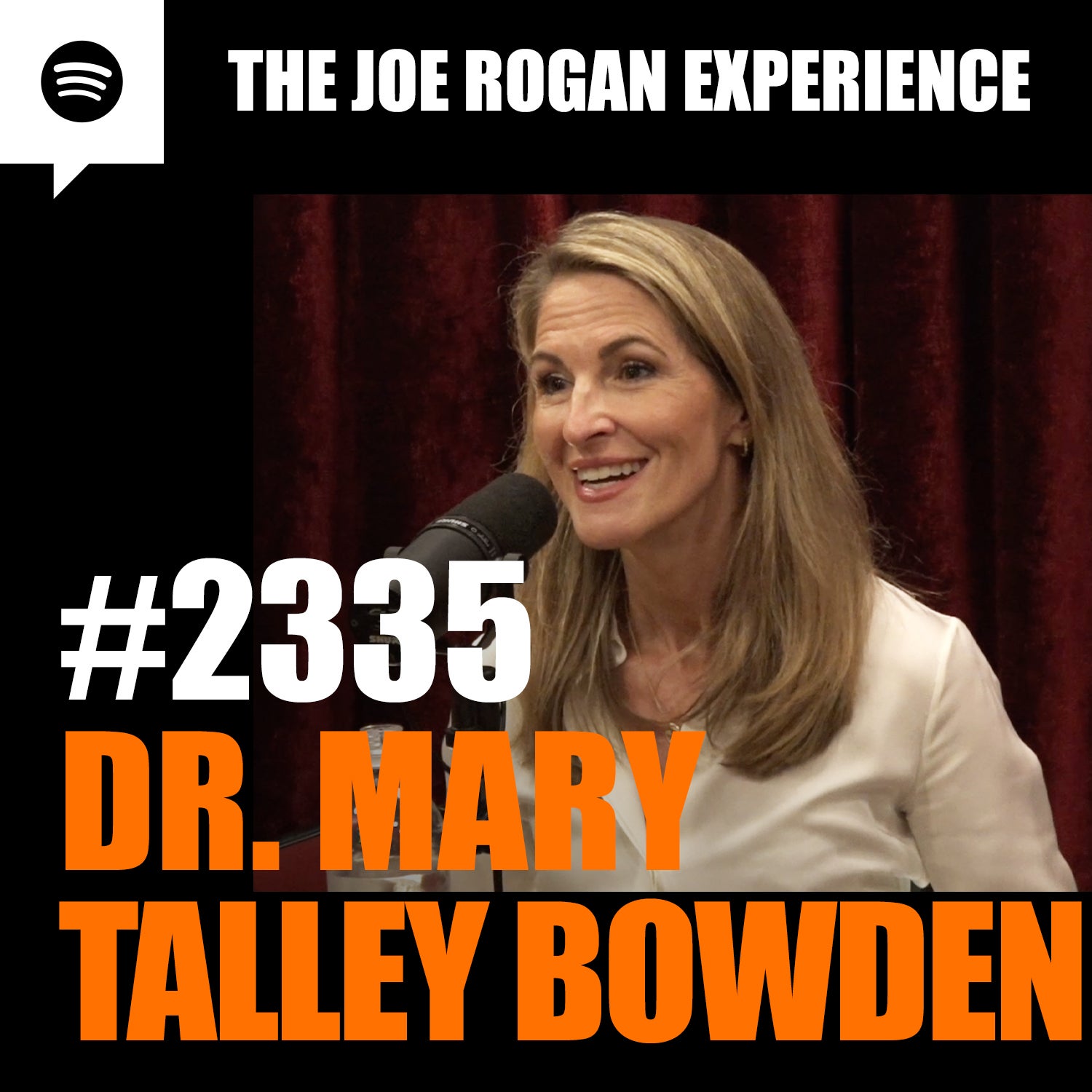
The Joe Rogan experience. Join my day Joe Rogan podcast by night. All right, very nice to meet you. Nice to meet you.
I have, I saw you on the day Jones podcast and I've read a lot of your tweets and Twitter and just the entire ordeal that you've been through since the beginning of COVID. And so I felt like it could be very educational for people to hear your perspective. Well, I appreciate you continuing to talk about COVID because I think a lot of people are sick of it. I'm certainly ready to move on.
I am too. But it's just people need to make sure this doesn't happen again. Exactly. Nothing's happened really.
Nothing's been corrected. No, not only has nothing been corrected, I was just watching an argument on television where they were trying to argue for vaccinating women who are pregnant. All right. It's insane.
I mean, there's a golden rule of pregnancy, right? You don't experiment on pregnant women. You don't experiment on an unborn child. You're not even supposed to eat sushi.
Exactly, right. But we're going to put this modified mRNA technology into these women who, you know, early treatment, we have early treatment. COVID is no longer a threat. We're dealing, you know, at one point it was more than a cold, but not now.
Why in the world will we give them to pregnant women? The only thing that makes sense is money. Right. Well, it's the only thing that makes sense.
It's ego and ego. Ego, meaning because they've already recommended it because they don't want to admit that it's not effective. They don't want to admit their side effects. I mean, we have hard facts showing up to be pulled off the market.
I mean, any other product would have been pulled a long time ago. This were an antibiotic and we'd seen all the carnage from an antibiotic. It would have been yanked off long ago. It should have been yanked off in the first month.
There's just, there's no other explanation than there's just, there's fraud, there's corruption, there's ego, there's money. But it's not science. No, and there's a lot of people that for whatever reason, they have this very rigid ideology that the pharmaceutical drug companies are to be trusted. And we should trust the science and at all these organizations, whether it's the FDA or whatever it is that's connected to these assertions, they should be trusted, not just the average doctor who's talking about these side effects and all these different things they're experiencing with their patients.
Yeah, I mean, I trusted them with the pandemic started. I mean, I didn't think that the shots would work necessarily, but I trusted them. I didn't think they were going to hurt us. Why didn't you think they would work?
Because they were rushed to the market. I knew the flu shots were already iffy. We're dealing with a virus that mutates. We've never been able to vaccinate against a cold, which is a rapidly mutating virus.
It's been tried before and it's failed. If you don't mind, please tell everybody what your background is in medicine. Yeah, private practice, solo physician, I'm not head of the Mayo Clinic. I'm just a neighborhood, Uranus and throat doctor that sort of got tangled up in this inadvertently.
And I always thought when the pandemic started, I thought, well, this will be the hospital. This will be a chaos in the hospitals. I never envisioned getting wrapped up in this at all. I trained at Stanford and then I moved to Texas after residency.
And then I worked in a small private practice for seven, eight years. Then I started having a bunch of children and I pretty much gave up medicine. And I took a seven year sabbatical. I wasn't even sure I was going to go back.
But then I just had this itch that needed to be scratched and I opened up a solo practice six months before the pandemic started. Oh boy. What time did he? I know.
Why don't I do it? You can even out. I know. Well, sometimes the universe has a calling for people.
You know? It's been a very interesting journey. So take us through what happened with you at the very beginning. So COVID starts making its way across the world.
Yeah. So I had people coming in with respiratory tract infections that were stubborn. They were not the typical colds. And there was all this news that there's this virus in China.
But you watch something on the news, you think, oh, that's not going to really affect me. But I started having more and more patients coming in. And first, I really didn't know what to do. I just used common sense.
I treated the symptoms. I used breathing treatments. I covered for secondary infection with antibiotics. I used steroids, that sort of thing.
And I had success. But I didn't have a lot of people showing up at my door to treat me for COVID. But I did start having people wanting to get tested. And you might remember that Lab Corps was the first lab in the country to offer the test.
And they just got completely slammed. So it took two weeks to get the results back. We were already working. I was already working with a lab for patients with chronic sinusitis, who they were doing PCR testing for chronic sinusitis.
So it tests where bacterial and fungal infections of the sinuses. It's called Microgen DX. And it came out with a saliva test for COVID. So we were able to get the results back the next day.
So I started offering that. And my little clinic exploded. Because I'm located in a strip mall, which is very purposeful. I'm very close to the medical center, which is to get your doctor's office.
It's a 10-minute navigation of the parking garage. Another 10-minute walk to the office. And so I was trying to locate my office where it was very easy to get in and out of. And then that served me very well during the pandemic.
Because with these saliva tests, you could just take the cup to somebody's car. They could spit in the cup. They could leave it outside. It was contact-free.
You didn't have to be shoved up your nose. And then we got the results back the next day. And so that sort of made me put me on the map in my little neighborhood. And then I started tracking who, when the vaccines came out, I started tracking who was positive by their vaccination status.
And so I started noticing that the vaccine wasn't working. And that's sort of what got me in trouble. I also started giving monoclonal antibodies. And I didn't ration them.
So I became known in town as a place you could get monoclonal antibodies without having to pass being a certain race or certain age or that sort of thing. What do you think that was all about? Yeah, I don't know. The monoclonal antibodies is very frustrating to me.
They worked very well. They were not controversial. People would turn around the next day. But when they first came out, I could get as many doses as I wanted.
I mean, they'd show up at my door and stuff the next day. And it was great. I mean, that also sort of put me on the map with COVID. And then I didn't even use Ivermectin until the government took over distribution of monoclonal antibodies.
And then it became harder and harder to get them. And that's when I turned to Ivermectin. But in my opinion, they did that on purpose. They did that to encourage people to take the COVID shot.
It was very orchestrated. If you look at the timing, in March, the government put out the big information on Ivermectin and why you should not take it for COVID. They put that on the FDA's website. At the same time, they launched COVID-19 Community Corps.
And this was April 1, 2021. This was an $11.5 billion slash fund to feed out propaganda and censor people. And the day that they launched the COVID-19 Community Corps was the same day that Houston Methodist, which is where I had privileges, they mandated the COVID shots for all their employees. And they were the first in the country.
And that's sort of how I got tangled up in all this because I had privileges there. And then I was actually working with them. I was doing research with them. I was sharing my data with them to try to get it published.
But then I started questioning the vaccine and how it wasn't working. I brought it to their attention first. And they gaslit me. They just said, well, it lowers severity.
And when they ignored me, then I started speaking out on social media. And that's what got me in trouble. But so that summer, 2021, that's when the third and the largest surge of the pandemic started. And this was after the rollout of the wonderful COVID shots that were promised to stop transmission and prevent death and obviously didn't.
And the government was getting frustrated. So they doubled down on their Ivermectin attack. And this was in August, 2021. They put out the infamous horse tweet.
They said, seriously, y'all, you're not a horse. You're not a cow. Stop it. They had dire consequences, in my opinion.
And then they fully approved the COVID shot and then mandated for employers with 100 more employees. And that was right when they took you down. So it was all very courting. Oh, and then the final straw was taking away monoclonal antibodies.
Yeah. This episode is brought to you by Squarespace. Once you've got a great name for your business, you need a great domain. And Squarespace makes it easy to lock in a domain.
You just search the name you want, buy it, and then you're ready to build. No hidden fees, no weird upsells. Go to squarespace.com slash Rogan for a free trial. And when you are ready to launch, use the code Rogan to get 10% off your first purchase of a website or domain.
Yeah. That was the more fascinating thing about it to me. I listed a bunch of different things that I took, including monoclonal antibodies. But they only concentrated on Ivermectin.
But the way they did it was so transparent, like changing the color of my face on CNN and everywhere this concerted effort to call it horse dewormer, they just try to make it look as preposterous as possible without ever explaining that it's been used more than multiple billions of times prescribed to human beings. Yeah. I mean, they branded you. When I think of you, I think of that picture of you, where you're slightly green.
Honestly, yeah, Ivermectin, I was nervous about using it because of all the hype and because monoclonal works so well, I was like, well, this is not going to work. I was nervous. But the first thing I did was dug into the safety. And anybody could do that, which is a minimal amount of effort.
You can go to the FDA website and you can find the toxicity data on Ivermectin. And there's something called the LD50, lethal dose 50, which is, it's a benchmark number that gives you an idea of how toxic a medication is. And LD50 means how many animal, what dose would kill 50% of lab animals? So for Ivermectin, it kind of depends on the rat, the type of animal and the gender, but it's basically 10 milligrams per kilogram up to 80 milligrams per kilogram.
So for COVID, we're using 0.4 milligrams per kilogram. So I knew that we were not worried about killing people with it. And then I did a literature search and I looked for accidental, intentional overdoses for Ivermectin. And I couldn't find a single study where she did that for Tylenol, I mean, thousands of reports.
So once I knew it was safe, then I started using it and then I found it worked. And then all in all, I treated well over 6,000 patients. And everybody that got early treatment stayed out of the hospital. Also had patients come in that were really sick in the second week.
And that was such a learning experience for me because normally if somebody walked into my office with an oxygen saturation in the low 80s, I would call me ambulance. But I had patients who were refusing to go to the hospital. And I had to give them the option to possibly die in my office, which is scary. But we saved them.
I mean, we just threw the kitchen sink at them and we didn't have monoclonal antibodies. So we brought them in every day. We did IV steroids. We did IV antibiotics.
We gave them home oxygen. We gave them high dose of Ivermectin. We did everything we could. And it was amazing.
I mean, they survived. It was very gratifying. So you think it was probably a combination of all the different medications and all the different treatments? You know, I would vary my approach depending on severity, the comorbidities.
I mean, it's an art, not a protocol. It's a guideline, right? But every patient is sort of individual. And so for the patients, you know, one patient, I'm thinking of need to have history of two heart attacks.
He had a history of throat cancer. He came in with an oxygen level. It was below 80. I can't remember what exactly it was.
And so I just did everything. You know, I took everything that I could and gave it to him and it worked. But I had a few people like that. But you know, 20 year old came in.
I'd probably just give him some Ivermectin. And you know, it just depends. Why did you decide to try Ivermectin, even though there was all this negative propaganda? Well, because I had patients coming to see me who needed help.
I mean, I just wasn't going to shut my door. I'd already established I could help people with monoclonal antibodies. So I still had people coming to me seeking help. And I just didn't have the heart to say no.
And I knew it was safe. So I knew that, you know, it was a little bit iffy. But I knew it was safe. And there was a good day of showing it worked.
And I learned that in residency. All residents learned that. We have something called journal club where you sit down once a week and you pour through different articles. And the takeaway is most articles are, you know, crap.
They're not they're not their low power or their their conflicts of interest or, you know, they're not they're designed poorly. So, you know, my mindset coming into the pandemic was, you know, the research, the journals are a starting point. But it's not the final say is your own clinical experience and what you're seeing. And, you know, we had never seen COVID before.
This was a brand new entity. So we're learning on the fly, but you know, I've never treated this many patients with a single disease in my career. I'm sure I never will again. And so you quickly become an expert and you know, doctor, I don't can't speak for all doctors, but we like to do well.
We like our patients to get better. It's gratifying. That's how it's sort of how you get job satisfaction is seeing your patients do well. So why would I, you know, continue to have, you know, COVID patients come in if I couldn't help them?
And it's astounding to me that the doctors in the hospitals just didn't pivot, didn't try new things. And I guess they were handcuffed by, you know, the hospital administrators. But it just seems to me that, yeah, there was a doctor in Houston, Joe Verone, who I'm pretty good friends with who is a critical care doctor and he was one of the founders of FLCCC, which is sort of the, they developed the original protocols for Ivermectin. And Dr.
Verone had much better success than most other doctors. His overall success rate was 4.4% of his patients died, whereas in other hospitals average around 20%. And he did, he threw the kitchen sink at them at people and he basically followed this FLCCC hospital protocol. So when the monoclonal antibodies were suppressed, what was the messaging?
What did they say to doctors? They said that the strain of the virus was no longer covered so that it had evolved and it wouldn't work. At the same time, they used the exact same vaccine. Exactly.
And they had switched the monoclonal antibodies periodically. So it wasn't like they started with one and stuck with it the whole time. They switched it as things evolved, but. It was really clear.
And the propaganda was shocking because we've all seen propaganda with foreign conflicts, weapons and mass destruction, all that kind of stuff. We've all seen propaganda. But when Rolling Stone magazine printed an article saying that people were, the hospitals were overflowing with people overdosing on Ivermectin and gunshot victims couldn't get in. And they used a stock photo, which was a bunch of people wearing winter coats.
And I think the article was August in Oklahoma. The whole thing was so brazen and sloppy and obvious, especially in the age of Google. If this had all gone down in the 1980s, we would all be in the dark. We would have no idea.
We would have been like, wow, I guess Ivermectin's killing people. We wouldn't have known until like 2030. People would have been a conspiracy theorist. You've been a crazy person.
Like one of those people that could tell you all the facts about the Kennedy assassination and with wild eyes, all of a stone. But it was so obvious and it was so confusing because I had had people in my podcast before where I had a doctor's on and I would talk about foolish people that don't believe in traditional medicine, like people that want to try different things, like people that were anti-vaccine or anti-anything. I'd be like, these are the best people at the front of the line. Trust them.
Five years later, I'm like, don't trust anybody. They're all compromised. It's all money. And that was the most disheartening thing.
The propaganda was disheartening, but it was that the whole system is compromised. And then when I found out that pharmaceutical drug companies are the ones that are funding studies and that they could have a whole ton of study, they don't have to divulge all the data from their studies. They only have to show you some studies that were carefully crafted to show efficacy. But all the other studies that they had that even showed negative effects, they could bury those.
They weren't held responsible. I was like, what is this? What is this? It's like everything in the world when money gets involved.
Yeah, that Rolling Stone tweet is still up. I found it yesterday. I couldn't believe it. So wild.
Look at that. Look at these people wearing winter coats. So apparently this was a bunch of people that were waiting in line for the flu shot. One shot victims.
All the most people got shot. What the fuck is going on in Oklahoma? They're shooting folks. They think it's the Wild West out there.
Imagine if those were all gunshot. But look how crazy that article is or that tweet is. Gun shot victims left waiting as horse dewormer overdoses overwhelmed Oklahoma. By the way, zero horse dewormers there.
Zero. It was a total lie. Well, in a, you know, even last Friday, Vanity Fair didn't article on Maha and Cali means and they quoted me in it and in the, you know, in their description of me, they used horse dewormer. It could not believe it.
Still. The reporter for Vanity Fair. Wow. It's she bedded up to me.
Actually, like you're a good friend. That's what they always do it. Yep. This episode is brought to you by BetterHelp.
Sometimes it can feel like you're carrying the weight of the world on your shoulders and for guys, especially it can feel like you have to carry that burden on your own. There's a lot of stigma around men being the provider to keep it all together by themselves. But that's not good for you, your family or anyone. Did you know that six million men suffer from depression every year in the U.S.
and then often goes undiagnosed because of these stigmas. Real strength isn't bottling things up inside though. It's admitting to your faults and doing something to better yourself. So go talk to someone.
And your partner, family, a therapist. Therapy is an excellent tool everyone should utilize. It's a great way to learn more positive coping skills like how to manage stress and help you live a more balanced and fulfilling life. BetterHelp is a great place to start that conversation, judging by the millions of reviews and the 4.9 rating in the App Store.
It's helped many people across the globe. As the largest online therapy provider in the world, BetterHelp can provide access to mental health professionals with a diverse variety of expertise. Talk it out with BetterHelp. Our listeners get 10% off their first month at betterhelp.com.com.
That's betterhelp.com.com.com. It's so dirty. It's such a dirty business. God, I have massive respect for journalists.
If I had never done the podcast, I would be your regular schmo out there with spitting out all the company lines and all the blast all over the news. I kind of liked it better then. It's a great thing to learn. I didn't think the world was filled with demons.
Money hungry demons. They're willing to sacrifice human lives in the pursuit of revenue. It's crazy. That's why we have to continue the site because people have lost all trust with good reasons with good reason.
That's why I'm having you on. That's why I continue talking to people who just go up with the COVID already. I get it, folks. If this is not for you, move on.
Mary and I will still be bitching about this for the next three years. For me, it was such a wake up call because it's so weird to see your face on TV green, first of all. That was weird. Then this term, horse dewormer.
I'm like, why are you guys not concentrating on the fact that a 55-year-old man is fine three days later during the worst train? It was during the Delta where everybody's freaking out. This one's going to kill us all. I was fine.
In three days. I made this video. I'm like, sorry, I have to cancel the concert this weekend. I got COVID, but I'm good now.
I didn't think that was going to be anything. I thought that was just going to be the people that bought tickets to see Dave Chappell and I in New Orleans. Where's it? Where's it?
Wherever it was. That's all I was going to be. Those folks are going to be upset. I'm sorry.
You took it up to you. You took it still count. That's all I thought it was going to be. I thought it was going to be a normal tweet that I put out or a normal Instagram post that I put out.
Then all of a sudden, I hear that Neil Young wants to be removed from Spotify. I was like, what the fuck is going on? This is crazy. Spotify got calls from two former presidents.
Really? Oh, yeah. Oh, yeah. I'm not going to get censored or de-plapped.
No, I'm going to be by 2 million subscribers in a month. I did. Because people started listening. They made it sound like I was this maniac.
They started listening. They're like, oh, he's really reasonable and pretty humble about all this stuff. Just asking questions and bringing people on it. Like Dr.
Robert Malone who has nine patents in the invention of mRNA vaccine technology. He's one of the, he took it himself. He was reporting his insane adverse side effect where he almost died. He was telling about it and they labeled him a kook for that.
What made you so awake though? Well, that. Just, just. That.
I'm a, I'm a, I'm a, I've always been the type of person that is like, if someone is saying something and they have rocks all connected, Dr. Peter McCulloch is the most published physician in his field in human history. Like this is a incredibly well respected doctor up until he took a moral and ethical stand saying that this is not what they're saying. This is not what we should be doing and then destroyed.
They tried to destroy his career. He's at a horrible. It's insane. But the man has incredible courage and he was labeled all, when I would tell people, he's the most published physician in time that you'd see their eyes glaze.
Like they didn't want to hear it. I'm like, maybe he's right. Well, five years later. We know he's right.
We know he was right. He was right all along. I mean, the whole. So for me, when there's people, there's always a bunch of people that are ideologically or financially captured.
And then there's people that feel morally obligated to tell the truth and you can spot those people. And when I spotted a few of them, like, okay, let me hear him out. I might be the guy that goes, no, this guy's a kook. He's going to cross people lives or I might be someone go, Hey, everybody hit the brakes.
Like you might be getting bamboozled here and especially the real concern with any sort of a new drug is always the side effects. But when you have indemnity, when you have complete immunity for any financial liability, like the vaccine manufacturers do, and all you have to do is label it a vaccine because that's not a traditional vaccine. It's just not. They changed the definition for mRNA vaccine technology.
Before that was not that. It was a very different thing. We all had in our head vaccines are good. That's why they don't get sued because we need vaccines, you know, and then unfortunately, I read Robert Kennedy Jr's book, the real Anthony Fauci was like, Oh my God, did you, what was your initial thought about the COVID shot?
What was your mind? Did you take it? No, I didn't take it. I was ready to take it.
I, I, the UFC had allocated shots for all the Johnson Johnson for all their employees. And I showed up there on a Saturday, which was the day of the fights. And I said, can you give it to me? And they said, yeah, sure, let's call the doctor will set it up.
I thought I was going to get a shot. I thought I was like a flu shot. Like I'll get that shot and I'll go do the broadcast. I was going to do the broadcast.
I didn't think anything of it. I was not worried about it at all. And they said, no, you have to come to the clinic and do it. Could you do that on Monday?
And I said, I can't, but I'll be back in two weeks during the time that I was trying to get it. I got better when the next fights were it got pulled from the market because of blood clots. And then two people I knew had strokes. And I was like, hold the fuck up.
And then I got real nervous because there was a lot of family members that were like really pushing it. You need to get vaccinated. Have you gotten vaccinated? Get vaccinated.
We all need to do our part. We all need to get vaccinated. And, you know, then I became a heretic. And then I was like, okay, I don't, I don't want to do it.
And I had a bunch of friends that had horrible side effects, including one of them who is a young guy who is a pacemaker now, yeah, yeah, is heart stopped beating for like nine seconds at a time. You'll black out. It was wild shit was happening. I don't understand why this isn't on the news.
I don't understand. And then I'm like, oh my God, on the news. I'm like, I have to be the news. I don't want to be the news.
I like talking shit. I like having a bunch of comedians here. We have laughs. We get silly.
You know, have a few drinks, watch some funny videos, crack each other, have fun, or scientists. I like to have fascinating people in here. Tell me how the cosmos was formed. I don't want to be someone who distributes information to the masses that's been lied to.
I don't have any lofty goals like that. I want to be the one that tells the truth. And that's not what I do. I'm just a curious person who talks to people.
Was it hard for you to get Ivermectin? No, I got it from India like that. I got boxes of it. I was handed out to everybody.
I think we still have some more right here. I think we're talking about India to get their medicine in the US. Well, that was after my doctor got it for me. My doctor got it for me.
I think I fucked it up for everybody. I think me becoming the attack boy when they went after me. I don't think they would have attacked anybody that didn't have a large platform like that. And I don't think they would have attacked Ivermectin the way they did.
I think they would have just suppressed it. And it wouldn't have been a public thing because it wouldn't have got out. I think the problem was me saying that. The crazy thing is I said all that other stuff too.
I said IV vitamins. I said Z-Pac, prednisone. I told them all the things my doctor put me on. And all they concentrated on was this Ivermectin thing.
I was like, this is wild. Like what is going on? Is that like my wrong about Ivermectin? Like then I started just reading about the scientists and the team that invented it and how they want to Nobel Prize.
I'm like, OK, what the hell is happening? Like this is nuts. This is so weird. Well, it was all part of getting the shot in every arm.
And they had to go after Ivermectin. I mean, they launched a war on Ivermectin. Pierre Cori wrote a book about it. I appear on early on too.
Yeah. And I actually sued the FDA over that horse tweet. And we won. It hadn't really changed anything.
So the FDA, when they put that information or misinformation out against Ivermectin, they were really crossing a line. Because they're not allowed to tell the public, you can't take a medication for this, or you should take a medication for that. They're basically allowed to just approve medications and move on. I mean, they can issue a safety alert.
There's something that comes up. But they're not allowed to really direct patients. And that's what they did. And so we did sue them.
And we won. And they had to take down the horse tweet. And they had to take down the misinformation on their website. But unfortunately, as evidenced by what just happened on Vanity Fair, the brand of it being only for animals still lives on.
And it would be great. What happened at Vanity Fair? So the reporter still used the term horse tweet. Oh, with the reason.
Right, right. Wild. Wild. You're still the only person you remember for sure.
In 2025. Right. When Chris Cuomo was out there talking about how he's taking it for long COVID. Right.
Right. But it'd be great if FDA could issue some sort of statement, saying that it is safe, that it is used in humans. They don't have to say much more than that. We could use a little help in rebranding Ivermectin.
And there are also a bunch of states that are trying to make it over the counter. I'm not sure if you've seen that. Yes, I have. 17 states have had bills in the last legislative session trying to get Ivermectin over the counter.
Three have been successful. So Tennessee, Idaho, and Arkansas. Four, they're still in deliberations. And ten, they failed.
But another thing that FDA, I believe, should do is make Ivermectin over the counter. Because people are basically going to the feed store. I mean, my own kid, he had some sort of a stavies situation in West Texas over the weekend. He had to go to the feed store to get treatment.
And I did a poll on Twitter, 52% of the respondents said they go to the feed store to get their Ivermectin. Is there any difference in the Ivermectin from the feed store? I don't know. I mean, I haven't heard of anybody having issues.
But it's just unnecessary. This is America. We're still to get the medication very easily. And there is some sort of an efficacy for some sort of skin infections.
Is that true? Scabies is one of them. Yeah. But use it topically.
Is that how it's word used? You can. I mean, for scabies, actually, you can take it orally. OK.
But yeah, so we shouldn't have to go to India. We shouldn't have to go to the feed store. We should be able to just go to. I mean, that's how India.
He still emails me. You need more, my friend. Oh, no, that kind of worries me. Because you just said it.
I just bought boxes. I was saying I had out boxes to people. Because so many people were telling me they couldn't get it. And so I'm like, let me just get a lot of it while I still can.
Yeah. Yeah. I mean, I guess it's probably fine. But it's just unnecessary.
People give it to me at shows. They were. Let's guess. I carry around my purse.
I like, you can do something for me. Oh, here's my Ivermectin. Oh, I know people that take it as a prophylactic all the time. Oh, yeah.
So it's just what a weird drug to go after that was on the World Health Organization's list of essential medicines. Yeah. How many people who had yellow fever and all the river blindness, all sorts of different parasitic infections. It won a Nobel Prize.
And it showed that it stopped viral replication in vitro. They knew that. Now, remember when I brought that up to Sanjay Gupta? It was like, but you know it does, right?
And you can see the look on his face where it's like, he couldn't talk about it. He had to skirt around it and just do his best to. But it was like, this is kind of crazy to make an off label medication, so taboo. Yeah.
And then to stop monoclonal antibodies, just stop them. Well, you couldn't get it. My friend, one of his buddies, was in the hospital. And because he was in the hospital, they wouldn't give him monoclonal antibodies.
Oh, yeah. If you cross that threshold, you were not going to get monoclonal antibodies. What is that about? Does that make any sense?
Well, they did it by the day. Apparently, there was some data showing if you gave it too late in the time course, actually, makes things worse. How many people did they give it to? They were too late.
How do we know this? It's a little suspicious. It does seem suspicious. It does seem suspicious because if something, if you've shown something to be very effective, done early on, wouldn't you assume it would continue to be, at least, somewhat effective?
Now, if you're trying to stop someone on the brink of death, which this gentleman might have died, and they didn't get it to him. If you're just trying to stop, and you can't do it because you're in the hospital because you're admitted, but you should have crazy data that shows after 14, your feet fall. 14 days of infection, your feet fall off, you go blind, if you take it, can't give it to you. In my theory is, they probably had a massive inflammatory response because we would see that.
People get the monoclonal antibodies, and they would just feel like complete hell that night because it was like a little war going on in the body. And then they would wake up the next day feeling great. I don't know if you had that experience, but. Yeah, I pretty much did.
So the second week of illness was the massive inflammatory response. So my thinking is the monoclonalal antibodies may have just exacerbated that. But they could have counteracted that with high dose steroids. And that was another thing.
They gave these piddly doses of steroids in the hospital. And what stories in particular? Methyl prednisolone or salumetrol was what we typically use. If we were in salumetrol.
Is that prednisolone what I took? Is it the same? No, well, prednisolone is an oral. There are different types.
But I usually do a medrol dose pack rather than prednisone because it's been shown to help better with respiratory. It's not a huge deal. But in the hospitals, they could give salumetrol and high doses of that. But they were giving very small doses of steroid, which is a problem.
Interesting. Well, that's also one of the things that they talked about in the RFK Junior book was that the studies that were saying that it was ineffective, the studies were not using the protocol that these doctors were using. And it seemed like these studies were designed to fail. Exactly.
Exactly. And like I said, you can find a study to support or go against anything you want, basically. So I just relied on my clinical experience. And I just had so many people saying, wow, it really made a big difference.
And I saw people staying out of the hospital. And it wasn't hurting anybody. But yeah, a lot of those studies were basically designed to fail. Either the dose wasn't high enough, or they gave it too late, or it was heavily funded by somebody that doesn't want it to succeed.
Yeah, it's all very bizarre. Like, really bizarre to live through. And for you as a person who was out of medicine, and then said, jump back in six months before all this, was it like to have your world view sort of spun around like that? I mean, it's getting bad.
I feel sorry for the people that don't get it in a lot of ways. But I just never thought it would come to all this. I didn't go back to work to have a huge career. I was just basically trying to stay busy and active.
And help people. But I didn't envision this at all. It's been very impactful. I'll say that.
Yeah, what has it been like having to do this? I've been to all these podcasts. Yeah, it's wild. It's not what I envisioned at all.
But I feel vindicated, finally, at least I'm not embarrassed to go to the school functions anymore, or show up at the sporting events, or I used to be scared to go to the grocery store. Because they came after me so hard. And Houston Methodist Hospital is sort of the country club, the elite of the hospitals. And so for them to come after me was a big deal.
It's hard to get privileges there. Their tagline is leading medicine. And they were very proud of being the first hospital in the country to mandate the shots. They didn't need to go after me.
I was nothing. I saw a lot of COVID patients, but in the grand scheme of things, it really wasn't, it was not really doing anything. It's the Streisand effect, right? Yeah, exactly.
They attacked you. And by doing so, they made the whole thing way bigger than it needed to be. But they did silence other doctors. I mean, I hear from doctors all the time that won't say anything because of what they did to me.
Yeah, no, there's a lot of doctors that I know that were in danger of losing their license because they had prescribed ivermectin. And that was another thing. The Federation of State Medical Boards, which is this private entity, they're actually located in Texas, who oversees all the state medical boards, they sent out a directive to all the state medical boards concerning ivermectin, concerning misinformation, and basically encouraging the medical boards to go after doctors like myself. And I mean, I'm still tangled up with a medical board, trying to clear my name.
But they did that. It all happened in that fall of 2021, right? When Biden mandated the shots, they really came down hard on the doctors. So what did they do specifically to you?
So I got several complaints. But only one of them is really stuck. Others have cleared my name on. But they're all involving ivermectin.
No patient harm. The one that has stuck is from a hospital in Dallas called Texas Hegley Hospital. And there was this man out of share of study, Father of six, who's basically dying. They were talking hospice.
And his wife wanted him to have the opportunity to try ivermectin. And he had tried to get it before getting in the hospital and couldn't find a doctor willing to prescribe it. So wife knew he was OK with it. And so she sued the hospital.
And then she asked me to come on as sort of an expert. They had a doctor who was willing to prescribe it because they can't force the doctors to prescribe a medication. But they could force the hospital to give a doctor privileges who was willing to prescribe it. So that's where I came in.
And we won the case. And the hospital had a court order saying that they were going to give me emergency temporary privileges so that could go into the hospital and give him ivermectin. Well, there was all this stall tactics. They were supposed to give me the privileges the same day.
And in other circumstances, at that time because of the pandemic, they were giving doctors same day privileges. It wasn't this lengthy application process because there was a shortage of doctors. For me, they made me submit my surgical case log for the last three years. They made me get three letters of recommendation.
They made me fill out a 30 page application. I got it all done in 24 hours. And then they're like, no, no. We're actually going to deny you privileges.
So it turned out in this big battle, it became very confusing because they got to go back to the judge. And finally got the green light, though. The lawyer's like, we can go. You've got the green light, the judge.
We got the order. There's no stay on the order. I send a nurse to the hospital because this is in Dallas, and I'm in Houston. Shows out that the court order and the police agreed her and turned her away.
There's not a big scene. She leaves. But she's not allowed to give a miver of meth. And it turns out they did get a stay, but our lawyers weren't aware of it at the time.
But this is what they're going after me. They said that I sent a nurse to the hospital without privileges. And I caused a scene. And I harmed other patients by doing this.
And it has been three and a half years. They can't find an expert witness to testify against me. There have been three continuances. They finally were awarded summary judgment against me.
So I'm already decided I'm guilty. And now I'm waiting for my punishment. There was a hearing about a month ago to find out what they're going to find me with and that sort of thing. And I'm just waiting on that.
But I do plan on appealing. It's just gotten crazy. Wow. So the first thing they attacked you with was what?
What was the first one? For the medical board? Yes. I had one pharmacist, Termy, and we sort of got in a pissing match on the phone.
And then I. This is in 2021? That might have been, I can't remember, but around that time. I had a father reach out to me.
A 17-year-old had a history of a kidney transplant. And they were going to Europe. And they wanted to have Ivermectin, just in case he got sick. And I was telling you the dad and the stepmother.
I didn't realize I wasn't talking to the mother. So the mother found out I prescribed him Ivermectin and turned me in. But Ivermectin is metabolized by the liver, not the kidney. So it would be no harm for him to get, I was having had a kidney transplant for him to get Ivermectin.
And he never took the medicine. But it cost me $16,000 in legal fees to get that straightened out. So this was your first experience? Like, oh my god, this is a real battle.
Yeah, yeah, yeah. I've never been in any trouble. I've never been sued. Would it feel weird publicly yet?
Like when you were saying you were having a hard time going across your story, where were there? That was when Methodists came after me. So Methodists. They came up to you very publicly.
Yeah, they tweeted about me. They went to the, I found out that my privileges were suspended from a text message from a reporter. That's how I found out. I looked at my phone and I was like, what?
Are you talking about? I did. I said, check your sources. I don't know what you're talking about.
And I got in my email and they suspended me. And then they tweeted about it. And it went, you know, I had CNN, Washington Post going after me. It was traumatic.
I mean, I was just a mama for with a small practice. And all of a sudden I've got CNN calling me. Wow. So.