
EPISODE · Feb 24, 2026 · 7 MIN
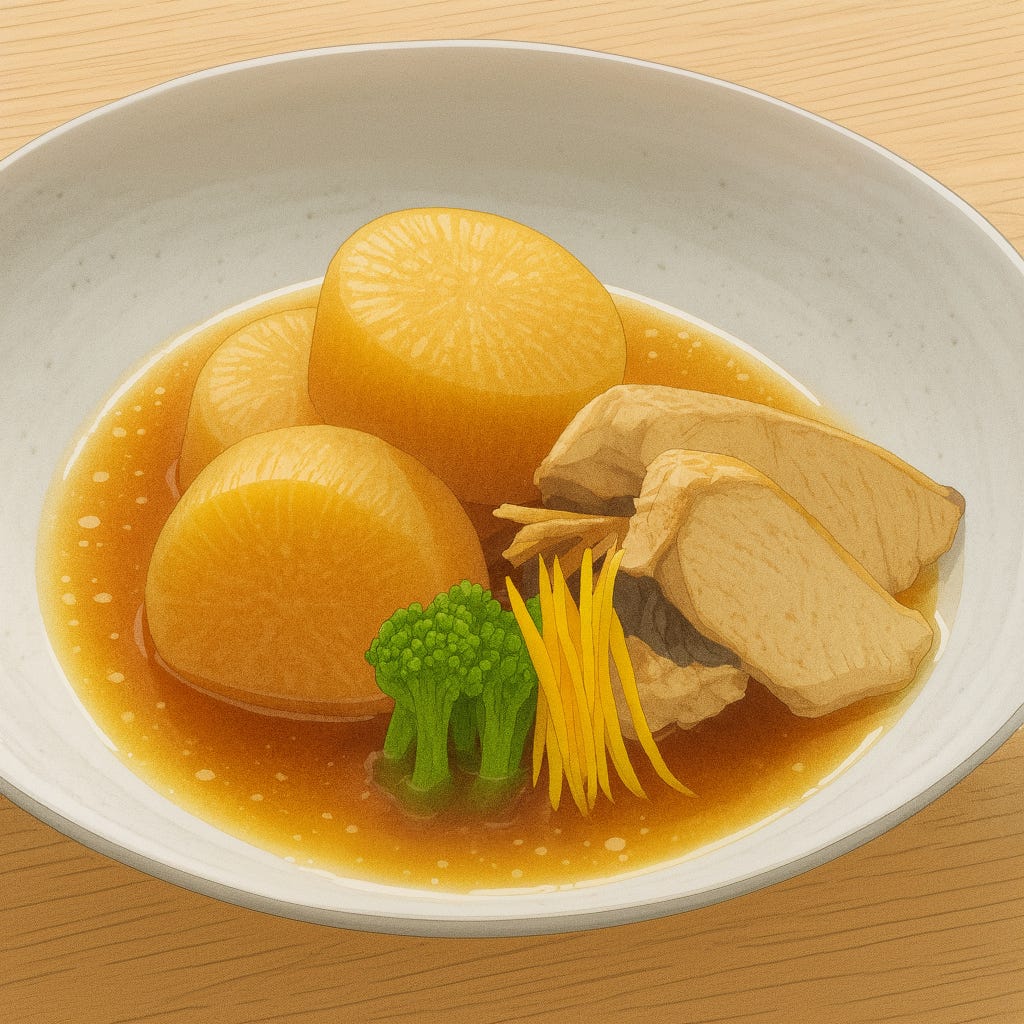
#24 Learn Japanese Drama | Izakaya Recipe: Buri Daikon (Week 4)
from Learn Delicious Japanese · host Learn Delicious Japanese
This is a free preview of a paid episode. To hear more, visit learndeliciousjapanese.substack.com#24 Learn Japanese Drama | Izakaya Recipe: Buri Daikon (Week 4)Experience the most emotional episode of Level 2 — a heartwarming drama about あいじょう (love), きおく (memory), and the invisible bond between a daughter and her late father through the taste of ぶりだいこん! In this special finale, Nami discovers her father's handwritten レシピノート (recipe notebook) and relives precious childhood memories of watching him cook every winter with patience and love. Master emotional vocabulary and grammar patterns: 〜てくれた (someone did something for me with gratitude), 〜ながら (while doing), 〜だけじゃない (not just...), 〜とおり (just as someone said), 〜ていく (continue doing going forward), そういえば (come to think of it), おもいだす (to recall/remember). Learn heartfelt expressions woven through the drama: あいじょうをこめて (with love), きもちをこめる (put feeling into it), まったくおなじ (exactly the same), さすが (as expected of), いきている (lives on), なつかしい (nostalgic), かけがえのない (irreplaceable). Discover the cultural philosophy of あいじょうをこめる — the deeply Japanese belief that a cook's feelings are transferred into the food itself, expressed through きもち (feeling for the person you cook for), ていねいさ (unhurried care and attention), and わざ (technique passed down with love). Explore でんしょうのぶんか (the culture of passing things down) — why handwritten recipe notebooks are treasured family heirlooms in Japan, how seasonal dishes like ぶりだいこん connect generations to the same rhythms of the year, and the powerful cultural concept of おとうさんのあじ (father's taste) — the idea that recreating a dish is a way of receiving the love of someone no longer there. Follow the complete ぶりだいこん recipe revealed through the notebook: the critical しもふり technique (blanching to remove ぬめり and よごれ), したゆで of daikon in こめのとぎじる (rice washing water) until とうめい (transparent), and the precise あじつけのじゅんばん (seasoning order) of さとう→みりん→しょうゆ with the かけながし (basting) method for even flavor — exactly as the notebook instructs: 「ゆっくり、あせらずに」(slowly, without rushing). Feel the emotional turning point when Nami reads the final line of her father's notebook: 「なみがよろこぶかおをそうぞうしながらつくる」(Make it while imagining Nami's happy face) — and understand why りょうりは、ただつくるだけじゃない。あいじょうときおくをつなぐ、たいせつなかけはしです (Cooking isn't just making food. It's a precious bridge that connects love and memories). Level 2 完了おめでとうございます!From next month, Level 3 begins — with かんさいべん (Kansai dialect)! Perfect for intermediate learners (JLPT N4-N3) ready to experience authentic emotional Japanese storytelling, understand expressions of gratitude and memory, and feel how traditional home cooking carries the love of the people who made it before us. 📚Check Out the Full Study Guide on Substack https://learndeliciousjapanese.substack.com/
Embed this episode
NOW PLAYING
#24 Learn Japanese Drama | Izakaya Recipe: Buri Daikon (Week 4)
No transcript for this episode yet
Similar Episodes
No similar episodes found.
Similar Podcasts
No similar podcasts found.